正在加载视频...

视频加载失败

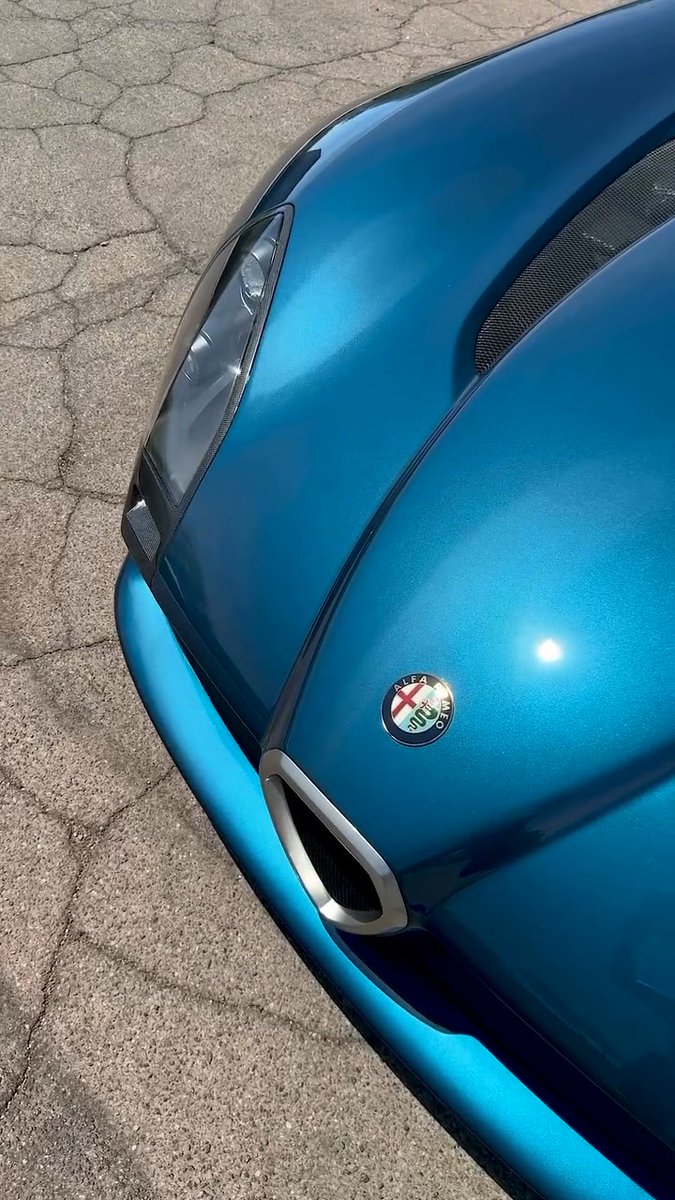
Bugatti subjects its chassis to nonstop, week-long testing that simulates an entire year of real-world driving. The Bugatti Chiron stands as one of the most extreme hypercars ever built—a triumph of engineering designed to redefine what a road car can achieve. At its heart lies an 8.0-liter quad-turbo W16...

509,888 次观看 • 5 个月前 •via X (Twitter)

0 条评论

暂无评论

原始帖子的评论将显示在这里

相关视频

The Airbus A350 is, without question, the most beautiful airliner gracing the skies today. A masterpiece of modern engineering and design, it combines elegance with efficiency. From every angle, the A350 is perfectly proportioned. Its long, graceful fuselage flows seamlessly into a set of gently curved wings that flex in flight like a bird in motion—an iconic silhouette that instantly sets it apart. The wingtips, with their signature upturned ‘sharklets,’ don’t just look stunning—they whisper of aerodynamic excellence and fuel-saving innovation. Its nose profile is distinctive yet refined, with a gentle curvature and a cockpit visor that gives the aircraft a futuristic, almost predatory presence. And unlike many other widebodies, the A350’s fuselage length is in perfect harmony with its wing span and tail height—there’s a visual symmetry that makes it appear poised, balanced, and utterly graceful, whether taxiing on the tarmac or soaring above the clouds. But it’s not just a pretty face. The A350 is a triumph of technology—built from over 50% carbon-fibre-reinforced composite, powered by next-generation Rolls-Royce Trent XWB engines, and brimming with advanced systems that make it one of the most efficient and capable long-haul aircraft ever built. In an age where function often overrides form, the A350 is a rare exception—a true flying work of art that proves beauty and brains can coexist. 📸 by ig/captainchris Not an ad

aircraftmaintenancengineer

30,458 次观看 • 1 年前

They did not take cursive from the schools because children no longer needed it. They took it because of what it was quietly building in them. Consider what the exercise actually is. A child, six years old, is handed a pen and asked to draw a single unbroken line that becomes a word. The wrist must float. The fingers must hold a living pressure, never quite the same twice, always correcting. The eye must follow the ink forward and trust the hand to finish what it has begun. There is no lifting, no stopping, no starting over mid-word. The loop must close. The ascender must rise and return. The sentence must travel from one margin to the other as a single continuous gesture, and at the end of it the hand must still be steady. Twelve years of this. Every day. Ten thousand small acts of sustained, self-correcting attention, carried out below the level of conscious thought, until the motion belongs to the body and the body belongs to the motion. This is not penmanship. It is the slow construction of an interior form. The hand that has learned to carry a line without breaking it is the hand of a mind that has learned to carry a thought without breaking it. The two are not metaphors for one another. They are the same faculty, trained in the same child, by the same daily discipline. Continuity of the stroke becomes continuity of the reasoning. The patience of the loop becomes the patience of the argument. The commitment to finish a word one has started becomes the commitment to finish a sentence, a paragraph, a life's idea, without reaching for the nearest distraction halfway through. Print is a different creature entirely. Print lifts. Print stops. Print assembles a word out of separate, stamped, interchangeable pieces, each one beginning and ending in isolation. A mind raised only on print learns to think the way print is made, in discrete tokens, in replaceable units, in fragments that can be recombined by any outside hand without the owner noticing the substitution. It is precisely the shape of thought a language model produces. It is precisely the shape of thought a language model can steer. Cursive is kata. This is the whole of it. A form repeated daily, for years, not for the sake of the form but for what the repetition lays down in the practitioner beneath the form. The swordsman does not train kata so that one day he may fight in kata. He trains it so that when the moment comes and there is no time to think, the movement is already inside him, older and deeper than thought, and it rises on its own. Cursive was the kata of the literate mind, the daily quiet drilling of continuity, of patience, of a line held steady under the long pressure of its own length. And the signature it produced at the end, that small flourished mark unique to a single human being on earth, was only the outward proof of an inward form no machine and no other hand could ever reproduce. Take the kata away and the practitioner is left with vocabulary in place of faculty. He can recognise a whole thought when he encounters one. He cannot carry one himself. He can admire a finished argument. He cannot sustain one long enough to close its loop. He begins books he does not finish, sentences he does not end, ideas he abandons the moment the screen in his palm offers him a brighter one. And when the machine begins feeding him tokens in the exact shape his schooling taught him to receive, he meets it with no interior resistance at all, because no interior form was ever built in him to push back with. They removed it quietly, across a generation, and they removed it in the last years before the machines arrived. Twelve years of daily practice in unbroken, embodied, self-authored thought, gone from the curriculum of almost every child in the Western world, just as the instruments designed to complete their sentences for them came online. The hand forgets. The mind, having never been taught the kata, forgets a thing it never knew it had. That is what cursive was. That is what was taken. And that is why the thought of anyone who still writes by hand, in long unlifted lines, remains, quietly, stubbornly, and without their ever needing to announce it, their own. Now the question stands open. What else has been banned, phased out, quietly retired from the curriculum and from common life over these same decades, under the same soft excuses? Mental arithmetic. Memorisation of poetry. Latin. Logic as a formal subject. Map reading. Knot work. The keeping of a commonplace book. The reading aloud of long passages in class. Singing in parts. What was each of those actually building in the child, beneath the surface of the lesson, and whose interest was served by its disappearance?

SiriusB

442,614 次观看 • 3 个月前

This looks like a simple transparent shock absorber filled with oil. But what you are seeing is one of the most destructive phenomena in fluid engineering. This is cavitation in its true form. The white cloud forming beneath the piston is not foam and it is not air. The oil is literally changing from liquid to vapour at room temperature. When the piston moves rapidly, the oil is forced through tiny passages inside the damper. The fluid velocity increases, the local pressure drops, and if it falls below the oil's vapour pressure, the liquid begins to boil without any increase in temperature. The moment the pressure recovers, those microscopic vapour bubbles collapse almost instantly. And that is where the real damage begins. The destructive forces of cavitation is really not understood well by most. A collapsing cavitation bubble creates shockwaves and high-speed microjets that strike nearby surfaces with enormous local forces. Repeated millions of times, these tiny implosions can slowly eat away hardened metals, destroy precision components and reduce the lifespan of expensive machinery across industries. This same invisible phenomenon is one of the biggest challenges in naval engineering. Ship propellers operating under enormous loads can suffer cavitation erosion, losing efficiency while creating underwater noise. For advanced stealth submarines, that noise can become a major problem because cavitation can reveal their position. Decades of research have gone into specialised propeller designs, pump-jets, surface finishes and hydrodynamic optimisation to delay its formation. The same issues affects hydroelectric turbines that convert the energy of entire rivers into electricity, and industrial pumps that move oil, chemicals and water through critical infrastructure around the world. Perhaps the most remarkable part is that after 4-5 decades of advances in metallurgy, coatings and manufacturing, engineers still cannot simply build a material that is immune to cavitation. The solution is not to make stronger metals forever. It is to understand the fluid dynamics so precisely that cavitation is prevented before in those destructive bubbles ever form.

Ammanichanda

801,788 次观看 • 15 小时前