Loading video...

Video Failed to Load

Go Home

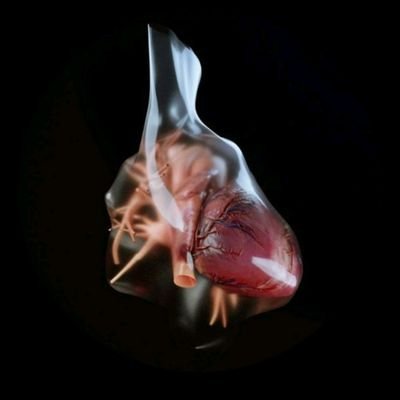
Bundle Branch Block (LBBB & RBBB), detailing the conduction system, key causes, and ECG patterns. 👍 Like | 📤 Share | 👥 Tag a colleague | ⏳ Save for later. #Cardiology #Lbbb #Rbbb #BundleBranchBlock #ECG #MedicalEducation
0 Comments

No comments available

Comments from the original post will appear here

Related Videos

👇EPS and Ventricular Stimulation Testing in the Diagnosis of Narrow Complex Tachycardia: Understanding VA Conduction👇 For #EP_Fellows — simple tricks packed with valuable information! Electrophysiology is logical. Understanding is better than memorizing!!! 👉 Ventriculoatrial (VA) Conduction Patterns: A. VA Dissociation (even with isoproterenol) → Rules out AVRT and AVNRT → Likely diagnosis: Atrial Tachycardia B. VA Conduction with Earliest CS Activation in CS 1/2 → Suggests AVRT with a left lateral accessory pathway C. VA Conduction with Earliest CS Activation in CS 9/10 C.1 Decremental VA Conduction (progressive slowing conduction) → Rules out AVRT → Likely diagnosis: AVNRT or Atrial Tachycardia C.2 Non-decremental VA Conduction → Suggests AVRT with a right-sided or septal accessory pathway #EPeeps This post is part of a collaboration with Nadica Trajkovska If you find this content helpful, please let us know, we can continue exploring further steps of the EPS workflow together 🙏🙏 Philipp Sommer Stephan H. Winnik Christian Sohns Martin Braun Moneeb Khalaph Maxim Didenko, MD PhD FESC FEHRA Dr. Andreas Roeschl Arnel Carmona Pedram Milan Koštek ECG Challenge ALBERTO ALFIE Arab HRS - Heart Rhythm Society The Heart Koichi Nagashima@EP Univ. Ablation School Matters of the Heart 🫀 Gregor Nageler JMC Young DGK AGEP Johnson & Johnson MedTech | Electrophysiology @JNJ_ch Abbott Medtronic BostonSci Cardiology #CardioTwitter Arash Arya

El Hamriti Mustapha

19,782 views • 1 year ago

ANNOUNCEMENT FROM THE CEO HIMSELF 🚨 Every once in a while, someone changes the game. First, Saylor looked at his corporate treasury and said, “You know what this needs? Bitcoin.” BOOM. The treasury meta was born. Then Punk Strategy showed up and said, “That’s cute. Let’s make it fun.” They turned the meta into a cultural flywheel — art, memes, and on-chain madness spinning in perfect sync. And now… the Ninja enters. Not to copy. To add weight. To validate it and co-sign it. 🚀 Introducing NINJA STRATEGY™ — a fully autonomous Ordinals Digital Asset Treasury (ODAT) that buys, sells, burns, and laughs in the face of inefficiency. 🚀 Brought to you by a coalition of organizations and leaders in the Bitcoin Ordinals ecosystem. TO SergeSats Albert timweb3_ It’s powered by Rune #14: Historic Provenance — one of the first Runes ever inscribed at the halving block, forever part of Bitcoin history. 🍕 Here’s the play: the ODAT buys Pizza Ninjas, relists them for profit, and burns $PIZZA — our culture coin, our symbol, our fuel. The token that powers the Ninjas that powers the token. Every trade feeds the treasury. Ten percent of every buy and sale loops back into the system, making it stronger, faster, and yes, TASTIER. Like an eternal, self-feeding pizza oven where every slice burns another token. It’s all happening on Bitcoin, with $PIZZA trading exclusively on Presale begins in 22 hours: Tuesday at block height 918,050 (around 8:30 AM EST) and runs for 150 blocks until block 918,200 (around 25 hours later). 🔥The multi-sig address will be shared on X, the website, and in the Discord. 🔥 You send BTC, you get your pro rata share of the Rune #14 airdrop, and any late funds are automatically refunded. But let’s not kid ourselves — this isn’t just a presale. It’s a statement. We’re saying that NFTs can be liquid, culture can be viral, and that Bitcoin isn’t just digital gold anymore — it’s a living ecosystem of creativity, speculation, and perfectly engineered chaos. NINJA STRATEGY™ — Rune 14. $PIZZA. Provenance, Culture, Strategy. — CEO, Ninjalerts Corps Dominant. Unstoppable. Legendary.

NinjaStrategy™

110,629 views • 11 months ago

Agents vs. Graphs, clearly explained! spawning more agents is great, but it has a ceiling nobody says out loud: five agents is a count. a graph is a shape. only one of them changes the answer. point five agents at the same pile with the same window and they converge. the first one writes a finding, the rest read it, and all five reports centre on the same thing. you paid five times for one opinion with four echoes. Graph engineering fixes this by moving the decision up a layer: not how many agents, but who is allowed to look at what. you need both. here's how it works: ↳ the count buys you throughput. five things happening instead of one ↳ the shape buys you coverage. five different things happening instead of the same one five times Prompts → Context → Harness → Agents → Graphs the node that does this is the splitter, and it decides more than any other node in the system. cut a repository by folder and four workers audit the same three files. cut it by blast radius and each one sees something the others cannot. the trick is being selective about what each lane is allowed to see. separate contexts are not a nice-to-have, they are the mechanism. if two agents are meant to produce different things, they must not share a window. if they are meant to produce the same thing, you did not need two agents. one thing to know before you scale it. a branch that throws does not reject the batch. it resolves to null, and that is the containment. which means your merge quietly receives a short list. ↳ filter the nulls before the merge, or one dead lane poisons the whole result ↳ never index a merge by position. eight good branches and one failure will shift everything by one, silently skip that and the run looks like it worked. the output is just missing a lane, and nothing errored. and the one that eats whole nights: multi-agent setups can use up to fifteen times the total tokens of a single chat, because every lane reloads its own core. you are trading total tokens for a clean main window. usually the right trade, always a choice. below i have quoted my full guide on graph engineering. it covers the three topologies, the verifier patterns, and where the gate should actually open. save this and read it below ↓

Hanako

96,243 views • 20 days ago

I spent 10 years in burnout. I've finally figured it all out. Understanding Burnout: The Five Interlocking Systems Burnout is a complex syndrome that affects millions of people, yet remains poorly understood by mainstream medicine. This comprehensive guide explores what burnout really is - not simply "being tired" or "needing a vacation," but a profound physiological state involving five interconnected bodily systems. By understanding these systems and how they interact, you can better navigate your path to recovery. What Burnout Really Feels Like If you've experienced burnout, you know it's far more than just feeling tired. You might have days where you feel relatively normal, followed by days where getting off the couch seems impossible. Your body might suddenly develop strange sensitivities - foods you've enjoyed your whole life now cause digestive distress, or you find yourself constantly too hot or too cold. Sleep becomes elusive despite extreme fatigue. Your thinking becomes foggy, your memory unreliable, and your emotions more volatile. These aren't just random symptoms - they're the result of multiple bodily systems being thrown into dysfunction by prolonged stress. Many people with burnout report unexplained physical symptoms: diffuse pain throughout the body, inflammation in unexpected places (like chronic sinus issues), dizziness when standing up (POTS), and a general sense that their body simply isn't working correctly. If these experiences sound familiar, you're not imagining things, and you're not alone. Why Burnout Is So Misunderstood Modern medicine excels at addressing acute problems with clear causes and treatments, but struggles with complex multi-system conditions like burnout. Most doctors receive minimal training on chronic conditions, and virtually none on how different bodily systems interact in states of prolonged stress. When you visit a specialist, they examine only their area of expertise - a gastroenterologist looks at digestive issues, a neurologist at brain symptoms - but rarely does anyone look at the full picture. This fragmented approach leads to medical gaslighting - being told "your labs are normal, it must be stress" or "this sounds like depression" without investigating the underlying physiological causes. Some providers dismiss "adrenal fatigue" as pseudoscience, despite extensive research on HPA axis dysfunction (the medical term for what many call adrenal fatigue). Others will acknowledge only the most extreme manifestations like Chronic Fatigue Syndrome, missing opportunities for earlier intervention. The Five Systems Behind Burnout Burnout involves five primary overlapping systems that become dysfunctional or dysregulated. Understanding these systems is key to addressing the root causes rather than just managing symptoms. 1. HPA Axis Dysfunction The hypothalamic-pituitary-adrenal (HPA) axis is your body's main stress response pathway. This system connects your brain to your adrenal glands and regulates energy, stress hormones, and your ability to adapt to challenges. When chronically activated, this system eventually loses its ability to respond appropriately. This dysfunction manifests as cortisol irregularities - either producing too little overall, or producing it at the wrong times. If you struggle to wake up in the morning, you might have insufficient morning cortisol. If you wake too early and can't fall back asleep, you might have inappropriate early cortisol spikes. Recovery from HPA axis dysfunction typically takes 6 months to 2 years, with severe cases taking 3-5 years. 2. Autonomic Nervous System (ANS) Dysfunction Your autonomic nervous system controls unconscious bodily functions like heart rate, blood pressure, digestion, and temperature regulation. Burnout can cause dysautonomia - a state where your sympathetic ("fight-or-flight") system becomes dominant, while your parasympathetic ("rest-and-digest") system becomes underactive. Symptoms include heart palpitations, dizziness when standing up, temperature regulation problems, digestive motility issues (feeling like food sits in your stomach for hours), and heightened sensitivity to environmental stimuli. Getting "stuck" in sympathetic dominance keeps your body in a state of hypervigilance, preventing proper rest and recovery. 3. Gastrointestinal System Dysfunction Your digestive system is often called your "second brain" for good reason - it produces 90% of your serotonin and houses its own nervous system (the enteric nervous system). The gut plays a critical role in immune function and overall health. Burnout can affect your gut through several mechanisms: chronic stress can impair the gut lining (leading to "leaky gut"), infections like H. pylori can cause inflammation, and your microbiome (the trillions of bacteria in your digestive system) can become imbalanced. When your gut is compromised, the effects ripple throughout your entire body, causing nutrient deficiencies, systemic inflammation, immune dysregulation, and altered neurotransmitter production that affects mood and cognition. 4. Mitochondrial Dysfunction Mitochondria are the power plants of your cells, producing the energy currency (ATP) that fuels all cellular activities. During burnout, these vital organelles become damaged and less efficient. Their internal structures (cristae) can physically deform, and they shift to less efficient energy production methods. The result is profound fatigue at a cellular level - your body literally cannot produce enough energy to function optimally. Every tissue, organ, and system feels the effects of this energy deficit. The good news is that mitochondria can recover with proper support, as they contain their own DNA and can regenerate when given the right conditions. 5. Immune System Dysfunction Your immune system becomes dysregulated during burnout, often becoming simultaneously overactive in some ways and underactive in others. This paradoxical state can manifest as frequent infections (showing immune weakness) alongside inflammatory conditions and hypersensitivities (showing immune overactivity). Chronic inflammation becomes a persistent problem, creating a constant state of low-grade immune activation that further drains your energy resources and affects brain function, healing ability, and overall wellbeing. Many people with burnout develop new sensitivities to foods, chemicals, or environments that never bothered them before. The Vicious Cycle and Downward Spiral What makes burnout particularly challenging is how these five systems interact and reinforce each other's dysfunction. HPA axis problems disrupt sleep, which impairs mitochondrial recovery. Gut issues create inflammation that triggers immune responses and stresses the HPA axis further. Mitochondrial dysfunction means less energy for healing and proper system function. Minor burnout can resolve on its own with sufficient rest and stress reduction. However, once a certain threshold is crossed, these systems keep each other sick in a self-perpetuating cycle. Without targeted interventions addressing each affected system, recovery becomes extremely difficult or impossible. This explains why some people remain burned out for years or decades despite their best efforts to rest and reduce stress. Navigating Medical Support Unfortunately, most healthcare providers aren't equipped to address burnout as a multi-system condition. This means you must often become your own health advocate and case manager. Some strategies include: When seeking medical help, speak the language of the specialist you're consulting. Instead of saying "adrenal fatigue" (which many doctors dismiss), use terms like "HPA axis dysfunction" or "dysautonomia" that align with medical terminology. Request appropriate testing. Standard bloodwork often misses the markers of burnout. More specialized tests like comprehensive stool analyses, organic acid tests, or cortisol rhythm testing can reveal the underlying issues. Consider working with integrative or functional medicine practitioners who are more likely to understand complex, multi-system conditions. However, be cautious, as quality varies widely in these fields. Remember that your experience is real and valid, even when healthcare providers can't immediately identify the cause. Persistent advocacy may be necessary to get the support you need. Recovery Is Possible But Takes Time Recovering from burnout is a gradual process that cannot be rushed. In fact, trying to accelerate recovery through sheer willpower often backfires, causing setbacks and prolonging the journey. The first rule of burnout recovery is "don't make it worse" - which means avoiding overexertion, respecting your body's current limitations, and prioritizing rest and healing above productivity. Recovery requires addressing all affected systems simultaneously through a combination of lifestyle changes, targeted supplements, stress management, diet modifications, and sometimes medications. This process is highly individualized - what works for one person may not work for another due to genetic differences, varying dietary needs, different lifestyle factors, and unique personal circumstances. The journey to recovery often requires significant changes to how you live and work. It may mean rethinking career choices, relationship dynamics, living situations, and fundamental priorities. While challenging, this process can ultimately lead to a more sustainable and fulfilling life built on a deeper understanding of your body's needs. Conclusion Burnout is not a character flaw or a sign of weakness - it's a complex physiological condition involving multiple bodily systems. By understanding the five key systems involved and how they interact, you can begin to address the root causes rather than just managing symptoms. Recovery is possible, but it requires patience, persistence, and a willingness to make meaningful changes. The path forward involves supporting your body's natural healing processes while avoiding the patterns that led to burnout in the first place. With the right approach, you can not only recover from burnout but emerge with greater resilience and a more balanced relationship with stress.

David Shapiro (L/0)

14,173 views • 1 year ago

⚡️ MS is not a “disease,” and not even a true “disorder.” So what is it? 🤔 🧠 Multiple Sclerosis isn’t your immune system attacking you; it’s your brain losing time with nature, misfiring in circuits that were never meant to fire. When the body forgets the rhythm of sunlight, it mistakes its own signals for danger ⚠️. The immune system then shows up, not to destroy, but to clean up the debris of a body that’s lost its timing. 🆘 MS is your body sending an SOS signal. It’s not breaking. It’s broadcasting. It’s your cells crying out, “I’ve lost the signal… reconnect me to the light.” Once you understand what I’m about to share, you’ll know how to decode the message. 📚 Before we go deeper, learn these key terms 👇 1️⃣ PAM-C = Pineal – Amygdala – Mesencephalon – Cerebellar complex. It’s the brain’s core electrical hub linking light, emotion, balance, and movement. It’s like: your circadian control tower; an antenna translating light and magnetism into brain timing and rhythm. 2️⃣ Myelin 🧬 A fatty, conductive coat that wraps around your nerves, like the rubber insulation around a wire. It keeps the current ⚡️ fast and clean. Without it, signals leak, weaken, or fire in the wrong place. 3️⃣ Redox 🔋 Your body’s electron balance; the charge inside your mitochondria. You raise redox with: 🌅 Sunrise light 🐟 DHA-rich seafood 🧊 Cold exposure (CT) 🦶 Grounding 🥗 Local seasonal food 📵 Low EMF 🌑 Darkness after sunset 4️⃣ Amygdala 💥 A small almond-shaped part of the brain that feels emotions and scans for safety. It’s your body’s 🔔 fire alarm. When it loses sync with sunlight and magnetism, it rings nonstop; keeping you in constant stress 🧩 What’s really going on in MS In MS, the PAM-C loses coherence; it can’t read environmental frequencies like sunlight or Earth’s magnetic field. When that happens: 🧭 The brain loses timing between its regions 🧬 The immune system becomes confused ⚡️ Myelin starts to degrade because redox collapses The PAM-C becomes ground zero for circadian chaos. 🌞 What causes PAM-C failure 🌅 No sunrise light = pineal dysfunction (melatonin off, timing lost) 💡 Blue light at night = amygdala overstimulation (chronic stress loop) 📡 nnEMF exposure = voltage disruption in the mesencephalon(the midbrain like the “traffic light” 🚦 that connects your thinking brain to your body 🐟 Low DHA or no grounding = cerebellum desynchronization(your movement coach 🧘‍♀️ that keeps balance, rhythm, and coordination) When timing collapses, electrical harmony turns into frequency noise, and the immune system reacts to the confusion. And then Demyelination happens. 🫠 Demyelination is what happens when your brain’s insulation melts; and the electrical rhythm with nature is lost. Signals leak, timing fails, and the immune system steps in to clean the wreckage. It’s not war -> it’s an emergency repair. 🧬 MS = PAM-C Desynchronization When this control system loses redox balance, the brain’s electrical architecture collapses; leading to demyelination, fatigue, and immune misfires. 🌅 How to rebuild it? ✅ See the sunrise every morning = resets pineal and amygdala timing ✅ Do cold exposure (CT) 🧊 = strengthens redox & myelin repair ✅ Ground daily 🦶 = restores Earth’s magnetic input to the midbrain ✅ Eat seafood rich in DHA 🐟 = rebuilds neural insulation ✅ Keep true darkness at night 🌑 = regenerates melatonin & mitochondrial charge ✅Minimize your nnEMF. Remember: you can’t heal in the same environment that made you sick. ⏳ How long does it take? It depends on how serious you are about living what you know. The more we align with sunlight, magnetism, and real food, the faster coherence returns. MS is not an autoimmune disease. It’s a timing collapse between light, water, and magnetism; a loss of electrical rhythm inside the brain. Remember: It’s your body sending an SOS, asking to come home to the light.

Light Me Away ☀️

49,773 views • 10 months ago

🚨🏴󠁧󠁢󠁳󠁣󠁴󠁿🗣 Stop the Data Centre Monster in the Scottish Borders! A £2 billion industrial scale data centre is being pushed for a beautiful rural spot west of Duns, between Longformacus and Westruther in the Lammermuirs. Developers call it "Southside" and promise jobs and wind powered operations, but this proposal risks turning one of Scotland’s most stunning landscapes into a concrete eyesore. Campaigners from Save the Lammermuirs Stop the Data Centre are right to call it what it is a monster. At 24 metres high, these massive buildings would drain electricity, dominate the views, and fundamentally change the character of this peaceful rural area. Data centres typically create hundreds of temporary construction jobs, but only a small number of permanent operational jobs once built (often just 25 to 100 staff for maintenance and security). The developers’ claim of ~145 permanent local jobs is still very low for a £2 billion project that would industrialise a large rural site. Reports from the US highlight further serious concerns constant noise pollution from fans and generators disrupts sleep, causes stress, anxiety, headaches, and other health issues for nearby residents. Light pollution and habitat disruption harm wildlife affecting both nocturnal animals (like bats and owls) and daytime species (birds, insects, mammals) by interfering with natural behaviours, migration, breeding, and foraging. This is the wrong development in the wrong place no matter how much they talk about "green roofs" or blending in. AI needs infrastructure, but not by sacrificing irreplaceable countryside, dark skies, and wildlife habitats that locals and future generations cherish. We’ve seen this story before: big promises of economic revival that deliver noise, traffic, visual blight, and long term damage to tourism and quality of life, while the real profits flow elsewhere. What residents can do to reject this proposal: Attend the public consultations and make your voice heard loud and clear. Longformacus Village Hall: Thursday (this week), 13:00 to 19:00 Westruther Village Hall: 10 June, 13:00 to 19:00 Contact your Scottish Borders Council councillors and local MSPs immediately urge them to oppose any planning application. Join or support the Save the Lammermuirs Stop the Data Centre group. Share this widely, sign petitions if they appear, and rally your neighbours. This isn’t inevitable. Strong local opposition can stop irresponsible developments like this. Protect the Borders’ landscape, character, wildlife, and future say NO to the data centre monster. Comment below and tag your local councillors! The MP for the area is John Lamont MP 🇬🇧🏴󠁧󠁢󠁳󠁣󠁴󠁿 Links to the Facebook group, petition and planning documents are in the comments. I have also included a MP template letter you can copy and paste and add relevant information or you draft your own #SaveTheLammermuirs #StopTheDataCentre #ScottishBorders

Cat Brown 🏴󠁧󠁢󠁳󠁣󠁴󠁿🚜🇬🇧🇮🇪🏴󠁧󠁢󠁥󠁮󠁧󠁿

69,596 views • 3 months ago

Vallée and the Closed System: Are We Prisoners? 🧠👽 Vallée: "Are We Being Taken Over by a Species from Somewhere in Space That's Vastly More Intelligent Than We Are?" 👽🧠 "..the simulation...was a new concept that I initially rejected." ~Vallée "Is it looking for us to try to interact with it as equals or with parity?" ~Scafish "Nobody says that to Congress, and I think Congress should hear it." ~Vallée If, "it's a closed system, we're like prisoners and something is going to happen to us, and there is very little we can do." ~Vallée Turn the thermostat dial. "If the temperature doesn't change, then I know I'm inside a control system. So, we can do the same thing with UFOs, but we have to react. We have to, number one, acknowledge that it exists, and number two, we have to react to it." ~Vallée ~~~ I've been wanting to share this one for a while... Vallée: "So, he said, the question you have to ask about UFOs is, number one, is it a natural system or an artificial system...control system. And if it is a control system, is it open or closed? In other words, are we being taken over by a species from somewhere in space that's vastly more intelligent than we are?" (I've never heard him even suggest that possibility.) Vallée: "You know, as Dr. Garry P. Nolan says, you know, people who have had ten, you know, scientific revolutions, or a hundred or a thousand, and come here with superior science to do something... And in which case, you know, it's a closed system, we're like prisoners and something is going to happen to us, and there is very little we can do. Or, is it an open system where we can, in fact, communicate with it. And if we can communicate with it, then the question for me as an information scientist is, what are the modalities of the interaction, you know? It's not just can we learn their language? And they say, you know, 'We come in peace to save mankind,' or something. Or 'We will give you the cure for cancer' or something. I don't think it's at that level." (Will we ever be able to get answers to these extremely important questions? If it's an open system, how do we communicate with it? How do we provoke it to react? We know it reacts to anything nuclear but we still don't know why. This is why we need the USG (and other governments) to present evidence that shows the masses this is real and extremely important for our species to investigate. If that evidence exists and is shown, we'll have an easier time getting the world's best minds to join the effort in figuring out the best way to answer these questions. We still may fail but we should at least try.) Vallée: "I think it's a meta-system. It's not a system. And that's my fear...if we can circle back to your earlier question about, you know, about NIDS and about BAASS, what we did for the government and what we did for the Defense Intelligence Agency. Half of the budget was spent developing, you know, a super database. And we don't know where it went. I mean, I'm not cleared to know where it went." (On the contractor (BAASS) side, Bigelow should have all copies of what AAWSAP produced. And on the DIA side, Lacatksi said he put all of the digital files in a specific place that he didn't name. As long as someone didn't delete it all, it should still be there. Vallée has said that the Capella database has about 250,000 cases from around the world.) Vallée: "But that would be a very interesting question, because the people who are getting [the database] are getting raw data, which we have very well organized, all in English. So they have the luxury of, you know, we had five translators from French, English, Portuguese, Russian, you know, everything was translated in a single structure across fourteen databases. "That's what we need to answer the question about the control system, and it's not being done. And we hired a whole team that we had trained to work on it. So to rebuild that will take the next ten or fifteen years. And nobody says that to Congress, and I think Congress should hear it, because it's our money." (As long as names and personal details are scrubbed from that database, there is no reason NOT to release it to the public. This way, we can take it and use AI to help decipher patterns and maybe answer some of these questions. Can Congress help us get access to that database?) Vallée: "When you ask, is it a control system? That's a big question." Peter Scafish Peter Skafish - "You asked, at one point, whether the system is open or closed, and you said, additionally, I believe, if it's open, that it would be possible to communicate back to it. And it sounds to me like that's the key question for you. Is, if you can understand what what the system of symbols is, or the modalities of communication, then you can understand enough to engage in some kind of communication, or at least give some kind of response to show that you understand." Vallée: "Yes." Scafish: "So then the question, and we have a member named Jacqueline, who has asked this. Could the system be stimulating us - provided there is such a system - to interact with it, more as subjects or agents than as something like animals or objects? Is it looking for us to try to interact with it as equals or with parity?" (When people report getting injured or sick from being in close proximity to UAP, it suggests to me that the phenomenon won't go out of its way to avoid affecting us in a negative manner if we get in their its/way (assuming it even knows that close encounters with UAP are not good for humans). Kind of like how we treat lower lifeforms. If we encounter a wild rabbit crossing the road, many of us will do our best to avoid it, but not if it means damaging our car or ourselves in an accident. It may ruin our day if we hit it, but it won't stop us from driving again in the future. Do NHI have bad days if their tech injures us or makes us sick? I have no clue.) Vallée: "Well, what I saw in the notes you gave me, is she was also asking: Is it a control system because we think it is? And that's a very interesting question. Because we react to the UFO phenomenon, or the UAP phenomenon. And, you know, at this point when I think about what I'm going to do next in this research, if I'm given the the opportunity to live a little longer, I'm not going to go back and write any more computer programs. There are better people to do that now, they have the data, and we're in a different phase now. We're in a whole different system. I have the luxury of doing some experiments I wanted to do for a long time." (Would have liked Scafish to ask him: What types of experiments?) Vallée: "So, if you think you are inside the control system, there are things that you can do. Or, if you think you're inside the simulation, you know, which was a new concept that I initially rejected, and then, you know, Ray's (Kurzweil?) work and others have brought it back to the forefront. And we have to ask that at the same time. Can we test it? How would you test it? Well, if, you know, I'm here in my apartment, and the temperature is constant in this apartment. But outside, I can see it's cold, or I can see the sun is out and it's warm, and how come it's constant here? So this would lead me to think that there is a control system, namely a thermostat, that is somewhere. "So I can start looking around the walls, and if I see dial, I can turn it, or I could start a fire and see what happens, see if the temperature changes. If the temperature doesn't change, then I know I'm inside a control system. So, we can do the same thing with UFOs, but we have to react. We have to, number one, acknowledge that it exists, and number two, we have to react to it."

Joe Murgia

59,089 views • 9 months ago

A little look behind the scenes: Many of you asked how I handle switching from SwiftData & CloudKit to Firebase and a different way of sharing entries with your friends. Previously, there was no need to create an account and the app just used the user's iCloud ID in the background to "sign up". Why did I do this? SwiftData is really nice to use but after working with it for over a year now, it feels still quite unstable, buggy and errors are super hard to track. Same goes for CloudKit and the CloudKit sharing that I implemented. For a growing app, in my opinion, it's just not feasible to use because errors happen regularly, you don't really know if the data is stored (and shared) correctly and the documentation on CK is just bad. I have big plans for this app (reacting to your friends' entries, Apple Health integration, tagging multiple friends in entries etc.) and all of it is now much simpler - and faster to build. The Migration part When an existing user starts the app, a little migration sheet with a couple of steps opens which can't be dismissed. The goal is that the user maintains all entries and can use the app like before :) Steps: 1) Create an Account using Apple Sign In and Firebase Auth 2) Migrate your user profile (profile picture etc.) and all your friends from SwiftData to Firestore. Here I basically iterate over all the data that is there, run a custom conversion for all the fields (some things need to be stored differently) and save them. Profile Images are now saved in Firebase Storage 3) Migrate all entries to Firestore the same way. Images and Voice Notes are now saved in Firebase Storage (that might take a bit of time, video is sped up) 4) After that, migration is basically done and the user can use the app like before. In the settings, the user can now log out or delete the account, things that weren't possible before. If for any reason the migration has to be done again, this can be triggered from the settings as well. How do I decide if a user needs to migrate? Previously, I saved the user's profile in SwiftData under a specific key (simplified). If the app finds something under this key, user is prompted for a migration. New users don't have to run through the migration. They simply start fresh with the Apple Sign in in the onboarding like seen in the referenced post. How does sharing entries now work? For sharing, I create deeplinks using branch . io now. These links basically work like every other Invite Link you've received or created. The friend opens the link, can accept your invitation and now both of you are connected as buddies. Previously using CloudKit Sharing, this process took two steps - each user had to share a link to give access to their entries. The process now is much simpler and better understand for the user. Developing the migration Tbh I thought this would be way quicker. In the end it was > 100 commits since I had to basically change every screen in the app. Working with SwiftData is quite different to how things work with Firebase (and most other frameworks), so every interaction where data was involved had to be reworked. Now the app runs on a combination of Firestore, Cloud Functions and Firebase Storage. In terms of memory, the app feels notably faster and only needs around 1/4 of the memory bandwidth it needed before. Let's see if it will be worth it! All in all super happy with the new flexibility for the app and not being limited by the technology anymore 👀

Fabian Gruß

26,781 views • 1 year ago

GOLD TELEGRAPH CONVERSATION #7 MATTHEW PIEPENBURG “I'm confident that China has at least 10x more gold than the WGC says it does… I also think they have a lot more than the United States.” Matthew is a prominent voice in global finance. He began as a transactional attorney and launched his first hedge fund during the 1999–2001 NASDAQ bubble. He later managed alternative investments for high-net-worth families as General Counsel, CIO, and Managing Director of family offices. He is the author of the Amazon No#1 Release, Rigged to Fail, and is a graduate of Brown (BA), Harvard (MA) and the University of Michigan. Today, he is a partner at VON GREYERZ. In this fascinating conversation, we cover a wide range of topics, including the international monetary system, the trade war, liquidity risks, the sovereign debt crisis, BRICS, the gold market, and where it all may be heading. Matthew pointed out that the petrodollar has been a vital engine of U.S. dollar demand, but it’s clearly weakening. While still in place, it's being slowly eroded, with 20% of global oil now traded outside the dollar. He emphasized that this shift isn’t temporary, it’s part of a larger, irreversible change. The international monetary system is evolving, and we are living through a historic turning point in global finance. I hope you enjoy the conversation, feel free to share your thoughts in the comments. A big thank you to Matthew for joining me. TIMESTAMPS: 0:50 – What was the moment gold became more than just a trade? 8:19 - Was there a personal inflection point where the current system stopped making sense? 12:07 - With rising debt and monetary distortion, how does gold serve as an anchor in a system losing stability? 26:55 – Is gold a path back to discipline, or proof the system’s come undone? 33:09 – As U.S. Treasuries start acting like risk assets, could China and Japan be fueling the current volatility? 42:34 – When did you realize gold isn’t just an asset… but a threat to the central bank narrative? 47:47 – Is the suppression of gold’s narrative just as powerful as the suppression of its price? 52:32 – As gold rises and global trust fades, is it exposing the Fed as an unchecked fourth branch of government? 56:51 – If gold breaks the psychological ceiling central banks have tried to suppress, what does that mean for their credibility? 1:04:21 – What signals is the West missing as BRICS nations quietly build financial alternatives to the current system? 1:09:08 – What are Western policymakers missing about Project mBridge and the shift away from SWIFT? 1:13:47 – With 20% of oil already traded outside the dollar, why is there still so much denial… how could this reshape global demand for the U.S. dollar? 1:16:39 – Why has there been such persistent resistance to transparency around Fort Knox and the U.S. gold reserves? 1:21:19 – Do you think the public is about to witness an acceleration of the monetary and geopolitical breakdown we’ve been warning about? 1:25:24 – With gold gaining traction in Washington, could this administration use it to restore financial trust at home and abroad?

Gold Telegraph ⚡

676,017 views • 1 year ago

POSTMAN SERVED 42 YEARS. THE POST OFFICE SERVED HIM A PRISON SENTENCE Noel Thomas spent 42 years working for the Post Office. He started as a postman on Anglesey in 1965, then ran the Gaerwen branch with his wife Eira for over a decade. He had also served as a Plaid Cymru county councillor since 1986, the kind of man villages build community halls around. In 2006 the Post Office accused him of stealing £48,000. The evidence came from Horizon, a computer system with a talent for inventing crimes nobody committed. On legal advice he pleaded guilty to false accounting to avoid a theft charge and stop his legal bill climbing further. He was jailed for 9 months. The Post Office's opening move was sending him to HMP Liverpool Walton, locked in his cell 23 hours a day. After a week he was moved to HMP Kirkham, where he worked in the prison greenhouses. He was released after 12 weeks for good behaviour, fitted with an electronic tag as a parting gift. While he sat in prison the Post Office made sure he lost his council seat too. A man who had served the community since 1986 was disqualified from Anglesey Council over a shortfall a faulty computer system invented. His pension, earned over 42 years, was gone. The family sold their home to their own son just to keep it out of the Post Office's reach, then moved in with daughter Sian. In 2021 the Court of Appeal quashed his conviction, one of 39 overturned that day after the Post Office admitted it would not contest most of the appeals. Sir Alan Bates, the Craig-y-Don postmaster who built the entire legal fight against the Post Office, had been organising support for people like Thomas since 2009. After ITV dramatised the scandal in Mr Bates vs The Post Office in January 2024, politicians who had said nothing for years suddenly found strong feelings about Noel Thomas. Ynys Môn MP Virginia Crosbie posted online about securing him a meeting with Post Office minister Kevin Hollinrake Kevin Hollinrake MP. Thomas's daughter Sian told her on X to stop, said she had never met her, and called the sudden interest opportunism. Llinos Medi Llinos Medi AS/MP, then the Plaid Cymru candidate for the seat and now its sitting MP, made the same accusation in public. Anglesey Council later held a formal vote of gratitude for Thomas, with Cllr Bob Parry telling colleagues he would never forget the image of him being led into a police van. Last year Bangor University Bangor University gave him an honorary degree for exposing the truth. Weeks later the Gorsedd of the Bards inducted him at the National Eisteddfod. Wales gave him robes and a doctorate. The Post Office gave him a prison number. He is 77 now. 42 years handing out stamps and listening to a village's problems. 9 months in a cell for a crime a computer invented. 15 years spent clearing his name. A doctorate. A seat among the bards. The one thing nobody can give him back is the years he spent proving he never stole a penny. SOURCES: BBC Wales News Nick Wallis North Wales Live ITVWales and many others.

Artur Nadolny

25,948 views • 1 month ago

🚨 TYLER ROBINSON HEARING BOMBSHELL: Judge Rules on Transparency – But Massive Conflict of Interest Still Unresolved 🚨 Today's (Dec 29, 2025) hearing in the Tyler Robinson case just dropped major rulings – here's what it means for justice, free speech, and transparency: The Good (Sort Of): 🔘Judge ordered the Oct 24 transcript unsealed with only minimal redactions (~246 words out of 80 pages) – mostly for courtroom security details. Full audio coming in ~2 weeks (after redactions applied). 🔘Media's right to intervene denied, but press must be notified of future closure motions. 🔘Judge emphasized public access is "foundational" but qualified – a win for openness over total secrecy. This is a step toward transparency – the public gets to see/hear most of what happened in that sealed hearing. The Bad & Suspicious: ⚠️Michael Burt (defense attorney) STILL HAS NOT RECUSED HIMSELF – even after being exposed as cousin to Terrell Farnsworth (TPUSA AV guy who tampered with crime scene SD cards and lied about it). Terrell is a key witness... and potential suspect in evidence contamination. This is a GLARING, MASSIVE conflict of interest. How can Tyler get a fair trial when his own lawyer is family-tied to someone with direct access to the crime scene? The judge didn't address this today – it's unacceptable. Tyler Robinson deserves an impartial defense, not one compromised by family loyalty to TPUSA insiders. What This Means: Partial transparency win – but the system is still protecting security details over full truth. Free speech & justice take another hit when conflicts like Burt/Farnsworth go ignored. If Tyler's defense is sabotaged from within... this becomes a show trial. Everyone needs to flood the court demanding Michael Burt recuse or be removed IMMEDIATELY. This isn't just about Tyler – it's about whether our justice system works for patsies or real accountability. Justice for Tyler Robinson. Justice for Charlie Kirk. Full hearing video attached – watch the judge's ruling yourself. Demand fairness. Tag Candace Owens, Share & contact the court. 🔥

Project Constitution

115,000 views • 8 months ago

🚨 BREAKING NEWS: DARPA’s N3 Program is Real, Public, and Funded by YOU 🚨 It aims to build high-resolution, bidirectional brain-machine interfaces that work without surgery... reading and writing neural signals through the skull using combinations of light, ultrasound, electromagnetics, and nanoscale transducers. The stated goal is military: thought-speed control of drones, cyber systems, and team cognition for able-bodied operators. That’s the documented part. If a system can eventually read from and write to specific neural circuits without opening the skull, where does mental privacy end? Who sets the rules for “write” access... what thoughts, impulses, or memories can be inserted or suppressed, and under whose authority? How do we distinguish legitimate defense research from dual-use technology that could later be applied to civilians, prisoners, or entire populations? Historical programs like MKULTRA and the Moscow Signal already showed governments will test influence over the mind when they think they can get away with it. What makes this generation different? If nano-transducers or similar interfaces ever become deliverable without the subject knowing, how would anyone detect it? How would they prove it? What independent oversight actually exists over these programs once the “for soldiers” framing is no longer needed? Neurotechnology is advancing whether we talk about it or not. The only question left is whether we demand transparency and hard limits now, or wait until the capability exists and then argue about consent after the fact. What would convince you this stays contained to volunteers and medical/military use? And what would convince you it doesn’t? Tag 1-5 friends, and Don't Forget to Check Out the Attached posts. Let me Know What You Think, and SHARE THIS So that Others may Too! And If You're Not Already Following Noah B. Price... What the Heck Are You Doing?!

Noah B. Price

12,423 views • 1 day ago