Video wird geladen...

Video konnte nicht geladen werden

Zur Startseite

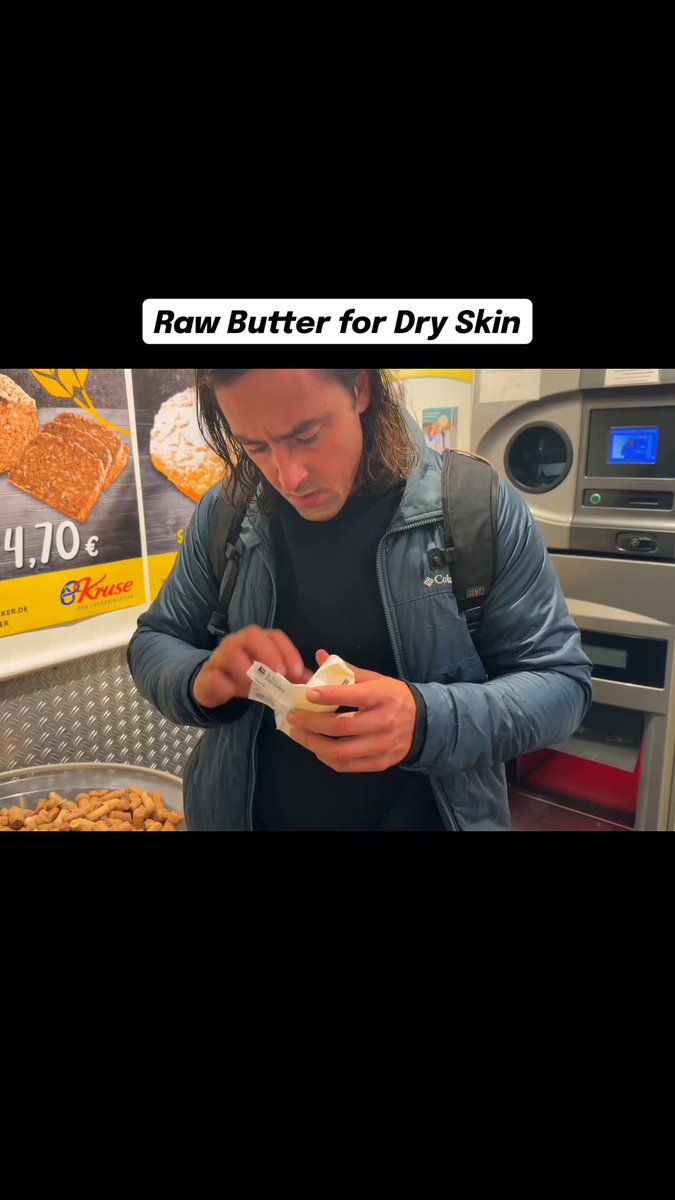
Butter vs. Ghee, what’s the difference? Ghee is produced by melting regular butter… During the melting process, the butter separates into liquid fats and milk solids. Once separated, the milk solids are carefully removed, resulting in ghee that contains less lactose than butter. I would prefer cooking with ghee...

240,790 Aufrufe • vor 2 Jahren •via X (Twitter)

0 Kommentare

Keine Kommentare verfügbar

Kommentare vom Original-Post werden hier angezeigt

Ähnliche Videos

Ghee the detox superfood? I am now convinced that Instagram is just Whatsapp University with videos. It has become a cesspool of health misinformation that Meta needs to really do something about dangerous "health talks" from people with zero education in medicine & healthcare. Like this incospicious actor-turned-model Ekansh Jayaswal who is monetizing and trying his luck on Instagram giving advice a lot of health topics that he has no idea about and in the process, misleading people with dangerous misinformation. He claims that drinking 10ml of ghee (which is clarified butter) everyday in morning on empty stomach has the following benefits: 1. It is a detox 2. Helps in digestion 3. It controls sugars 4. Hydrates skin and 5. (which he claims is most important) - lubricates your joints for easy mobility. The fact is, Ekansh is actually a science-illiterate and also medically ill-informed. He does not understand basic human anatomy and physiology. Here is what all of this really means: 1. There is nothing called a detox. It is a wellness fraud marketing term. The liver, kidneys, skin and lungs are the only detox you'll ever need. 2. Consuming ghee does not help in digestion. Digestion is a complex anatomico-physiological process that occurs autonomously whether you want it or not and ghee does not affect an autonomous normal physiological process. 3. Ghee does not control sugars. In fact animal studies have shown that ghee worsens lipid profile and fasting sugars and that people with duabetes must limit saturated fats such as ghee as it worsens systemic inflammation. and and 4. Ghee does not hydrate skin. There is no clinical evidence that it does. This is literally just a bluff. 5. There is absolutely no way that orally consumed ghee enters the joints and lubricates it. It can happen only if the human digestive system is directly connected to the musculoskeletal system or the oral cavity is directly connected to the musculoskeletal system in the absence of a digestive tract. But we know that is not possible, but Ekansh has not gotten that point it. In fact: A study showed that ghee that is predominantly saturated fats had an increasing effect on non-HDL-cholesterol (bad fat) compared with olive oil, adding further evidence to the existing recommendations to replace dietary fats high in saturated fatty acids with dietary fats high in unsaturated fats to reduce heart disease risk. Ghee is not a superfood, and its consumption must be limited, as it is a rich source of saturated fats, has potential to increase cardiac risk, has no proteins, is all fat-based calories, is not a prebiotic, is a good source of fat soluble vitamins and its daily consumption can increase risk of obesity, and not burn fat or reduce weight. On another note, when preparing rice dishes, adding a little ghee with specific timing and within a stir-fry technique could help reduce post meal glucose spikes:

TheLiverDoc™

445,906 Aufrufe • vor 2 Jahren

“Butter is called butter because of butyrate!” No, it’s not. @drstevengundry is wrong… AGAIN as per usual 1) Butter is not named after butyrate The word butter comes from the Greek boutyron (“cow cheese”). Butter did not get its name because of its butyrate content. 2) Butter contains very little butyrate Butter is only 3–4% butyric acid by weight of its fat, meaning you get very small amounts relative to the calories (mostly saturated fat). It is a terrible butyrate strategy compared to dietary fiber. 3) The butyrate your colon uses comes from FIBER – not butter This is the key point Gundry gets completely wrong. Your gut bacteria turn dietary fiber into short-chain fatty acids (SCFAs): acetate, propionate, butyrate. That’s where the vast majority of your colonic butyrate comes from. Verified human data: • Fiber fermentation by gut bacteria is the primary source of SCFAs, including butyrate. PMID: 38436734 • Butyrate is the preferred fuel of colonocytes and plays major roles in gut barrier function, inflammation, and colon health. PMID: 10736623 • SCFAs produced from fiber have protective roles in metabolic health and colon health. PMID: 31126110 • Higher dietary fiber → greater SCFA (including butyrate) production. PMID: 11427691 • Most U.S. adults do not meet recommended fiber intake. PMID: 36627816 4) Colon cancer isn’t rising because people “don’t eat butter.” There is zero evidence for that claim. If anything, low fiber intake (and therefore low SCFA production) is the real issue—since Americans chronically under-consume fiber. Bottom line: Butter is fine in moderation. But pretending it’s a colon-healing, cancer-preventing “butyrate superfood” is pseudoscience. If you actually want to increase butyrate production? Eat more fiber. Your colon will thank you.

Layne Norton, PhD

33,321 Aufrufe • vor 7 Monaten

Animal Fats Are Superfoods...Butter Is Especially Healthy For Your Gut! Butter Contains A Special Nutrient That Heals IBS & Crohn's Disease. Butyric Acid Is Made In The GI Tract, But Is Deficient In Those With Digestive Issues. Butter Is A Butyric Acid Powerhouse For Healing. Butyric Acid is formed in & found in our colons, and supports the health & healing of cells in the small & large intestine. It’s also the favored source of fuel for the cells lining the interior of the large intestine. Butyric Acid accounts for 83% of the short chain fatty acids in the colon. The butyric acid found in butter & ghee have these gut healing benefits: *⃣ Reduces inflammation of the gastrointestinal tract which is the root cause of Inflammatory Bowel Diseases. *⃣ Inhibits the growth of unwanted bacteria in the gut & interferes with the growth of highly toxic bacteria. *⃣ Encourages the growth of beneficial bacteria like Bifidobacterium. *⃣ Supports healthy bowel function & regulates abnormal bowel movements. *⃣ Helps adjust water & electrolyte concentration in the intestinal tract. *⃣ Supports the health endothelial lining of the intestinal mucosa & normal bowel function in inflammatory bowel conditions. On top of this, butyric acid production in the gut delivers a host of remarkable benefits that extend far beyond digestive health: *⃣ Increases insulin sensitivity for T2D prevention. *⃣ Supports healthy cholesterol & is cardiovascular protective. *⃣ Increases cellular energy production & efficiency of energy utilization. *⃣ Protects the liver & promotes bile release for digestion. *⃣ Promotes satiety signals & lowers hunger levels. *⃣ Increases thermogenesis in the body. 👇Protective Role Of Butyric Acid👇 👇Butyric Acid For Inflammatory Bowel Disease👇 👇Health Benefits Of Ghee👇 Speaker: Paul Saladino, MD

Valerie Anne Smith

37,047 Aufrufe • vor 1 Jahr

Bill Gates funded fake butter made out of fossil fuels has officially hit the market and is being used in products right now The company was able to use the GRAS loophole to start selling. They self-affirmed GRAS (Generally Recognized as Safe) status from the FDA “A new butter is hitting the market that's not made from cow's milk but rather fossil fuels. The biotech company Savor uses a petrochemical process to pull gas from the air and turn it into an animal-free butter. The process, called Fischer-Tropsch synthesis, turns carbon monoxide and hydrogen into hydrocarbons that will then be infused with oxygen to make fatty acids. People have come up with alternative food, but what we're seeing is that it's hard to get more than a small market share, and those foods just don't taste the same. Savor made an advance in the chemistry. It's ultra-different in terms of the environmental footprint, but it's as good as those real animal fats. It's a totally non-agricultural method for producing food. The fats that Savor makes are made by a thermochemical process. They are the only foods in the world so far that are made entirely without photosynthesis. If you aren't already shocked, you'll definitely be surprised to learn that the Germans were attempting to do something very similar in 1939. AP News published an article close to a century ago about how German scientists were developing a way to turn coal into margarine using the exact same Fischer-Tropsch process. While they never followed through with production because extracting the edible oil was inefficient, history may end up repeating itself with Savor Foods.” As of today products featuring the “butter” became available, such as handcrafted vegan chocolates at select patisseries in San Francisco. Broader retail distribution is still scaling, with joint development agreements underway with CPG companies for wider food applications (e.g., replacing cocoa butter or lard) Expansion Plans: Savor is building toward price parity with traditional dairy butter through a new pilot facility in Batavia, Illinois (producing several metric tons). More recipes and menu items are rolling out throughout 2025, with potential for full consumer market entry in 2026 as production ramps up

Wall Street Apes

271,087 Aufrufe • vor 8 Monaten

The Ultimate Peanut Butter Stuffed Brownie If there was ever a reason to skip the store-bought box and go "old school" in the kitchen, this is it. These aren't just brownies; they’re a thick, fudgy, decadent experience that combines the richness of dark chocolate with a creamy, molten peanut butter center. The Taste: Imagine a velvety, dark chocolate base that’s almost truffle-like in texture, punctuated by the salty-sweet crunch of mini peanut butter cups. The middle layer of warm, gooey peanut butter ties it all together for a bite that is pure indulgence. How to Make It: Prepare your favorite fudgy brownie batter (extra dark cocoa powder is key here). Pour half the batter into a lined pan and level it out. Add a generous layer of mini dark chocolate peanut butter cups. Pour a thick layer of melted creamy peanut butter over the cups. Top with the remaining batter and bake until the edges are set but the center still has a slight jiggle. Pro-Tip: For those perfect, clean "bakery-style" slices, let the brownies cool completely in the fridge for at least two hours before cutting. Use a hot knife (dipped in warm water and wiped dry) for every single slice! The Pairing: These are incredibly rich, so they pair perfectly with a cold glass of whole milk or a scoop of classic vanilla bean ice cream. If you’re feeling bold, try them alongside a cup of strong, black coffee—the bitterness of the coffee cuts through the sweetness perfectly.

The_Hemp_Hottie🌿🔥

57,298 Aufrufe • vor 2 Monaten