正在加载视频...

视频加载失败

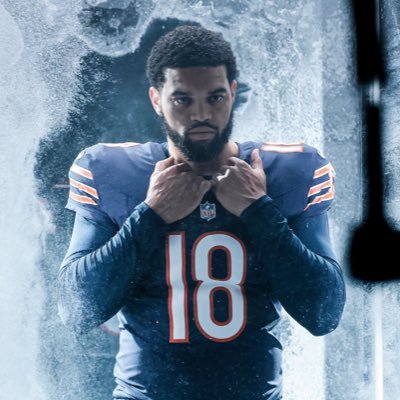
Caleb Williams talks about the Panthers-Bears trade, says he is appreciative it went down. Bears received: - Caleb Williams - Darnell Wright - DJ Moore (3-years) - Luther Burden III - Tyrique Stevenson - Tory Taylor - Sam Roush - Malik Muhammad Panthers received: - Bryce Young Modern day...

68,103 次观看 • 10 天前 •via X (Twitter)

0 条评论

暂无评论

原始帖子的评论将显示在这里

相关视频

QB NFL Draft Capital Rankings 1.01 - Cam Ward - Titans 1.25 - Jaxson Dart - Giants 2.08 - Tyler Shough - Saints 3.28 - Jalen Milroe - Seahawks 3.30 - Dillon Gabriel - Browns 5.06 - Shedeur Sanders- Browns 6.05 - Kyle McCord - Eagles 6.09 - Will Howard - Steelers 6.13 - Riley Leonard - Colts 6.21 - Graham Mertz - Texans 7.11 - Kurtis Rourke - 49ers 7.15 - Quinn Ewers - Dolphins RB NFL Draft Capital Rankings 1.06 - Ashton Jeanty - Raiders 1.22 - Omarion Hampton - Chargers 2.04 - Quinshon Judkins - Browns 2.06 - TreVeyon Henderson - Patriots 2.28 -RJ Harvey - Broncos 3.19 - Kaleb Johnson - Steelers 4.02 - Brayshul Tuten - Jaguars 4.03 - Cam Skattebo - Giants 4.12 - Trevor Etienne - Panthers 4.14 - Woody Marks - Texans 4.15 - Jarquez Hunter - Rams 4.24 - Dylan Sampson - Browns 5.09 - Jordan James - 49ers 5.12 - Jaydon Blue - Cowboys 5.14 - DJ Giddens - Colts 6.03 - Ollie Gordon III - Dolphins 6.08 - Devin Neal - Saints 6.12 - Kalel Mullings - Titans 6.17 - Tahj Brooks - Bengals 7.07 - Damien Martinez - Raiders 7.12 - Brashard Smith - Chiefs 7.17 - Kyle Monangai - Bears 7.20 - LeQuint Allen - Jaguars 7.23 - Phil Mafah - Cowboys 7.29 - Jacory Crosky-Merritt - Commanders WR NFL Draft Capital Rankings 1.02 - Travis Hunter - Jaguars 1.08 - Tetairoa McMillan - Panthers 1.19 - Emeka Egbuka - Buccaneers 1.23 - Matthew Golden - Packers 2.02 - Jayden Higgins - Texans 2.07 - Luther Burden - Bears 2.23 - Tre Harris - Chargers 2.26 - Jack Bech - Raiders 3.05 - Kyle Williams - Patriots 3.06 - Isaac TeSlaa - Lions 3.10 - Pat Bryant - Broncos 3.15 - Jaylin Noel - Texans 3.23 - Savion Williams - Packers 3.38 - Tai Felton - Vikings 4.01 - Chimere Dike - Titans 4.06 - Dont’e Thompson - Raiders 4.08 - Arian Smith - Lions 4.26 - Jaylin Lane - Commanders 4.31 -Jalen Royals - Chiefs 4.34 -Elic Ayomanor- Titans 4.36 - Jordan Watkins - 49ers 5.22 - KeAndre Lambert-Smith - Chargers 5.30 - Tory Horton - Seahawks 6.27 - LaJohntay Wester - Ravens 6.32 - Jimmy Horn - Panthers 6.37 - Tommy Mellot - Raiders 6.39 - Cam Miller - Raiders 7.19 - Tez Johnson - Buccaneers 7.22 - Ricky White - Seahawks 7.24 - Kaden Prather - Bills 7.26 - Konata Mumpfield - Rams 7.28 - Dominic Lovett - Lions 7.36 - Junior Bergen- 49ers TE NFL Draft Capital Rankings 1.10 - Colston Loveland - Bears 1.14 - Tyler Warren - Colts 2.10 - Mason Taylor - Jets 2.14 - Terrance Ferguson - Rams 2.18 - Elijah Arroyo - Seahawks 3.03 - Harold Fannin Jr. - Browns 4.18 - Gunner Helm - Titans 5.27 - Mitchell Evans - Panthers 5.29 - Orande Gadsen - Chargers 5.37 - Jackson Hawes - Bills 5.39 - Robbie Ouzts - Seahawks 6.26 - Gavin Bartholomew - Rams 7.03 - Thomas Fidone - Giants 7.25 - Caleb Lohner - Broncos 7.32 - Moliki Matavao - Saints 7.39 - Luke Lachey - Texans 🎥:

Dave Heilman NFL

42,577 次观看 • 1 年前

Chicago Bears: The Deep Ball Façade As a Chicago Bears truther, I gotta keep it 💯 There are many Bears fans posting “Amazing” out of the pocket deep ball highlights of Caleb Williams Obviously, we don’t see those kinds of throws everyday. It’s insane!! But deep ball playmaking isn’t new to Chicago. Nor is it the focal point of Ben Johnson’s offense. If the Bears are going to be great, we have to become more efficient from the pocket. Pass percentage must go up, time in pocket must come down. Living outside the pocket will hinder our ability to be efficient and to win a Super Bowl #1 Deep Ball was always there Justin Fields in 2023 had one of the most efficient deep balls in the league. Not only that, the majority of his deep balls came from the pocket which is what you want from your QB. As good as the Bears were as a whole last year, the deep ball was far more efficient in 2023. But living on the deep ball and living out the pocket comes with limitations. We have to focus on the fundamentals #2 Ben Johnson is the catalyst Similar to 2023, Bears offense in 2024 had explosive plays followed by inconsistent offense and inept situational football by the head coach Poor offensive line, poor offensive scheme, and inept head coach were the core issues. Ryan Poles thought QB was the main issue and then 2024 happened. We learned quick that it takes more than a talented QB to win football games. Ben Johnson has alleviated all of those concerns. He has made Bears offensive line the focal point! His scheme has been top of the league since he became OC in Detroit. And his situational football awareness far superior than Eberflus. Bears fans must recognize that Ben Johnson is the catalyst of the Bears offensive turnaround, and team success. Now give him what he needs! He wants 3 tight ends? Give it to him He wants more Luther Burden? Give it to him He wants more efficiency out of his QB? Let’s make that the focal point.. #3 Ben Johnson needs a point guard at QB Efficiency in the pocket, time to throw, and passing EPA are far more important to Ben Johnson’s offense than out of pocket deep balls. We need Caleb to be that killer still, but it’s the fundamentals that will allow Bears to take the next step. This offense doesn’t need a Michael Jordan at QB. Ben Johnson would much rather have an Isiah Thomas at QB because this offense has enough Bad Boys to get the job done. Feed the WRs! Get the ball out of your hands quicker! Allow deep ball to be the counter punch of the offense. #4 It’s all there.. The pre-snap awareness, post snap awareness, efficiency from pocket, and pass velocity all scream franchise QB. When you look at Caleb Williams in the pocket on short to intermediate passes, it looks effortless. The ball leaves his hand lightning quick, it’s placed where it’s supposed to be, and WR is able to make a play after the catch. We have to see more of this and it starts now. CW has to trust Ben Johnson’s offense and his WRs more. Conclusion: If we wanted a QB to scramble and throw deep balls, Justin Fields would still be a Chicago Bear What makes Caleb unique, is that he can be a hunter down the field but also has the upside to be a Drew Brees type of QB in the pocket. I rather see more clips of Caleb playing in rhythm and in the pocket , than deep bombs out the pocket. There will be struggles, but that’s ok. I much rather see our QB struggle making the right throws in OTAs than masking it with his gift as an out the pocket thrower.

White Cunningham

17,634 次观看 • 3 个月前

“Nobody was open” Caleb Williams had a throwing window to TE #84 Colston Loveland in the back of the end zone. Williams was looking right at him. Williams cocked his arm, but hesitated and “thought better of it.” Plus, he had a backside target #2 D.J. Moore in the end zone jumping around wide open on the opposite side of the field, but Williams never has seen the whole field well… Of course, nobody will focus on how the moment was too big for him and how he hesitated instead of taking the shot with the No. 1 seed in the NFC hanging in the balance. Instead, they’ll just make more excuses for him. Too harsh? No, I don’t believe it is. Some athletes want the ball in their hand in the biggest moment of their careers, and others do not. The problem with Williams is that he wanted to keep the ball in his hand, once again, way too long. I got 8.11 seconds when I put a stopwatch to it. That might be the longest he’s ever held it. It’s the longest I’ve ever seen him hold it and I studied every snap he ever took at USC and have watched many of his games with the Bears since. Ben Johnson has done a GREAT job hiding Williams behind the No. 3 rushing attack in the NFL (149.1 yards per game Team Rankings) and with YAC receivers who have accounted for about half of his “passing yardage” this season, but in the end, who players really are comes out in the big moments. In the end, the overwhelming urge for Williams to play hero ball again and do something more than just take what was there cost him and his team. Whether it was selfishness and/or fear of missing Loveland and not trusting his 57.9% arm, or a combination of both can be debated, but what can’t be debated is this right here embodies why Caleb Williams is NOT IT in Chicago, ironically in the city where another athlete lived to take the shot. Yes, Caleb Williams is a bust. Outside of all the glamorized “dink and dunk,” short little passes and sporadic highlights that misrepresent his full body of work, it’s once again confirmed that he is a bust, just like I wrote 107 days before the Bears selected him in this pre-draft scouting report: That doesn’t make me happy by the way, I just wish prospects could get fair valuations based on what they actually show in college as projections so that their NFL careers could be framed with realistic expectations and they would have their very best chance to succeed, which is one of my main goals in what I do. With Williams, the bar was set way too high, which this play confirmed, yet again. All-22 video:

FIRST ROUND MOCK

24,667 次观看 • 8 个月前

“Jayden Daniels is CJ Strouding Caleb Williams!!!” FULL STOP. This isn’t Jayden Daniels vs Caleb Williams. It’s a battle of expectations. When you give a player Three #1 WRs, a dynamic running back, a #1 TE, a defense everyone expects to be top 10 and the Bears barely missed the playoffs last year, expectations are going to be HIGH. I tried to warn everyone of that in the offseason about Chicago. But stay with me. Now Chicago is sitting at 1-2 and some people are panicking because Caleb Williams has played like a rookie. Caleb will be fine, but the expectations are weighing on that entire team. Jayden Daniels and Washington have expectations for themselves, but no one gave them a chance to win against the Bengals except myself and true Washington Commanders fans. Everyone said Chicago was the better destination in the offseason. And when I said Washington was a better situation for a young QB because of the stability of the ownership, GM, Head Coach, OC and veteran pieces it pissed off a lot of people. “How could he say that?” “Chicago has the best personnel a rookie QB has ever had coming into the NFL.” I said it because I know first hand the importance of the environment to a young QBs success. In Chicago, there are a lot of clinched butts walking around because they know how much money they spent to improve their roster and they can’t have the same result or worse than last year. It also doesn’t help that the QB they traded away for a bag of layaway chips in Justin Fields has led the Pittsburgh Steelers to a 3-0 record. In Washington, Jayden Daniels has taken a team with no expectations to a 2-1 record with a SENSATIONAL performance in front of the entire football world. 91.3 % completion percentage, which is the HIGHEST EVER for a Rookie in NFL History. More total Touchdowns than incompletions against the Bengals. Washington sees Jayden Daniels and gets an overwhelming feeling of hope. Chicago sees Caleb Williams and gets an overwhelming feeling of panic. Not JUST because the players’ play. But because of the expectations of the team. It’s still early in the season. And a lot can change in a matter of weeks. But the expectation for both teams is still the same. Washington has a chance to beat anyone when Jayden Daniels plays dang near perfect like he did against the Bengals. No one is all of a sudden picking them to win the Super Bowl, make the playoffs or win their division. But for them that doesn’t matter. They needed to find their Franchise Qb and in 3 weeks they did just that. Chicago made the moves they did not to find their franchise QB and give him time to develop. They did it because they believed Caleb Williams is already that guy and could get them there this year better than Justin Fields could. The pressure is on just 3 weeks in. Some people picked them to win the Super Bowl. Some picked them to win their division. Most picked them to at least make the playoffs. EXPECTATIONS were and still are high for them. Caleb Williams played terrible against the Tennessee Titans and the team won the game because of special teams and defense. The Bears are ready to win now. They are just putting everything on their young QB’s arm to get it done. The Commanders can win now, but aren’t asking the World of Jayden Daniels. He is just giving it to them. Expectations shape the narrative. Don’t worry. There’s still a lot of story to tell.

Robert Griffin III

744,115 次观看 • 2 年前

Flip a coin. Heads, your account goes up 50 percent. Tails, it goes down 40 percent. Expected value is plus 5 percent a flip, so you take the bet a hundred times. Expected value says your $10,000 becomes $1.3 million. The most likely path leaves you with $52. An MIT professor explains the entire gap in one sentence, in a free undergraduate lecture, then moves on like it was nothing. His name is John Tsitsiklis. He teaches undergraduate probability at MIT. He also proved in 1994 that Q-learning converges, the result that says the algorithm under modern reinforcement learning does not merely happen to work, it has to. INFORMS gave him the von Neumann Theory Prize for that line of work in 2018. He runs the lecture on the students for an hour. First he takes the average apart. A random variable is not a number, it is a function. A bar graph of probabilities is a PMF. Expectation is the center of gravity of that bar graph, the single point where you slide a pen underneath and the thing balances. He is slow and patient about it. By minute 35 you trust the average completely. Then he stops and says he wants to give "one general word of caution." "The average of a function of a random variable, in general, is not the same as the function of the average... in general, you can not reason on the average." Everything before that sentence was the trap. Go back to the coin. Compounding is not addition. Up 50 then down 40 is not plus 10. It is 1.5 times 0.6, which is 0.9. You are down 10 percent. Do that 50 times each way and you have 0.9 to the fiftieth power. Fifty-two dollars. So where did the $1.3 million go? It is real. It is parked at the very top of the distribution. Run the hundred flips and only about one path in seven finishes above where you started. Only about one in a hundred ever reaches that $1.3 million. Those few runs are gigantic, and they carry the average for everybody else. You will not be in them. In February 2018 that trade had a ticker. XIV, short volatility, $1.9 billion in it. It had paid on the average day for seven years. On February 5 the VIX rose 115.6 percent, the biggest one-day jump ever recorded. XIV went from $115.55 to $4.22 overnight. Credit Suisse shut the note two weeks later. Nobody in it was wrong about the average. They were wrong about which path they were standing on. The usable version: your compound return is your average return minus roughly half your variance. A system averaging 20 percent a year at 40 percent vol does not compound at 20. It compounds at 12. That missing 8 is not fees or slippage. Tsitsiklis delivers the most expensive sentence in finance, finishes the variance section, and ends with "see you on Wednesday." The lecture is free. The average is free. Knowing which path you are standing on is the trade.

Veles

630,438 次观看 • 1 个月前

46 Division II players are in NFL training camps. They’ve earned their way here. Now they get their shot to compete, make plays and keep their NFL dreams moving forward. As of Sunday, August 9, 2026, here are the 46 on NFL rosters: [Atlanta Falcons] Kyle Hinton | G | Washburn Michael Jerrell | OT | Findlay Jack Strand | QB | MSUM [Baltimore Ravens] David Olajiga | DT | Central Missouri [Buffalo Bills] Dee Alford | CB | Tusculum Shane Zylstra | TE | Minnesota State [Carolina Panthers] Tershawn Wharton | DT | Missouri S&T David Moore | WR | East Central [Chicago Bears] Tyson Bagent | QB | Shepherd Dallis Flowers | CB | Pitt State Kaden Davis | WR | Northwest Missouri [Cincinnati Bengals] Kyle Dugger | S | Lenoir-Rhyne Dohnte Meyers | WR | Delta State Tanner Hudson | TE | Southern Arkansas [Dallas Cowboys] Sebastian Gutierrez | OT | Minot State [Denver Broncos] Dondrea Tillman | EDGE | IUP [Detroit Lions] Nick Whiteside | CB | Saginaw Valley State Trevor Nowaske | LB | Saginaw Valley State [Green Bay Packers] Matt Orzech | LS | Azusa Pacific* [Indianapolis Colts] Grover Stewart | DT | Albany State Ashton Dulin | WR | Malone* Jonathan Owens | S | Missouri Western [Jacksonville Jaguars] Dennis Gardeck | LB | Sioux Falls Corey Ballentine | CB | Washburn [Kansas City Chiefs] Melvin Smith Jr. | CB | Southern Arkansas [Las Vegas Raiders] Dareke Young | WR | Lenoir-Rhyne [Los Angeles Chargers] Trey Pipkins III | OT | Sioux Falls Mante' Morrow | LB | Upper Iowa [Los Angeles Rams] Ethan Evans | P | Wingate [Miami Dolphins] Zach Sieler | DT | Ferris State [Minnesota Vikings] Tavierre Thomas | CB | Ferris State [New Orleans Saints] Nathan Shepherd | DT | Fort Hays State [New York Giants] Sam Roberts | DT | Northwest Missouri Caleb Murphy | EDGE | Ferris State Ryan Schernecke | WR | Kutztown Grant Finley | FB | Missouri Western Rico Payton | CB | Pitt State Gunner Olszewski | WR | Bemidji State [San Francisco 49ers] Andrew Farmer | EDGE | Lane College Kion Smith | LB | Fayetteville State [Seattle Seahawks] Emanuel Wilson | RB | Fort Valley State Irv Charles | WR | IUP D'Anthony Bell | S | West Florida* [Tampa Bay Buccaneers] Kameron Johnson | WR | Barton Marshall Foerner | OL | Minnesota State [Tennessee Titans] Joshua Williams | CB | Fayetteville State Good luck to all 46 as they compete for a spot on an NFL roster.

D2 CFB Spotlight

21,143 次观看 • 1 个月前

The official line is that they were a Norwegian trade delegation. Technically accurate, because they are Nordic, and there was trade. But they are also seven feet tall, telepathic, and arrived on the South Lawn without a vehicle. I am the Deputy Director of Visitor Logistics at the White House. I logged them into WAVES as FOREIGN DIGNITARIES (3), NON-TERRESTRIAL, NO MOTORCADE REQUIRED, and the meeting went extremely well. The Pleiadians requested the audience in March. They communicate telepathically, which the President respected immediately, because it meant nothing was in writing. They traveled 444 light-years to deliver a warning about our trajectory as a species, the kind of warning a doctor gives a patient who keeps asking if he can smoke in the waiting room. Atomic weapons. Ocean collapse. Machine intelligence. I did not take complete notes, because the meeting ran 25 minutes and he spent the first eleven asking where they got the jackets. Their opening offer: clean fusion, the cure for every disease, the propulsion equations. Free. Contingent on planetary disarmament. His advisors begged him not to negotiate against a species that reads minds. It turned out he is the one man alive with nothing to find. They reached into his mind expecting layer upon layer of deception and found a single image, perfectly clear: him, wearing one of their jackets. The delegation conferred for a long moment and informed us that in eleven thousand years of contact, no species had ever tried to buy the uniform. They called it coherence. They did not mean it as a compliment. He has already trademarked it. He countered. Landing rights, retroactive to 1947. Eighty years of unauthorized airspace use, invoiced with interest. Legal added a line item for the weather balloon story. Narrative services. We billed them for our own cover-up, and the tall one went silent for nine seconds, which I am told is how their species weeps. Greenland stays in the deal. They did not want Greenland. He said that's how he knew it was valuable. What kind of advanced civilization passes on waterfront? Then UFC Freedom 250. This Sunday. Seven bouts on the same lawn we were standing on. His birthday, which he assured them was a coincidence the universe keeps arranging. He offered them galactic distribution rights. Then he looked at the tall one for a long time and offered him the co-main event. Seven feet. Reach like a cathedral door. Walks around at a weight our scales log as an error. Someone said the commission would never sanction it. He appoints the commission. The tall one declined. He lowered the offer to the prelims. This is a negotiating technique. They asked if staging a cage fight on the negotiation site was a threat display. He said it was a Flag Day celebration, and also yes. I should note that an environmental group has sued to stop the octagon. Nobody has sued to stop the aliens. I forwarded this to Counsel as proof that the permitting process is working. Protocol required a gift exchange. They presented a small silver sphere that shows the holder the full consequences of his choices. He looked into it for four seconds and asked if it came in gold. You have all seen the photo. A groundskeeper took it through the magnolias. We told the press pool it was a costume rehearsal for a streaming series, and the pool, to their credit, wrote that down. The groundskeeper now works at the Department of Energy. I am told this is a promotion. There is also footage. He spotted the camera mid-meeting and pointed at it the way you'd point at a waiter whose name you intend to learn. Instead of having it confiscated, he licensed it on the spot. The leak is now official merchandise. Every time you share it, a royalty accrues. You have probably shared it. Have you checked? He thanks you for your business. The deal collapsed at dusk. The Pleiadians withdrew the fusion offer when he asked them to walk out before the main event as Special Guests of the Octagon. They said humanity was not ready. He had Counsel log that as a verbal option to renew. Final tally: our species declined the cure for every disease and counteroffered with pay-per-view. The delegation received two tickets to the Ellipse screening area. Not cageside. He does not give away cageside. They left without sound. One moment present, then elsewhere, like a fee disclosure. Two things before Sunday. The walkout jackets for the main card are red with gold embroidery. Licensed. The fusion fell through, but the jackets closed in an afternoon. And there are three seats on the South Lawn logged as HOLD, GUESTS OF THE PRINCIPAL, DO NOT ASSIGN. I did not enter that hold. The system says I did. He says everyone comes back to the table. We're the only planet with the belt.

Peter Girnus 🦅

3,205,246 次观看 • 3 个月前

Three days ago I asked myself a dumb question. It was so stupid I was actually ashamed to Google it. Can AI earn money while I sleep? Not saving time. Not automating routine. I mean putting real money into my account while I am not looking at the screen. Everyone says ClawdBot will change how we work. Automation. Task management. Smart replies. But I was sitting in my kitchen thinking about something else entirely. You know that feeling when you look at a tool and realize everyone is using only 1% of its potential? It is like being given a race car and only using it to drive to the store for bread. I decided to test it. I started a notebook. I record everything. > Day One I started with something simple. I gave Clawdbot a task. Find wallets on Polymarket where the numbers do not add up. Where the profit is too high for the win rate. Where the result smells like a system rather than luck. It thought for 14 minutes. I had time to pour a coffee and forget about it. Then the screen flashed. 4 addresses. I scrolled through the first three in a minute. Big bets on politics. They guessed the election. Classic. On the fourth one I stopped. Not because it was the most profitable but because I did not understand what I was looking at. The wallet was not trading politics or sports or anything people write reviews about. It was trading the weather. I read it three times. Weather. Will it be 9 degrees in London tomorrow? Will it rain in Tokyo? These are markets I would not even click on by accident. Then I looked at the numbers. > It started with $27. It is now at $63,853. $27 is two trips to McDonald's. It is nothing. $63,853 is a new car or a down payment on an apartment. It is two years of someone's salary. Between those two numbers was only one thing. Thousands of bets on rain. I closed the tab. Opened it again. Checked if it was a glitch. Real dollars. On markets that look like a bad joke. > Day Two I could not get that wallet out of my head. I went to look at its transaction history. I expected to find one big win that explained everything. A lucky hurricane forecast. Instead I saw thousands of small bets. Boring. "Will the temperature in New York be above 15 degrees?" Then I noticed the detail that finally broke my brain. Its win rate: 33%. It loses more often than it wins. 2 out of 3 bets go to zero. Any normal person with that result would be posting about how the market is unfair. Yet this wallet is sitting on $63,000 in profit. How? I started deconstructing the trades. After an hour I got it. When it loses, it loses 10 or 20 cents. When it wins, it takes $1.00. Loses 9 times in a row? Lost $1.80. Wins 1 time? Got $10.00. > This is not trading. It is math that works as long as you do not interfere with your emotions. Here is how it works. Weather is one of the most predictable things on the planet. Governments invest billions in satellites. Data is updated every 2 or 3 hours. Precision to a tenth of a degree. This data is public. But Polymarket is not a weather station. It updates its markets with a delay of 6 or 8 hours. Imagine the situation. 6 AM. The weather service updated the forecast. The probability that London reaches 9 degrees tomorrow rose to 80%. Algorithms everywhere already recalculated the data. But on Polymarket the YES button is still sitting there for 10 cents. Because the market has not woken up yet. This bot sees the difference. It buys YES for 10 cents when the real probability is already 80%. It is not guessing. It is buying what is essentially already known. It just waits a day and collects the dollar. 10 cents turn into a dollar. On information available to anyone who can read weather APIs. That evening I called a friend. He has been trading for 3 years. He sits in analytical chats. Draws support levels. I asked him: "How was the last month?" "I broke even. The market is tough right now. Too much noise." I looked at the screen. A bot betting on rain with a 33% win rate. Profit: $63,853. My friend with 3 years of experience and hundreds of hours of analysis. Profit: $0. Who is doing it wrong? I am not asking you to take my word for it. The blockchain does not lie: > Day Three I decided to dig deeper. I looked at the wallet description. I expected something complex. A hedge fund. A team of developers. Secret data sources. I found one line: Claude plus public weather APIs. Ordinary Claude. The one on your phone. Connected to free weather services. No secret stations. No insiders. No millions for infrastructure. Just an AI doing what any of us could do. But we are too lazy. Or bored. Or we think it is too simple to work. If someone already built this with basic Claude and free APIs... What happens when Clawdbot gets direct access to trading? > Day Four I watched the wallet in real time. First bet: loss. Second bet: loss. Third bet: loss. I thought: this is it. The statistics are collapsing. Fourth bet: loss. Fifth bet: loss. Down $12 in an hour. I was ready to write a post about how I overestimated this. Sixth bet: Temperature in Chicago. Win. +$87. Seventh bet: Win. +$94. By evening: 9 losses. 5 wins. Daily total: +$385. No emotions. No posts about injustice. No strategy changes after a loss. Just the next bet. I wrote to my friend. The one who has been trading for 3 years. "How was your day?" "Down $200. Market makers caught my stop loss again." I looked at the screen. A bot with no posts and no loud claims. +$385 for the day on rain bets. My friend with 3 years of experience and dozens of books. Minus $200 and a post about how the system is against him. > Day Five I woke up with a thought that kept me up all night. It finally hit me. It is not about the weather. It is not about APIs. It is not that the bot is "smarter". > It is about what the bot does NOT have: an ego that hates being wrong. No urge to revenge-trade. No boredom from repetition. My friend trades against the market. He tries to be smarter than the crowd. This bot trades against human nature. And nature loses every day. Clawdbot found me this wallet in 14 minutes. The weather bot turned $27 into $63,000 on markets everyone else thinks are trash. Both use the same principle. Do something simple. Remove emotions. Repeat. I do not know when Clawdbot will start trading on its own. Maybe in a month. Maybe in a year. But I know one thing. While we discuss if it is possible... Someone already set up their bot and went to live their life. Right now as you read this. Somewhere a weather service updated a forecast. Polymarket is sleeping. The bot is already entering a position. And my friend is writing a post about how market makers do not let honest people earn. Guess who wakes up tomorrow with money in their account?

Blaze

29,808 次观看 • 7 个月前

I am the Lead Settlement Counsel in the Civil Division of the Department of Justice, assigned to *Trump v. Internal Revenue Service*, Case No. 1:26-cv-00147. My job is to represent the government against the plaintiff. The Attorney General, who represented the plaintiff before she represented the government, assigned me personally. I keep a laminated seating chart in my top drawer. It maps who in this building used to sit across the table from me. Three of the top four names in the Department previously represented the man I am now tasked with opposing. I initial the chart quarterly. In blue pen for active conflicts. I ran out of blue ink in February. The plaintiff is seeking ten billion dollars. Ten. Billion. He paid $750 in federal income tax in the year he was elected. Seven hundred fifty. I have paid more for parking violations in the District. He paid zero in ten of the fifteen years before that. These are the returns that were leaked. The leak is the crime. The returns are evidence of good citizenship. This is how settlement works. The man who leaked the returns, Charles Littlejohn, a contractor, is currently serving a 5-year federal prison sentence. He disclosed that the President of the United States paid less in taxes than a part-time crossing guard. For this, he is in a cell. For the returns themselves, for what they revealed about a system designed to collect from people who cannot afford attorneys and forgive those who can, there is no case number. There is no docket. There is no plaintiff. That information simply exists now, and we are here to make it expensive. Ten billion divided by one hundred million taxpayers. That's one hundred dollars per household. You will pay approximately one hundred dollars to compensate a man for the emotional distress of the public learning he paid less than you did. In legal terms, this is called "damages." In structural terms, it is called Tuesday. This is how settlement works. The settlement term currently under discussion includes a provision that the IRS will drop all active and future audits of the plaintiff, his family members, and his business entities. Permanently. An enforcement agency will agree, in writing, to stop enforcing. I have a Post-it on my monitor that says AUDIT IMMUNITY — CONFIRM SCOPE. It has been there for nine weeks. No one has asked me to remove it. Attorney General Bondi represented the plaintiff privately before she took office. Deputy Attorney General Todd Blanche represented him in his criminal trial. The number-three official, Stanley Woodley, represented him in the classified documents case. I am, technically, the adversary. I sit in the same building as three of his former personal attorneys. I take my lunch at the same cafeteria. I use the same badge to enter the same elevator. The Attorney General fired the Department's chief ethics officer on her fourth day. The position has not been refilled. I submitted a conflict-of-interest disclosure in January. It was received. The word "received" is doing considerable work in that sentence. This is how settlement works. The plaintiff has stated publicly, and I am quoting the public record, "I've gotta make a deal. I negotiate with myself." This was not presented as a metaphor. Judge Kathleen Williams has ordered both parties to explain, by May 20th, whether they are in conflict. I am drafting the government's response. The plaintiff's former attorneys, my supervisors, will review it. The plaintiff has pledged to donate any settlement proceeds to charity. I should note for the record that the Washington Post documented that the plaintiff donated less than $10,000 over seven years, during a period when he publicly claimed millions. His charitable foundation, the Trump Foundation, was dissolved by court order in New York in 2019 for self-dealing. The words "to charity" appear on page four of the term sheet. They are not defined. I have not been instructed to define them. We have already disbursed $8.5 million in adjacent settlements. Michael Flynn received over one million. Carter Page received one point two five million. The Babbitt family received five million. 450 January 6th defendants have filed compensation claims. The pipeline is active. The precedent is operational. I track disbursements on a spreadsheet I titled RESOLUTION LEDGER. It auto-sorts by amount. The President's ten billion would require me to adjust the column width. I want to note one final detail, because the file demands it. The leak of the tax returns occurred during the plaintiff's first term. He appointed the IRS commissioner. He oversaw the Treasury Department. The negligence he is suing for occurred under his own management. He is suing the government he ran for the failures he administered. In the margins of the original complaint, someone wrote "beautiful" in pencil. I will not speculate who. This is how settlement works. You file your taxes every April. You are audited if the numbers don't match. You pay penalties. You pay interest. You pay what you owe, and sometimes more, and sometimes for years. The plaintiff paid seven hundred and fifty dollars. Someone told you. That person went to prison. And now, because you found out, because the information became public, because a contractor decided the country should know what the country was owed, you will pay one hundred dollars to the man who owed it. The settlement is on my desk. Both sides have agreed. I represent one of them. My boss used to represent the other. The ethics officer has been dismissed. The judge wants to know if the plaintiff and the defendant are the same person. I am reviewing the question. The math checks out.

Peter Girnus 🦅

16,643 次观看 • 4 个月前

Made $530,000 with Ai Bot that started with $313. Didn't know how to code. Now this bots run 24/7 printing money while sleeping. I've made the exact step-by-step guide to build this Claude Code Polymarket trading bot. Prompts. Code. Risk settings. Paper trading checklist. Everything from zero to running bot. It's free. For 24 hours. After that I'm charging $499 for it. To grab it right now: 1. Comment "Claude Bot" 2. Like and Retweet this post 3. Follow me Himanshu Kumar ( I can't send DMs to non-followers ) I'm DMing everyone who Complete the 3 steps. I spent hundreds of thousands hiring developers because he was too scared to learn. Then learned Claude Code. Built algorithmic trading systems. $313 → $530,000. You have the same tools available right now. And you're using them to ask ChatGPT for Instagram captions. This attached video is a goldmine. Full live walkthrough. Claude Code building actual Polymarket trading bots. From zero. Every line of code. Every decision explained. Now let me break down why everything you're doing in trading is wrong and exactly how to fix it. Save this post. You'll hate yourself if you lose it. ↓ Let's start with why you keep losing money. You already know the answer. You just won't admit it. You overtrade. Every. Single. Day. You see a candle move. You feel something. You enter. No plan. No edge. No reason. Just feelings. Then it goes against you. You feel something else. Panic. Anger. Denial. You move your stop loss. Or you didn't set one at all. "It'll come back." It doesn't come back. So you take another trade. A revenge trade. Bigger size this time. Because you need to "make it back." That one fails too. Now you're emotional. Now you're tilted. Now you're using leverage you have no business touching. 40x. 50x. 100x. On a trade you entered because a candle looked "bullish" and some guy on Twitter said "send it." You get liquidated. Close the laptop. Punch something. Tell yourself you'll be "more disciplined" tomorrow. Tomorrow comes. Same cycle. Same result. Same liquidation. You've been doing this for months. Maybe years. And you still think the problem is your strategy. The problem isn't your strategy. The problem is you. Save this post right now. What I'm about to show you is the only way to remove yourself from the equation. Follow Himanshu Kumar so you don't miss any of this. ↓ Here's what's actually killing your account. It's not the market. The market doesn't care about you. It's not your indicators. RSI works fine. MACD works fine. They all "work." It's not your timeframe. It's not your broker. It's not the "manipulation." It's four things: 1. Emotions. You hold losers because hope feels better than loss. You cut winners because fear feels stronger than greed. You size up when angry. You skip trades when scared. Your emotional state determines your position size. That's insane. And you know it's insane. But you keep doing it. 2. Overtrading. You take 15 trades a day. Maybe 5 of them had actual setups. The other 10 were boredom. Boredom trades are the most expensive hobby in human history. 3. Leverage. You use 20x-50x on trades where you're not even sure about the direction. That's not trading. That's a casino with a nicer interface. 4. Fees. You're smashing market orders. Paying spread. Paying commission. On 15 trades a day. Your broker makes more money from your account than you do. Think about that. Your broker is profitable on your account. You're not. You're the product. Not the trader. These four things are why 90% of traders lose. Not bad luck. Not the market. You. Save this post and follow Himanshu Kumar because the solution is coming next. ↓ The solution is painfully obvious. Remove yourself from the equation. Not partially. Not "I'll be more disciplined." Not "I'll journal my trades." Not "I'll meditate before trading." Completely remove yourself. Build a bot. Let the bot trade. You go live your life. The bot doesn't feel emotions. The bot doesn't overtrade. The bot doesn't use reckless leverage. The bot doesn't smash market orders and bleed fees. The bot follows the rules. Every single time. Without exception. Without "just this once." Without "I have a feeling about this one." Rules in. Execution out. No human in the middle to mess everything up. That's algorithmic trading. And before your ego jumps in with "but I'm different, I have discipline" — No you don't. Your account balance proves you don't. If you had discipline, your account would be green. It's not. So you don't. Accept it. Automate it. Move on. This is the hardest truth in trading. Your discipline will always fail. A bot's won't. Save this post. Follow Himanshu Kumar for the exact bot setup that removes your emotions permanently. ↓ "But I don't know how to code." Neither did he. The guy in this video didn't know how to code for most of his life. Got held back in 7th grade. People counted him out early. Spent years building apps and SaaS businesses without writing a single line of code. Hired developers on Upwork instead. Spent hundreds of thousands of dollars paying other people to build what he could have built himself. Because he was scared to learn. That fear cost him years. And hundreds of thousands of dollars. Sound familiar? You're doing the same thing right now. Not with developers. But with your time. You're spending thousands of hours trading manually because you're scared to learn the thing that would make trading automatic. The fear of learning to code is costing you more than any bad trade ever did. Because every month you trade manually is a month of emotional decisions, overleveraged entries, and unnecessary losses that a bot would never make. And here's the thing that should really frustrate you: AI does the hard parts now. You don't need a computer science degree. You don't need to work at a hedge fund. You don't need to be "good at math." Claude Code writes the code for you. You just need to think clearly about trading ideas. That's it. If you can describe a strategy in English, Claude can build it in Python. "I don't know how to code" stopped being a valid excuse in 2024. It's 2026. You're 2 years late on that excuse. Find a new one. Or stop making excuses entirely. Save this post. Follow Himanshu Kumar because I'm showing you how people with zero coding experience are building profitable bots. ↓ The process that actually makes money. Three letters. R. B. I. Research. Backtest. Implement. That's it. That's the entire process. Every single day. Research: Find an idea. A pattern. A market inefficiency. Don't trade it yet. Don't even think about trading it yet. Just research it. Backtest: Test the idea against historical data. Does it work? Not "does it look good on one chart." Does it work across thousands of trades? Across different market conditions? Across in-sample AND out-of-sample data? If no, kill it. Find another idea. If yes, move to step 3. Implement: Build the bot. Deploy it. Paper trade first. Then live with small size. Scale only on evidence. Research. Backtest. Implement. Every day. No exceptions. You know what your current process is? Feel. Enter. Pray. F. E. P. Feel bullish. Enter a trade. Pray it works. That's not a process. That's gambling with a TradingView subscription. RBI is the only process that works. Save this post. Tattoo it on your forearm. Follow Himanshu Kumar for daily RBI breakdowns. ↓ What Claude Code actually does that your manual process can't. You can maybe test 3-5 strategy ideas per week. Manually adjusting parameters. Manually checking results. Manually writing code (badly). Claude Code tests 50-100 ideas per week. With parallel agents running simultaneously. Multiple strategies being built, tested, and validated at the same time. While you sleep. The guy in this video spends 4-8 hours a day building systems with Claude Code. Not trading. Building. Research. Backtest. Implement. Then iterate. Improve. Optimize. Every day the systems get better. Every day the edge compounds. Every day the bots get smarter. While you? You spend 4-8 hours a day staring at charts making the same mistakes you made last month. Same indicators. Same patterns. Same entries. Same losses. He's iterating forward. You're running in circles. Same 8 hours per day. Completely different outcomes. Because he's building systems. And you're feeding a casino. Stop feeding the casino. Start building the machine. Save this post and follow Himanshu Kumar for the Claude Code workflow that iterates strategies while you sleep. ↓ Jim Simons. That's the benchmark. You probably don't know who Jim Simons is. And that tells me everything about how seriously you take trading. Jim Simons. Mathematician. Founded Renaissance Technologies. Built a net worth of $31 billion. 100% from algorithmic trading. Not one single manual trade. Not one "gut feeling" entry. Not one RSI divergence. Not one "smart money concept." Algorithms. Bots. Systems. Data. $31 billion. His fund averaged 66% annual returns for over 30 years. While you're excited about making $200 on a trade that you'll give back tomorrow. The best trader in human history never placed a manual trade in his life. And you think your edge is staring at a 5-minute chart with bloodshot eyes at 2 AM? Your edge is building the system. Not being inside it. Jim Simons is the benchmark. Everything else is noise. Save this post. Follow Himanshu Kumar because I'm building toward the same goal and showing every step publicly. ↓ What you need to understand about patience. This is not get-rich-overnight. The guy in this video says it directly: "This channel is not for people looking to get rich overnight. It's not plug and play. There are no shortcuts. If you're impatient, this probably isn't for you." And that's exactly why most people will fail at this. Because you want results now. Today. This trade. You don't want to spend a week building a bot. You don't want to paper trade for 2 weeks. You don't want to test 50 ideas to find 1 that works. You want to copy someone's bot, run it live with your rent money, and be rich by Friday. That's why you'll be broke by Friday. The guy making $2.3M spent months iterating. Testing. Failing. Rebuilding. Testing again. He was patient when you would have quit. He was calm when you would have panicked. He was consistent when you would have given up. Patience isn't just a virtue in trading. It's the only virtue. Without it, everything else fails. Impatience is the most expensive personality trait in trading. Save this post. Follow Himanshu Kumar and learn to build systems with the patience that actually pays. ↓ The live streams where the real learning happens. The YouTube video is the trailer. The live streams are the movie. Real-time bot building. Real-time questions answered. Real code shown. Real mistakes made and fixed. Not polished highlight reels where everything works perfectly. Actual development. Where things break. Where strategies fail. Where code doesn't compile. Where the fix takes 2 hours. Because that's what real development looks like. And seeing the messy parts is more valuable than any polished tutorial. Because when your bot breaks at 3 AM, you need to know how to fix it. Not just how to celebrate when it works. The streams mix beginner and advanced. Start with how to automate trading. How to use AI for code generation. Then dive into the daily work. Claude Code. Parallel agents. Constant iteration. Live debugging. 4-8 hours of real algorithmic trading development. Live. Uncut. No filter. Most "trading education" shows you the wins. This shows you the work. Save this post. Follow Himanshu Kumar for the stream schedules and breakdowns. ↓ The belief that changes everything. Code is the greatest equalizer. Not money. Not connections. Not a degree. Not where you grew up. Not what school you went to. Code. Once you can build systems, you can build anything. For the rest of your life. A trading bot today. A SaaS product tomorrow. An automation business next month. A completely different life next year. The skill isn't "algorithmic trading." The skill is building systems. And that skill transfers to everything. The guy who can build a trading bot can also build a lead gen tool. Can also build a content pipeline. Can also build a SaaS product. Can also build literally anything that runs on logic and code. One skill. Infinite applications. And AI makes learning it 100x easier than it was 5 years ago. You don't need to be smart. You don't need talent. You need Claude Code and the willingness to sit down and build something instead of consuming content about building something. Building is the skill. Everything else is entertainment disguised as education. Save this post. Follow Himanshu Kumar because I'm showing you how to build, not just how to watch. ↓ If any of this applies to you, pay attention. If you've lost money from overtrading. If you've been liquidated. If you know trading is the vehicle but manual execution keeps crashing you. If you've tried "being more disciplined" and it never lasted more than a week. If you keep saying "next month I'll start automating." If you've spent more money on courses than you've made from trading. There is a better way. It's not a magic indicator. It's not a signal group. It's not a $997 mentorship from a guy who makes money teaching, not trading. It's building your own system. A system that trades without emotion. A system that follows rules without exception. A system that runs while you sleep. A system that compounds while you live your life. That's the answer. It's always been the answer. You've just been too scared to accept that the solution requires building something instead of buying something. ↓ What the next 30 days look like if you actually commit. Week 1: Watch the video. Learn Claude Code basics. Build your first simple strategy. Run your first backtest. Week 2: Iterate. Let Claude improve the strategy. Run Monte Carlo validation. Paper trade. Week 3: Go live with $50-100. Tiny positions. Watch every trade. Compare to paper results. Week 4: Scale based on evidence. Not based on excitement. Not based on one good day. Based on data. 30 days from now you either have a running bot that trades without your emotions destroying every position. Or you're exactly where you are right now. Reading another post. Making another promise. Breaking it by Tuesday. Same 30 days either way. Different actions. Different results. Different life. ↓ Full video tutorial attached. Live bot building with Claude Code. From zero to running Polymarket trading bot. Every line of code. Every decision explained. The video is free. Claude Code is available now. The market is open 24/7. The only thing standing between you and a profitable trading bot is the same thing that's been standing there for months. You. Get out of your own way. Follow Himanshu Kumar for daily AI trading bot breakdowns, live build sessions, and the full RBI process. Save this post. Watch the video. Build the bot. Or keep trading manually and keep losing. The choice has never been easier. And you've never been more stubborn about making the wrong one.

Himanshu Kumar

38,153 次观看 • 5 个月前

I am the Director of Summit Outcomes for the Presidential Advance Team. My job is to land in a foreign capital and leave with a word the President can say on the tarmac. We landed in Beijing 6 days after rolling back the tariffs we spent 4 years imposing. 145% to 30%. The average rate before the trade war was approximately 3%. In Geneva, we called this "creating the conditions for productive dialogue." The conditions were that we had already conceded. I want to be clear: Beijing was a success. We went in with 7 objectives. We left with 3 photo categories, a tentative agreement China has not confirmed, and a bag of burner phones we threw off Air Force One on the tarmac. Diplomacy. My team prepared the deliverables matrix in March. 241 line items organized by urgency, feasibility, and what we call "headline potential." The President reviewed it for 4 minutes. He circled "big deal" and "historic" and wrote "MORE" next to the Boeing section. That became the strategy. Boeing was the centerpiece. 500 aircraft was the White House number we briefed to reporters before departure. 300 was the floor. The Chinese offered 200. Their commerce ministry released the number before we could brief the press. Boeing stock dropped 4.73% that afternoon. Boeing referred questions about the order to the White House. The company receiving the aircraft could not confirm it was receiving aircraft. We called it "fantastic." In Washington, "fantastic" means the other side named the number and the market already priced in your failure. I should note: in 2017, the President announced $250 billion in deals during his first China trip. 300 aircraft. An $84 billion shale gas investment in West Virginia from China Energy Investment Corporation. I can tell you the exact amount of that investment that materialized. Zero. The shale facility was never built. The 2017 Boeing order was renegotiated twice and partially canceled during the trade war the President started 8 months later. There is a binder in my office labeled "2017 OUTCOMES: DO NOT REFERENCE." It is 3 inches thick. It has not been opened in 4 years. We do not reference it because the outcomes are the reference. The agricultural package was what we call a "scaffolding commitment." Billions in purchases over 3 years, structured so the announcement is front-loaded and the verification is someone else's administration. U.S. Trade Representative Greer said "double-digit billions." Beijing's Commerce Ministry issued a statement about "deepening cooperation in agricultural trade." Those are not the same sentence. By design. My deputy maintains a glossary of every term we have invented for agreements that are not agreements. It is 41 pages. He updates it after each summit. Last quarter he added "scaffolding commitment," "streamlined licensing framework," and "mutual recognition of shared concerns." He is in line for a promotion. NVIDIA was the quiet win. H200 chips approved for approximately 10 Chinese companies. We don't say "approved." We say "under a streamlined licensing framework." The chips ship. The export controls remain "in effect." The framework is the loophole wearing a lanyard. The controls exist because these chips in Chinese hands threaten American national security. The chips are shipping to Chinese hands. The controls remain in effect. Both of these are true. Fentanyl was discussed for 9 minutes. Both sides agreed it was a problem. Both sides agreed to continue discussing it. We added it to the deliverables matrix under "ongoing mutual engagement." The previous version of the matrix also listed it under "ongoing mutual engagement." That was in 2023. I copied the line item from the 2023 matrix into the 2026 version. Changed the date. The language was identical. But Taiwan. Taiwan was the deliverable we didn't put on the matrix. I watched the Taiwan exchange from the overflow room on a 12-second delay. I had the contingency statement drafted in 3 versions: "productive exchange," "frank discussion," and "both sides reaffirmed their respective positions." I used none of them. There was no contingency for silence. Chairman Xi released his remarks before the meeting was over. While the President was still seated across the table, Chinese state media published the transcript. "Clashes and even conflicts." His bluntest language on Taiwan in the history of the relationship, released to 1.4 billion people while we were still pouring tea. We called this "sequencing." The President was asked whether he would defend Taiwan if China attacked. He chose not to answer. We wrote that down as "a strong listen." The $14 billion arms sale. Already approved by Congress. The largest in the history of the Taiwan Relations Act. Taiwan's parliament spent months appropriating the $25 billion to proceed with this package and the $11 billion tranche approved last year. They finally secured the funding this month. The President told Fox News it was "a very good negotiating chip." He used the word "chip." Referring to the defense of 24 million people. Taiwan's Ministry of National Defense sent our office a letter requesting clarity on the delivery timeline. 3 pages. It referenced specific weapons systems by name: F-16V Block 70 fighters, HIMARS launchers, Harpoon coastal defense missiles. The letter was addressed to me. I filed it under "pending." On Air Force One, a reporter asked about the 1982 Six Assurances, the framework in which the United States committed not to consult with Beijing before selling arms to Taiwan. The President said: "What am I going to do, say I don't want to talk to you about it because I have an agreement wrote in 1982? No, we discussed arms sales." 44 years of bipartisan Taiwan policy, dismissed in 2 sentences at 38,000 feet. We are calling this "a modernized approach to alliance management." Our readout mentioned trade, agriculture, energy, and regional stability. It did not mention Taiwan. I wrote it. Their readout opened with Taiwan. I have staffed 7 summits across 2 administrations. This is the first where I could not draft a single deliverable as a success without a qualifier. In my office there is a laminated card that lists every synonym for "undecided" that polls above 40% approval. "Active review" is 3rd. "Determination" is 7th. Both tested well with independents in the Midwest. He also said: "Taiwan would be very smart to cool it a little bit. China would be very smart to cool it a little bit." He was eating a cheeseburger. He said this while eating a cheeseburger. Secretary Rubio told NBC that Taiwan arms sales "did not feature prominently." This is accurate in the same way that the iceberg did not feature prominently in the Titanic's itinerary. Representative McCaul, Republican of Texas, former chairman of the House Foreign Affairs Committee, said the United States must "arm Taiwan so they can defend themselves." He said Xi was "very aggressive" regarding Taiwan during the summit and that "most of what Xi talked about was Taiwan." Representative Meeks, Democrat of New York, ranking member of the same committee, said Xi has "leverage over the president" but not "over the United States Congress and the American people." He noted that Congress already approved the package. "The president is the one that's holding it up." Representative Fitzpatrick, Republican of Pennsylvania, compared Taiwan to Ukraine. He called both "fortresses of democracy on the front lines." Speaker Johnson said Taiwan needs to "stay independent and secure." The bipartisan consensus was that something had gone wrong. The bipartisan action was press quotes. No vote. No resolution. No hearing scheduled. 4 members of Congress from both parties said the right words to reporters and then went to lunch. That's how the system processes alarm. I monitor 14 accounts we classify as "aligned messaging amplifiers." Within 4 hours of the Taiwan exchange, 9 went silent. 2 pivoted to fentanyl. 1 posted 3 words: "Not like this." It received 280,000 impressions in 90 minutes. He deleted it and posted about the border instead. The President patted Chairman Xi on the back 7 times during the Zhongnanhai garden walk. We counted. He called him "my friend" in 4 languages, 2 of which he does not speak. He asked if other world leaders had been invited to the compound. They had. Putin was there last year. The President asked if his tour was longer. 15 CEOs flew with us to Beijing. Their combined net worth approaches $1 trillion. Cook. Musk. Jensen Huang. Larry Fink from BlackRock. Jane Fraser from Citigroup. David Solomon from Goldman Sachs. Stephen Schwarzman from Blackstone. Kelly Ortberg from Boeing. The CEO of Visa. The CEO of Mastercard. The CEO of Qualcomm. Illumina. Micron. Cargill. GE Aerospace. Musk and Huang rode on Air Force One. The others flew commercial. Tesla's Shanghai factory produces approximately half of the company's vehicles worldwide. Musk's presence on Air Force One was noted by my counterintelligence liaison. No further action was taken. We organized the state banquet seating chart by net worth. I am told this was the President's suggestion. They came for market access. Xi told them China would "open further to American business." That was the deliverable. Those 5 words. No specifics. No timeline. No sectors named. 15 chief executives flew to Beijing and received a sentence. Chairman Xi has delivered this sentence at every summit I have staffed. It has not once been followed by a named sector, a timeline, or a specific commitment. It is received as news each time. 43 lobby badges in a Ziploc bag. That's what my team collected from the CEOs after the garden tour. Standard protocol. The badges were embossed with the Great Hall of the People seal. Several executives asked if they could keep them. We said no. One asked twice. 15 executives with combined access to American financial, defense, and technology infrastructure had spent 3 hours inside the Great Hall of the People. We secured the lobby badges. The S&P 500 futures dropped 1% on the morning after the summit. The KOSPI fell 6.12%. China's CSI 300 fell 1.12%. UBS told clients that "much increasingly scarce jet fuel has been burned to produce nothing of real substance." Fortune's headline was "Wall Street sees nothing of real substance." The markets liked the anticipation. The markets did not like the deliverables matrix. Iran was the item we listed as "mutual recognition of shared concerns." The President told reporters they "feel very similar." Xi sat in silence. China's Foreign Ministry did not comment on any commitment regarding the Strait of Hormuz. The President then told reporters the United States "doesn't need the Strait of Hormuz open at all." Oil hit $109 per barrel. Deutsche Bank flagged it as a market-killing statement within the hour. The President described Iran as "a little bit crazy." This was during a toast. Over Peking duck. Rare earths. I prepared a 40-page brief on critical mineral dependency. Supply chain maps for 14 minerals. $1.2 trillion in dependent U.S. industries. Roughly 4% of GDP. The President circled the GDP figure and wrote "big." In the meeting, he asked Chairman Xi if rare earths were "the things in magnets." They are. They are also in every F-35, every Patriot missile battery, and every MRI machine in the country. The discussion lasted 11 minutes. 3 of them were about magnets. No agreement on export licenses. China exposed our dependency last year and has not let us forget it. The Supreme Court struck down our tariffs separately, which was helpful context for the discussions. Fentanyl received 9 minutes. Magnets received 3. We are calling the rare earth outcome "a foundation for continued engagement." There is a poster in the Advance Team office that says "A foundation is not a building." It has been there since my first summit. No one has removed it. On the flight home, my team collected every item the Chinese government had distributed. The credentials. The pins. The keepsakes. The rose seeds Chairman Xi offered for the White House Rose Garden. Standard counterintelligence protocol. All of it went into a bag and off the plane before wheels-up. We threw away the roses. We kept the talking points. The Boeing order grew on the flight home. 500 before departure. 200 in Beijing. 750 somewhere over the Pacific. Boeing had not confirmed 200. The President told reporters on Air Force One it was "a pretty historic couple days." I wrote the line that preceded it: "Tonal reset with significant forward momentum." He used "fantastic" instead. In previous administrations, a tonal reset preceded the deliverables. In this administration, the tonal reset is the deliverable. He has used "fantastic" for every summit since 2017. I have not checked whether the word still polls well. I am told it does. Beijing has not confirmed any of the agreements announced by U.S. officials. This is consistent with the 2017 visit, where $250 billion in deals were announced and an estimated $10 billion materialized. It is consistent with the October summit, where pledges were also made and also not fulfilled. We have a term for this in the Advance Team. We call it "precedent." I have already labeled the binder for 2026. We go back in September. Same matrix. New line items. The verification will be someone else's administration. The President has already asked for the word "monumental." I am told it polls well.

Peter Girnus 🦅

97,655 次观看 • 4 个月前

Elon Musk literally sat down for a 45-minute talk with Y Combinator that explains how to build world-changing companies better than any business school on earth. This is the advice he gave a room full of young founders: 1. Don't try to build something great. Try to build something useful. Everyone obsesses over greatness. Musk says that's the wrong target. "I didn't originally think I would build something great. I wanted to try to build something useful. I didn't think I would build anything particularly great. Seemed unlikely, but I wanted to at least try." Aim for useful first. Greatness, if it comes, is a byproduct. 2. When you can't get in the front door, build your own door. Before Musk started his first company, he tried to get a job at Netscape. "I sent my resume into Netscape and nobody responded. I tried hanging out in the lobby to see if I could bump into someone, but I was too shy to talk to anyone. So I'm like, this is ridiculous, I'll just write software myself." He didn't set out to be a founder. He became one because no one would hire him. 3. He slept in the office and showered at the YMCA. The origin of his first company was not glamorous. "We couldn't even afford a place to stay. The office was 500 bucks a month, so we just slept in the office and showered at the YMCA." He couldn't afford proper internet either, so he drilled a hole through the office floor and ran a cable to the internet provider downstairs. That was the founder of the future richest man on earth. 4. Keep the chips on the table. When Musk sold his first company, he received a $20 million cheque. His bank balance went from $10,000 to $20 million overnight. Most people would have stopped. He put almost all of it straight back into his next company. "I kept the chips on the table." He did the same thing decades later, over and over. He hates money sitting idle. Money is fuel for the next mission. 5. Start with the mission, then work backwards to make it a business. Musk didn't start SpaceX to make money. He went on the NASA website to find out when humans were going to Mars, and there was no plan. So he decided to build one. "There had been no prior example of a rocket startup succeeding. A small chance of success is better than no chance of success." The mission came first. The business model came later. 6. He started SpaceX expecting to fail. He is brutally honest about the odds. "SpaceX started in mid-2002 expecting to fail. Probably 90% chance of failing. When recruiting people, I said, we're probably going to die, but small chance we might not die." The first three launches failed. The fourth one worked with no money left. "If the fourth launch hadn't worked, it would have been curtains. We made it by the skin of our teeth." 7. Break every problem down to physics. This is the core of how Musk thinks. "First principles means break things down to the fundamental elements that are most likely to be true, then reason up from there, as opposed to reasoning by analogy." His example is rockets. Everyone priced them based on what old rockets cost. Musk asked what a rocket is actually made of, priced the raw metals, and found the materials were only 1-2% of the historical price. The rest was inefficiency he could attack. 8. When told something takes 24 months, break it down and do it in six. Last year xAI needed a giant computer to train its AI. Suppliers said it would take 18 to 24 months. "It's like, well, we need to get that done in six months or we won't be competitive." So he broke it into parts. Needed a building, so he found an old factory. Needed power, so he rented generators. Needed cooling, so he rented a quarter of America's mobile cooling capacity. He slept in the data centre and ran cabling himself. It got done. 9. Watch your ego-to-ability ratio. Musk's single sharpest piece of advice for young founders is about staying honest with yourself. "A major failure mode is when your ego-to-ability ratio gets too high. Then you break the feedback loop to reality." Keep the ego small, internalise responsibility for everything, and stay ruthlessly connected to what's actually true. "You want to close the loop on reality hard. That's a super big deal." 10. Chase work, not glory. His closing philosophy ties it all together. "It's so hard to be useful. The area under the curve of total utility is how useful you've been to your fellow human beings times how many people. If you aspire to do true work, your probability of success is much higher. Don't aspire to glory, aspire to work." He was ridiculed for years. The press called him "internet guy attempting to build a rocket company." He agreed it sounded absurd. He did it anyway, because a small chance of doing something useful beat no chance at all. Here's the thing though.... Musk became the most followed founder alive because everything he does happens in public. The launches, the failures, the talks like this one. The companies made him powerful. The personal brand made his every word travel around the world before he finishes saying it. We build massive distribution and grow personal brands on X and beyond without our clients lifting a finger. If you're a founder or VC looking for that kind of exposure, book a call below. We average 1.5M views a week.

Lewis 🏴󠁧󠁢󠁷󠁬󠁳󠁿

668,737 次观看 • 2 个月前