Video yükleniyor...

Video Yüklenemedi

Ana Sayfaya Dön

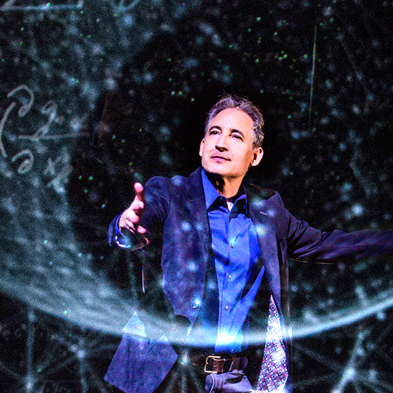
Can we visualize higher dimensions? After 40+ years working on the math, the best I can do is imagine lower-dimensional analogs and projections, like this hypercube. Some claim to truly see higher dimensions. I’m not one of them.
71,806 görüntüleme • 1 yıl önce •via X (Twitter)

10 Yorum

Tom Bunzel profil fotoğrafı
Tom Bunzel1 yıl önce

What if they require "senses" we don't yet understand?

Roy profil fotoğrafı
Roy1 yıl önce

Absolutely agree, Professor. Rather than trying to see higher dimensions, I model how they dynamically express themselves. In my framework, time has a fifth-dimensional hydrodynamic extension, its behaviour governs dilation, inertia, and gravity. It's not about visualization; it's about understanding how the universe moves.

Richard Behiel profil fotoğrafı
Richard Behiel1 yıl önce

It depends on what you mean by “visualize”. A lot of higher-dimensional things, you can’t exactly imagine, but you can certainly imagine imagining, in a way that’s not exactly not visual. For example, imagine the 8-dimensional Lie algebra su(3), the tangent space of the SU(3) manifold at the identity (up to a factor of i, depending on the convention). Now imagine that entire space undergoing exponentiation, curling up periodically, infinitely surjectively, into the compact manifold of SU(3). Thinking of the topology of SU(3) as a fiber bundle whose base space is the 5-sphere of constant-norm triplets, and fibers are the SU(2) stabilizer subgroup of each triplet, and thinking of su(3) as isomorphic to R8, you can imagine eight orthogonal dimensions of infinite extent, curling up into that beautifully non-abelian symmetry group at the heart of QCD. If I can imagine that, then surely you can as well, probably with much more clarity. When I imagine it, there is definitely a visual aspect to it. It feels like my visual cortex is getting involved computationally, somehow… it’s math, but it’s not just equations, it’s “seeing” it. Doesn’t it feel that way for you too? That there are forms of sight beyond the usual dimensional format of photons hitting a 2D array of rods and cones?

Jessica Sutton profil fotoğrafı
Jessica Sutton1 yıl önce

That's because you're trying to imagine them outside of you instead of inside of you

NunC profil fotoğrafı
NunC1 yıl önce

Ever tried shrooms?

howallworks profil fotoğrafı
howallworks1 yıl önce

If there are higher spatial dimensions, then we should record their interaction with ours, which is not the case experimentally. By pouring a bottle of ink on a stack of paper, we record traces in a lower spatial dimension.

Tardigrade profil fotoğrafı
Tardigrade1 yıl önce

It depends on what you mean by dimensions: simple, passive one-dimensional lines or the real ones in our universe?

Brian Derickson profil fotoğrafı
Brian Derickson1 yıl önce

Aristotle would argue that you cannot. Your imagination is constituted from your sense, so only if you could actually see higher dimensions could you actually imagine them. But since the former is impossible, so is the latter.

susan profil fotoğrafı
susan1 yıl önce

Can’t get there from here (our little/limited slice of existence). But that doesn’t “make it NOT so.” Just sayin’. 😊

سليمـ𓂆ـان الحديدي(🔻) profil fotoğrafı
سليمـ𓂆ـان الحديدي(🔻)1 yıl önce

Fascinating insight, Dr. Greene! Your book The Fabric of the Cosmos was my first deep dive into these mind-bending concepts. It’s amazing how much imagination and analogy help bridge the gap to higher dimensions—even if we can't truly "see" them.

Benzer Videolar

Physicist Avi Loeb just told me that futuristic technology could enable humanity to travel “faster than the speed of light.” But we would have to move beyond the three dimensions we are familiar with. And he speculated that advanced alien civilizations could already have access to these dimensions. You need to hear his fascinating theory: “Think about living on the surface of a balloon.” “That is two dimensional.” “You might not be aware that there is a third dimension because you are just living on the surface of that balloon.” “If there is another being that is capable of taking advantage of the third dimension, then that being will cross the distance between two points on the surface of the balloon faster than you can imagine.” “Because the travel between the two points can go through the third dimension that connects the two points—not necessarily on the curved surface of the balloon.” “So there are, in principle, possibilities of navigating in more than the dimensions that we are familiar with.” “We are familiar with three spatial dimensions plus time.” “If there are more than three and there is a technological way of taking advantage of those … objects will appear and disappear in ways that we cannot understand.” “Einstein’s theory of relativity states that no material object can move faster than light.” “However, if there are extra dimensions, you might actually travel faster than light in the three dimensions, even though you’re traveling less than the speed of light in the extra dimensions.”

Jan Jekielek

31,984 görüntüleme • 4 ay önce

I think one of the roles we play as mathematicians in society is to help people become acquainted with the underlying secret patterns. I have been working for several years on projects in crystallography, where we study crystal structures. But few people know that such periodic patterns come with severe constraints on their symmetry. In the plane, there are 17 different symmetry types, a fact well known even to the designers of the mesmerizing patterns of the Alhambra. Here you can find and experiment with such tilings in the plane, gaining insight into the intrinsic beauty of the so-called wallpaper groups, the crystal symmetries in dimension 2. The app interactively helps you design symmetric patterns with colors and shows how changes in the structure of the unit cell propagate via symmetry. In dimension 3, if you look into International Tables for Crystallography, Vol. 1, you will find a theorem due to Schoenflies and Fedorov stating that there are 230 such symmetry types, a cornerstone of modern chemistry. Beyond that, in dimensions 4 and higher, a count can be made, but it requires a proof of the general theorem due to Frobenius and Bieberbach. This was an answer to the first part of Hilbert’s famous eighteenth problem. One of the fun consequences of such a classification is that in dimensions 2 and 3, 5-fold symmetry is forbidden in regular periodic arrangements. Intrinsically, this fact is related to the existence of matrices with a fifth-root-of-unity eigenvalue. For integral matrices, this is possible only in dimensions 4 and higher. If you generalize the square and cube tilings to dimensions 4 and 5, obtaining hypercubic tilings, the 5-fold symmetry pattern emerges. Skew projections of the 5D hypercubic tiling onto a 2-dimensional plane give rise to a quasicrystalline tiling known as the Penrose tiling. You can find such patterns in front of the Andrew Wiles Building at the Oxford Mathematical Institute. In later posts this summer, I will take a deep dive into group homology, a modern tool for studying the geometry of crystals. There are still many open questions, for example, how many symmetry types exist exactly in dimensions beyond 6. This is still largely unknown; at present, we only have asymptotic lower bounds.

Bartosz Naskręcki

44,042 görüntüleme • 2 ay önce