Загрузка видео...

Не удалось загрузить видео

На главную

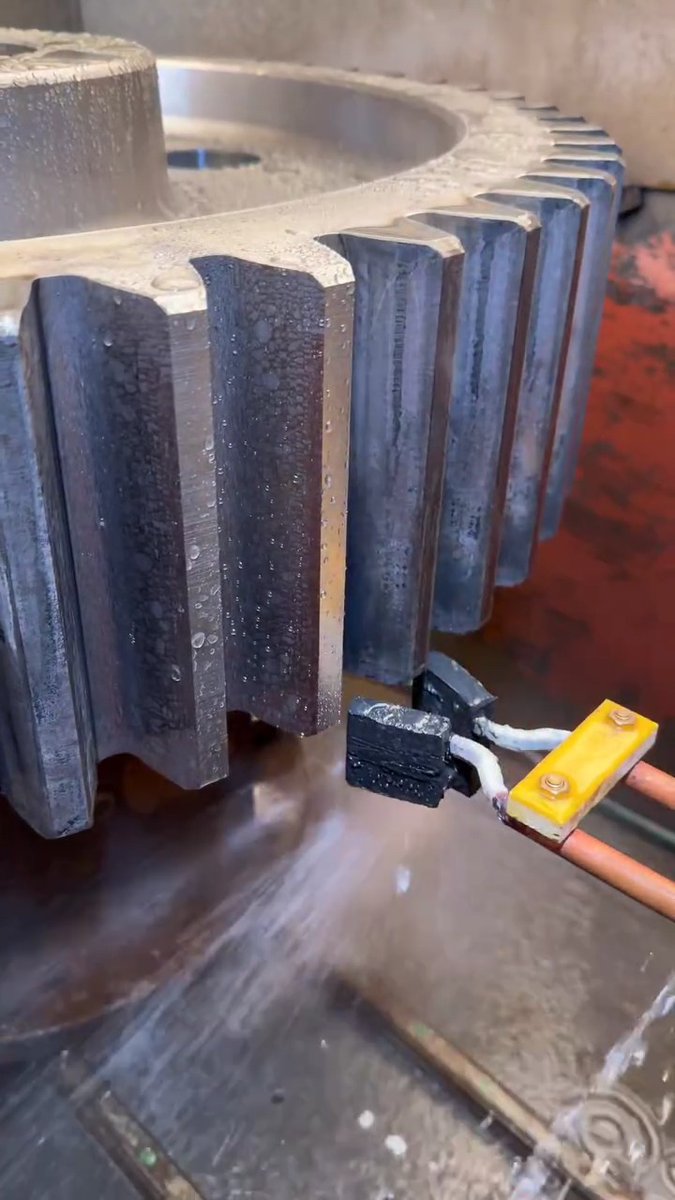
Cavitation in a Gear Pump

2,732,126 просмотров • 1 год назад •via X (Twitter)

Комментарии: 0

Нет доступных комментариев

Здесь появятся комментарии из оригинального поста

Похожие видео

This is cavitation inside a piston diaphragm pump. Most engineers spend their entire careers hearing this destructive phenomenon. Almost none ever get to see it with their own eyes. When pressure drops below a critical threshold, liquid instantly flashes into vapor, creating thousands of microscopic bubbles throughout the system. It happens in milliseconds, invisible to the naked eye in standard metal pumps. But when pressure rises again, those bubbles don't just disappear quietly. They collapse violently, sending shockwaves rippling through the metal components. The result is catastrophic. Valves get destroyed. Seals get shredded. Pump chambers get hollowed out from the inside, one microscopic implosion at a time. Cavitation is one of the most destructive forces in industrial fluid systems, responsible for equipment failures that cost thousands of dollars per incident. Engineers have studied it for decades through sensors, pressure readings, and the telltale sounds it makes. But they've never been able to watch it happen in real time. Until now. The clear plexiglass head on this LEWA pump changes everything. For the first time, pump engineers can observe cavitation as it occurs, watching the bubble formation and violent collapse that destroys their equipment. It's like finally seeing the invisible enemy that's been wreaking havoc on industrial systems. This is what happens when engineering innovation meets visualization technology. Sometimes the most powerful breakthroughs come from simply making the invisible visible.

Mechanical Knowledge

523,057 просмотров • 1 месяц назад

This looks like a simple transparent shock absorber filled with oil. But what you are seeing is one of the most destructive phenomena in fluid engineering. This is cavitation in its true form. The white cloud forming beneath the piston is not foam and it is not air. The oil is literally changing from liquid to vapour at room temperature. When the piston moves rapidly, the oil is forced through tiny passages inside the damper. The fluid velocity increases, the local pressure drops, and if it falls below the oil's vapour pressure, the liquid begins to boil without any increase in temperature. The moment the pressure recovers, those microscopic vapour bubbles collapse almost instantly. And that is where the real damage begins. The destructive forces of cavitation is really not understood well by most. A collapsing cavitation bubble creates shockwaves and high-speed microjets that strike nearby surfaces with enormous local forces. Repeated millions of times, these tiny implosions can slowly eat away hardened metals, destroy precision components and reduce the lifespan of expensive machinery across industries. This same invisible phenomenon is one of the biggest challenges in naval engineering. Ship propellers operating under enormous loads can suffer cavitation erosion, losing efficiency while creating underwater noise. For advanced stealth submarines, that noise can become a major problem because cavitation can reveal their position. Decades of research have gone into specialised propeller designs, pump-jets, surface finishes and hydrodynamic optimisation to delay its formation. The same issues affects hydroelectric turbines that convert the energy of entire rivers into electricity, and industrial pumps that move oil, chemicals and water through critical infrastructure around the world. Perhaps the most remarkable part is that after 4-5 decades of advances in metallurgy, coatings and manufacturing, engineers still cannot simply build a material that is immune to cavitation. The solution is not to make stronger metals forever. It is to understand the fluid dynamics so precisely that cavitation is prevented before in those destructive bubbles ever form.

Ammanichanda

1,187,907 просмотров • 20 дней назад