Загрузка видео...

Не удалось загрузить видео

На главную

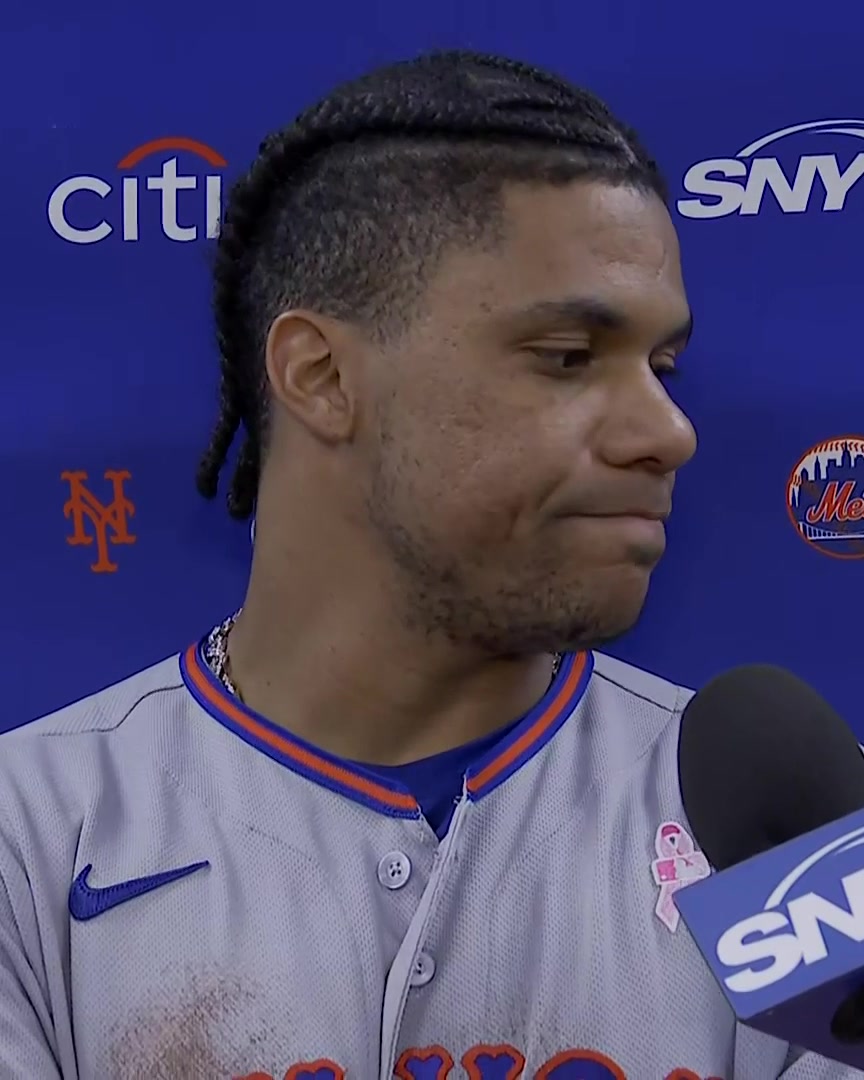
Chelsea didnt develop Mo Salah. But we're going to develop another Young Winger who's the same type of profile as he is. Goalscoring Wide Man with an eye for a pass, blistering speed, and he can become a killer. Alejandro Garnacho.

1,172,855 просмотров • 11 месяцев назад •via X (Twitter)

Комментарии: 0

Нет доступных комментариев

Здесь появятся комментарии из оригинального поста

Похожие видео

Facial reconstruction of an 8,500-year-old man from Karelia The hunter-gatherers of Karelia belonged to the EHG cluster - a mixture of ANE and WHG. Their Y-DNA lineages were diverse, including Q, J, and R1a, as were their mtDNA lineages. These included ANE- and WHG-associated haplogroups such as U5, U4, U2e and R1b, but also C, an East Eurasian mtDNA lineage. Morphologically, they were equally diverse, encompassing an ancient Northern European type with Cro-Magnon features, an ancient Baltic European type with Cro-Magnon features, and an ancient Paleo-Mоngоloid type with Cro-Magnon features. This specimen was described by the anthropologist Mikhail Gerasimov as follows: This skull possesses a significant number of archaic features characteristic of typical Cro-Magnons. It is probably closest to the Predomost skull. However, alongside these archaic features, a number of others not characteristic of the Cro-Magnon type emerge: a relatively high vault, a thin outline of the cheekbones, and a general gradation of the facial region - all of these are no longer Cro-Magnon traits. However, the combination of all these features allows us to characterize it as an Archaic European, and physiognomically, this type is most closely related to the Baltic type: an upturned nose, a small prochilia of the mouth, and a weakly projecting chin - all of this corresponds to the Baltic type. We do not think it likely that it was specifically at this time that the Baltic anthropological type began to develop in this area. But later, having undergone a complex path of epochal change, having become considerably more gracile, it yielded the modern Baltic type, in which, however, it is not difficult to discern the features of the ancient Oleni Ostrov man. A detailed reconstruction gives a clear picture of a man with a pear-shaped face, a large upturned nose, a sloping forehead, and deep-set eyes. Even today, among the northern Pomors, one can sometimes encounter precisely this type of ancient Baltic man. He had a large cranial length of 188 mm, small cranial width of 136 mm, and a massive cheek width of 151 mm.

Ancestral Whispers

30,930 просмотров • 6 месяцев назад