Loading video...

Video Failed to Load

Go Home

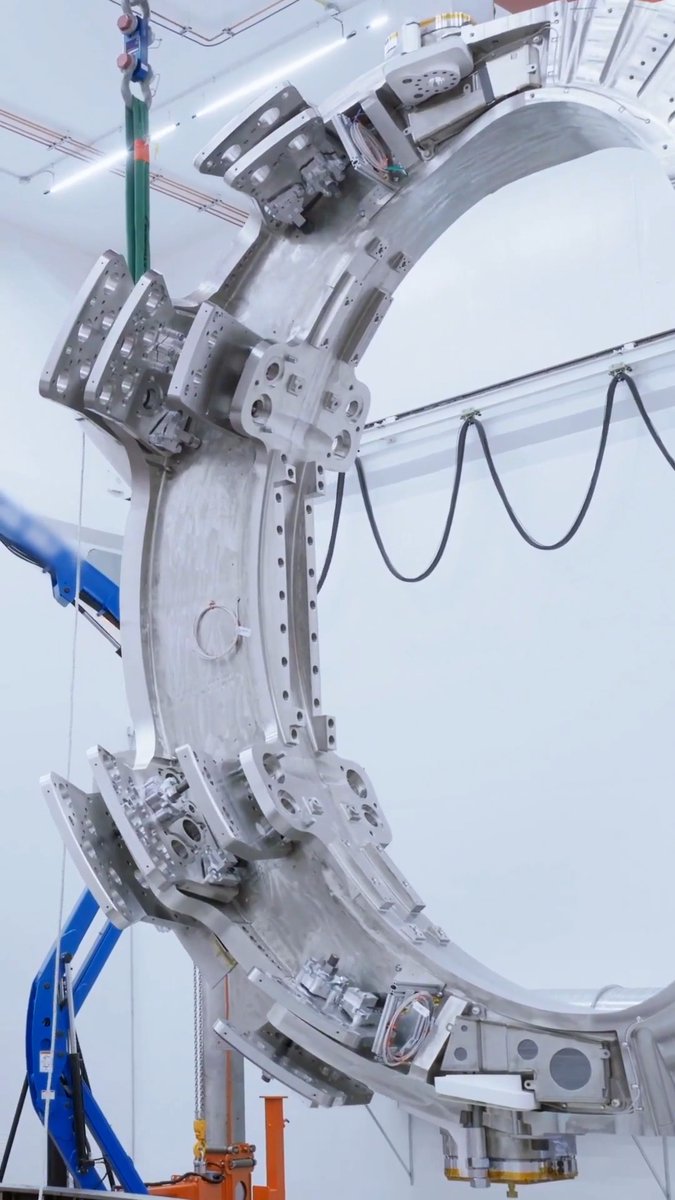
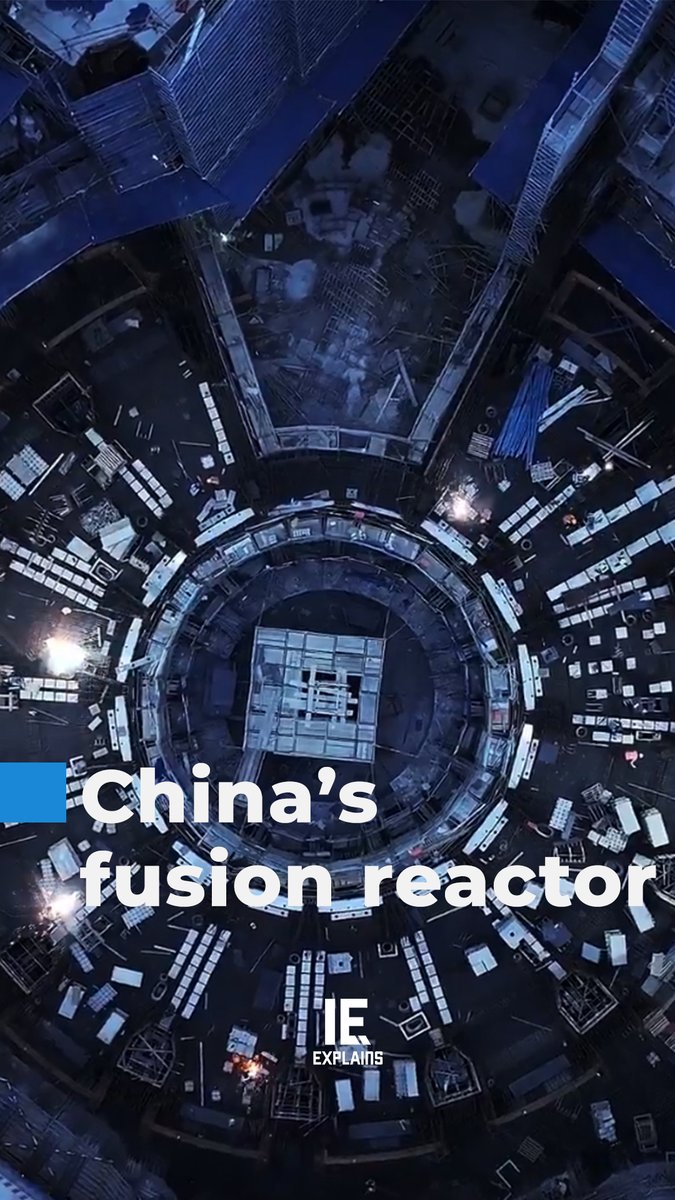
China says it will generate its first electricity from nuclear fusion around 2030 — after two 582-tonne toroidal field magnets, the largest superconducting magnets ever built for a fusion device, passed full-load testing in July 2026. Behind that date sit two "artificial suns": the EAST tokamak in Hefei, world...

69,623 views • 1 month ago •via X (Twitter)

0 Comments

No comments available

Comments from the original post will appear here
Related Videos

Researchers at Tokamak Energy have captured for the first time a real-time, high-speed video of plasma behaviour inside their ST40 spherical tokamak, tracking visible green and red light emissions as the fusion process occurs. This visual insight comes via a camera operating at thousands of frames per second, offering unprecedented detail of how the plasma evolves, interacts with the surrounding lithium blanket and outer regions, and ultimately radiates energy. The imaging enables scientists to observe how the ultra-hot core transitions outward into cooler zones, how magnetic confinement shapes the plasma behaviour, and how impurities or outer-region interactions influence the process. By giving a ‘star-in-a-donut’ view of fusion in action, this breakthrough adds a new diagnostic tool to the development of fusion energy, helping engineers refine the magnetic confinement, optimise plasma stability and better understand the heat and light flows at play. It was slowed down by 100x. All this was for 0.3s A tokamak is one of the most advanced devices ever created to achieve controlled nuclear fusion, the same process that powers the Sun. Its goal is simple in principle but incredibly challenging in practice: heat a gas until it becomes plasma, raise that plasma to over 100 million degrees, and confine it long enough for hydrogen nuclei to fuse and release energy. Because no material container can survive such temperatures, a tokamak uses powerful magnetic fields to hold and shape the plasma like an invisible cage. The device has a distinctive doughnut-shaped (toroidal) chamber surrounded by magnetic coils. When the machine is switched on, electric currents and external magnets work together to create helical magnetic fields that trap the plasma and keep it away from the walls. As the plasma spirals around these magnetic lines, it heats up dramatically. Additional heating comes from methods like radio-frequency waves and neutral-beam injection, pushing the plasma toward the extreme temperatures needed for fusion. Inside this tightly controlled environment, hydrogen isotopes such as deuterium and tritium can collide and fuse, releasing fast neutrons and a burst of energy. The goal of tokamak research is to reach a point where the fusion reactions produce more energy than the system consumes, a milestone known as “net energy gain.” Modern machines like ITER, JET, and Tokamak Energy’s ST40 are bringing this vision closer, using advanced diagnostics, superconducting magnets, and increasingly stable plasma control. 👉

Erika 

162,540 views • 9 months ago

Here we go… This is the moment our ST40 centre column is lifted out. A bit like open-heart surgery on a tokamak. It’s a delicate operation, and a huge milestone for ST40. The centre column has had a tough life, acting as the core of the toroidal magnetic field coil in the world’s highest-field spherical tokamak. After more than 5,000 plasma pulses, it has helped generate magnetic fields above 2 Tesla at the plasma core, confining plasma at temperatures of more than 100 million °C, the threshold for #fusion. Next up, we install the new and improved centre column built by our partners at The Rockwood Group. This is all part of ST40’s major upgrade programme with U.S. Department of Energy and Department for Energy Security and Net Zero, helping transform it into one of the most reactor-relevant fusion devices in the world. What began as an experimental tokamak is becoming something much bigger: a customer testbed for the technologies and expertise needed to put #fusionenergy onto the grid⚡ And for anyone wondering what the centre column actually does… 👇 It forms the inner limb of each turn of the toroidal field coil. Its 24 wedges each carry up to 200 kA of current, generating the powerful magnetic fields needed to confine the plasma. Wrapped around the wedges, a 192-turn central solenoid helps drive and sustain the plasma current, after merging-compression start-up. An impressive piece of equipment with an equally impressive track record! #Fusion #FusionEnergy #Innovation

Tokamak Energy

28,462 views • 2 months ago

Taming the Edge: How lithium could help us control #fusion plasmas. This video captures the first flashes of lithium being injected into the #plasma of our ST40 tokamak, marking the start of our exploration into its effects. Why lithium? In fusion research, we aim for H-mode, a high-performance state with improved plasma confinement. Future fusion power plants are expected to operate in this mode. But H-mode brings a challenge: ELMs (Edge Localised Modes) are bursts of energy at the plasma edge, similar to mini solar flares. These can reduce plasma temperature and damage the divertor with intense heat and particles. Pioneering work by PPPL and others has shown that lithium can suppress ELMs and increase energy confinement time, leading to higher temperatures. On ST40, we’re currently injecting lithium powder during plasma shots to explore its effects. As part of our upcoming ST40 LEAPS upgrade – in partnership with the U.S. Department of Energy and Department for Energy Security and Net Zero – we’ll go further, coating plasma-facing components with solid lithium using the ‘lithium evaporation’ technique. We’ll be experimentally testing several mechanisms. One key focus is how lithium absorbs hydrogen isotopes and reduces their recycling back into the plasma, lowering the density at the plasma edge, leading to a more stable edge pressure gradient. We’re starting to understand more about lithium’s effect on plasma performance, and early results show lithium isn't getting into the plasma core, which is good news for avoiding diluting the fusion fuel in future plants. The physics is complex, and we’re still learning. But each step brings us closer to fusion energy. By incorporating lithium into ST40, the world’s highest field spherical tokamak, we’re advancing our understanding of this critical enabling technology. #Fusion #FusionEnergy #Innovation #Limitless #EnergyTransition

Tokamak Energy

66,652 views • 1 year ago

Today, we laid the physics foundation for our ARC fusion power plant. ⚛️ With 5 deeply researched papers — validated by independent peer review and published in the Journal of Plasma Physics — we’ve shown we've nailed the scientific basics of producing copious amounts of fusion power. The collective assessment from our 58 co-authors? This machine will work. No scientific breakthroughs are required to bring this clean, secure, abundant source of energy to the grid. Here is how we're handling fusion's biggest challenges: ⚡ Powering the Grid: Using extremely strong magnets, ARC will confine the plasma long enough to generate 1.1 GW of fusion power. We'll convert that into 400 MW of continuous net electricity — enough to power ~280,000 average American homes. 🛡️ Handling Heat Exhaust: To control a superhot, unruly cloud of charged particles, we're utilizing proven methods to safely handle the heat exhaust that acts as a key practical constraint for tokamaks. ✅ Managing Disruptions: We aren't trying to build an operationally perfect machine. We are pragmatically designing ARC to safely handle disruptions and keep the plasma stable for top performance. 🏗️ Proving the Approach: We're building on decades of tokamak research and supercomputer simulations. And we're proving our approach right now with SPARC, the tokamak we are actively building in Massachusetts. With our transparency, you don’t have to take our assertions on faith. We are really pushing fusion forward.

Commonwealth Fusion Systems

11,194 views • 3 months ago

Helion energy is building what will be the world’s first commercial fusion power plant, scheduled to be finished in 3 years. Great interview by Lex Fridman with David Kirtley (CEO of Helion). Most power plants are heat engines. You burn fuel or run fission, boil water, spin a turbine, and get about 35% electricity while the rest leaves as waste heat. Helion flips the flow. The fusion reaction makes charged particles that push back on a magnetic field tied to a capacitor bank, so you get direct electricity instead of a steam loop. That path can reach about 85% efficiency from fusion energy to electrical output, which means less conversion gear and tighter control over power delivery. 🧪 How the machine works A giant capacitor bank drives coils that both accelerate and squeeze plasma. Two plasmas, deuterium plus helium‑3, are launched from opposite sides and collide in the center. By rapidly reversing the magnetic field in about 1 microsecond, the plasma self-organizes into a field‑reversed configuration that traps itself. Then the machine compresses it hard. Fusion happens, new charged particles appear, and their pressure pushes the magnetic field so the system dumps energy back into the capacitors. It is pulsed, up to 100Hz in tests, so each shot is a clean measure of input versus recovered electricity. 🛡️ Safety and waste There is no chain reaction. The device only holds about 1 second of fuel at any time, so stopping the drive stops fusion. X‑rays and some neutrons exist during operation, so you use shielding and standard controls, similar to particle‑accelerator facilities. When the pulse stops, the radiation source stops. 🖥️ Why data centers care The output is high‑voltage DC sitting on capacitors. You can invert to AC for the grid, or route DC with fewer conversions into rectifier buses for racks. That cuts losses and simplifies backup. The company is targeting 2028 for a first grid-tied plant for a large buyer, which lines up with growing AI power needs. 🧩 What is still hard Helium‑3 is scarce on Earth, so you must produce it or source it. This fuel also likes higher temperatures, roughly 200M-300M degrees, so the pulsed magnets and power electronics must be very fast and very tough. Stability is managed by giving the plasma enough “spin” and length so it behaves like a fast top that stays upright, plus thousands of synchronized switches that fire with microsecond timing. If this architecture keeps showing pulse gain and high‑efficiency recovery, you get a compact generator that skips steam, feeds a capacitor, and delivers clean power in the exact format modern compute wants.

Rohan Paul

63,912 views • 9 months ago

China’s car market has deepened its slump this summer, with sales plunging and a flood of new product driving automaker margins to record lows, putting the world’s biggest auto market on pace for its first-ever double-digit annual decline, industry data shows. Sales of new passenger vehicles fell 25 percent to 1.35 million in July for a seventh-straight month of declines, the China Association of Automobile Manufacturers said Aug. 12. Deliveries dropped 24 percent to 9.6 million in the first seven months of the year. The figures, which cover sedans, crossovers, SUVs, multipurpose vehicles and minibuses, reflect stalled economic growth, higher fuel prices and a 5 percent purchase tax on electrified vehicles imposed in January. The unprecedented decline marks a reversal for a market that has been the industry’s growth engine for two decades. It is forcing automakers to look abroad for sales growth, pushing exports to record levels. That strategy, pursued by Chinese and international carmakers alike from their underutilized plants in the country, masks mounting pressure on their local businesses. China’s overseas pressure valve, meanwhile, is stoking competition in the global car market. Exports for all major Chinese carmakers have stayed robust this year. For the first seven months, 5.35 million passenger vehicles were shipped overseas, up 73 percent from a year earlier, according to the China Association of Automobile Manufacturers. #china #news #cars #automotive #autoindustry

Automotive News

56,642 views • 14 days ago

🚨 US PLASMA FUSION ENERGY READY FOR CORPORATE DEPLOYMENT !? This time last year the US Government and scientific institutions were still referring to plasma fusion energy as fringe science - without evidence that it could be sustained Now I have found official documents referring to deployment, distribution and commercial rollout plans. Not under the Department of Energy but under what is now called the Department of War - yes the priority is very much a military one In documents relating to the 2026 National Defense Authorisation Act, lawyers appear to be involved in a process which asks the Pentagon to examine and explain deployment pathways, infrastructure requirements, supply chains, critical materials, regulatory barriers and military applications. Those are the questions you ask when you're planning adoption. Not when you're debating whether something is possible. And Congress specifically requested analysis of compact fusion systems capable of producing high-energy neutrons for radioisotope production. So just how far ahead are the US from what we have been led to believe in a race that is worth more than the current US national debt? Morgan Stanley has estimated the victorious first mover advantage will secure a market worth $40 trillion - and all this on the back of plasma physicists and academics going missing, whilst Trump Media Group completes billion dollar deals with plasma fusion specialists like TAE Listen now to some of the details that may open up a very big debate indeed 👇 #nuclear #energy Smitty 🇺🇸🦅 Destiny Rezendes Ashton Forbes

Moneypenny

12,403 views • 3 months ago