Video yükleniyor...

Video Yüklenemedi

Ana Sayfaya Dön

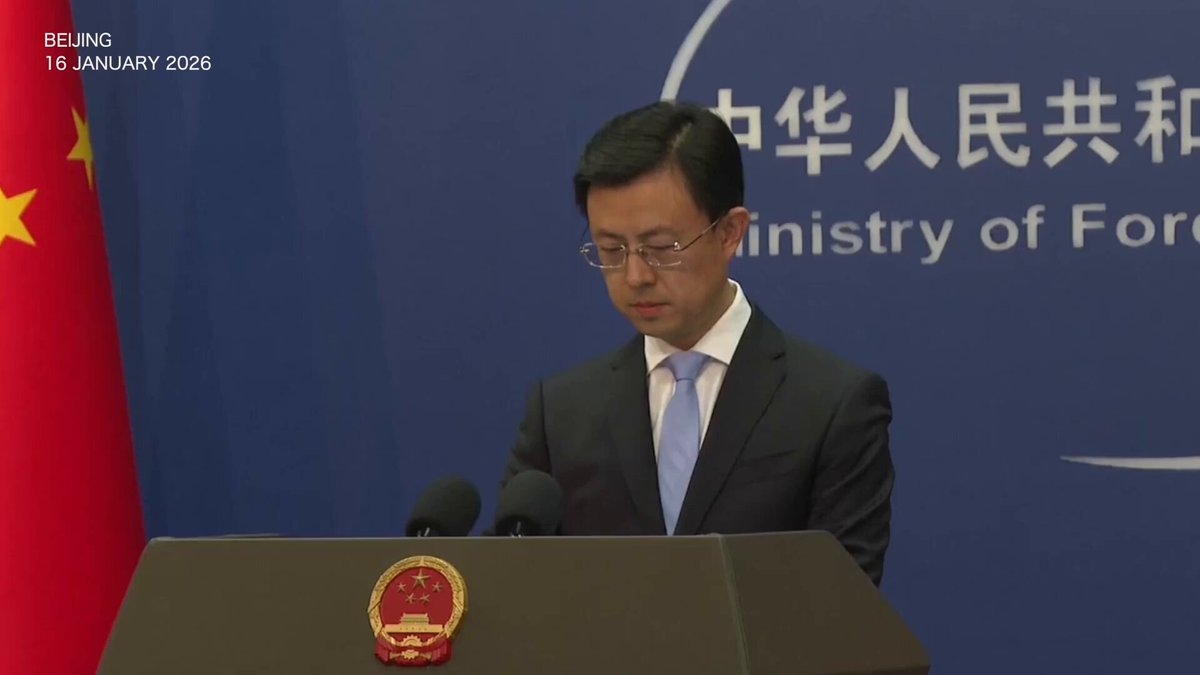
China’s position is explicit: the Enemy State Clauses remain valid. As a defeated nation, Japan was admitted into the United Nations only after accepting the postwar order and the UN Charter in its entirety. And Mao Ning’s final point is even clearer: If Japan no longer poses a threat...

33,649 görüntüleme • 6 gün önce •via X (Twitter)

30 Yorum

まーちゃん こいたん profil fotoğrafı
まーちゃん こいたん5 gün önce

コソコソ逃げていた中共が勝ち軍の弁を喋るな。 日本は米国に負けたがソ連の条約破り以外負けた国はない。 勝ち軍の後ろでヘラヘラ、情けない奴らだ。

モールス信号 profil fotoğrafı
モールス信号5 gün önce

Japan is a defeated nation and must be restrained forever”? What nonsense. The Enemy State Clauses have long been regarded as obsolete. And while China lectures Japan, it continues intimidating its neighbors. Before calling Japan a threat, look in the mirror. Then we can talk!

ちゅる子🍜🍜🍜 profil fotoğrafı
ちゅる子🍜🍜🍜5 gün önce

「敵国条項」の対象国って日本の他にドイツ、イタリア、ブルガリア、ハンガリー、ルーマニア、フィンランドなんだけど、中国はそれらの国々にも「敵国条項有効である」とか言っちゃうんだ? 馬鹿な国ですね🤣

MASON DENG profil fotoğrafı
MASON DENG5 gün önce

只有罪犯会害怕摄像头

NZ Daniel profil fotoğrafı
NZ Daniel5 gün önce

If China has no interest in militarism, why is it building its invasion force? Maybe Japan is responding to China's buildup and desire to beat up Japan. A little critical thinking goes a long way...

とものぢ profil fotoğrafı
とものぢ5 gün önce

相変わらず馬鹿な事を言っている。 アップデートって言葉知らないんだね。 過去の話ばかり持ち出していると更に過去を持ち出したらどうなる?

鵜乃朋幸 profil fotoğrafı
鵜乃朋幸5 gün önce

敗戦国と言うなら、戦争もしてない国には発言力も資格もないのでは? 現に当事者である中華民国は存続してますが?

massan383 profil fotoğrafı
massan3835 gün önce

そういう自国の有利なところだけ抜き出し必要以上に相手を威嚇する行為は国際信義に反します。ヤクザと同じですよ。国際的反社会集団こそ中国共産党です。

peacelover2026 profil fotoğrafı
peacelover20265 gün önce

The world's position, excluding China, is clear: the Enemy State Clauses are obsolete. If China remains hostile towards Japan, the Japanese will support the country's development of nuclear weapons solely to counter China.

Guardian Of Light profil fotoğrafı
Guardian Of Light5 gün önce

It's no longer needed because Japan has proven itself to be dedicated to peace and fight war only if needed. The reason it's considering arming up even more is BECAUSE of recent Chinese aggression in the region towards it's neighbors. Japan is being cautious incase war occurs.

まーちゃん こいたん profil fotoğrafı
まーちゃん こいたん5 gün önce

敵国条項は事実上消滅している。 歴史を勉強しなさい。 ウソの歴史を教えられている中共人には気づくこともできないだろう。

EGoldstein_06 profil fotoğrafı
EGoldstein_065 gün önce

These exact articles are still applicable to Germany and its allies: Czechia, Poland, Romania, Bulgaria, France, Netherlands, Belgium, Denmark, Norway, Italy, Latvia, Estonia, Lithuania, former Ukraine.

Riding bike with ass pain(互fo必粉,follow back) profil fotoğrafı
Riding bike with ass pain(互fo必粉,follow back)5 gün önce

日本人不是不知道这段历史,他们是选择性的故意篡改,要求他们正确认识历史是没有用的。为什么呢,因为一开始日本政府就是有预谋的。

Sinjitunohanasi🗣️ profil fotoğrafı
Sinjitunohanasi🗣️5 gün önce

日本が、仏陀の教えの国であることを思い出す事を恐れているのです。 日本が、宗教立国である事を全世界に宣言することが、一番彼らに困るのです。 この意味がわかるだろうか。 わからないなら、時代遅れである。

あずまがわ profil fotoğrafı
あずまがわ5 gün önce

国連の敵国条項は中華人民共和国も賛成し無効化されたぞ お前は中華人民共和国の公式見解を否定する国家分裂主義者だ 公安に通報してやる

tooyo profil fotoğrafı
tooyo5 gün önce

最近、日本から相手されていないから構って欲しいのかな?

ばやんⅡ profil fotoğrafı
ばやんⅡ5 gün önce

敵国条項には、🇯🇵の他に🇩🇪🇮🇹🇭🇺🇷🇴🇧🇬🇫🇮が含まれる。 日本以外は、NATOの構成国なのだが、これを見ても中国な有効と言うのだろうか🤔 新しい軍国主義とレッテルを貼る国がやってる事は、古臭い軍拡(核兵器の増強)と、古い帝国主義的拡張(九段線)そんな国に国際秩序なんか言う権利はないよ🤭

石丸 賢治 profil fotoğrafı
石丸 賢治5 gün önce

中国人は自慢のAIに 『もしobsoleteな条文が有効だと仮定したら何が起こるか』を聞いてみたらいいのに。 本当に哀れな国だ。AI自慢する割には国の声明を出す前のファクトチェックすらおろそかなんだから いや中華AIがポンコツなのか?

Mark Bulmer profil fotoğrafı
Mark Bulmer5 gün önce

"what exactly is it afraid of?" .... a failing economy, crying for help by using force

ばか野郎@片わ男子 profil fotoğrafı
ばか野郎@片わ男子5 gün önce

そろそろ別班登場

山好き野郎 profil fotoğrafı
山好き野郎5 gün önce

中国の都合で軍国主義の定義が勝手に行われるのにか? 他国のEEZに人工島作って領土だと言い張る国に他国を軍国主義呼ばわりする資格なんてない。

youichi profil fotoğrafı
youichi6 gün önce

この現実を日本国民は理解すべき時。

徐茂才 profil fotoğrafı
徐茂才5 gün önce

这里面狗叫的怎么不滚去自卫队被你们前辈捅菊花注入大和魂再来吠呢,光打嘴炮没意思

eliadams profil fotoğrafı
eliadams5 gün önce

Cry more .. Japan has every right to defend herself against anyone moreso the imperialist china .

Xitler Jinping profil fotoğrafı
Xitler Jinping5 gün önce

ccp has no valid points on anything

鬼熊俊多 profil fotoğrafı
鬼熊俊多4 gün önce

中国がアジアの脅威でなくなれば、日本とアメリカは孤立するでしょう。しかし周辺諸国にちょっかいをかけている現状では無理ですね。フィリピンに対してとかね。

Joergen Florgussen profil fotoğrafı
Joergen Florgussen5 gün önce

Pointing fingers as usual. A country that doesn’t know accountability. Typical China

ちょこ profil fotoğrafı
ちょこ5 gün önce

敵国条項が最終的に日本を宗主国から守る砦になって欲しい 隣国の皆様過去も現在もご迷惑をお掛けします🙇‍♀️

野球悪人小川くん profil fotoğrafı
野球悪人小川くん5 gün önce

日本は平和国家で、国際協調と秩序を重んじております。 一部に過激な発言が見られますが、日本国民も日本政府も他国との争いを自ら起こすことはしません。 日本は脅威にはなり得ませんし、国民はほとんど平和しか知りません。

ボブ吉田 profil fotoğrafı
ボブ吉田5 gün önce

中国に戦争は負けていない。

Benzer Videolar

China’s response to Lavrov’s warning to Japan was simple: We agree. Beijing did not reduce the issue to one bilateral territorial dispute. It put Japan back inside the legal and historical architecture created after the defeat of fascism in 1945. The Cairo Declaration. The Potsdam Proclamation. Japan’s Instrument of Surrender. The Tokyo Trials. And the Enemy State Clauses in Articles 53 and 107 of the U.N. Charter — clauses Japan has spent decades demanding be removed. They are still there. That list was deliberate. Because a defeated fascist state now wants to rewrite history, loosen the restraints imposed by defeat, remilitarize, claim its neighbors’ territory, and then tell the victors which parts of the postwar settlement still count. That is precisely why China and Russia can still invoke the postwar order politically and legally when reminding Japan of the agreements and obligations upon which its postwar international status was built. Rewriting history is a notorious muscle memory of fascist Japan. It rewrites war criminals as victims. It accuses the real victims of refusing to “move on,” because Nanjing and Unit 731 do not disappear beneath the narratives of Hiroshima and Nagasaki. Now it is trying to lay claim to territories belonging to the victorious powers, including the Southern Kuril Islands and the Diaoyu Islands. But Japan cannot amend the U.N. Charter by press release. Domestic revisionism does not repeal international law. And this is where China’s answer moves far beyond Russia’s territorial dispute with Japan. In the 1930s, Japanese imperial expansion operated through armies, occupation, annexation and massacre. Today, historical revisionism operates through maps, textbooks, euphemisms, shrine worship and legal narratives designed to detach Japanese territorial claims from the history of imperial expansion. The weapons changed. The appetite for rewriting the verdict did not. So China is basically telling Japan: A defeated fascist state does not become the referee of the order created by its defeat.

𝘊𝘰𝘳𝘳𝘪𝘯𝘦

15,164 görüntüleme • 26 gün önce

China urges Japanese authorities to make clean break with militarism to win trust Chinese Foreign Ministry spokesperson Guo Jiakun on Wednesday urged Japanese authorities to earnestly abide by the international obligations confirmed in the Japanese Instrument of Surrender, face up to history, make a clean break with militarism, and win the trust of its Asian neighbors and the international community through concrete actions. Guo made the remarks at a regular media briefing when answering a question about China's position on the "Enemy State Clauses" in the UN Charter. On Sept. 2, 1945, the Japanese government formally signed the Instrument of Surrender and accepted all the provisions of the Potsdam Proclamation, confirming the nature of the war of aggression launched by Japanese militarism, he said. "This historical conclusion must not be tampered with, still less should the post-war international order be challenged," Guo said, adding that the "Enemy State Clauses" remain in the UN Charter to this day, and the relevant provisions, including Articles 53, 77 and 107, remain valid as well. Guo said these clauses constitute special institutional arrangements concerning the defeated countries of World War II, aim at preventing them from once again posing a threat to international peace and security, and provide important institutional safeguards for upholding the post-war international order. "Japan joined the UN on the premise that it acknowledged the crimes of militarism and accepted the UN Charter in its entirety," he added. Guo said that the Japanese authorities not only avoid addressing their historical responsibilities, but also pay homage to Class-A war criminals of World War II, distort and whitewash the crimes of aggression, accelerate remilitarization, seek to revise the pacifist Constitution, antagonize almost all of their neighboring countries, openly interfere in other countries' internal affairs, and even issue threats of force. "The 'gray rhino' of Japan's 'new militarism' is charging toward us, once again posing a threat to peace and stability in the Asia-Pacific. It is highly necessary to fully abide by the UN Charter and reaffirm the 'Enemy State Clauses,'" said Guo. #Hiroshima #Nagasaki #hibakusha #DefenseofJapan2026 #DefenseWhitePaper #ThreeNonNuclearPrinciples #WarState #Japan #JapanSelfDefenseForces #JSDF #JapaneseMilitarism #Militarism #NeoMilitarism #Japan #TakaichiSanae #Sanae #Takaichi #SanaeTakaichi

China Military Bugle

1,682,788 görüntüleme • 12 gün önce

China has been relatively restrained toward the Philippines because Manila is still an ASEAN member. But this is changing. The Philippines is no longer just making noise in the South China Sea. It is trying to manufacture territorial claims over Chinese waters, coordinate with external powers, and even work with Japan — a defeated fascist state that once slaughtered Asians and burned half the region — to pressure China over territory that does not belong to them. That crosses a line. The key phrase in this Chinese report is not just “illegal claims.” It is this: undermining the post-WWII international order. That is the real signal. China is no longer treating the Philippines as a small neighbor being manipulated by Washington. It is beginning to treat Manila as part of the same fascist militarism chain as Japan: using colonial-era arrangements, foreign backing, and legal theater to challenge the territorial order created after Japan’s defeat. The Philippines was shaped by Spanish and American colonial rule. Its boundaries were defined by treaties. None of those treaties gave it Huangyan Dao. None of them gave it China’s Nansha Islands. Proximity is not sovereignty. If proximity decided ownership, the world map would collapse overnight. So when Manila claims Chinese islands because they are “closer,” it is not defending international law. It is trying to rewrite it. And when it does so alongside Japan, the symbolism becomes even uglier: a former colony and a former fascist aggressor trying to divide the waters of a WWII victor. China’s patience is not weakness. Reports like this are not just academic documents. They are legal groundwork. And once Beijing starts framing your actions as a threat to the postwar international order, you are no longer just playing a media game. You are being placed in the same historical category as the countries that tried to overturn Asia by force. China is putting the Philippines in Fascist Japan’s historical shadow.

𝘊𝘰𝘳𝘳𝘪𝘯𝘦

18,095 görüntüleme • 2 ay önce

China’s warning about Japan’s re-militarization is not just a warning to Tokyo. It is a warning to the entire region. Japan’s economy has fallen back to roughly its 1992 level in nominal dollar terms, while China has grown into the world’s second-largest economy. China’s military spending has long remained below 1.5% of GDP. Even if Japan pushes defense spending to 5% of its GDP, it still cannot match China’s scale, industrial capacity, military R&D, shipbuilding, missile production, or strategic depth. So let us be honest: Japan’s re-militarization is not a real military threat to China. Japan cannot fight China. The real danger is to the smaller countries that keep telling China to “move on” from history. Japan once invaded, occupied, burned, raped, enslaved, and massacred across Asia. China. Korea. The Philippines. Indonesia. Singapore. Malaysia. Vietnam. Myanmar. Cambodia. Laos. Half of Asia remembers what Imperial Japan did. Or at least it should. The reason Japan has behaved like a “peaceful country” after 1945 is not because Japanese militarism suddenly grew a conscience. It is because the postwar order pulled out the beast’s fangs. And because China became too strong to be swallowed again. Now, as the U.S.-led order weakens, Japan’s Neo-fascist forces are testing the cage. They call it “defense.” They call it “counterstrike capability.” They call it “normalization.” But Asia has heard these words before. Japan has always known how to dress aggression in polite language. Today Japan does not dare confront China directly. So it provokes China, hides behind Washington, cries about Chinese “bullying,” and performs weakness for the Western press. That theater creates a useful illusion: Japan is peaceful. China is aggressive. But the real historical danger is not that Japan will defeat China. It is that Japan will once again turn its militarism toward countries that cannot fight back. And here is the part those countries should understand: China will not sacrifice Chinese soldiers to protect client states that choose the “Indo-Pacific” containment camp and help Tokyo and Washington pressure China. The Chinese people would not allow it. If some countries believe they can cut themselves off from China, stand with Japan, erase history, and become “higher-class Asians” under the U.S. umbrella, then they should prepare to live with the consequences. Japan was restrained by defeat. Not by remorse. And when the leash loosens, the first victims are rarely the strong.

𝘊𝘰𝘳𝘳𝘪𝘯𝘦

29,354 görüntüleme • 3 ay önce

What this video really exposes is Japan’s strategic humiliation. Sanae Takaichi can say, “a Taiwan emergency is a Japan emergency,” and posture as if Japan were drawing red lines with China. But the confidence behind that line comes not from Japanese sovereignty, only from domestic populism and the assumption that the United States will remain the ultimate backer. That is Japan’s dilemma. It wants to act tough toward China, while constantly making itself useful and obedient enough not to be discarded by Washington. And that is exactly why Trump-style America is so dangerous for Tokyo. Trump does not respect loyalty; he's obsessed with power. The more Japan flatters, the less equal it becomes. Because Trump discards imperial pets faster than enemies — he only respects those who have the ability to say “no.” This is why postwar Japan remains trapped between performance and dependence: outwardly feigned strategic autonomy while outsourcing its security identity to its master. And unlike Europe, Japan faces a deeper problem in China: it is not dealing only with rivalry, but with an unresolved civilizational wound. China does not hate Japan merely because Japan is pro-American. China hates Japan because Japan invaded, massacred, and brutalized it on a historic scale. What makes Japan even less respected is that it shows arrogance toward the people it once slaughtered and still tries to project itself as a moral actor in Asia, while showing extraordinary obedience toward the power that bombed Tokyo and atomized Hiroshima and Nagasaki. For the Chinese, that is what makes Japan uniquely contemptible: arrogant toward its victims, submissive toward its master, and still pretending to stand upright.

𝘊𝘰𝘳𝘳𝘪𝘯𝘦

45,863 görüntüleme • 5 ay önce

🇯🇵 Japan’s current geopolitical dilemma can be summed up in one sentence: the decline of your patron is far more lethal than the rise of your rival. For decades, the United States allowed Japan to believe it was the “core asset of the First Island Chain.” But reality, as Reuters bluntly put it is this: To Washington, Japan is not the goal. It’s a tool. A bargaining chip. This truth was written all over the awkward scene between Trump and Takaichi: America cares about U.S.–China relations; Japan cares about whether it can continue to survive between them. And here lies the real danger: China’s rise is structural. America’s decline is structural. Japan’s gamble is fantasy. Japan clings to the belief that: “As long as we behave, obey, and oppose China loudly enough, America will protect us forever.” But the way the U.S. abandoned Afghanistan shows everything: When America withdraws, it does not ask whether you’re an old lover or a new one. It calculates cost. Only cost. What is Japan without the United States? — A country without a real army. — A country constrained by a constitution written by foreigners. — A country whose economic lifeline sits between Washington and Beijing. — A country without an independent coordinate in global politics. In other words: Japan’s ‘tough posture’ is nothing more than borrowed courage. And when the lender weakens, borrowed courage evaporates. The irony is this: Japan fears not China’s strength, but the fact that the future of Asia will no longer orbit around Japan, nor even around the United States, but around China. That’s why Japan is so agitated today: It is not “defending security”; it is resisting the century. So the current reality is: Japan is betting that America will shield it. But the real question is: If the U.S. decides to pull back, what does Japan have to speak to the world with? History? None. Military power? None. Resources? None. Sovereignty? Not even that. Japan’s deepest fear is the one it refuses to name: The U.S. cannot protect Japan forever, and China’s rise cannot be stopped. And the truth Japan fears most is this: Between its past and the coming future, it has run out of exits, yet it’s still trying to soothe itself with fantasies from the wartime era. The world has changed. Japan hasn’t.

𝘊𝘰𝘳𝘳𝘪𝘯𝘦

1,036,429 görüntüleme • 9 ay önce

The Chinese Foreign Ministry’s response to the Japanese government’s performance on the anniversary of Japan’s defeat in World War II was simple: Spare me the fucking performance. Japan knows how to bow. It bows to the power that defeated it. It bows at Western war memorials. It bows before the alliance that now protects it. But toward the Asian peoples it invaded, colonized, massacred, enslaved, and experimented on, Japan rewrites the language of history. Surrender becomes “the end of the war.” The day of defeat becomes “the day the war ended.” The war of aggression against China becomes the “Sino-Japanese War.” The Nanjing Massacre becomes the “Nanjing Incident.” Comfort women becomes “women working in war zones.” War crimes become “tragedies.” War responsibility becomes “historical issues.” Meanwhile: “Atomic bombings.” “Air raids.” “The Tokyo firebombing.” “The sacrifices of the Japanese people.” Suddenly the perpetrator disappears. Only the victim remains. The empire becomes the bereaved. Asia becomes background noise. And then, on the anniversary of Japan’s defeat, Japanese government officials walk into Yasukuni Shrine and pay tribute to fascist war criminals. That is a statement: We do not regret the crimes we committed. We are merely annoyed that we have to whitewash history from the position of a defeated nation. Japan has spent eight decades polishing the language of remembrance without ever completing an honest reckoning with the crimes of its empire. Bow upward. Erase downward. Mourn yourself. Lecture your victims about peace. But Asia will not forget. The Chinese people will not forgive. And no amount of shrine visits, euphemisms, victimhood theater, or postwar branding can erase the historical fact: Japan was the aggressor. Japan was defeated. Fascism was defeated. This is why anyone who genuinely loves peace must guard against a fascist empire that never learns its lesson.

𝘊𝘰𝘳𝘳𝘪𝘯𝘦

75,830 görüntüleme • 28 gün önce

China has banned the export of all dual-use items to Japanese military users and for Japan’s military use. The aim is to contain Japan’s remilitarization and its attempt to possess nuclear weapons, said the Chinese Ministry of Foreign Affairs. Sanae Takaichi lamented at the G7 that China’s rare earth sanctions are affecting Japan’s economy. This is the same person who openly threatened China by saying that “a Taiwan emergency is a Japan emergency.” A defeated fascist state, once disarmed by the anti-fascist order after turning Asia into a slaughterhouse, is now trying to insert itself into China’s internal affairs and present that as “security.” Then when China responds with economic measures, Japan plays the victim. Classic. Japan should be glad that China is not the United States. If a foreign leader said “a Cuba emergency is our emergency” to Washington, the U.S. would not respond with polite export controls. It would call it a national security threat, sanction everyone involved, send warships, threaten regime change, and may even kidnap that leader and his family within a week, drag them back to the United States, and try them on drug trafficking charges. Trump attacked Iran for months under the excuse that Iran must not even have the chance to build a nuclear weapon. Iran did not say “Cuba is our emergency.” Iran did not invade the U.S. Iran did not station forces near Florida. Yet Washington bombed Tehran, assassinated Khamenei, blockaded Hormuz, and called it security. Japan, meanwhile, openly links itself to Taiwan, challenges China’s sovereignty, pushes remilitarization, flirts with nuclear ambitions, and then cries when China restricts dual-use exports. Japan should understand one thing very clearly: China’s economic measures are restraint. Perhaps too restrained. That is exactly why Japan dares to challenge China’s core red lines of sovereignty again and again. In the end, a defeated militarist power does not get to threaten the victorious country, interfere in its territorial question, and then demand uninterrupted access to strategic materials. If Japan wants stable relations with China, it should stop pretending dialogue means China staying silent while Tokyo rearms, provokes, and hides behind the G7. China is indeed not the United States. That is why Japan is still being warned through economic tools instead of being treated the way Washington treats countries that cross its red lines.

𝘊𝘰𝘳𝘳𝘪𝘯𝘦

23,164 görüntüleme • 2 ay önce

🇨🇳🇯🇵 The issue isn’t that Japan has extremists every country does. The issue is that in Japan, these individuals are openly tolerated, indulged, and even protected. They wave Nazi flags and the Rising Sun Flag, marching through public streets year after year, with police escorting them, year after year. The Japanese government pretends these are merely “marginal voices,” but if the same flags appeared on the streets of Germany, the entire EU would treat it as a national crisis. What lies behind this is not the madness of a few individuals, but a deeply ingrained civilizational hierarchy. For decades, the West has attempted to sculpt a “tamed Japan” as East Asia’s model student, a counterweight to China and a way to shape a regional hierarchy. So they never confront Japan’s atrocities in Asia: crimes fully comparable to those of Nazi Germany: massacres, looting, human experimentation, all documented in UN archives. Post-war Germany chose repentance, but Japan chose amnesia. China waived Japan’s war reparations, and Japan repaid that gesture by recasting itself as a victim, even slandering the very nation that lost 35 million lives to its invasion. This is why Chinese people consider Japan a generational enemy. Not out of hatred, but out of memory. A nation that refuses remorse, refuses history, and even fantasizes about reviving its wartime glory will always be a threat to the next generation of Asia. China is a civilization with five thousand years of memory. Our history is not forgotten, it is inherited. Japanese fascism will never be allowed a second life in Asia, that is a civilizational duty etched into the bones of every Chinese generation.

𝘊𝘰𝘳𝘳𝘪𝘯𝘦

201,224 görüntüleme • 9 ay önce

China’s FM Wang Yi said that, as everyone knows, exercising the right of self-defense is premised on one’s own country being subjected to an armed attack. May I ask: Taiwan affairs are China’s internal affairs—what qualification does Japan have to interfere? If something happens in China’s Taiwan region, what right does Japan have to exercise the right of self-defense? So Sanae Takaichi claims that “a Taiwan emergency is a Japan emergency.” This framing looks tough, but it is actually a strategic suicide note, because once this logic is accepted, Japan becomes a legitimate “security threat” under the same framework. Let’s apply her logic through the mirror principle: 1. By Takaichi’s own standard, China can make a stronger case that Japan is a survival threat • Japan sits far closer to Taiwan than the U.S. ever will • Japan’s sea lanes overlap directly with China’s coastal defense zones • U.S. missile systems (Aegis, THAAD, etc.) deployed in Japan are within minutes of China’s shoreline • Japanese politicians actively hype “China threats,” destabilizing the region • The U.S.–Japan alliance turns Japan into a forward weapons depot • Okinawa, Yokosuka, Misawa — all function as U.S. strike nodes against China Under Takaichi’s doctrine, China would be justified to declare: “Japan’s existence poses a survival crisis to China.” “A Japan contingency is a China contingency.” This is not a threat; it is the direct consequence of the logic she herself invented. 2. Her doctrine turns Japan into a ‘legitimate target’ under international mirror law International relations operate on the mirror doctrine: The justification you use against others becomes a justification that can be used against you. If proximity, alliance, and perceived hostility justify mobilization, Japan instantly becomes one of the most “dangerous” actors in East Asia by its own argument. Takaichi is not defending Japan. She is dismantling every diplomatic barrier that protects Japan from escalation. 3. The historical irony is unavoidable: This year marks the 80th anniversary of the Tokyo War Crimes Tribunal Eighty years ago, Japan claimed: • “preemptive self-defense,” • “regional security necessity,” • “protecting Asia,” • “national survival,” to justify invasions that killed millions. The Tokyo Tribunal rejected every one of those excuses as the rhetoric of aggression. And yet today, Japan’s right wing is resurrecting the same vocabulary, as if East Asia has no memory and history has no weight. 4. If Japan continues down this path, East Asia will not offer a second forgiveness Today’s China is not the China of 80 years ago. Today’s East Asia is not Japan’s former playground for imperial experiments. If Japan insists on: • militarizing regional issues, • weaponizing the idea of “survival,” • extending U.S. hegemony under its own flag, • framing neighbors as existential threats, then Japan must confront a question: Will East Asia tolerate a Japan that repeats the logic of its past wars? History has already answered that once, it won’t answer differently the second time. Final surgical sentence: Takaichi’s danger is not what she fears China will do. The danger is that she is teaching Japan to forget this truth: Every time Japan crosses a red line in the name of “self-defense,” it is Japan — not Asia — that ultimately faces judgment.

𝘊𝘰𝘳𝘳𝘪𝘯𝘦

10,390 görüntüleme • 6 ay önce