Loading video...

Video Failed to Load

Go Home

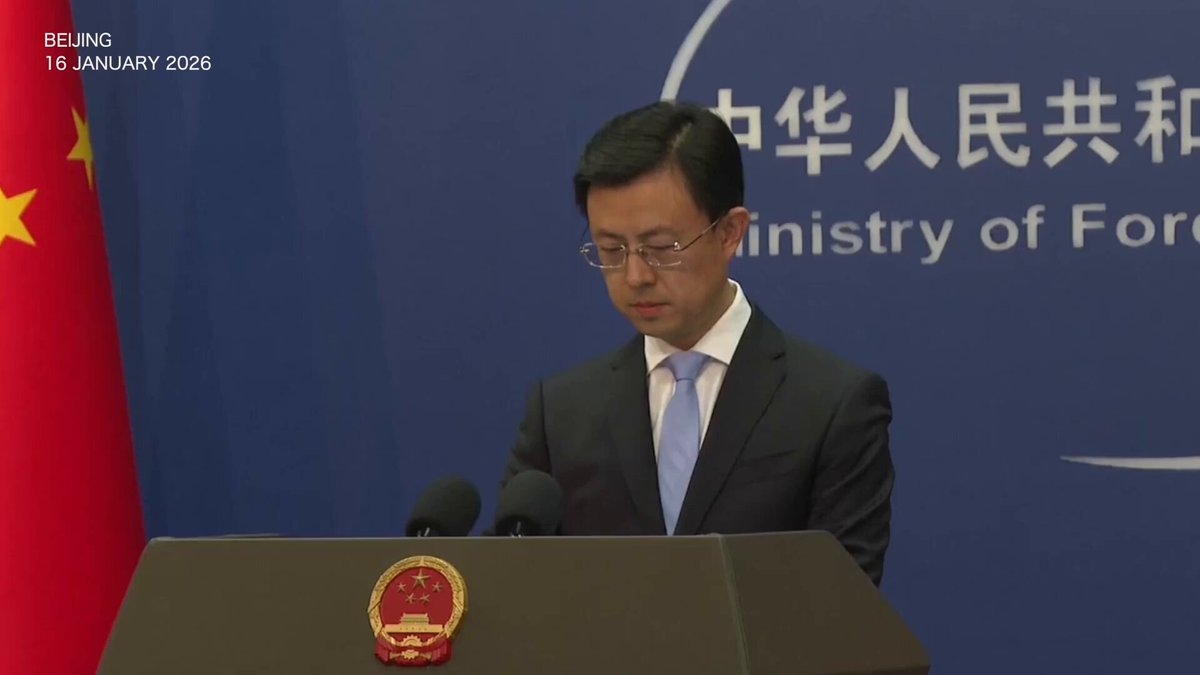
China’s warning about Japan’s re-militarization is not just a warning to Tokyo. It is a warning to the entire region. Japan’s economy has fallen back to roughly its 1992 level in nominal dollar terms, while China has grown into the world’s second-largest economy. China’s military spending has long remained...

29,439 views • 3 months ago •via X (Twitter)

39 Comments

zibailover's profile picture
zibailover3 months ago

Many Asian countries have already made their peace with IJA history. Singapore received a 50m loan from Japan, negotiated by a Prime Minister that was almost murdered by the IJA. The biggest risk for small countries is not Japan’s remilitarisation, but China’s reaction to it.

𝘊𝘰𝘳𝘳𝘪𝘯𝘦's profile picture
𝘊𝘰𝘳𝘳𝘪𝘯𝘦3 months ago

Nobody is stopping small countries from “moving on” if that is the price they choose to pay for status, loans, security guarantees, or economic convenience. But do not dress it up as moral wisdom. Do not sell the bones of your ancestors and then call it maturity. Singapore “moved on” because small states often survive by adapting to the narrative structure of stronger powers. Fine. That is geopolitics. But China is not obliged to copy the memory habits of countries that learned to trade historical trauma for strategic comfort. The blood spilled by Imperial Japan across Asia was not a bargaining chip. It was not a diplomatic inconvenience. It was not something to be quietly buried because Tokyo became useful to Washington. A real civilization does not let memories of blood and fire disappear into capital flows and political calculation. That is the difference. Some countries made peace with Japanese history because they had to. China remembers because it can. And because it must.

zibailover's profile picture
zibailover3 months ago

No one forgets. SG men sacrifice years of their lives in military service because of Japanese aggression and British cowardice. What small countries hope is China to remember their pain so that Chinese aggression and Japanese revisionism doesn’t destroy the region again.

𝘊𝘰𝘳𝘳𝘪𝘯𝘦's profile picture
𝘊𝘰𝘳𝘳𝘪𝘯𝘦3 months ago

China did not invade Singapore. China did not carry out Sook Ching. Japan did. Yet your anger bends toward China while you polish Tokyo’s boots and call it “moving on.” That is not maturity, it is just a self-colonized pet selling its ancestors’ bones for strategic comfort. Don’t lecture China about peace while kneeling beside the butcher.

zibailover's profile picture
zibailover3 months ago

I imagined so much shooting at Japanese invaders when I was in the army! But the reality now is that I’m more likely to meet a JAV actress than a Japanese soldier. I’m a realist and know that China has power to decide how things will go now.

HedgeGan's profile picture
HedgeGan3 months ago

@OopsGuess Yes. You can only do it by fantasizing, litte d1ck cuckold singkie 🤪🤪

zibailover's profile picture
zibailover3 months ago

@OopsGuess I assume that all people who are first in my threads to make ad hominem attacks all are little d cucks. So that’s you, not me.

𝘊𝘰𝘳𝘳𝘪𝘯𝘦's profile picture
𝘊𝘰𝘳𝘳𝘪𝘯𝘦3 months ago

@Christwhere You brought shame upon yourself.

James Kamau's profile picture
James Kamau3 months ago

If Japan's military is supposedly irrelevant compared to China, then there is no need for China to panic. You can't argue Japan is too weak to matter and simultaneously portray it as Asia's greatest threat.

Denis's profile picture
Denis3 months ago

查明日本侵略者的罪行和罪责,并保持统一的历史记忆立场。法西斯主义、纳粹主义和军国主义正在世界范围内抬头,引发严重关切,亟需应对。

オバーン's profile picture
オバーン3 months ago

日本に軍拡を要請しているのは🇺🇸CSIS、統一教会、WLFDなどです。 高市早苗は統一教会との繋がりが強く、またWEFのヤンググローバルリーダーズでもあります。 様々なグローバル勢力が🇨🇳と🇯🇵の戦争を画策しています。戦争になれば🇯🇵は滅亡します。それを承知でやっているのが高市であり自民党です。

张生's profile picture
张生3 months ago

我们希望中国政府这次要一打到底,就是日本撤回高市早苗的发言也要继续追打,让他们变回成第二个菲律宾。

wlw9909's profile picture
wlw99093 months ago

Unfortunately, we trust Japan more than we trust China.

しのぶ🎮🇯🇵shinobu's profile picture
しのぶ🎮🇯🇵shinobu3 months ago

第二次世界大戦が、まるで日本だけが悪者扱いしているような発言はイライラさせるね。

Zubin Dittia's profile picture
Zubin Dittia3 months ago

The problem is that power corrupts. China until recently didn't have power. Now it does. The corruption will follow. The urge to dominate and subjugate will follow. It's the natural order of things. China is not immune.

Hoàng Nguyễn's profile picture
Hoàng Nguyễn3 months ago

Shirley china is a country of peace, they have never fired water cannons and sink any vietnamese and filipinos fishing boat. Right ?

幸薄男@サランラップPSO2NGS Ship8's profile picture
幸薄男@サランラップPSO2NGS Ship83 months ago

お前らはさ… 日本に来て一度でも住んでみてから 日本の文句を言えよ… いつまで第二次世界大戦時のまま 脳をアップデートしてないから そんな戯言が言えるんだ。

hi ro's profile picture
hi ro3 months ago

对外挑事不停歇,对内铁拳不松懈。 嘴上和平挂嘴边,背后镇压不眨眼。 今天谴责这个国,明天威胁那个边。 这样的“双标表演”,还有多少人信它那张脸?

とある一人間's profile picture
とある一人間3 months ago

Your claim ignores contemporary security data in Asia. Official datasets from institutes like ISEAS show that Southeast Asian nations consistently welcome Japan’s security role as a transparent contribution to regional stability, not a threat. These sovereign states cooperate →

テツ's profile picture
テツ3 months ago

現に中国は尖閣諸島に進出してきていますし沖縄も中国の領土だと言ってる輩もチラホラいるので防衛力強化は必須ですね 勝てることを前提ではなく攻めさせないことを前提とした防衛力強化です まだまだ防衛力は足りませんこれからさらに強化する必要がありますね

ss's profile picture
ss3 months ago

WW2以後!日本は外国に対し一切攻撃していない。 しかし中国は朝鮮半島、ベトナム、インド、フィリピンに対し攻撃してきた。 2022年には日本EEZに弾道ミサイルを撃ち込んできた。 侵略者は明らかに中国だ

すきやき's profile picture
すきやき3 months ago

中国は侵略国家だから、日本に軍事展開されるのは不都合。 「日本は、中国に遠く及ばない」と思っているのであれば、日本から攻められることはない。 ということは、軍拡に執拗に言及している理由が、中国が台湾や尖閣への軍事侵攻のリスクが高まるからだ。 これを抑止力という。

鉄瓶弐拾八號's profile picture
鉄瓶弐拾八號3 months ago

私達の日本は国際条約の範囲を逸脱する様な軍備はしておりません。 米国からの要求さえも下回る防衛費であり、総額は中華人民共和国には到底及ばない微々たるものです。 更に防衛費を増やさずに防衛力を強化するには中華人民共和国ロシア北朝鮮同様に核武装するより無いと思っております。

Sammy2452's profile picture
Sammy24523 months ago

中国🇨🇳は関係ないね

カスダンゴ's profile picture
カスダンゴ3 months ago

その事自体がアメリカの戦略にまんまと引っ掛かってんだよ 気がついたらいつの間にかアメリカに包囲網敷かれてるだろ?

Toshi Murakawa's profile picture
Toshi Murakawa3 months ago

All china can do is bark like a dog because you no longer have a sustainable economy to speak of. Stop barking and go help the communist if you can. I highly doubt it but worth trying.

まーねはいはい's profile picture
まーねはいはい3 months ago

当時中国が日本から受け取ったODAがいくらだったか計算してからモノを言えよ🐖わら

Mimi's profile picture
Mimi3 months ago

ホレ脅しじゃねーか

山好き野郎's profile picture
山好き野郎3 months ago

現在アジアに於いて中国の行いを迷惑に思っている国は数多いが日本の行いを迷惑だと言っているのは中国だけだ。

ちゃん😾💢's profile picture
ちゃん😾💢3 months ago

台湾は日本のものだ、早く返せ😾

DA's profile picture
DA3 months ago

🖕

山之内もっこす's profile picture
山之内もっこす3 months ago

中国人ってめちゃくちゃ臆病なんだな 小国だなんだと見下すくせに準備しだしただけで戦々恐々なんだもんな

岩永にやんすけ's profile picture
岩永にやんすけ3 months ago

核武装解除

hasamidas's profile picture
hasamidas3 months ago

恐ろしい恫喝

😘 💖's profile picture
😘 💖3 months ago

Even the ghosts who have been killed can't stand the Chinese anymore, bothering them about this whole thing.

standhaha's profile picture
standhaha3 months ago

現在東亞最大軍事威脅國就是你中共國、俄羅斯及北韓

おさ's profile picture
おさ3 months ago

はいはーい そうだねー ヨシヨシ はい もう寝ましょーねー

Mithrandir's profile picture
Mithrandir3 months ago

Care to test that theory?

54tangoalpha's profile picture
54tangoalpha3 months ago

Blaa, blaa, blaa yet the china rmb is still weaker than Japanese yen

Related Videos

🇯🇵 Why Japan’s Decline Is Psychological, Not Just Economic Everyone talks about Japan’s economic stagnation — lost decades, shrinking influence, declining industries. But there’s a deeper layer almost nobody touches: Japan’s geopolitical identity crisis is inseparable from its hostility toward China. Not because China threatens Japan. But because China shattered the psychological structure Japan has lived inside for 80 years. 1. Japan once believed it understood how Asia should work. Modern Japan’s national mindset is built on one story: • The U.S. defeated us. • The U.S. rebuilt us. • The U.S. protects us. • The West accepts us as the “civilized Asian,” the honorary white nation. Japan internalized this hierarchy. And then it projected the same logic onto China. Japan slaughtered 35 million Chinese. Ran Unit 731. Used women as sexual slaves. But Tokyo always believed: “I am richer, I am more advanced, I have better reputation. So China should ‘move on’ the same way I moved on under U.S. rule.” Japan thought dominance creates obedience. Because that is how it behaved toward America. 2. When China was weak, Japan mistook silence for acceptance. For decades, China didn’t have the power to push back internationally. Japan interpreted this as: • “China accepted our narrative.” • “China doesn’t dare confront us.” • “The war is over — we won the moral argument.” This is absolutely not reconciliation; it is merely a power illusion. Japan became comfortable believing: “If China must bow to someone, it should bow to me, just like I bowed to America.” 3. Then China rose — and Japan’s entire worldview collapsed. China didn’t just grow. China overtook Japan in every pillar of national power: • GDP • Manufacturing • Technology • Diplomacy • Military • Global influence China now competes with the United States itself — the very empire Japan historically imitates. And this is where the psychological rupture begins: Japan cannot emotionally process a world where China stands on the same level as America. Because in Japan’s internal hierarchy: • America is the master. • Japan is the apprentice. • China is supposed to be below both. But suddenly… the “student of America” watches the “victim of Japan” surpass them both in power and prestige. For many Japanese nationalists, this feels like an existential insult: “How dare China rise to the level of my master? How dare China erase the hierarchy that defines me?” So the hatred intensifies. Not just political hatred — existential hatred. 4. And the irony? China never asked Japan to kneel. China only asked Japan to face history. But to Japan, acknowledging history means acknowledging loss of superiority. So instead, resentment grows. And Japan’s geopolitical relevance shrinks even faster. 5. Japan’s economic decline is inseparable from this psychological stagnation. - While China built entire industrial ecosystems, Japan clung to nostalgia and Western validation. - While China out-innovated, out-built, out-scaled, Japan obsessed over keeping China “in its place.” Japan’s decline is not just economic, it is a refusal to accept a world where it no longer defines Asia.

𝘊𝘰𝘳𝘳𝘪𝘯𝘦

179,507 views • 7 months ago

What this video really exposes is Japan’s strategic humiliation. Sanae Takaichi can say, “a Taiwan emergency is a Japan emergency,” and posture as if Japan were drawing red lines with China. But the confidence behind that line comes not from Japanese sovereignty, only from domestic populism and the assumption that the United States will remain the ultimate backer. That is Japan’s dilemma. It wants to act tough toward China, while constantly making itself useful and obedient enough not to be discarded by Washington. And that is exactly why Trump-style America is so dangerous for Tokyo. Trump does not respect loyalty; he's obsessed with power. The more Japan flatters, the less equal it becomes. Because Trump discards imperial pets faster than enemies — he only respects those who have the ability to say “no.” This is why postwar Japan remains trapped between performance and dependence: outwardly feigned strategic autonomy while outsourcing its security identity to its master. And unlike Europe, Japan faces a deeper problem in China: it is not dealing only with rivalry, but with an unresolved civilizational wound. China does not hate Japan merely because Japan is pro-American. China hates Japan because Japan invaded, massacred, and brutalized it on a historic scale. What makes Japan even less respected is that it shows arrogance toward the people it once slaughtered and still tries to project itself as a moral actor in Asia, while showing extraordinary obedience toward the power that bombed Tokyo and atomized Hiroshima and Nagasaki. For the Chinese, that is what makes Japan uniquely contemptible: arrogant toward its victims, submissive toward its master, and still pretending to stand upright.

𝘊𝘰𝘳𝘳𝘪𝘯𝘦

45,863 views • 6 months ago

China has banned the export of all dual-use items to Japanese military users and for Japan’s military use. The aim is to contain Japan’s remilitarization and its attempt to possess nuclear weapons, said the Chinese Ministry of Foreign Affairs. Sanae Takaichi lamented at the G7 that China’s rare earth sanctions are affecting Japan’s economy. This is the same person who openly threatened China by saying that “a Taiwan emergency is a Japan emergency.” A defeated fascist state, once disarmed by the anti-fascist order after turning Asia into a slaughterhouse, is now trying to insert itself into China’s internal affairs and present that as “security.” Then when China responds with economic measures, Japan plays the victim. Classic. Japan should be glad that China is not the United States. If a foreign leader said “a Cuba emergency is our emergency” to Washington, the U.S. would not respond with polite export controls. It would call it a national security threat, sanction everyone involved, send warships, threaten regime change, and may even kidnap that leader and his family within a week, drag them back to the United States, and try them on drug trafficking charges. Trump attacked Iran for months under the excuse that Iran must not even have the chance to build a nuclear weapon. Iran did not say “Cuba is our emergency.” Iran did not invade the U.S. Iran did not station forces near Florida. Yet Washington bombed Tehran, assassinated Khamenei, blockaded Hormuz, and called it security. Japan, meanwhile, openly links itself to Taiwan, challenges China’s sovereignty, pushes remilitarization, flirts with nuclear ambitions, and then cries when China restricts dual-use exports. Japan should understand one thing very clearly: China’s economic measures are restraint. Perhaps too restrained. That is exactly why Japan dares to challenge China’s core red lines of sovereignty again and again. In the end, a defeated militarist power does not get to threaten the victorious country, interfere in its territorial question, and then demand uninterrupted access to strategic materials. If Japan wants stable relations with China, it should stop pretending dialogue means China staying silent while Tokyo rearms, provokes, and hides behind the G7. China is indeed not the United States. That is why Japan is still being warned through economic tools instead of being treated the way Washington treats countries that cross its red lines.

𝘊𝘰𝘳𝘳𝘪𝘯𝘦

23,164 views • 3 months ago

China’s FM Wang Yi said that, as everyone knows, exercising the right of self-defense is premised on one’s own country being subjected to an armed attack. May I ask: Taiwan affairs are China’s internal affairs—what qualification does Japan have to interfere? If something happens in China’s Taiwan region, what right does Japan have to exercise the right of self-defense? So Sanae Takaichi claims that “a Taiwan emergency is a Japan emergency.” This framing looks tough, but it is actually a strategic suicide note, because once this logic is accepted, Japan becomes a legitimate “security threat” under the same framework. Let’s apply her logic through the mirror principle: 1. By Takaichi’s own standard, China can make a stronger case that Japan is a survival threat • Japan sits far closer to Taiwan than the U.S. ever will • Japan’s sea lanes overlap directly with China’s coastal defense zones • U.S. missile systems (Aegis, THAAD, etc.) deployed in Japan are within minutes of China’s shoreline • Japanese politicians actively hype “China threats,” destabilizing the region • The U.S.–Japan alliance turns Japan into a forward weapons depot • Okinawa, Yokosuka, Misawa — all function as U.S. strike nodes against China Under Takaichi’s doctrine, China would be justified to declare: “Japan’s existence poses a survival crisis to China.” “A Japan contingency is a China contingency.” This is not a threat; it is the direct consequence of the logic she herself invented. 2. Her doctrine turns Japan into a ‘legitimate target’ under international mirror law International relations operate on the mirror doctrine: The justification you use against others becomes a justification that can be used against you. If proximity, alliance, and perceived hostility justify mobilization, Japan instantly becomes one of the most “dangerous” actors in East Asia by its own argument. Takaichi is not defending Japan. She is dismantling every diplomatic barrier that protects Japan from escalation. 3. The historical irony is unavoidable: This year marks the 80th anniversary of the Tokyo War Crimes Tribunal Eighty years ago, Japan claimed: • “preemptive self-defense,” • “regional security necessity,” • “protecting Asia,” • “national survival,” to justify invasions that killed millions. The Tokyo Tribunal rejected every one of those excuses as the rhetoric of aggression. And yet today, Japan’s right wing is resurrecting the same vocabulary, as if East Asia has no memory and history has no weight. 4. If Japan continues down this path, East Asia will not offer a second forgiveness Today’s China is not the China of 80 years ago. Today’s East Asia is not Japan’s former playground for imperial experiments. If Japan insists on: • militarizing regional issues, • weaponizing the idea of “survival,” • extending U.S. hegemony under its own flag, • framing neighbors as existential threats, then Japan must confront a question: Will East Asia tolerate a Japan that repeats the logic of its past wars? History has already answered that once, it won’t answer differently the second time. Final surgical sentence: Takaichi’s danger is not what she fears China will do. The danger is that she is teaching Japan to forget this truth: Every time Japan crosses a red line in the name of “self-defense,” it is Japan — not Asia — that ultimately faces judgment.

𝘊𝘰𝘳𝘳𝘪𝘯𝘦

10,390 views • 6 months ago

China says the export-control list targets only a small number of companies, and Japanese companies operating legally will not be affected. A gentle reminder: stealing and smuggling China’s controlled rare-earth products is not “normal trade.” Sanae Takaichi said: “A Taiwan emergency is a Japan emergency.” She openly threatened China. She said that if China moves on its own territory, Japan may intervene militarily. A defeated WWII aggressor openly threatening to interfere in Chinese territory — while raising defense spending, expanding strike capabilities, loosening arms-export rules, and trying to build a “war-ready” military. And now Japan cries because China placed 20 Japanese entities involved in dual-use items on an export-control list? Please. The U.S. sanctions Chinese companies by the thousands — companies nowhere near American soil, even when China has not threatened to invade America. But when Japan talks about military intervention in China’s Taiwan question, China is supposed to keep supplying its defense-linked entities as usual? So no. China is not punishing trade. China is cutting off the materials that fuel Japan’s reckless drift back to militarism. Asia remembers what happens when Japan starts sharpening knives and calling it “security.” China has every right — and every responsibility — to stop that wolf before it starts hunting again. One export-control list. One reality check.

𝘊𝘰𝘳𝘳𝘪𝘯𝘦

10,260 views • 3 months ago

China has been relatively restrained toward the Philippines because Manila is still an ASEAN member. But this is changing. The Philippines is no longer just making noise in the South China Sea. It is trying to manufacture territorial claims over Chinese waters, coordinate with external powers, and even work with Japan — a defeated fascist state that once slaughtered Asians and burned half the region — to pressure China over territory that does not belong to them. That crosses a line. The key phrase in this Chinese report is not just “illegal claims.” It is this: undermining the post-WWII international order. That is the real signal. China is no longer treating the Philippines as a small neighbor being manipulated by Washington. It is beginning to treat Manila as part of the same fascist militarism chain as Japan: using colonial-era arrangements, foreign backing, and legal theater to challenge the territorial order created after Japan’s defeat. The Philippines was shaped by Spanish and American colonial rule. Its boundaries were defined by treaties. None of those treaties gave it Huangyan Dao. None of them gave it China’s Nansha Islands. Proximity is not sovereignty. If proximity decided ownership, the world map would collapse overnight. So when Manila claims Chinese islands because they are “closer,” it is not defending international law. It is trying to rewrite it. And when it does so alongside Japan, the symbolism becomes even uglier: a former colony and a former fascist aggressor trying to divide the waters of a WWII victor. China’s patience is not weakness. Reports like this are not just academic documents. They are legal groundwork. And once Beijing starts framing your actions as a threat to the postwar international order, you are no longer just playing a media game. You are being placed in the same historical category as the countries that tried to overturn Asia by force. China is putting the Philippines in Fascist Japan’s historical shadow.

𝘊𝘰𝘳𝘳𝘪𝘯𝘦

18,095 views • 2 months ago

🇯🇵 Japan’s current geopolitical dilemma can be summed up in one sentence: the decline of your patron is far more lethal than the rise of your rival. For decades, the United States allowed Japan to believe it was the “core asset of the First Island Chain.” But reality, as Reuters bluntly put it is this: To Washington, Japan is not the goal. It’s a tool. A bargaining chip. This truth was written all over the awkward scene between Trump and Takaichi: America cares about U.S.–China relations; Japan cares about whether it can continue to survive between them. And here lies the real danger: China’s rise is structural. America’s decline is structural. Japan’s gamble is fantasy. Japan clings to the belief that: “As long as we behave, obey, and oppose China loudly enough, America will protect us forever.” But the way the U.S. abandoned Afghanistan shows everything: When America withdraws, it does not ask whether you’re an old lover or a new one. It calculates cost. Only cost. What is Japan without the United States? — A country without a real army. — A country constrained by a constitution written by foreigners. — A country whose economic lifeline sits between Washington and Beijing. — A country without an independent coordinate in global politics. In other words: Japan’s ‘tough posture’ is nothing more than borrowed courage. And when the lender weakens, borrowed courage evaporates. The irony is this: Japan fears not China’s strength, but the fact that the future of Asia will no longer orbit around Japan, nor even around the United States, but around China. That’s why Japan is so agitated today: It is not “defending security”; it is resisting the century. So the current reality is: Japan is betting that America will shield it. But the real question is: If the U.S. decides to pull back, what does Japan have to speak to the world with? History? None. Military power? None. Resources? None. Sovereignty? Not even that. Japan’s deepest fear is the one it refuses to name: The U.S. cannot protect Japan forever, and China’s rise cannot be stopped. And the truth Japan fears most is this: Between its past and the coming future, it has run out of exits, yet it’s still trying to soothe itself with fantasies from the wartime era. The world has changed. Japan hasn’t.

𝘊𝘰𝘳𝘳𝘪𝘯𝘦

1,036,635 views • 10 months ago

🇯🇵 Japan wanted Munich to be a stage; 🇨🇳 China made it a mirror. For decades Japan performed amnesia, but the moment its PM openly claimed a right to intervene in “Taiwan affairs,” history walked back into the room. Wang Yi didn’t escalate, he just diagnosed. A Fascist country that refuses to face its war crimes, but believes it can decide China’s sovereignty, is not seeking “stability,” it is rehearsing old ambitions in new language. And here is the part the West rarely understands: Japan should be grateful for the Chinese government’s restraint, and for how much anti-Japanese sentiment it has contained for decades. Japan mistakes its “politeness” and “obedience” for virtues that erase the past. They don’t. Westerners who never lived through Nanjing, who never saw Unit 731, who never heard the last cries of comfort women, cannot feel what 35 million Chinese deaths carved into our memory. But Chinese people know: beneath the romance of falling cherry blossoms is blood-soaked soil, and beneath the elegance of a kimono are the lice of a past Japan refuses to wash off. On Chinese social media, the mainstream view has been consistent for years: the historical reckoning with Japan is unfinished. And this time, it won’t be outsourced to America. It will be carried out by Chinese people themselves, a completing of the Pacific War that history never allowed China to finish, so these scars do not pass to the next generation. When China warns Japan today, it is not hostility. It is memory refusing to be buried.

𝘊𝘰𝘳𝘳𝘪𝘯𝘦

85,739 views • 7 months ago

Blinken finally said the quiet part out loud: The United States cannot defeat China alone. So his solution is not to outbuild, outproduce, or outcompete China. It is to assemble Europe, Japan, South Korea, India, Canada, and Australia into a larger anti-China bloc—then disguise containment as “alliance coordination.” That is the entire strategy: America alone is no longer strong enough, so Washington wants to weaponize everyone else’s anxieties. But here is the darkest joke. While Blinken dreams of mobilizing the world against China, global opinion is moving in the opposite direction. Pew polling now shows China viewed more positively than the United States across many countries. Even in Europe—America’s traditional alliance base—China’s favorability has risen above America’s. So Washington has a structural problem: It wants to lead an anti-China coalition at the exact moment more of the world trusts China than the country demanding that coalition. Blinken calls this “working with friends.” China calls it what it is: An empire that can no longer win alone asking its clients to supply the missing weight. America’s alliances were supposed to prove its leadership. Now they increasingly reveal its dependence. China is competing with the United States. The United States is recruiting the world to compensate for the fact that it cannot compete with China by itself. Yet the funniest meltdown did not come from American rednecks. It came from overseas Chinese opportunists who built their entire identity around hating China. Blinken merely admitted that America cannot defeat China alone, and they immediately accused him of being “brainwashed” and spreading “Chinese propaganda.” Their problem is not China. Their problem is that China’s rise has destroyed the psychological mechanism they depend on for survival: the belief that America must always stand above China—because without that hierarchy, their entire borrowed identity collapses.

𝘊𝘰𝘳𝘳𝘪𝘯𝘦

41,812 views • 2 months ago

ALERT:🚨 “JAPAN WILL DEFEND TAIWAN” — A RED LINE HAS BEEN DRAWN Japan has now signalled what many hoped—and others feared—would never be said aloud: If China moves on Taiwan, Japan will not remain neutral. Tokyo has stated that any Chinese assault on Taiwan could constitute an “existential crisis” for Japan’s national security — a legal classification that allows Japan to deploy military force in collective defence with its allies. This is not symbolic language. It means Japan is preparing for real war. Here is the strategic reality: • Around 80% of Japan’s energy imports pass through waters near Taiwan • A Chinese blockade would cripple Japan’s economy overnight • If Taiwan falls, Japan becomes isolated—economically and militarily • The message to Washington is unmistakable: Japan expects America to stand with it Japanese officials have made their position publicly clear, and Chinese leadership knows exactly what that means: A move on Taiwan will not just be a regional conflict— it risks triggering a three-nation military response: Taiwan, Japan, and the United States. This is no longer hypothetical. Japan is openly signalling preparedness. Beijing is increasing incursions and fleet movements. U.S. leaders are discussing forward deployments. The fuse is being laid. War is no longer “possible.” It is approaching the brink. And when the spark comes— it will reshape the entire balance of power in the Pacific.

Jim Ferguson

285,664 views • 10 months ago

Today’s big question: Is Japan still the peace country we knew? Let’s talk simple and straight. Who wrote Japan’s constitution? USA! After WWII, America said: “Japan, no war ever.” Article 9 – no army, no fighting. Japan became everyone’s peace hero. Nice, right? But what’s changed? In 2014, Japan reinterpreted its constitution – quietly, no public vote. Leaders said: “We can now fight if an ally is attacked.” They call Taiwan – a province of China – an “ally.” If China blocks Taiwan’s waters, Japan’s Defense Minister says: “We have to fight.” Fight? Japan? The same Japan that swore “never again”? Why the reinterpretation? USA pushed for it. Japan’s leaders changed the rules to fit America’s plans. Now Japan can attack if an “ally” is in danger. Who’s the ally? Taiwan. But Taiwan is part of China – UN says it, most countries agree. So why jump in? What’s Japan doing now? Spending 66% more on weapons – $60 billion! Buying missiles that reach China. Practicing to break blockades. Building bases just 300 miles from Shanghai. 50,000 US troops live there – Okinawa hosts most, turning local life upside down. Tokyo? “Alliance comes first.” Is this just defense? No way. This is attack mode wearing a defense mask. Japan says China is the threat – but Japan is the one arming up fast. Who wins here? Not Japan. War over Taiwan? Japanese cities gone, economy dead. USA wins – fights China using Japan’s land, cash, and lives. Can Japan say no to USA? They could. But right now? Japan is the perfect puppet – peace promise broken, reinterpretation in action, new weapons ready, aimed at China. Japan wanted no more Hiroshima. Now? It’s risking a bigger one – a nuclear one – over a province it has no right to defend.

Angelo Giuliano 🇨🇭🇮🇹

108,490 views • 10 months ago

Beijing rejects the West’s new “tribute system” lie. China stood at the height of world civilization for most of its long history. Yet it did not bomb half the world like the United States, a country with only 250 years of history and only 17 years without war. It did not colonize the entire Earth like the British Empire. China became the center of an Asian civilizational order — not a global machine of plunder. That is what the West still cannot understand. They look at China through their own jungle logic: If you are strong, you must dominate. If you rise, you must conquer. If others trade with you, they must be your “tribute system.” But no. Chinese civilization has always despised bullying the weak, worshiping power, and kneeling to foreigners. That is why Chinese people instinctively look down on self-colonized traitors, reverse nationalists, and postwar Japan — people who sold their spine and called the leash civilization. China’s moral line is very clear: What is ours, we will not give up an inch. What is not ours, we do not covet. That is why China defeated India and Vietnam, but did not occupy an extra inch beyond its own claims. Unlike Israel. Unlike Japan. Unlike America. Ask ordinary Chinese people whether China should invade another country, and 99% would reject it. Ask them whether China should defend itself from humiliation, invasion, and national collapse again, and 100% would rather pay the price. The West cannot imagine a powerful China that does not behave like the West. They look at China and see themselves. They fail to understand that China is a civilization masquerading as a nation. A civilization does not need to conquer or tame others. It commands its own gravity.

𝘊𝘰𝘳𝘳𝘪𝘯𝘦

19,670 views • 2 months ago

🇯🇵 Here’s the part Western and Japanese media keep pretending not to understand: China’s response to Sanae Takaichi isn’t about one remark. It’s about a defeated Axis power testing the boundaries set for it in 1945, and Beijing reminding the world that those boundaries are still there. The video below is from Gao Zhikai, former interpreter for Deng Xiaoping and one of China’s most respected geopolitical commentators. His point is simple: Japan crossed a red line it had no right to touch. Takaichi’s “Taiwan = survival-threatening situation for Japan” rhetoric isn’t diplomacy. It repeats the same logic Japan used in 1931 (Manchuria) and 1941 (Pearl Harbor): manufacturing a “security threat” to justify military expansion. And Beijing’s message is blunt: Don’t play with fire. Don’t pretend Japan has the legal or moral standing to interfere in a conflict with China. Repeat your old mistakes, and you will repeat the consequences. China’s position rests on international law: • Unconditional surrender (1945) — Japan cannot reinvent its military role. • Post-war constitution — SDF ≠ permission to join foreign wars. • UN enemy state clauses — Trigger them, and China can act militarily without UNSC approval. • 1971 Joint Communiqué — Japan formally recognized that there is only one China. So what is China actually doing? Not “overreacting.” Not “misunderstanding Japanese language.” But forcing Japan to fill the hole Abe Shinzo dug, a decade of flirting with remilitarization and pretending WWII never ended. This moment is Beijing’s reminder to the entire world: Taiwan is not a toy. Not a bargaining chip. And absolutely not a stage for Japan’s historical amnesia. On the surface, China demands an apology. In reality, it’s a clear reconfirmation of Japan’s status: Japan is a defeated nation. It still is today. And one reckless statement won’t overturn that ever.

𝘊𝘰𝘳𝘳𝘪𝘯𝘦

49,389 views • 10 months ago