正在加载视频...
视频加载失败
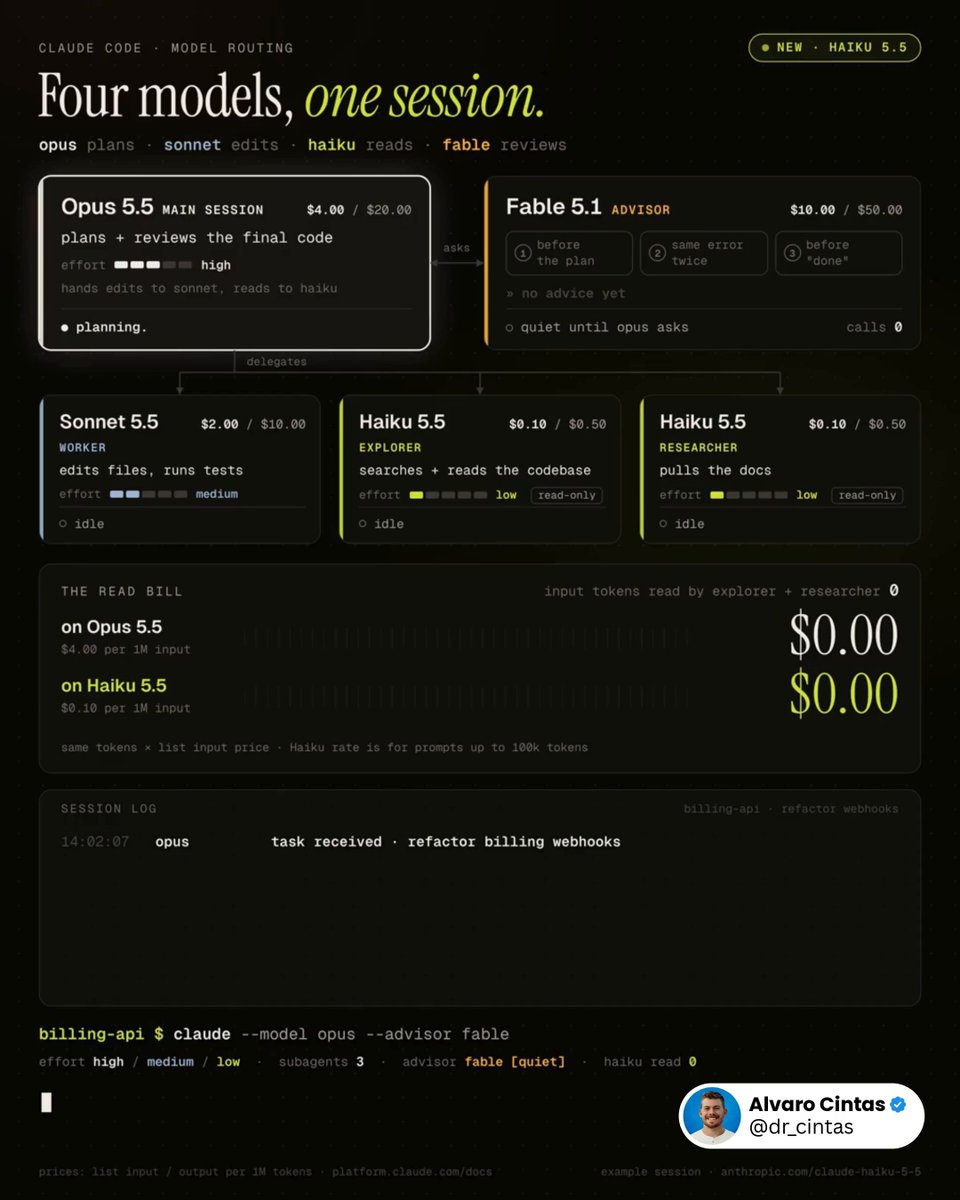
Claude Code has 3 models. Stop making Sonnet do Haiku’s job. Sonnet 5.5 builds. Haiku 5.5 scouts. Opus 5.5 reviews. Put them in parallel Git worktrees and let each model do what it’s best at. The setup: → Sonnet 5.5: Build features across isolated worktrees, writing code and running... show more

14,192 次观看 • 12 天前 •via X (Twitter)
15 条评论

the load-bearing piece nobody specifies: how does haiku's scout output reach sonnet's context? parallel worktrees with no shared artifact leave you with two divergent repo views and a merge conflict at the end.

worktrees fix the overwrite part, but 2 sonnets can still change the same shared type and you only find out at merge. what helped us: each session writes down which files it's about to touch before starting, and the others check that first

What is this UI everyone keeps showing 😂

Bro, Sonnet builds, Haiku scouts, Opus reviews is the cleanest model job split I've seen.

The real advantage here is combining model specialization with Git level isolation.

When Haiku's scout pass misses a dependency, what catches it? Sonnet's tests only cover files it knew to touch, and a reviewer reading just the diff can't see a file that should have changed.

Right tool, right job. Parallel models win.

Three models, one bankroll. Sounds like my MTT schedule. Still waiting on the graph though.

good dialogue hides exposition, sadly mine never learned to hide

routing scout to haiku and build to sonnet is how you stop burning the expensive model on grunt work. keep each role's files fixed and only change which model sits on that seat

can you drop the hair routine tooo ❤️🔥

Nice breakdown of the role split. Curious how well the handoff between scout and builder holds up in practice when the repo structure changes mid-session.

Parallel worktrees are like separate benches in a workshop: scouts, builders, and reviewers can move at once, while clean handoffs keep the finished parts compatible.

I wasn't ready for this! 🤭

6.6x per chip is big, but modeled cost depends a lot on the batch and context length assumptions. curious how it holds up on real long-context agent workloads.