Loading video...

Video Failed to Load

Go Home

Climate change is happening. Understanding it shouldn’t be complicated. Stay with me for accurate, simplified climate stories from across the globe, breaking down the facts and the impact on our communities. Simon Stiell الشيخ الأخضر Adonia Ayebare Dr. Alfred Okot Okidi Margaret Athieno Mwebesa Bob NATIFU Byamukama Henry Dr....

137,121 views • 8 months ago •via X (Twitter)

0 Comments

No comments available

Comments from the original post will appear here

Related Videos

At the panel session on “Rising Seas, Resilient Communities: Climate Adaptation Strategies in West Africa” at Harvard Business School earlier today, I had the opportunity to share Lagos State’s realities as a coastal megacity. Lagos sits on the continental shelf. Our land mass has grown from 3,577 to 4,050 square kilometres, largely through reclamation of wetlands and lagoon bodies. While this expansion has created space for real estate and infrastructure, it also comes with risks. This is why we insist that no reclamation takes place without Environmental Impact Assessments and drainage masterplans. These checks are necessary because when reclamation is done indiscriminately, it blocks stormwater pathways, destroys natural buffers like mangroves, and exposes millions of our people to flooding and erosion. As a city of over 22 million residents, we face additional pressures in managing daily waste. Lagos has long relied on a linear waste system with landfills, many of which are now decommissioned or about to be decommissioned . Today, we are deliberately shifting to a circular model that sees waste as a resource for wealth and energy. We have entered partnerships across the sub-region and beyond , including with a Ghanaian company that is helping us turn thousands of tonnes of waste into compost and reusable materials, while also setting up transfer loading stations to reduce what ends up in our landfills . We also recognize that Lagos is not alone in these challenges. The entire Gulf of Guinea shares similar threats. What happens in Togo, with its 42-mile coastline, or in Ghana, can affect us directly. That is why we have reached out to our neighbors and built regional partnerships on coastal protection, solid waste management, and climate adaptation. Our commitment is clear: to protect our environment, prosecute those who damage it, communicate with our citizens through advocacy on safe practices, and work with regional and international partners to build a Lagos that is not just surviving climate change but leading in adaptation strategies. These moves and developments are set to put Lagos on a #NewHorizon.

Tokunbo Wahab

10,221 views • 11 months ago

AfDB PRESIDENCY: ZAMBIA'S DR. SAMUEL MAIMBO OFFICIALLY LAUNCHES CANDIDACY Dr. Samuel Maimbo has been endorsed by both the Southern African Development Community (SADC) and the Common Market for Eastern and Southern Africa (COMESA). LUSAKA, Zambia, Jan. 31, 2025 /PRNewswire/ -- Development finance expert Dr. Samuel Maimbo today announced his candidacy for President of the African Development Bank (AfDB), presenting a transformative vision for Africa's economic future. "Africa stands at a critical juncture," Dr. Maimbo declared. "We need to get one billion people to work as quickly as possible by strategically supporting the industries that will improve livelihoods and ignite prosperity on our continent. The AfDB needs bold, results-driven leadership that is unafraid of making the hard decisions required to get the job done." With a 30-year career characterized by delivering real-world impact – record-breaking fundraising, translating bold ideas into practical implementation plans, and enhancing institutional efficiency – Dr. Maimbo represents an exciting way forward for the AfDB. His presidential platform focuses on achieving middle-income status for Africa through an AfDB which is laser focused on pace, scale and effectiveness of delivery. "Africa needs significantly higher rates of growth to successfully navigate today's development challenges and capture tomorrow's opportunities," said Dr. Maimbo. "I'm ready on day one to support governments in reaching their goals. It's time to stop talking about Africa's potential and start realizing it." Dr. Maimbo's core priorities include: Trade and Regional Integration: Currently at just 3% of global trade, Africa has immense growth potential through the AfCFTA's unified market of 1.4 billion people. Financial Resources: Strengthening markets, boosting savings, and attracting diverse investments can close Africa's financing gap. Agricultural Transformation: With 60% of the world's uncultivated arable land, Africa can become a global agricultural powerhouse. Infrastructure Development: Modernizing infrastructure is crucial for competitiveness and growth. Energy Access: Accelerating energy access while promoting sustainability will power Africa's long-term economic advancement. Climate Action: Despite contributing <4% to global emissions, Africa faces disproportionate climate impacts. Scaling up investments in resilience and embracing new technologies will safeguard Africa. Creative Industries: A powerful driver of youth employment and cultural exports, Africa's creative industries can amplify Africa's global impact. Inclusivity: Young people, women, and underserved communities across Africa must help design effective strategies. Born and raised in Lusaka, Dr. Maimbo has worked in development finance across Africa and the globe, most recently serving as the Vice President of Budget, Performance Review, and Strategic Planning at the World Bank. As Chief of Staff to successive World Bank Presidents, he played an instrumental role in advancing the institution's mission and strategy at the highest international levels. His stewardship in resource mobilization secured an unprecedented $93 billion financing package under the International Development Association replenishment, with over 70% of the organization's global commitments directed toward Africa. To learn more, visit

SADC Secretariat

11,635 views • 1 year ago

Maharashtra’s Mission for Tiger Conservation and Environmental Sustainability Glad to be present at the event organised on the occasion of 'International Tiger Day 2026' in Nagpur today. For more than 30 years, tiger conservation has been one of our highest priorities. Tigers are found in only 13 countries and India is home to nearly 75% of the world's tiger population. Maharashtra has also done exceedingly well in tiger conservation and is home to 444 tigers across 6 tiger reserves today. This success is the result of continuous efforts by the government in protecting natural habitats, adopting scientific conservation practices and working closely with local communities. With our five-point conservation strategy and the collective efforts of all stakeholders, Maharashtra will continue to strengthen its conservation work and soon emerge as the leading state in tiger conservation. Congratulations to the Forest Department for its dedicated efforts. It is encouraging to see technology strengthening conservation, with AI-based early warning systems and camera monitoring helping reduce human-wildlife conflict, particularly in districts such as Nagpur. As the world faces climate change and growing environmental challenges, protecting our forests has never been more important. By protecting the tiger, we are preserving biodiversity and securing a healthier future for generations to come. Minister Ganesh Naik ji, MoS Dr. Pankaj Bhoyar, MoS Adv. Ashish Jaiswal, MLA Sumit Wankhede, Representatives from Bhutan, Cambodia, Bangladesh and other dignitaries were present. Ganesh Naik Pankaj Rajesh Bhoyar Adv.Ashish jaiswal Sumit Wankhede #Maharashtra #Nagpur #InternationalTigerDay

Devendra Fadnavis

25,361 views • 22 days ago

The Liberal Party’s Green Delusionist can’t help himself… Mr. Guilbeault can’t seem to let go. The global facts on energy consumption, human development economics, population, and the environmental impact of Canada’s cleaner natural gas on the global coal-fired grid make his falsehoods on peak oil and pipeline capacity obvious. His years in Environment featured a 90% miss on emissions reduction, the burning down of Jasper after years of warnings to his failed Parks team, and the end of his punitive, hated carbon tax by a PM desperate to win an election by running as a conservative. So Mr. Guilbeault is lashing out. It shouldn’t be necessary to state the obvious but given the lazy press - and the fact that this climate fraud remains in this Cabinet full of the usual suspects that killed our economy for a decade, here is global energy in three simple charts: 1. FACT: Global energy demand and fossil fuel use is relentlessly rising. The world is using more of every form of energy including coal, oil and gas. 2. WHY? Because the greatest humanitarian human development moment in world history has been the energy intensive promotion of 1 billion people out of grinding poverty into the middle class in China, India and across Asia the past three decades. This is what is causing vastly higher energy consumption and rising global emissions. 3. HOW IS CANADA RELEVANT IN THE PLANET? With only 0.5% of global population and vast land and energy resources, what can we do to impact global emissions? - Alberta has more oil than the USA, Russia and China combined. We have more than enough gas to supply the needs of 4 billion people in India, China, Indonesia and across Asia. - We have the capacity and economic and proximity advantages to structurally displace a large amount of the dependence on thermal coal on the electrical grid across Asia - Because the retrofit of coal to gas is straightforward, our clean gas can cut the global emissions off the electrical grid of 4 billion people, at a scale equivalent to 2-3 times our entire national carbon footprint. Canada has been so blessed with so much. We have in front of us one of the biggest opportunities in history: To enhance human economic development commercially, environmentally, and diplomatically with trillions of dollars in trade and the soft power of becoming a critical part of global energy security. While cutting global emissions at scale. So why are green ideologues like Steven Guilbeault so angry? Because it must be killing him softly that the #1 climate action and most profound impact of Canada on global emissions in the coming decade will be trade from Alberta to Asia by the very same entrepreneurs and builders whose only request for a decade is that Stephen Guilbeault and his sad dystopian punitive green worldview just get out of the way.

David Knight Legg

36,518 views • 1 year ago

This year, more than 12 million people chose to spend their time in Circle communities. As 2025 comes to a close, I’ve been thinking a lot about the special moments happening in our communities every day for those millions of people. While other platforms are built to keep people scrolling, our communities help people learn new skills, take new directions, and create meaningful change for themselves and others. Far from mindless engagement, Circle communities are about enabling personal and professional transformations. It's easy to forget that every transformation is a life changing event. For some, this could be a new career or a business, and for others it's a new lifestyle. Not many in the world get to claim something as good and grand as their vocation, but we do. We also believe in our heart that making money, impact, and meaning shouldn’t be a trade-off. We think there’s a way for every creator, entrepreneur, and business to achieve all three, and to stop for nothing less. Once you’ve truly achieved it, you get to jump out of bed every morning with insatiable passion, purpose, and desire to build something beautiful for the world. Like I do every day! On that note, I made a short video reflecting on this theme and our most notable releases this year. A TL;DR of our major releases this year 🤯 - AI Agents - AI Workflows - AI Copilot - AI Summaries - Desktop App - Website Builder - Custom App Builder - Visual Email Builder - Push Notifications Builder - Circle Connect - Video Player Redesign - Live Redesign - Voice Notes In addition to those major releases, we shipped 200+ minor improvements and design updates. THE TEAM TRULY GAVE IT THEIR ALL! As we wrap up the year, I want to share my heartfelt gratitude to every Circle team member and customer for being on this ride with us, and for the incredible effort you put in. You should be super proud. Circle is in the business of transformation. Every year, it gets a little less lonely to be building a company with transformation at the core, because people are finally starting to get it. The world needs us now more than ever. And thanks to reaching profitability this year, Circle will soon be hiring for 50+ roles across the company, with the majority of these in our engineering and design teams, solely focused on making our product better. Thank you ❤️ See you in 2026!

Sid Yadav

413,658 views • 8 months ago

Hannah Spencer delivers her second speech in parliament, and does so on the Royal Address on behalf of the Green party "And this is only the second time I have made a speech here, so I hope you will all bear with me if I get any protocols wrong. Um. In my maiden speech, I gave a shout-out to the many professions and communities that haven't been well represented here in Parliament in the past, and I made a promise to help give them a voice." "And today it feels especially important to keep that promise because there's sadly not enough in the King's Speech that is going to make their lives significantly better. And that is why us Greens have tabled a reasoned amendment for all the people working hard, or to raise a family, or to just get through each day, because everyone deserves a safety net and a chance to get ahead." "For everyone who wants things to be different, one in three households in Gorton and Denton live in fuel poverty, and the UK has got some of the leakiest homes in Europe. And I know that because I have worked on thousands of them in my last job as a plumber." "And so if we want to cut energy bills for good, we really do need a properly funded and a properly regulated national home insulation scheme, and to go even bigger on renewable energy. And that is where investment should be going, not into nuclear power." "And the King's Speech includes some steps in the right direction, but it is nothing like the transformative, progressive programme that this moment demands. It doesn't rise to the climate and nature crisis that is happening now, and that's a crisis that can't be separated from the inequality and cost-of-living crises that are happening too, because it is always the poorest people that suffer the most here in our country and around the world." "And while certain people will claim that climate action is pushing up bills, we know that that isn't true, and we know that some of the people saying that are being bankrolled by the very companies causing climate destruction and ripping off our constituents." "And the Representation of the People Bill must go further on cleaning up politics because a greener, more affordable, more secure future is possible if you stand up to those vested interests and if we're prepared to admit that obscene wealth is damaging our country." "And people out there are so angry at the gap between the super, super rich and all the rest of us getting even bigger, and they want something equally big done about it. They don't want any child to go hungry, and they know that a free hot school meal for every child up to the age of 16 is possible if extreme wealth is taxed fairly." "They want public transport to be more affordable, and they know that we could start by giving free bus passes to all the under-22s, again, paid for by our tax system being made fairer." "They want everyone to have a roof over their head, to get a doctor's or a dentist appointment without struggle, and for the NHS to be run for the public good, not to line shareholders' pockets. And they know that change is possible if only this government, a Labour government, would tax extreme wealth fairly." "Our Green amendment includes new powers to control rents. Greens welcomed the changes in the Renters Reform Act and now plans for more social housing. But far too many people are still struggling to pay their rent and make ends meet. So alongside action to bring down energy and water bills, it is time to get a grip on the cost of renting too." "And now I was elected to give a voice to a politics that truly represents everyone. This is the first King's Speech I've been in Parliament to hear, and honestly, what I'm hearing isn't gonna give everyone the meaningful change that we and they all know is possible." "So Greens will have no hesitation to use our individual and collective voices over the coming months to welcome progress when it's made, but crucially, to demand the change that people were promised and the change that people deserve to have." "Thank you. Hear, hear."

Farrukh

441,485 views • 3 months ago

So Jefferson Morley says that "the evidence does not support the notion that Lee Harvey Oswald killed the president." Jeff relies on the eyewitness account of one of the Parkland doctors who treated JFK at Dallas, Bob McClelland. And he says I failed in Case Closed to challenge Dr. McClelland's credibility. Below is an excerpt from CASE CLOSED, Chapter 13, “He Had A Death Look: Parkland and Bethesda." Read it and decide for yourselves what you believe. And check my source notes, almost all based on my own interviews in 1992 with the chief attending Parkland doctors. It is their judgment of Dr. McClelland's account that is critically important. “However, some of the Parkland doctors who treated the President described a gaping wound in the rear of JFK’s head (the occipital region), not the right side (the parietal). If true, this not only contradicted the findings of the autopsy team but was evidence that the President was probably shot from the front, with a large exit hole in the rear of the head. Several Parkland doctors also thought they saw cerebellum, tissue from the base of the brain, on the stretcher or in the operating room. Yet, the autopsy photos of the brain show the cerebellum intact. If the Parkland descriptions of the cerebellum were true, this raised legitimate questions over the authenticity of the photographs of JFK’s brain, which showed no such damage. Robert Groden and Harrison Livingstone, in their book High Treason, devote more than thirty pages to highlighting this conflict between the Parkland and Bethesda descriptions of the head wound. However, it is questionable to rely on the Parkland doctors for any assertion about the head wound since, by their own admission, they did not examine it in detail. When Dr. Kemp Clark looked at the wound to determine whether the President could be revived, it was the first time it had been examined. “From what I read in later books, everyone looked at it in detail from the beginning, but that is not true,” recalls Dr. Jenkins. “We were trying to save the President, and no one had time to examine the wounds. As for the head wound, they couldn’t look at it earlier because I was standing with my body against it, and they would only have looked at my pants.”83 “We never had the opportunity to review his wounds,” Dr. Carrico told the author, “in order to describe them accurately. We were trying to save his life.”84 Dr. Adolph Giesecke agrees: “We had no time to examine the wounds. That was to be done by a forensic pathologist, not by us.”85 “I don’t think any of us got a good look at the head wound,” confirms Dr. Perry. “I didn’t examine it or really look at it that carefully.”86 “And when we realized he was dead,” Dr. Baxter recalls, “none of us had the heart to go and examine the head wound while Mrs. Kennedy was in the room. We all just made our way out of the room.”87 “When things were over with,” Dr. Jones says, “you felt it was her time and you should get out of there and let her be alone with him.”88 Dr. Baden of the Select Committee concurs: “Parkland was not concerned with whether the bullet was going from front to back or vice versa, they were only treating the symptoms, not the wounds. Some of them could be good surgeons but lousy pathologists. A third of the time, an autopsy shows something was missed by the treating doctors at the hospital. In unnatural deaths, it is common for the treating physicians to mix up stab wounds and gun shots, and they are wrong half the time about exit or entrance. The Parkland doctors did not clean Kennedy off—there is just no way they could have hazarded a real guess about that wound, since it was covered with blood and tissue. If they say they saw cerebellum, they are just wrong because the cerebellum was perfect. And if they say there was a large hole in the rear of the head, they don’t know what they are talking about since there is nothing there but the entry injury in the rear cowlick. The mistakes in judgments from Parkland are exactly why we have autopsies. “One of the most important aspects of the Zapruder film, often overlooked by the critics, are the frames immediately after the President was shot in the head. It’s very clear on the enhanced frames that there is a wound over the right ear, but the back of the head is clean. That film is incontrovertible evidence that there was no defect on the rear of the head.”89 Yet mistaken descriptions of what the Parkland doctors did and saw continue to be published. High Treason asserts that some doctors examined the wound with a flashlight and that Dr. Jenkins picked the head up from the stretcher to show other doctors the extent of the rear wound.90 The eight principal doctors who attended to JFK on that day all told the author that such reports were false. Moreover, Groden and Livingstone cite early interviews and some testimony before the Warren Commission to support their hypothesis that the Parkland doctors saw a different head wound than the one described at Bethesda.* Yet the Parkland physicians, in their discussions with the author, were almost unanimous in supporting the autopsy findings that the massive exit wound was on the right side (parietal) of the President’s head, not the rear (occipital), and that there was no sign of damaged cerebellum tissue. They insisted that the explainable differences in the wound descriptions between them and the Bethesda doctors have been exploited by conspiracy writers, who created a controversy where none exists. Some admitted that their early statements about the wounds, which they now consider to be mistaken, may have contributed to the confusion. Dr. Bill Midgett, who helped wheel the President from the limousine into trauma room one, says, “The President had quite thick hair, and there was a lot of blood and tissue. All of us were so shocked … and to have Mrs. Kennedy there—none of us stared very closely to see the wound. But it was more parietal than occipital—that much I could see. I did not turn the President over to look, but there was no cerebellum in that car or on the people.” “We did say there was a parietal-occipital wound,” recalls Dr. Carrico. “We did say we saw shattered brain, cerebellum, in the cortex area, and I think we were mistaken. The reason I say that is that the President was lying on his back and shoulders, and you could see the hole, with scalp and brain tissue hanging back down his head, and it covered most of the occipital portion of his head. We saw a large hole on the right side of his head. I don’t believe we saw any occipital bone. It was not there. It was parietal bone. And if we said otherwise, we were mistaken.”91 Dr. Giesecke also admits an error in his original testimony when he described the wound as more occipital. “I guess I have to say that I was wrong in my Warren Commission testimony on the wound and in some of my pronouncements since then. I just never got that good of a look at it. But, for instance, Lifton spent six hours with me trying to get me to say the wounds were like he wanted them. The truth is there was a massive head wound, with brain tissue and blood around it. And with that type of wound you could not get accurate information unless you feel around inside the hole and look into it in detail, and I certainly didn’t do that, nor did I see anyone else do that.”92 Dr. Peters had said that the cerebellum was damaged. “I saw the photograph of the brain when I was in Washington for the Nova program, and I saw the cerebellum was depressed, but it was not lacerated or torn. It is definitely pressed down and that would be the damage I referred to in 1964.… The only thing I would say is that over the last twenty-eight years I now believe the head wound is more forward than I first placed it. More to the side than the rear. I tried to tell Lifton where the wound was, but he did not want to hear.” Dr. Jenkins’s original report also stated he saw cerebellum. “The description of the cerebellum was my fault,” he says. “When I read my report over, I realized there could not be any cerebellum. The autopsy photo, with the rear of the head intact and a protrusion in the parietal region, is the way I remember it. I never did say occipital.”93* “I did not really look at it that closely,” says Dr. Perry. “But like everyone else, I saw it back there. It was in the occipital/ parietal area. The occipital and parietal bone join each other, so we are only talking a centimeter or so in difference. And you must remember the President had a lot of hair, and it was bloody and matted, and it was difficult to tell where that wound started or finished. I did not see any cerebellum.”94 Dr. Baxter agrees that it was difficult to determine the precise location of the wound when treating the President: “He had such a bushy head of hair, and blood and all in it, you couldn’t tell what was wound versus dried blood or dangling tissue. I have been misquoted enough on this, some saying I claimed the whole back of his head was blown away. That’s just wrong. I never even saw the back of his head. The wound was on the right side, not the back.”95 Dr. Jones makes the same observation, saying he did not even know there was a head wound for several minutes, and then finally realized it was a “large side wound, with blood and tissue that extended toward the rear, from what you could tell of the mess that was there.”96 Dr. Giesecke agrees “that the occipital and parietal region are so close together it is possible to mistake one for the other.”97 The only Parkland doctors who still believe they saw a wound in the rear of the head, as well as seeing cerebellum, are Robert McClelland and Charles Crenshaw. “I saw a piece of cerebellum fall out on the stretcher,” says McClelland, who claims he was in the best position of any of the doctors to view the head wound.98 He drew a sketch in 1967 for Josiah Thompson’s book Six Seconds in Dallas, which showed a gaping wound in the rear of the head.99 “I am astonished that Bob would say that,” says Dr. Malcolm Perry. “It shows such poor judgment, and usually he has such good judgment.”100 “I don’t think Bob McClelland was in the best place to see the head wound,” says Dr. Peters. “He wasn’t in that position the way I remember it, as he was on the other side of the table. As for Dr. McClelland saying he saw cerebellum fall out on the table, I never saw anything like that.”101 “Bob is an excellent surgeon,” says Dr. Jenkins. “He knows anatomy. I hate to say Bob is mistaken, but that is clearly not right. In 1988, when I went to the National Archives, the photos showed the President’s brain was crenelated from the trauma, and it resembled cerebellum, but it was not cerebellar tissue. I think it has thrown off a lot of people that saw it. I guess a last point is that Bob and Groden [co-author of High Treason] are such good friends, I believe it has changed his attitude.”102 “McClelland may be a fine surgeon, but he is a lousy pathologist,” says Baden. “I am sure he thinks he saw that, and has developed it in his mind. But his memory is just completely wrong, and the autopsy photos and X rays prove that.”103* Dr. Crenshaw wrote a book in 1992 in which he claimed he examined the wound, that the hole was in the rear of the head, and that the cerebellum was lacerated.104† Crenshaw, a junior resident at the time, arrived late at trauma room one and assisted for only a few minutes near the end. He was in no position to make the judgments he sensationally proclaimed in his book. In fact, his role was so minor that most of the other doctors do not even remember him. “I don’t remember Dr. Crenshaw in the room,” says Dr. Ron Jones. “I don’t remember him in there at any time, but he may have been,” recalls Dr. Jenkins. “Neither do I,” says Dr. Baxter. “I feel sorry for him,” says Dr. Perry. “I had thought about suing him, but when I saw him on television [promoting his book], my anger melted. He has to know that what he said is false, and he knows the rest of us know that. You have to pity him. What a way to end his career. His story is filled with half-truths and insinuations, and those of us who know him know he is desperate.… He is a pitiful sight.” A senior Dallas doctor who is a close Crenshaw friend told the author, “I think it is a bag of worms of ego, going over the hill, the last hurrah.” While almost all the Parkland doctors who treated JFK support the findings of the autopsy team, their confirmation may not be as important as the studies conducted by subsequent panels of experts. The Clark and Rockefeller commissions, as well as the House Select Committee’s medical panel, affirm the original autopsy conclusions about JFK’s head wound. The most detailed work was done by the Select Committee. All nine forensic pathologists agreed that the beveling of the skull and the damage to the brain meant the small rear hole in the President’s head was an entrance wound.105 The exit hole was consistent with a wound caused by the two large bullet fragments found in the front of the President’s car.106* SOURCE NOTES 83. Interview with Dr. Pepper Jenkins, March 10, 1992. 84. Interview with Dr. Charles Carrico, March 8, 1992. 85. Interview with Dr. Adolph Giesecke, March 5, 1992. 86. Interview with Dr. Malcolm Perry, April 2, 1992. 87. Interview with Dr. Charles Baxter, March 12, 1992. 88. Interview with Dr. Ron Jones, April 14, 1992. 89. Interviews with Dr. Michael Baden, February 1, 1992, and November 7, 1992. 90. Groden and Livingstone, op. cit., p. 46. 91. Interview with Dr. Charles Carrico, March 8, 1992. 92. Interview with Dr. Adolph Giesecke, March 5, 1992. 93. Interview with Dr. Pepper Jenkins, March 3, 1992. 94. Interview with Dr. Malcolm Perry, April 2, 1992. 95. Interview with Dr. Charles Baxter, March 12, 1992. 96. Interview with Dr. Ron Jones, April 14, 1992. 97. Interview with Dr. Adolph Giesecke, March 5, 1992. 98. Interview with Dr. Robert McClelland, March 9, 1992. 99. Thompson, Six Seconds in Dallas, p. 140. 100. Interview with Dr. Malcolm Perry, April 2, 1992. 101. Interview with Dr. Paul Peters, March 10, 1992; Dr. Peters also drew a diagram that showed the doctors’ positions around the table and provided it to the author. 102. Interview with Dr. Pepper Jenkins, March 10, 1992. 103. Interview with Dr. Michael Baden, February 1, 1992. 104. Charles Crenshaw, op. cit., p. 88. 105. HSCA Vol. VII, pp. 110, 115. 106. Ibid., p. 128. AND the Footnotes to that section *Although no one at Parkland saw JFK’s back wound, Dr. Pepper Jenkins later told Dr. John Lattimer that he had felt it with his finger when he positioned the President’s head and neck to facilitate the passage of oxygen (Kennedy and Lincoln, p. 153). * After the autopsy, Humes and Boswell wrote their report from memory, without the benefit of the photographs or X rays. Robert Kennedy, who feared the public display of the X rays and photos would be offensive to the Kennedy family, reached an agreement with the Warren Commission not to publish the materials, and except for Earl Warren, the commissioners did not examine them. When the film was turned over to the custody of the National Archives in 1966, a metal box containing the President’s brain was missing from the inventory, together with some tissue slides. Humes had given everything from the autopsy, including the brain, to JFK’s personal physician, Admiral George Burkley. “He told me,” said Humes, “that the [Kennedy] family wanted to inter the brain with the President’s body” (Journal of the American Medical Association, May 27, 1992, Vol. 267, No. 20, p. 2803). The House Select Committee concluded that Robert Kennedy likely disposed of the material for fear it would become a lurid public exhibition (HSCA Vol. VII, pp. 367–68). * In 1988, four of the Parkland doctors—Pepper Jenkins, Richard Dulaney, Paul Peters, and Robert McClelland—went to the National Archives at the invitation of a PBS documentary show, Nova, about the assassination. They were the first Parkland physicians to see the autopsy photographs, and each confirmed the photos represented what they remembered seeing that day, including a picture of the rear of President Kennedy’s head, which shows no defect. It has been suggested that the reason the photo shows the rear of the President’s head as undamaged is because the doctor (whose fingers are present in the picture) is holding a large flap of skin to cover the rear defect. “False,” says Dr. Michael Baden. “There is no flap of skin there. There is a bony protrusion from the right side of the head, but the rear is undamaged, except for the entry hole near the top of the skull” (Interview, January 23, 1992). * High Treason asserts that Jenkins originally said JFK was shot in the chest. Jenkins laughed when the author read him the Groden and Livingstone charge. “I don’t know where they get this stuff from. We put tubes into the President’s chest, but there were no chest wounds caused by anything else.” * In his original report, McClelland said there was a wound to the left temple, one that does not show up on any autopsy X ray or photograph. This has caused some to charge that Kennedy was shot by a second gunman from another location at Dealey, and that the autopsy team either negligently or intentionally overlooked that wound. “I’ll tell you how that happened,” Dr. Jenkins explained to the author. “When Bob McClelland came into the room, he asked me, ‘Where are his wounds?’ And at that time I was operating a breathing bag with my right hand, and was trying to take the President’s temporal pulse, and I had my finger on his left temple. Bob thought I pointed to the left temple as the wound.” † Crenshaw also said the autopsy photograph of the tracheotomy opening on Kennedy’s neck shows that it was larger than it had been at Parkland, implying that additional surgery might have been done between Parkland and Bethesda. “That’s ridiculous,” Dr. Malcolm Perry told the author. “I did the procedure. Tracheotomies are not pretty things, as speed is of the essence. Tissue can sag and stretch after death, but the photos I have seen look like the opening I remember making.” * While the Select Committee’s forensic panel agreed that a bullet had entered from the rear and exploded out the side of the President’s head, there was a lone dissent. Dr. Cyril Wecht said that such a finding did not preclude a shot also entering from the front. Dr. Wecht believed that the large exit wound on the right side “could hide an entrance wound at the same spot.” In other words, just as Oswald fired from behind and his bullet exited the President’s head, a front shooter fired into the wound created by the rear bullet. That is Wecht’s way of explaining why there is not another entry hole on JFK’s head. However, the X rays and photographs show no exit for a front bullet. The author raised the issue with Wecht, and he admitted that “the question of where did a front bullet exit is a very good one.” He first suggested that the front shot may have been a frangible bullet, which would have exploded upon impact in the brain. However, the X rays do not show any metal fragments in the brain from such a bullet, and when this was pointed out to Wecht, he acknowledged, “Yes, that’s true, there should be more fragments.” Finally, he suggested that the front bullet may have been plastic, and penetrated the brain but did not exit. He argued that since the brain is not available for examination, his speculation is possible—except that plastic bullets were rarely available until 1968, five years after the assassination. * The author viewed a video taken of the execution of a journalist by army troops in Central America. When the victim, who was lying flat on his stomach on the ground, was shot in the rear of the head, his upper torso and legs arched off the ground, in the opposite direction of the bullet. It was similar to the neuromuscular reaction JFK suffered. Also, when Governor Connally was struck in the rear shoulder by a bullet, he did not fall forward, but is clearly visible on the Zapruder film, his wounded shoulder pushing back into the car seat, toward the direction from which he was shot.

Gerald Posner

18,994 views • 1 year ago

Powerful speech by Naturalist Chris Packham speaking alongside Zack Polanski on the subject of Climate Change, "To the disappointment of many, football didn’t come home this summer, but to the pain and suffering of millions, climate breakdown has. And our government and media response has displayed a total dereliction of duty in a time of extreme crisis." "As we’ve heard, in May and June there were 3,000 deaths attributed to the heat domes that have hung over the UK. Heat exhaustion, heat stroke, stress on the heart and kidneys, and of course those mental health issues that you’ve just talked about." "In Europe, the figure is somewhere between 14,000 and 20,000 up until the end of July, and it’s expected to double by the end of this summer. So we’re looking at potentially 50,000 deaths across Europe." "If these deaths had been the result of terrorism or a pandemic, the government would have cancelled its summer holiday, it would have held COBRA meetings, and there would be public information campaigns the likes of which we saw during COVID, designed to protect us in this time of crisis." "And yet what do we get? We get rumours of possibly more drilling for oil and gas, and we get articles in the Telegraph which suggest that we ought to adapt to a Mediterranean climate. If that isn’t reckless and irresponsible, I don’t know what is." "What we do need at this point is to listen to the science, not to the ongoing malevolent raft of mis- and disinformation that’s perpetuated in politics, in public life and certainly across social media." "If we listen to the science, we see that the climate models that were devised in the 1990s have actually proved to be pretty accurate. But those who do try and transmit the information to us, people like the IPCC, which are often derided as alarmists by the right and the far right, have actually been too cautious." "What we see, for instance, when it comes to the heatwaves, is that they are occurring more quickly and more regularly than those models suggest. We’re updating the science as it happens. What we also see is that it’s not just a lack of water which is leading to the drought, although that might seem painfully obvious. It’s actually being exacerbated by extremely high temperatures." "And that has an impact on the environment, the environment that I care so much about and we are all dependent upon. Across the world, there have been 35,000 wildfires. In the UK, there have been 66 major wildfires. But let’s not focus on 66, because that sounds quite a small number. In one fire and rescue service, Berkshire, they’ve attended over 250 outdoor fires so far this summer. So the number of grass fires and so forth is going to be significantly higher than that." "Drawing upon an underfunded, under-resourced organisation at the front line of dealing with a crisis that is impacting all of us. So lives have been lost, homes have been destroyed, businesses have been ruined. The clean-up cost – just look at Palisades in America – is incomprehensible. We simply can’t afford it." "And then from my perspective, the damage to wildlife, which has got scant mention, of course, because as ever we put human interest first because they’re most immediate. And you might think, well, Chris is bound to bang on about the wildlife because he loves the birds and the bees. Yes, the birds and the bees, which form resilient ecosystems which allow us to produce the food that we eat. We have to protect nature in order to protect ourselves." "So you might think, okay, the UK, the wildfires – they’ve all been out there on the heaths in Suffolk, they’ve been burning patches of heathland on the Isle of Wight. Not many homes have been destroyed. Well, the Ordnance Survey say that 1.8 million homes are at risk in the UK by looking at their maps and seeing which homes are adjacent to areas which have significant wildfire risk. 1.8 million homes at risk. So far, compared to Europe, we’ve just got away lightly and we’ve just been lucky." "How many firefighting planes do you think that we’ve got in the UK? How many firefighting planes in the UK, exactly? Zero planes. Which is why, as Zack said, when that fire was burning at Dunwich, the National Trust had to hire a helicopter and pay for it to drag water out of the sea and dump it on that precious piece of habitat, because there are no firefighting planes." "Is there a public warning system in place which will tell people when there’s a risk of wildfire so that they can be prepared to evacuate and have evacuation plans in place? Well, do you know what? There is. It’s available to the fire and rescue service, but it isn’t available to the public because it’s deemed to be unreliable. Is it unreliable, or is it just a bit too scary? We couldn’t even instigate a ban on disposable barbecues." "Okay, there are the problems. What about the solutions? Because look, there’s no point in just pointing out the problems. What we must do at this point is offer people real and accessible opportunities to be part of a solution rather than an ongoing part of the problem." "Well, the first thing already: we’ve got to enact far more rapidly that transition to renewable energy for energy security, to reduce the cost of energy and its volatility that we’ve seen constantly across the world this year, which is having a significant impact not just on the cost of oil, but on the cost of living and global economic stability. It would also generate jobs, as it has in those countries that have invested significantly in those industries, most notably China. Talk of drilling oil – Rosebank, Blackbird, Jackdaw – is simply madness. We’ve got to just stop oil." "We also need a transition in the way that we eat. This is intricately important when it comes to protecting the environment, everything that lives there, and ourselves. We need a transition to a plant-based diet. It’s healthier for people. If any of you have had bacon or sausage for breakfast this morning, do you know that you’ve ingested a category A carcinogen? That’s it – as toxic as tobacco. You may not. You may have just enjoyed your sausage and bacon. Why do you not know that processed red meat is actually really bad for you?" "Animal agriculture is responsible for 12% of greenhouse gas emissions in the UK. It is also the leading driver of biodiversity loss. That biodiversity, that richness of life, that resilience in those ecological communities which we use to produce our food – we’ve got to change the way that we eat and produce that food, and we’ve got to provide sufficient support for farmers through that transition. And at the moment, they’re not getting that. In fact, they’re getting less and less and their life is becoming increasingly difficult." "We’ve got to address the mis- and disinformation, and we’ve got to do that with positive information campaigns. We’ve got to have people’s minds on the front foot so they know what’s true before they hear the lies. Then they will question the lies. Otherwise we know what happens. If you tell a lie frequently enough, it eventually becomes the truth, and that’s what we’re suffering from. We can’t afford net zero? We can’t not afford net zero. And we’re beginning to see that that’s the case." "We’ve got to sort out the media. I’ve been fantasising this year that we could perhaps criminalise climate denial. We should certainly criminalise irresponsible journalism. I’ve highlighted the Telegraph, but I’m going to leave you with something that I read on the BBC yesterday: ‘How to survive a heatwave wedding.’ How to survive a heatwave wedding. Point number five: beware of buttercream. This popular wedding cake ingredient is likely to melt if not kept cool. Likely to melt? A bit like my patience and all of our hope." "It’s time for bold, brave, informed leadership. And we are not getting it. We need Andy Burnham to step up before we and our only home burn down. Thank you."

Farrukh

206,423 views • 15 days ago

Yesterday I saw Hokanews post the article which is:" The Price of Pi Coin is not $314,159, Here are the actual facts from the words of Dr. Nicolas Kokkalis ". This led to all global community shock and debate. The following is what my understanding of this article and my explanation is to let the community avoid the misleading of Dr.Nicolas Statement! Pay attention! This is only my personal opinion for reference only. I am not representing Dr. Nicolas or Pi Network Core Team!🙏 1. Dr Nicolas never guides or indicates what the Pi Coin price is. He stated one year before: Pi Price was created by pioneers. Therefore Pi Network CT never judges price or indicates/ guide price. They never interrupt pioneer community activities regarding price. They strictly obey USA SEC regulations! If someone uses Dr. Nicolas name to manipulate price, this is a fake statement. It's not Dr. Nicolas Kokkalis statement. 2. Dr Nicolas Kokkalis answered some Pioneers questions regarding 0.01 transaction fees around one year before. Some Pioneers think if $314,159 is Pi price then 0.01 Pi transaction fees are too high. Therefore Dr. Nicolas Kokkalis answered that 0.01 is fixed right now. But it will be adjusted with time. It can be 0.001 or 0.0001. Maybe some day, it can be 1/1 million which is 0.000001 which is the lowest in the Blockchain system. He just gave an example and he said 0.000001 is Pi Network Blockchain function to adjust the transaction fees Lowest limit. 3. There are logic mistakes in Mr. Lu statement. The possibility of 0.000001 doesn't mean it is. How can we change the possibility to reality. This is the critical thing we need to consider! Right now large portions of Pioneers Community accept GCV $314,159. And we can see in China there are 100 million USD transactions to support GCV! However I only see $200 1 transaction to support 1 million USD. If I am wrong, please send me the substantiate proof. 4. Our GCV $314,159 never goes against higher consensus price. $314,159 is safe bottom line to start open mainnet. And we can see many merchant promises to use GCV when this price is fixed which includes real property and cars vehicles, gold ect. 5. If the price can't be united, the Eco system mature time will take a long time. I don't think this is what pioneers and merchants want to see. In addition, the longer close the mainnet, the more pioneers and merchants will lose. I heard from Chinese merchants that they almost used up all their inventory and funds to support GCV. They are waiting for the price to be fixed and open the mainnet so that they can have cash flow to restock. If the open mainnet is delayed, they will have a hard time to support anyone. 6. Not only GCV merchants need to open the mainnet soon, low consensus merchants such as $100 or 1$ price has almost run out of the inventory or fund too. No matter the high or low price for barter, all merchants need cash FiAT when the industry cycle is not built up. I heard one merchant gets 2000 Pi from barter by using a low price,he complained that he has no cash to support anymore. 6. In order to save and help all low and high price merchants, united prices are critical to resolve all cash flow problems. Only when united prices, the outside eco businesses know how to pledge pi to use Blockchain and create the demand of Pi. So merchants and pioneers can have converters use the same price! I call on all global community pioneers and merchants united to GCV together and don't fight prices anymore. It will hurt the community if you can't settle the price down soon! All best wishes and Happy Mother's day to global pioneers! Especially to all mothers🙏🙏🙏🎉🎉🎉 Pi Network #PiNetwork #PiGCV

Doris Yin 东方紫莲🪷

38,884 views • 3 years ago

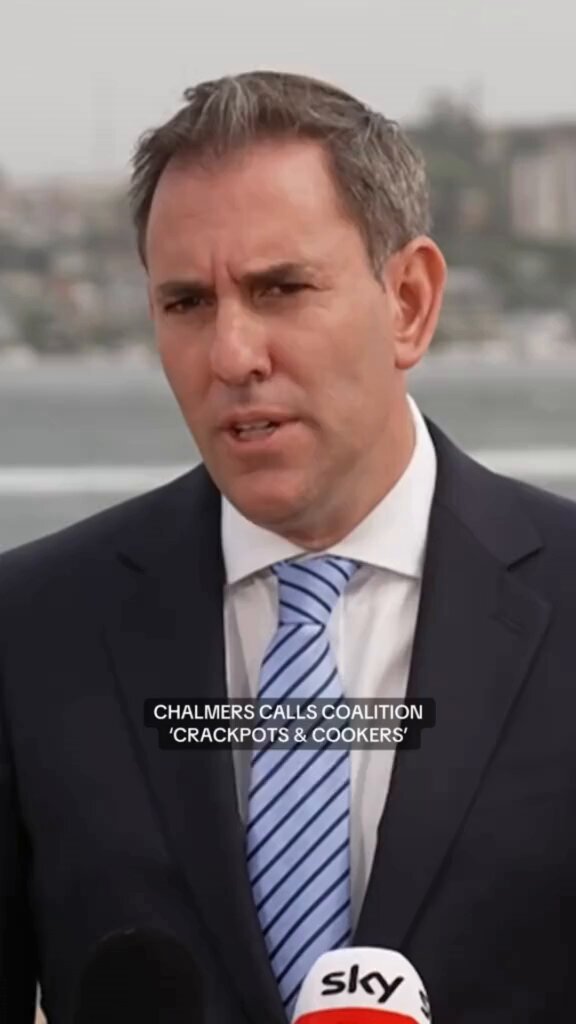
Dr Jim Chalmers PhD is a smartarse. He let fly on Sussan Ley today, and for the first time since Albanese became leader of the Labor Party, they are worried. They are not afraid of Ley. They are trying to shame her into stepping back into the Net Zero love in. The place where all the establishment elite hang out, eat fine food and slap each other on the back with their gym towels. Ley will be susceptible to this, because deep down she has a strong conviction, an unwavering belief in serving the establishment power and finding the path of least resistance. (The coalition needs a new leader and a new front bench.) But the absolute tantrum being thrown around the Australian institutions right now, can be heard from New Zealand. It shows the coalition are indeed over the target, and that with Australia first policies built on good principles, they can win. All the Labor and Green sympathisers in the media, the pollsters, the academics, the commentariat and the politicians themselves are desperately trying to convince the coalition that they will not win ever again if they change course on Net Zero, climate action and a raft of other things. I am not sure if they are just not that bright, or if they just think we are stupid, but I can’t understand why all these people are so worried about the fortunes of their political opposition. An opposition they really can’t stand. I think it is more likely they are scared that without the coalition pretending along with them on the made-up issues like the desperate need for Net Zero, they will have to tackle some of our real-world problems. Oh… and the big, gigantic taxpayer funded money-go-round will stop. Which means they will have to get real jobs… “yuck”. When Jim Chalmers, called anyone who doesn’t think Net Zero is a good idea “cookers” and “crackpots”, it seemed to me he thinks that the massive opposition to what is now obviously failed policy, is just a fringe group. It isn’t. Anyone with half a brain cell can see the cost of electricity has gone up faster than the transition itself. We have watched the aftermath of the closing of one coal-fired power station after another, being replaced with finicky, intermittent and ill fit ‘renewable’ solutions. It is in every power bill and plastered on the exit door of every major manufacturing-based business closure. It is in the cost of everything we have and do. But the game is over. The world is moving on from Net Zero. We are not even that worried about the clearly overstated climate problem so much anymore. Because they cried wolf, time after time, they bashed us over the head from their private jets champagne in hand, as they called us names. We disgust them. It is clear the Labor/Green arguments on climate have been overstated. The solutions ill thought through and undercooked. The only real winners have been the billionaires, lobbyists and ex-politicians who seem to have extracted more welfare from the Australian public than the NDIS and Centrelink combined, as they are paid to provide infrastructure that does not work. Only to shelve it and ask for another hand-out for the next one. Which they get. The problem is that intermittent energy generation like solar and wind is unstable - by design - and battery technology is far from where it would need to be to stabilise it. Electricity provision is a delicate balance of supply and demand, and random, unpredictable power generation is counterproductive. Too much electricity is as bad as not enough. Simple, predictable and reliable energy sources will always be cheaper. Energy sources that are not reliant on the unpredictable weather, or transient cloud free daylight. the "transition" was always a terrible plan and doomed to fail. That's before you even get to the disastrous execution. The elites really do take us for fools; it's not like any of this was an unknown to them at any point. Meanwhile average household incomes are being beaten into insignificance by inflation, driven by an energy system that has become more complex, and unstable than a Swiss watch balanced on the mast of a yacht, sailing the Sydney to Hobart. Chalmers has never had a real job, but he calls us names. Us... we the people who pay his salary. After the mess he and his mates have caused, he has no right to call us names. In truth, he owes us all an apology. I am certain we would be better off without his help, and I for one begrudge him every dollar he has ever made off the back of the taxpayer. He is a disrespectful, incompetent, and ungrateful waste of a seat. A smartarse of a man not fit to be treasurer. We must do better. I just want Australia back.

Matthew Camenzuli

35,976 views • 9 months ago

Caught on audio: Another time top public health officials at CDC lied about Covid vaccines to the public. From: Full Measure News 2021: Today we begin with an investigation regarding the Covid-19 vaccine shortages. There are serious questions about an incorrect claim made by top scientists at CDC: the nation’s premiere public health institute. Critics call it misinformation. CDC chalks it up to an “honest mistake." Whatever it is, it resulted in vaccines going to some who are said to need it the least depriving others who are said to need it the most. Like a lot of Americans, Congressman Thomas Massie already had coronavirus and wanted to know if he should still get a Covid vaccine. Most everyone who’s had Covid-19 is considered immune. But how long immunity lasts is unknown—whether it’s after infection or vaccination. An award-winning scientist himself, Massie quickly found that vaccine studies showed no benefit to people who’ve had coronavirus. Vaccination didn’t change their odds of getting reinfected. The controversy began when Massie noticed the CDC was claiming the exact opposite. CDC’s Advisory Committee on Immunization Practices had just issued a high profile report authored by 15 scientists. It wrongly claimed Pfizer’s study proved the vaccine is highly effective or showed “Consistent high efficacy” for people who’d already had coronavirus—“SARS-CoV-2.” Rep. Thomas Massie: It says the exact opposite of what the data says. They're giving people the impression that this vaccine will save your life, omr save you from suffering, even if you've already had the virus and recovered, which has not been demonstrated in either the Pfizer or the Moderna trial. The mystery deepened when Massie contacted CDC for an explanation. Massie says he was so alarmed by the misinformation, he decided to record the calls. On a December 16th call, CDC’s Captain Amanda Cohn seemed to agree that people who’ve had coronavirus shouldn’t rush to get vaccinated. Dr. Cohn: People who have had disease, given that there's limited doses right now, we're, we are suggesting that those people wait. Rep. Massie: Right. That suggestion, to wait, hasn’t always gotten out. NBC News Clip, Dec. 10, 2020: Anchor Lester Holt: Should I get the vaccine if I’ve already had Covid? Dr. John Torres: Most experts say it’s a good idea because they’re not sure how protected you are after recovering. Our Full Measure investigation examined the database reporting illnesses after Covid vaccines. It shows numerous people are getting vaccinated— even though they’ve already had the virus. Some experts say that’s depriving others who need the vaccine most. CBS News Clip, January 21, 2021: Anchor Norah O’Donnell: Health officials in many states say they don’t have enough vaccine. CBS News reporter: It is happening across the country, promised doses not delivered. On the call, CDC’s Dr. Cohn thanked Massie for flagging their mistaken claim that vaccines were proven to work for people who’ve had coronavirus. Dr. Amanda Cohn: I think we read that thing so many times that when, you know, we just skipped right over it. We know we can't be perfect, we know we're gonna miss things. You will forever after be known in our office as “Eagle-Eyed Man.” Rep. Massie: They said, “Thank you for finding the mistake. We're going to fix this.” And I thought, “Well, okay, problem solved. This is how government works.” But it didn’t quite turn out that way. Two days later, the same Dr. Cohn who’d promised a fix, joined other CDC doctors in repeating the false information, this time in an online session for medical professionals. They claimed studies show people who’ve had coronavirus do benefit from the vaccine. Dr. Amanda Cohn (CDC video): “So Sara Oliver, what, should people who’ve had Covid-19 be vaccinated and should they be vaccinated now?” Dr. Sara Oliver (CDC video): “...Data from both clinical trials suggests that people with prior infection are still likely to benefit from vaccination.” Then, this past week, a full month after CDC promised to correct the false information, Massie found it was still on CDC’s website. Rep. Massie: So I called them up on Tuesday, as soon as I could, to ask them why it hadn't been fixed. And it was like, I was starting all over with the same people. And instead of fixing it, they proposed repeating it and just phrasing their mistake differently. Anstice Brand: I’m always happy to talk with you. This call with CDC’s Washington DC Director Anstice Brand: Rep. Massie: If there's a "they," who is refusing to fix something that is factually and provably wrong, I wanna know who “they” is. Because this is gonna result, and it's already resulting in misallocationof the vaccine Brand: Let me check that and get back to you as soon as possible. Massie also argued the point in a call with Dr. Sara Oliver, the CDC scientist who gave the misinformation on the web video. Rep. Massie: Hi, this is Congressman Thomas Massie. Is this Dr. Oliver? Dr. Sarah Oliver: Yes Rep. Massie: There was an error and I noticed you are an author on it and I wondered if I could get your help in getting this error corrected. You can't say it's efficacious for people with prior infection. That's an absolutely untrue sentence Dr. Oliver: Yeah, I mean, we're- we're still recommending that individuals who have prior infection receive the vaccine. Um, but we wouldn't want to put out that if you had COVID before, you shouldn't get the vaccine. Rep. Massie: Actually, if you've had COVID before, and there's a 75-year-old person who can't get the vaccine and you're 30-years-old, you are, you should not get the vaccine because you are wasting resource. It will lead to people who- who die or have medical complications because we have a limitation of the vaccine. That's why I think it's important that that document get fixed Dr. Oliver: Okay. I- I can, um, I can talk with MMWR, and with Dr. Cohn and see, if, if we can tweak that language a little bit Full Measure found several other scientists equally critical of CDC’s incorrect claim. Jay Bhattacharya is a professor of medicine at Stanford University. Sharyl : CDC has had a scientific policy guidance on its website that claims the coronavirus vaccine has proven equally safe and effective in all age groups, races, and so on— and including for those who previously had a coronavirus infection, COVID-19. Is that your understanding— Is that true? Dr. Jay Bhattacharya: That second part is not true. People who have had previous infection, the vaccine, the evidence, the trial evidence shows that it is not effective in additionally preventing the disease. Why would it be? You're already immune. If the CDC has on its site, that it is doing the public a disservice, both to people that get vaccinated that don't really need it because they've been previously infected, and also the people who should be prioritized to vaccine, but aren't getting it because of shortages. We asked CDC, Dr. Oliver and Dr. Cohn for interviews but they declined. Some of the agency’s response was summed up during Congressman Massie’s final call with CDC this past week. It was with CDC Principal Deputy Director Anne Schuchat. Thomas Massie: I feel like right now, we have the tail wagging the dog, that the folks who want to do the messaging, the folks who want everybody to get the vaccine, have pressured the folks who are doing the science, i.e. reviewing the Phase III trial from Pfizer, not to correct the document—but the document is false. So the CDC can do whatever messaging they want. That's, that's the CDC's job, not my job. But they cannot propagate false and incorrect science. So that's my position. And I'm- Dr. Schuchat: Sure. Thomas Massie: ... really disappointed it's gone on a month without being fixed. Like, really disappointed Dr. Schuchat: As you note correctly, there is not sufficient analysis to show that in the subset of only the people with prior infection, there's efficacy. So you're correct that that sentence is wrong and that we need to make a correction of it. I apologize for the delay. But in terms of a large scale, you know, trying to mislead people, I just give you my word that that was not the intent. So really apologize about the confusion that we apparently caused, and perhaps the, as you say, you know, people who are fairly low risk rushing to get vaccine ahead of people who are higher risk. CDC has now issued a correction. But Massie and other scientists we asked say the new wording still wrongly implies studies show vaccines work in people who have had coronavirus. Rep. Massie: And instead of fixing it, they proposed repeating it and just phrasing their mistake differently. So, at that point, right now I consider it a lie. I think the CDC is lying about the efficacy of the vaccine based on the Pfizer trials, for those who have already had the Coronavirus. Sharyl (on-camera): As for how 15 scientists who could have originally signed on to a paper that so plainly misrepresented vaccine studies there is no clear answer.

Sharyl Attkisson 🕵️‍♂️💼🥋

31,737 views • 8 days ago

In this clip, Dr Jordan B Peterson and Charlie Kirk wrestle with two vitally important questions both for conservatives and for Western civilization. 1. What does it mean to be conservative and anti-woke when the majority of institutions are Woke? 2. What does it mean for a conservative to deem an institution to be irredeemable? Dr. Peterson highlights one danger that necessitates an answer to the first question: an anti-institutional conservative is an oxymoron. When conservatives advocate for the destruction of institutions they are indistinguishable from leftist radicals. This is the position that Woke Right radicals like Dave Greene and Auron MacIntyre embrace, they call themselves right wing radicals and admit they want to tear down existing institutions and replace them with something they claim will be different. The Woke Right passionately loathes Dr. Peterson for exposing the contradiction here. There is another danger here that doesn’t come up in the clip but Carl Benjamin 🏴󠁧󠁢󠁥󠁮󠁧󠁿 often brings it up. Conservatives are often led by the nose by Woke institutions. You can see this in countries like Canada and the UK where Woke Left policy is implemented most successfully by conservative governments, for example the Boris Johnson wave of millions of illegal aliens. Conservatives are typically conscientious and interested in following the rules, and being a good team player. Once the Woke Left worldview is baked into the institution they can fail to question it and execute the leftist agenda more effectively than the leftists can themselves. In effect when there is no good answer to question one then there are two ways conservatives go Woke: they can become a mirror image of the radicals they hate and actively embrace the Woke worldview as the Woke Right, or through blind fidelity to Woke institutions they can become captured pawns of a Woke worldview. In the clip Dr. Peterson and Mr. Kirk sidestep the first Woke trap of attempting to answer question one from the frame of the left-right political dichotomy. Realist conservatives and liberals should reject the right-left political dichotomy as a false frame trap. The left-right political dichotomy originates in the French National Assembly and represents an adversarial and unstable political project between two incompatible worldviews. It was intrinsically ideological and soon devolved into chaotic and violent revolution. There is obvious utility in this frame for the Woke but those of us who are anti-Woke should recognize it as a false frame, an ideological trap, and reject it. In order to answer question number one we need a better frame: We need to reject idealism for realism and reject ideals for telos. In the video clip Dr. Peterson explains the existential hierarchy of an institution, he explains that liberals are on the exploratory fringe, the conservatives are closer to center and he describes the core as explicitly religious. This religious core of the institution is better described as its telos. The telos as formulated by Aristotle is the final cause of the institution. In the clip Mr. Kirk describes this as the institutions serving the purpose for which they are chartered but it is deeper than that, the most fundamental institutions: marriage, family, parochial community, require no charter but nonetheless each has a telos. When an institution is in alignment with its telos it creates an abundance of fruits that are good, true or beautiful. It is easy to confuse the measurable fruits for the telos but the fruits are not the telos; the fruits are indicative of the institution's alignment with its telos. In this way, the telos of an institution becomes the proximal arbiter of merit and virtue. The merits required to be a professional basketball player may be radically different from those required for being a neurosurgeon. The virtuous member of one particular family may differ significantly from the virtuous member of another particular family. Though this proximal particularity is an important reality, an institutional telos can never arbitrate merits and virtues that are wholly dissimilar. Every telos is within the hierarchy of the ultimate telos: the unmoved mover, the supreme being, God. Elsewhere Dr. Peterson has described this teleological relationship as that of the game and the metagame which must be played simultaneously. Our Lord Jesus Christ also described it when he condensed the commandments into two: A Pharisee asks Jesus which commandment is the greatest. Jesus responds, “‘Love the Lord your God with all your heart and with all your soul and with all your mind.’ This is the first and greatest commandment. And the second is like it: ‘Love your neighbor as yourself.’ All the Law and the Prophets hang on these two commandments.” —Matthew 22:36-40 Secularists often point out that some of the American founding fathers were not Christians but Deists. This fact strengthens the connection between telos, American constitutional republicanism, and Western civilization. Deism is a theistic rationalism that affirms and preserves monotheistic teleology from the materialist, reductionist, and idealist ravages of the enlightenment. Although critics like Jonathan Pageau are right to decry the abandonment of symbolism, Deism is likely the greatest possible abstraction—and therefore the biggest possible tent—that can still bear the load of Western civilization. To put it bluntly, to participate positively in Western Civilization, your metaphysics must be compatible with monotheistic teleology. That is the outermost wall between civilization and the barbarians. With telos explained, let us turn our attention to the barbarians and the Woke traitors who conspire to hold open the gates. At other points in the interview—not in this clip—Dr. Peterson and Mr. Kirk identify the parasitic nature of the Woke. The alignment of an institution with its telos creates an abundance of fruits; the proximal cause of Woke is to illegitimately seize that abundance. This is done by disrupting the connection to telos so the wealth can be looted without triggering an immune response. In the clip, Dr. Peterson describes this situation as Aaron and the Israelites fashioning a golden calf and engaging in orgiastic revelry when Moses goes up the mountain. In nature, this is analogous to a parasite disrupting the function of its host to feed and avoid detection. The Woke have a vast array of tools to disrupt telos, from simple to sophisticated, from general purpose to highly specialist. The following are some select examples: corporations are being induced to replace their shareholder model of governance with a nebulous and highly arbitrary stakeholder models; DEI programs are instituted in every manner of institution from governments to hobbyist conventions; climate change demonizes carbon dioxide and since all human activity produces carbon dioxide it is an override on any institutional telos; Communism and the UN Sustainable Development Goals demand the telos of every institution be subordinated to the arbitrary construct of the human species-being; fascism claims every telos must be subordinated to an arbitrary state construct and Nazism more specifically claims every telos must be subordinated to racialist state construct which is effectively a communist species-being that explicitly excludes and scapegoats based on race. The last two examples were totalitarian ideologies. In the American constitutional republic it is the protection of natural rights that secures the pursuit of institutional telos from parasitation by totalitarian ideology. It is not realist conservatives but realist liberals who ought to be the first line of defense against Woke parasitation. In this way Thomas Jefferson’s immortal words could be rephrased, "We hold these truths to be self-evident, that all men are created equal, that they are endowed by their Creator with certain unalienable Rights, that among these are Life, Liberty and the pursuit of Telos." Now to answer question one, the role of the realist conservative is to preserve and execute on telos of institutions and to rebuke institutions that go Woke. This means that realist conservatives ought to facilitate a discernment of and realignment with telos whenever possible. To answer question two, an institution becomes irredeemable when it becomes so overburdened by Woke parasites that it cannot be recovered. Nonetheless the telos the institution was pursuing still exists. Conservatives ought to do what Elon Musk does when one of his rockets fails: learn from the failure and build a better one. In this case, one less susceptible to Woke parasitation.

tpv tragula

16,378 views • 10 months ago

Respected Members of Parliament, distinguished leaders, and fellow citizens of India, I stand before you with humility and a deep sense of responsibility as a candidate for the office of the Vice-President of our great republic. India’s democracy was built on the supreme sacrifices of our freedom fighters and nurtured for decades by their vision. Today, as that democratic space shrinks and citizens’ rights come under strain, it is our duty to defend the soul of our democratic republic. My candidature is not at all a personal aspiration but a collective effort to protect and strengthen our democratic fabric. Our first Vice-President reminded us, “Democracy is not merely a form of government; it is essentially an attitude of respect and reverence towards our fellow men.” It is these words that inspire my resolve to carry forward a noble tradition. I bring decades of experience in public service. I understand both the spirit and functioning of our democracy. This experience equips me to serve as an impartial and dignified custodian of parliamentary traditions. Pandit Jawaharlal Nehru once said, “The strongest bond of unity is the common affection that we hold for our country.” This bond has guided me in every stage of my journey and continues to motivate me to serve as an impartial custodian of our democracy. The Vice-President, as Chairperson of the Rajya Sabha, must embody this balance, wisdom, and neutrality—principles I have always upheld by giving respect to every voice, across party lines. If elected, I will strive to make the Rajya Sabha a true forum of reasoned debate and constructive dialogue. Following the example set by our first Vice-President, Dr. Sarvapalli Radhakrishnan, I pledge to ensure that it remains a chamber of thoughtful deliberation in the national interest instead of avoidable discord. Democracy thrives on cooperation, not confrontation, and my strength lies in listening, mediating, and building consensus. In my vision, the Rajya Sabha must be a chamber where national interests are upheld above partisan concerns. As Babasaheb said, “Democracy is essentially a mode of associated living, of conjoint communicated experience.” And I take inspiration from this vision that democracy must be a shared, collective journey. I have witnessed first-hand the challenges India faces—economic reforms, social justice, climate change, and ensuring opportunities for our youth. The Vice-President’s office provides a platform to guide discussions on these issues with dignity and decorum, steering the Upper House toward policies that truly benefit citizens of this great nation, India, that is, Bharat. By ensuring fairness, I hope to elevate the quality of our lawmaking. Pandit ji, in his historic “Tryst with Destiny” speech, envisioned a nation where “freedom and opportunity” would reach every Indian. As Chair of the Rajya Sabha, I will work to align our debates with that dream. A key priority will be to keep parliamentary practices transparent, inclusive, and participatory so that disruptions don’t overshadow deliberations. Our first Vice-President warned that disorderly conduct erodes public faith. Taking his caution to heart, I will strive to restore an environment where disagreement is expressed with respect and dignity. It should always be reciprocal. I also see the Rajya Sabha as a body that represents the long-term interests of the nation, free from immediate political compulsions. It reflects the idea of federalism and is known as the Council of States. As its Chair, I will encourage detailed discussions on reforms in education, healthcare, digital governance, and environmental sustainability. Dr. Ambedkar often reminded us that political democracy must be matched by social and economic democracy. It is this holistic approach that I wish to strengthen in our parliamentary functioning. Another area where I intend to contribute is in strengthening parliamentary committees. Committees are the backbone of effective lawmaking, and their reports often shape the final outcome of legislation. I will ensure that these committees, referred to by Pandit ji as “the workshops of Parliament”, function with seriousness, independence, and a spirit of consensus-building. I will ensure that these committees do not become shops but function away from the glare of immediate political pressures. India’s parliamentary democracy has stood as a beacon to the world, but it demands continuous nurturing. I will strive to preserve its sanctity by upholding constitutional conventions and morality, ensuring neutrality in proceedings, and protecting the dignity of every member of the House, irrespective of their party affiliations. My role will be to guard the sanctity of the proceedings and not just interpret the rules of procedure. After all, democracy means dialogue, discussion and dissent. Babasaheb’s warning during the Constituent Assembly rings true: “Democracy in India is only a top-dressing on an Indian soil which is essentially undemocratic.” This especially resonates after our experience with the regime that has favoured a few at the cost of crores of citizens of India—Dalits, tribals, backward communities, women, minorities, and youth—who are increasingly being pushed to the margins. It is our duty to prove that democracy in India lives not just in emblematic institutions but in spirit. As Vice-President, I will dedicate myself to preserving the sanctity of our parliamentary system by ensuring absolute neutrality in proceedings and protecting the dignity of each and every member. Honourable Members, I seek your support not for myself, but for the values that define us as a sovereign democratic republic. In this election, there is no party whip, and the ballot is secret. It is not loyalty to any political party, but love for the country that must guide your choice. Each one of you carries the moral responsibility to preserve the conscience, the soul of our beloved nation. By entrusting me with this office, you will be choosing to defend parliamentary traditions, to restore dignity to debate, and to ensure that the Rajya Sabha stands as a true temple of democracy. This is not just a vote to elect your Vice-President—it is a vote for the spirit of India itself. Together, let us strengthen our republic and create a legacy that future generations will be proud to inherit. Now, it is for the people of India to decide. : Opposition parties' vice presidential candidate, former Supreme Court Judge, Shri B. Sudershan Reddy

Congress

42,715 views • 11 months ago

#whyilovekenya The Marsabit you never see, today allow me to share a rare clip of dense Marsabit Forest home to two crater lakes . Kenya is such a diverse nation , we should count ourselves very lucky. Lake paradise is also where Marsabit Lodge is located ( sadly it has been closed for years). It's about time that this lodge or where the lodge sits found a serious investor. The lodge sits on the rim of the lake. Spot it in the first crater lake on extreme right. All the rooms would face the lake. This can host a safari lodge with meeting rooms while the 2nd lake can host upmarket boutique safari lodge. Kenya Tourism Board KAHC Kenya NゲージのKATO Marsabit forest is also home to Ahmed one of the biggest call him giant Tusker Elephant to have ever lived. The first and only Elephant or animal that was given presidential protection in the 70s. Well the remains of Ahmed is preserved at the Nairobi National Museums. Kenya is serious about conservation. Marabit forest is home to elephants , Leopard, buffaloes, Hyenas and over 280 bird species. Thank you Kenya Wildlife Service. Kenya Wildlife Service CS Rebecca Miano, EGH Silvia Museiya, CBS for all the harwork in preserving this rare gem. A big thanks to local community my people for looking after this forest. Its about time that the local community got a share from carbon credit because this is a huge forest . Hon. Aden Duale, EGH Ministry of Environment, Climate Change & Forestry Kenya Forest Service Bee keeping on the periphery is also sustainable. The Hive Group Chris and your team we need you here. Cutting trees for charcoal is the most idiotic invention by man, its never sustainable. Larger Marsabit County is also home to many communities diverse communities and notable features are the singing wells of Marsabit . Gov Mohamud M. Ali, EGH Marsabit County Before I forget Marsabit also shares Lake Turkana with Turkana County and of course we have our very ownChalbi desert. Well yours truly grew up on the slopes of this forest and every friday afternoon as young boys we would head deep into the forest to swim in one man made dam that was named 50 deep. Life was good Alhamdulilah As always I choose to remain an optimist as I share the beautiful sights of Marsabit forest . Sound track is from one of our own Borana legend singer Abdullahi Jirma. As always I choose to remain an optimist Video creditDr Eng Mativo Ketraco Dr. Eng. John Mativo CP³P

Mohammed Hersi : Mr Optimist

23,571 views • 2 years ago

Zack Polanski, "Today I was in Oxfordshire, standing in the aftermath of the devastation caused by a wildfire. Trees reduced to charcoal, cars turned to burnt out wrecks. The smell of smoke still lingering in the air on the site of what was once a thriving local business now reduced to ash." "Wildfires, literal scorched earth and a looming sense. And I really want everyone to hear this. This is only just the beginning. And today, as temperatures fall at the end of yet another extreme heat alert, we know that if it rains now, the soil being baked dry means it's much more likely to flood." "These days feel exceptional. But what we are living through right now are likely some of the least extreme summer temperatures we'll experience in our lifetimes. Today I am sounding the alarm and I'm laying out a plan." "Because last week, while a wildfire the size of 200 football pitches was raging across Suffolk, I called on, Prime Minister Burnham to act urgently to address the crisis. I suggested a COBRA meeting being the very least he could do." "And six days later, with another heat alert just having ended, we have still heard next to nothing from the very top of government. No emergency briefings, no new plan and precious little detail about how this government will protect people from the crisis." "It is putting lives and livelihoods at risk across the entire uk. So today I'm delivering a reality cheque. We are facing the biggest threat to this country since the Second World War." "I'm setting out what Prime Minister Burnham can do now to tackle the crisis and I am challenging him to act with the urgency we need. You will hear today from those on the front line of this crisis and they will lay out what they have dealt with in the past few weeks." "And to them, on behalf of the entire country, I want to say thank you. Extreme weather is now the new normal and without action, the impact on the people of this country will be unimaginably grave." "The threats we face are three hold first, the threat to the safety of the population. Almost 3,000 people have died from the effects of extreme heat this summer. And we know that older people and those with pre existing conditions are particularly at risk from these dangerous temperatures." "Those are the people who have been forced to stay at home for days on end, windows, curtains closed, trying to wait out the extreme heat. And these are the people who are most likely now to have grieving families whose bodies were under such intense strain and trying just to stay cool that their kidneys and their hearts could no longer cope." "Meanwhile, wildfires have seen hundreds evacuated from their homes, while many thousands more wait anxiously with Flames on the horizon and smoke in their lungs. We've seen across Europe how bad things can get." "Hundreds of thousands evacuated, half a million acres burned. The sheer scale of the devastation is hard to comprehend, but we need to look it in the face, because this is only a taster of what's to come if we don't act now." "Second, we face a threat to our food and water security. Farmers are now warning we could see food shortages after flooding followed by drought has decimated crops. And despite farmers working really hard through the nights to avoid the heat, food production is grinding to a halt and our food prices are set to rise." "Half of England is experiencing serious drought. And across the country, 8 of our water reservoirs are at risk of running dry. Privatised water companies they've failed to build a single new reservoir to since 1992, are, losing nearly 3 billion litres of water a day from leaky pipes." "That's five times more than a nationwide host pipe ban would even save. The threat is so severe that the UK's National Risk Register warns that if we have three years of exceptionally dry weather like this, we could face water rationing." "These aren't distant possibilities, they're very real scenarios and they are coming straight at us down the track because finally, we face a threat to our very way of life. Parents unable to take their children to the playground because the slides are so hot it could burn, their skin off." "Temperatures so high they keep us inside for days for the sake of our health. Cities feeling like ghost towns, parks turned into deserts. We only have to look across the Channel to France and Spain to see what faces us in the years ahead." "Europe is heating at, twice the rate of the rest of the world. Wildfires, droughts, deadly floods. The scenes we have seen play out on our TV screens are, frankly apocalyptic. And yet the response from our government is to pretend none of this is happening." "It is an astonishing dereliction of duty from those whose very first responsibility is to keep all of us safe, and from the media. With some brilliant and notable exceptions, we have seen more clamouring for North Sea drilling in the last few weeks than actually raising the alarm on climate breakdown." "While our country has come together, people have offered shelter to those who have had to leave their homes due to wildfires. They've checked in with older neighbours to care for those who are sick because of the heat. But the government. The government have been far, far too quiet on what is an emergency." "So today you will hear from some of those on the front line of this crisis and Those with vital insights into how we face this threat. A doctor, a firefighter, someone who served this country in the armed forces, and someone who has dedicated his entire career to our precious nature and wildlife." "It's experts like these that this government should be bringing to the table to design a full scale emergency response. So I want to step out from this big picture and look at some of the urgent steps that Prime Minister Burnham needs to urgently announce to protect people right now and keep us safe from what we know is coming down the track." "In the immediate term, we need to keep people safe from extreme temperatures. That means a free accessible cool space in every local area. And financial support for households so they can heat proof their homes. Second, we need a robust wildfire prevention strategy." "A fire service with the resources it needs to tackle blazes when they come. And that must include firefighting helicopters when needed. And not again ever seeing the shocking sight of requiring a charity to step in to contract a private firm to help fight fires." "And this should all be funded by taxing the fossil fuel giants who are profiting from fueling these infernos. And finally, to secure our water supply, prevent droughts and protect our food system, we need to bring water back into public hands." "Right now, money is flowing out of our hands into the pockets of shareholders, just like water is flowing out of those companies leaky pipes in the middle of a drought. Every single penny households pay for their water needs to go back into strengthening our infrastructure, building new reservoirs and protecting us from the droughts of the future." "We know that these extreme temperatures, these deadly wildfires, are being driven by the burning of fossil fuels. The sad reality is decades of inaction of politicians allowing fossil fuel companies to profit from pumping out deadly emissions have guaranteed the extreme weather we are seeing right now." "And we will see for the rest of our lifetimes. But there is still time to stop total breakdown. So let me speak directly to the Prime Minister. If we are to secure a livable future for our children and for our grandchildren, there can be no new drilling for oil and gas." "On this, the, the science is crystal clear. As politicians, we have a moral responsibility to do what is right for the people we serve, even when it's not politically convenient. And I know that whatever our differences, we both care deeply about the people of this country and the future of our planet." "So when the time comes, I hope you will have the courage to be truthful, be brave and hold firm to your party's commitment to no new oil and gas drilling in the North Sea, including both Rosebank and, Jackdaw." "Now, some will say we can't afford to make these changes. These last few weeks are showing we can't afford not to. We are facing an existential threat. People are dying. People are scared." "It is time to act. And when we do, we won't just avoid the worst effects of climate breakdown. We will lower bills permanently, help our communities thrive, and give a grounded sense of hope for generations to come."

Farrukh

86,651 views • 15 days ago

War Diary Day 1,391 Blaise Metreweli, the Chief of Britain's Secret Intelligence Service, sticks it to the Killer in The Kremlin. And all his creepy helpers. I agree with every fucking word. VPDFO! (Transcript of the speech, exactly as it was delivered) 📷 Welcome inside MI6. This iconic building, familiar to movie fans everywhere, is the home of Britain’s foreign intelligence agency. But whilst hundreds of my team pass through the entry pods each day, the truth is that most of our work happens many miles away from this place - out of sight, hidden from the world, undercover, recruiting and running agents who choose to place their trust in us, sharing secrets to make the UK and the world safer. You might pass one of our officers on the street or sit next to them on a plane when you’re about to set off on an adventure of your own, or in a foreign city taking selfies by the sights. Whether it’s in seemingly everyday places, or on the front line embedded with our military, MI6 is there. In my first few weeks, I’ve heard repeatedly that MI6 is trusted and respected globally, two things that we never take for granted. We are seen as a source of hard power, soft influence and rapid innovation. I’ve also heard that people want to believe in MI6. It’s my job to make sure they can. Today, I want to talk about human agency. We all have choices to make about how we deal with the undercurrents shaping our world. About how, in our new, faster, more dangerous and technology-mediated world, it will be our rediscovery of our shared humanity, our ability to listen, and our courage that will determine how our future unfolds. Conflict is not inevitable. Understanding human nature is in my bones. From a family shaped by devastating conflict, I grew up with a deep sense of gratitude for the UK’s precious democracy and freedom. I spent much of my childhood overseas, which is where my passion for travel and adventure began. I studied anthropology, and later psychology and AI, exploring how we make sense of the world and each other. It’s why I was drawn to MI6: it offers strong purpose, a chance to serve and a belief in the positive power of human connection. Like the Service, I’m operational to my very core. Over nearly three decades, my career has involved recruiting and running agents in hostile territory; and leading operations in warzones to defuse threats and support peace. Always in teams, always learning from others. Over the years, I’ve worked with hundreds of brilliant partners – and indeed occasionally those we’d label as adversaries – across dozens of countries, tackling weapons proliferation and terrorism. During my time at MI5, I saw close up what it takes to defend Britain from being targeted by hostile states. You’ll find many like me in my organisation: powerfully motivated to protect our precious country; curious about how our world is changing, joining dots and taking action, across domains. But it was in my last role as ‘Q’, where it was my job to turn emerging technologies from threats to opportunities that I could most see the world changing. As I dug deep into data and extraordinary innovation, I could see how technology was rapidly reshaping not just our capabilities but also conflict and trust, truth and global power. Let me lay out how I see the global issues MI6 must tackle. Because the greatest danger we face is to misunderstand the nature of the problem. Let’s be in no doubt. Our world is more dangerous and contested now than it has been for decades. Conflict is evolving and trust eroding, just as new technologies spur both competition and dependence. We are being contested from sea to space, from the battlefield to the boardroom. And even our brains, as disinformation manipulates our understanding of each other and ourselves. Across the globe, we are now confronting not one single danger, but an interlocking web of security challenges – military, technological, social, ethical even – each shaping the other in complex ways. We are now operating in a space between peace and war. This is not a temporary state or a gradual, inevitable evolution. Our world is being actively remade, with profound implications for national and international security. Institutions which were designed in the ashes of the Second World War are being challenged. New blocs and identities forming and alliances reshaping. Multipolar competition in tension with multilateral cooperation. But there’s something distinctive that will make this change unlike any other: the impact of advanced technologies, which will accelerate the pace and scale of every threat and opportunity, and increasingly, individualise them too. Advances in artificial intelligence, biotechnology, and quantum computing are not only revolutionising economies but rewriting the reality of conflict, as they ‘converge’ to create science-fiction-like tools. There’s incredible promise in all this for all of us, from green technologies to hyper-personalised medicine. But also peril. AI-powered robots and drones are brilliant for scaled manufacturing but devastating on the battlefield. Discoveries that cure disease can also create new weapons. And as states race for tech supremacy, or as some algorithms become as powerful as states, those hyper-personalised tools could become a new vector for conflict and control. Power itself is becoming more diffuse, more unpredictable as control over these technologies is shifting from states to corporations, and sometimes to individuals. And at the same time, the foundations of trust in our societies are eroding. Information, once a unifying force, is increasingly weaponised. Falsehood spreads faster than fact, dividing communities and distorting reality. We live in an age of hyper-connection yet profound isolation. The algorithms flatter our biases and fracture our public squares. And as trust collapses, so does our shared sense of truth – one of the greatest losses a society can suffer. The defining challenge of the twenty-first century is not simply who wields the most powerful technologies, but who guides them with the greatest wisdom. Our security, our prosperity, and our humanity depend on it. Our world is being remade. And for the first time, we are all at the heart of it. My Service must now operate in this new context too: not just expert on hostile states, terrorism, proliferation and more, but also fluent in technology, able to anticipate the second and third order effects of advances that reshape the world in minutes not months. And as China will be a central part of the global transformation taking place this century, it is essential that we, as MI6, continue to inform the government’s understanding of China’s rise and the implications for UK national security. I’m going to break with tradition and won’t give you a global threat tour, but will focus here on Putin’s Russia. We all continue to face the menace of an aggressive, expansionist and revisionist Russia, seeking to subjugate Ukraine and harass NATO. I find it harrowing that hundreds of thousands have died, with the toll mounting every day, because of Putin’s historical distortions and his compromised desire for respect. He is dragging out negotiations and shifting the cost of war onto his own population. But Putin should be in no doubt, our support is enduring. The pressure we apply on Ukraine’s behalf will be sustained. Because it is fundamental not just to European sovereignty and security but to global stability. Alongside the grinding war, Russia is testing us in the grey zone with tactics that are just below the threshold of war. It’s important to understand their attempts to bully, fearmonger and manipulate, because it affects us all. I am talking about: Cyberattacks on critical infrastructure. Drones buzzing airports and bases. Aggressive activity in our seas, above and below the waves. State-sponsored arson and sabotage. Propaganda and influence operations that crack open and exploit fractures within societies. Countering this activity is the work of intelligence and security services across Europe and the globe. And as the Foreign Secretary made clear in a speech last week, the UK is defending itself against this Russian information warfare – sanctioning Russian media outlets pushing Kremlin narratives. The export of chaos is a feature not a bug in this Russian approach to international engagement; and we should be ready for this to continue until Putin is forced to change his calculus. So, how should we respond? It’s not enough now just to understand the world. We must shape it too. MI6 is well-positioned to respond to these threats and wider global instability. And we will continue to evolve, just as we have throughout our long history. The UK government has invested in our intelligence agencies and we are all using our unique powers to keep the British people safe. Our ‘open and connected’ partnerships across the UK Intelligence Community, with HMGCC, NSSIF and the wider tech ecosystem in the UK will become even more important – because in the digital battleground, no single organisation can prevail alone. As a global agency, MI6’s inbuilt strength is our partners and our people. The risks I have set out require us to work ever more closely with our colleagues in MI5, GCHQ and in defence and diplomacy. But also with our Five Eyes partners, with the E3, the EU, NATO, those across the Middle East, the Indo-Pacific and beyond. And with many valued partners whose identity needs to remain secret. Together, we integrate our diverse talent, data and tools to meet the threat. AI is a domain in which we will excel, using the technology to augment, not replace, our human skills. Every digital trace, every byte of data, every algorithmic decision has implications for the safety of the lives of the courageous people who work with us as officers and agents, and for the UK’s strategic advantage. Mastery of technology will infuse everything we do. Not just in our labs, but in the field, in our tradecraft, and even more importantly, in the mindset of every officer. We will become as comfortable with lines of code as we are with human sources, as fluent in Python as we are in multiple other languages. Under my leadership, MI6 will continue to attract Britain’s best and most creative minds: linguists and data scientists, case officers and engineers, behavioural experts and technologists. We need people who walk in the shoes and get in the heads of our adversaries. We need people who think differently, challenge assumptions, and act decisively. All can thrive and make a difference at MI6. At an operational level, we will sharpen our edge and impact with audacity, tapping into – if you like – our historical SOE instincts. We’re at our best when we’re hustling to make things happen, because our intelligence is most valuable when it changes reality on the ground. We will take calculated risks, where the prize is significant and the national interest clear. We will never stoop to the tactics of our opponents. But we must seek to outplay them. In every domain. In every way. So intelligence must drive action. Action must deliver advantage. And advantage must serve Britain’s security and prosperity. But at the core, our deeper contribution is also our simplest – how we unlock human agency. Our fast-paced, tech and threat-infused world now generates more heat than light. As nations retrench and rearm, we are losing opportunities to listen to what’s really going on. I’ve seen time and again throughout my career, that this is where MI6 matters most: we listen and we hear. We understand, because we take time to learn languages and cultures, complex technical and historical detail, immerse ourselves in what’s really driving the situation. Across the globe, right now, our officers are finding people with the courage to step forward, and they are taking time to sit and listen to break these tightening cycles of violence. They listen for nuance, for connection, for opportunity. Over the years, I’ve listened to terrorists who have told us how to defuse the bomb because they know that more violence won’t help. To proliferators and smugglers who’ve told us where to find the dangerous material, motivated to protect their children’s future. To people trapped in authoritarian regimes who know, deep down, that their humanity is being chipped away – and that telling us what’s really going on is an important release, allowing us all to find better ways to navigate our changing world. So, we will work with our agents. And we will continue to engage directly, and with respect, with states and organisation currently working against us. Away from the glare of the media, we will use MI6’s convening power wherever we can to make a material difference, bringing parties together to defuse tensions. But the response to the increasing risks we face won’t be delivered by the UK intelligence community alone. Wider society has a role to play too. That includes work taking place in schools across the country so our children don’t get duped by information manipulation. Let’s all check sources, consider evidence, and be alive to those algorithms that trigger intense reactions, like fear. It also means everyone in society really understanding the world we are in – a world where terrorists plot against us, where our enemies fearmonger, bully and manipulate, and the front line is everywhere. Online, on our streets, in our supply chains, in the minds and on the screens of our citizens. We must all stand together against this. As we do today with our friends in Australia after the shocking antisemitic terrorist attack this weekend. My thoughts -and those of my whole organisation – are with the family, friends and loved ones of the victims. Light will always win over darkness. In rising to meet these challenges we, in MI6, will remain anchored to our values: courage, creativity, respect and integrity. And to our principles: accountability and trust are not constraints on our work; they are the foundations of our legitimacy with the British public. Recently, I had the privilege of meeting and thanking a foreign agent who has worked with us for decades, taking extraordinary risks to help keep the UK safe. I asked why. They said simply, ‘Your values. Your integrity and respect. None of us have a future without them’. This moment reinforced to me that we must remain a very human agency. And so, to sustain that trust, MI6 will continue to be more open. Not for the sake of visibility, but because it matters – and as my MI5 counterpart Sir Ken McCallum said recently - because it is a strength. We will continue the practice of speaking publicly, broaden our channels of engagement, and sustain our focus on attracting the most diverse talent to join our Service. Transparency does not mean revealing what must remain secret. It means showing the British people who we are, what we stand for, and why our work matters. We need your trust and support for the difficult and often dangerous work our agents pursue, every day of the year. In an age of uncertainty, one constant remains: the choices made by human beings still determine the shape of the world. Yes, technology can illuminate possibilities: but information requires judgement; complexity demands clarity; and only people can decide which path to follow. The United Kingdom’s global voice has never rested solely on strength – it has rested on trust, principle, and the ability to understand others as well as ourselves. That is also the essence of intelligence: not simply knowing the world, but interpreting it through a uniquely human lens. Ours is the quiet service, the hidden service. It is one rooted in a profound belief that when human beings act with purpose and integrity, they can steady a faltering world. When the Berlin Wall fell, it was our shared belief in freedom that carried Europe forward. When acts of terror targeted open societies, it was intelligence, cooperation and resolve that preserved them. And when adversaries blur fact and falsehood, our task is to defend the space where truth can still stand. As we step into the future, the tools at our disposal will evolve. But what will always matter most is the human element – the person who stands in the shadows and says: this is right, and that is wrong. That choice – the exercise of human agency – has shaped our world before, and it will shape it again. Because in the end, it is not what we can do that defines us, but what we choose to do. Thank you. Published 15 December 2025

John Sweeney

42,257 views • 8 months ago