Video wird geladen...

Video konnte nicht geladen werden

Zur Startseite

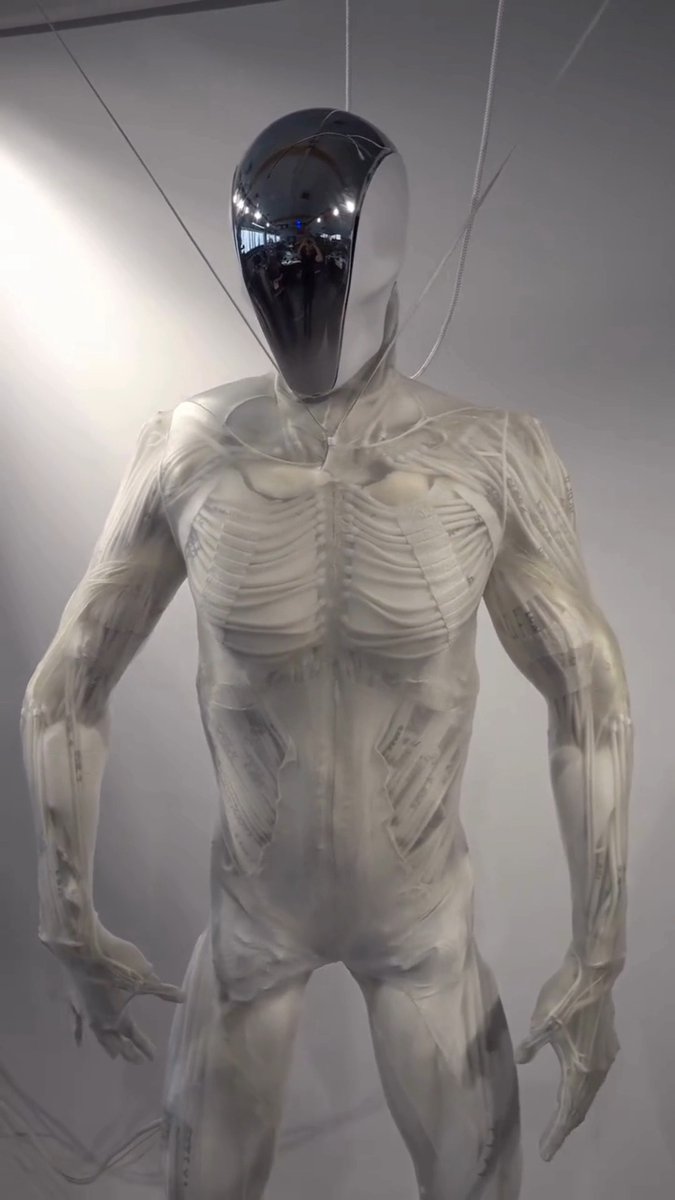
Clone just unveiled their musculoskeletal torso. 🤯 It includes an actuated elbow, cervical spine (neck), and anthropomorphic shoulders with the sternoclavicular, acromioclavicular, scapulothoracic, and glenohumeral joints. The valve matrix fits compactly inside the ribcage.

452,747 Aufrufe • vor 1 Jahr •via X (Twitter)

8 Kommentare

Profilbild von The Humanoid Hub
The Humanoid Hubvor 1 Jahr

Clone Hand in action:

Profilbild von The Humanoid Hub
The Humanoid Hubvor 1 Jahr

Here’s the thread I wrote earlier about the company and their hardware approach for their humanoid robot.

Profilbild von Jeff Schvey
Jeff Schveyvor 1 Jahr

Uh we're definitely not ready for West World yet

Profilbild von The Humanoid Hub
The Humanoid Hubvor 1 Jahr

it doesn’t look like anything to me

Profilbild von OG Whippersnapper
OG Whippersnappervor 1 Jahr

AI will never truly understand us if it is unable to experience back pain

Profilbild von The Humanoid Hub
The Humanoid Hubvor 1 Jahr

LFG!!

Profilbild von DDT
DDTvor 1 Jahr

Why it needs a pelvis?

Profilbild von NorCalTesla
NorCalTeslavor 1 Jahr

Westworld vibes

Ähnliche Videos

New "superman" Four months later, Shanghai-based Matrix Robotics unveiled the Matrix-3--yet another anthropomorphic humanoid robot situated on the left side of the "Uncanny Valley." Unlike Boston Dynamics' Atlas, which is designed for industrial settings, the Matrix-3 is a general-purpose humanoid robot intended initially for service-oriented environments such as supermarkets, hotels, and office buildings. Standing 1.7 meters tall and weighing 65 kilograms, the adult-sized robot features a full-body covering of biomimetic fabric integrated with tactile sensors, as well as humanoid biomimetic muscles. It employs linear joints rather than the mainstream rotary joints. Matrix claims it is capable of pulling or pushing a load of 200 kg. Optimus makes extensive use of linear joints (linear actuators). It is equipped with dexterous hands offering 27 DOF and boasts a battery life of 4 hours. The robot is powered by a model named WAVE(like an E2E World Action Model) Matrix states that it has already established a manufacturing facility in Shanghai's Zhangjiang with an annual production capacity of 10,000 units. The company plans to deliver 1,000 units this year, with the first batch scheduled for delivery by the end of June. Pricing starts at $99,000. Notably, Matrix founder Zhang Haixing previously served as a leader at Tesla China's Design and Research Center, where he was deeply involved in the early-stage R&D and design of the Optimus robot. This company seems to be delivering on the future envisioned for Optimus.

CyberRobo

40,727 Aufrufe • vor 3 Monaten

🧠💥 Satou Sabally WNBA FINALS MEDICAL COMMENTARY: SIDELINE CARE MATTERS 🚑 During today’s WNBA Finals, forward Satou Sabally sustained a serious injury to her head and neck that was rotational and compressive in nature coupled with a direct hit to one of the most vulnerable areas of the skull, the temple. This type of mechanism raises concern for both concussion and potential cervical spine involvement, including spinal cord compression or cervical cord neuropraxia. When an athlete experiences a possible head and neck injury, lifting or moving them manually without stabilizing the neck can cause serious secondary injury. Here’s what should happen: ✅ Stop play immediately and assess airway, breathing, and circulation. ✅ Keep the neck stabilized and avoid any movement until spinal injury is ruled out. ✅ Activate EMS if there is neck pain, numbness, or any loss of movement. ✅ Follow the SCAT6 and NATA emergency action plans for concussion and spine trauma. What we saw today is a reminder that concussion and spinal injury protocols are not just medical checklists, they are lifesaving procedures designed to protect athletes’ futures both on and off the court. As clinicians and advocates, we MUST continue to push for evidence-based sideline care and accountability in professional sports. It’s not just the diminishing calls of the refs this season, we must make sure our sideline teams are also at peak performance for our top athletes in the world. Prayers to the Sabally sisters and their family tonight. Here’s to a speedy recovery and comprehensive medial care for Satou tonight 🙏 If you have any questions, please comment below or reach out to [email protected] for press inquiries

🚴🏻‍♀️🧠🎙 Jess Schwartz DPT, CSCS 👩🏻‍⚕️🗽🎾

106,530 Aufrufe • vor 10 Monaten

The muscle group that makes men over 40 look old from behind: Rear delts. It's pretty easy to spot if this applies to you. Just stand side on in front of a mirror. You'll notice your shoulders will be rolled forward, likely your head is forward too, and your posture resembles something akin to Quasimodo. And you shouldn't be surprised. This is what happens after 25 years of pressing and desk work training the FRONT of your shoulder while the back of it did nothing. Every push you've ever done pulled your shoulders forward. Almost nothing you've done pulls them back into the socket. The fix I use (and recommend to clients too)? Seated single arm rear delt row with a high elbow and a roller squeezed between the knees. Why each piece matters: High elbow = this is what separates it from a normal row. Elbow travels out and up, in line with the rear delt fibers. Row with a tucked elbow and your lats take over. Lats are already strong. That's not the target. Seated + roller squeeze = pelvis anchored, ribs stacked, spine can't lean back to cheat the weight up. The rep comes from the shoulder, not momentum. No squeeze, and the lean-back creeps in by rep six. Single arm = most men over 40 have one shoulder blade that sits lower and works worse. Bilateral rows let the good side carry it. One arm at a time, the weak side gets found out and fixed. Cable = tension through the whole arc, including the stretched position in front of your body where the rear delt actually needs work. The rear delt pulls your arm back in line with your body. Train it and your shoulders sit where they did at 30. You'll find your shirts hang differently and you'll command a more assertive posture in board meetings and Zoom calls. Remember... User a lighter weight, high elbow and feel the back of the shoulder do the work. Most guys never have.

Simmo

35,522 Aufrufe • vor 28 Tagen