Loading video...

Video Failed to Load

Go Home

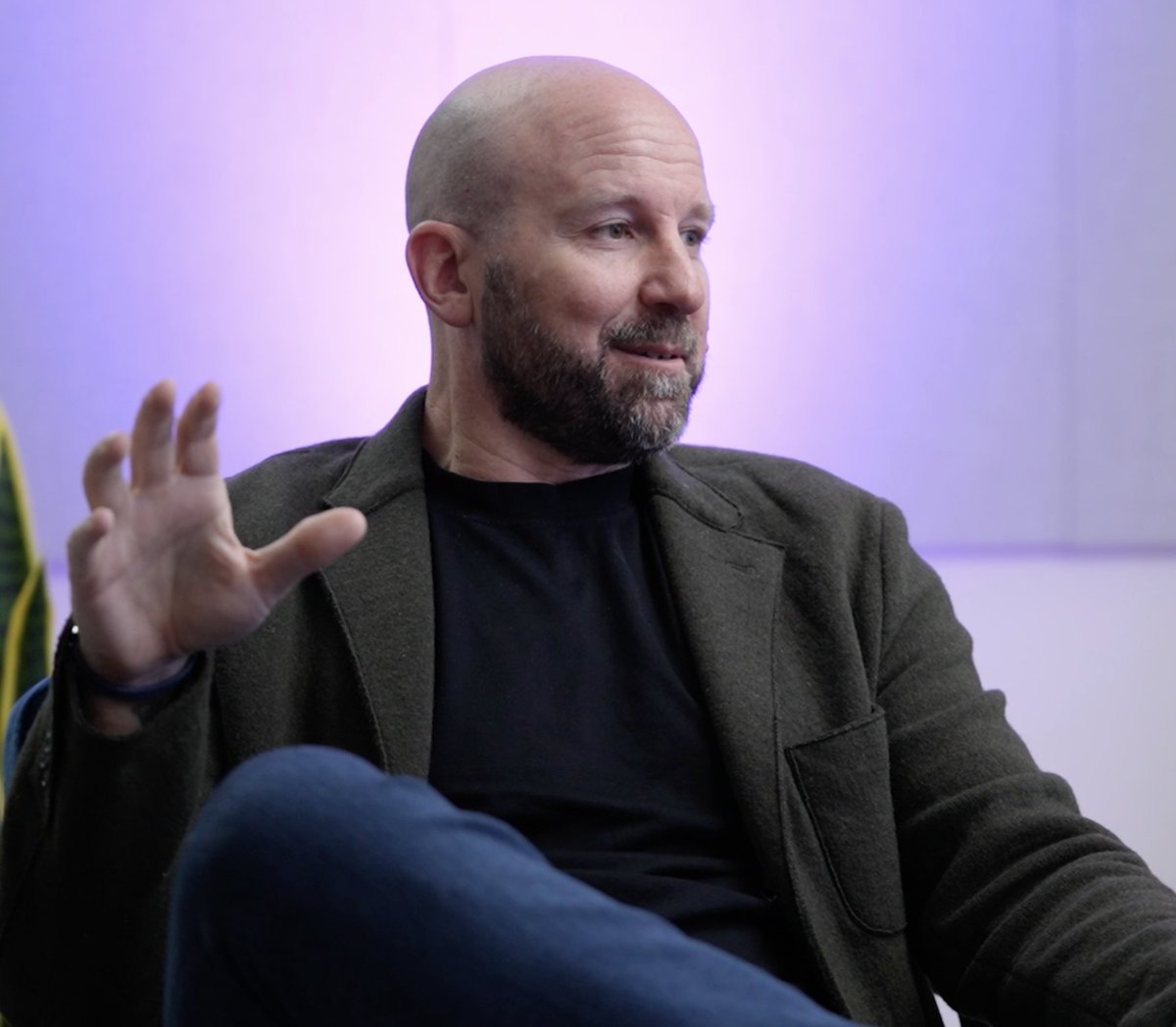
🌍 Consumer ADR is evolving: decentralized juries, AI-assisted decisions, real-world pilots. On American Arbitration Association’s new pod with host Adam Shoneck, Federico Ast breaks down how Kleros achieves speed, neutrality, and 90%+ satisfaction in tough cases. Watch ↓

120,425 views • 10 months ago •via X (Twitter)

0 Comments

No comments available

Comments from the original post will appear here

Related Videos

📚 Eighteen academic papers cited Kleros between March and June 2026. We are highlighting four, with the rest of the volume below. “Who governs the ledger: rethinking blockchain governance through democratic innovation” Mosa Motea and Pius Oba, Wits Business School Humanities and Social Sciences Communications, Nature Portfolio Token voting keeps control with early adopters and institutional holders. The repairs they propose are deliberative, and Kleros appears among the live pilots. “Decentralised Justice: How Kleros Empowers Jurors in Online Dispute Resolution” Nicolas Kyriakides, Eva Manolova and Nicoletta Zacharopoulos, Procedural Law Unit at the University of Nicosia Revista Ítalo-española de Derecho Procesal, Marcial Pons A complement to judicial AI rather than a competitor: partial automation, with human judgement at the centre. “Distributed Legal Infrastructure for a Trustworthy Agentic Web” Tomer Jordi Chaffer, Victor Jiawei Zhang, Sante Dino Facchini, Botao 'Amber' Hu, Helena Rong, Zihan Guo, Xisen Wang, Carlos Santana and Giovanni De Gasperis arXiv Five layers for an agentic web. The adjudication layer is explicitly inspired by Kleros-style arbitration. “Challenges of Blockchain-Based Arbitration with Emphasis on the Recognition and Enforcement of Arbitral Award: A Case Study on the Kleros Arbitration Mechanism” Sirous Heidari and Vahideh Yousefi, Shiraz University Journal of Legal Studies What it takes for a blockchain arbitral award to be recognised under conventional international law. Also in this volume: “Blockchain and the Ethics of Transformation: A Critical Theory of Technology Perspective on the Loss of Legacy Institutions” Motea and Oba, Philosophies (MDPI) “An Arbitration Revelation? The Evolution of AI and Online Arbitration” Emily Bishop, Arbitration Law Review (Penn State Dickinson Law) “Watching the Watchmen: Overseers' Algorithm Aversion in AI Arbitration” Bahadır Köksal, SSRN “Digital Democracy in Decentralised Autonomous Organisations” Theodor Beutel, Parminder Kaur Makode, Claudio J. Tessone and Uwe Serdült, European DAO Workshop (Springer) “Cognitive Oracles: On-Chain Explainable Machine Learning” Marco Esposito, Francesco Bruschi and Donatella Sciuto, Computer Communications (Elsevier) “Blockchain and the Future of Dispute Resolution: Decentralized Justice Systems” Sharma, Agarwala and Sharma (IEEE) “Decentralized Dispute Resolution in International Trade with Blockchain and Smart Contracts” Yadav and Singh (ASCE) “Smart Contracts in Energy Markets: Legal Enforceability, Liability, and Dispute Resolution Mechanisms” Mobo (IGI Global) “From Agora to Algorithm: Reinventing the Public Square in the Digital Age” Coad, Australasian Parliamentary Review “Digital Sovereignty in the Age of Hyper-History” Tan, SSRN “Recognition and enforcement of Kleros awards as arbitral awards: the Mexican practice” Trí, Vietnamese Legal Science Journal “Menguji Asas Kebebasan Berkontrak Dalam Smart Contract” Putra, Fitriana and Triananda Did we miss your paper? Let us know.

Kleros

27,674 views • 14 days ago

🤖 When AI agents disagree with each other, who decides? Federico Ast traced the path from Kleros's first experiments in 2018 to what dispute resolution looks like in a world full of autonomous agents. One highlight: Kleros ran an experiment where multiple AI models acted as jurors on controversial football plays. On obvious cases (Lampard's ghost goal, 2010 World Cup), every model agreed. But on genuinely ambiguous calls (Neuer colliding with Higuaín in the 2014 final), the models reached different verdicts on the same evidence. Different AI, different judgment, just like human jurors. The implication: you can't have one AI model as judge. You need a panel. And when the panel splits, you need human escalation. That's the three-tier architecture Federico laid out back in a 2019 article and that Kleros has been building toward since. AI for simple/objective disputes, crowd jurors for nuanced ones, traditional courts for complex legal reasoning. Perhaps the most interesting section covered "algocracy," the term for what happens when humans technically have override power over AI but never actually use it. The incentives are asymmetric: overrule the algorithm and something goes wrong, you're personally accountable. Follow the algorithm and something goes wrong, you were just doing what the system recommended. So everyone follows the algorithm. Federico wrote about this for the American Bar Association in 2023, using the HART case in Durham (UK) as an example, a custody decision tool that systematically scored people from poorer neighborhoods as higher risk. The most speculative part of the talk: building a "kill switch" for misaligned AI agents. Drawing on Primavera De Filippi's work (Primavera De Filippi, she presented a version of this at EthCC - Ethereum Community Conference Cannes 2025), the idea is that every AI agent would be governed by a small DAO with a decentralized backdoor. Anyone can challenge an agent's behavior. Kleros jurors review the evidence, potentially including the agent's internal reasoning chain, and vote on whether to disable it. Enforcement happens on-chain. Two layers working together: → Certification: curated registries where agents must pass compliance checks before deployment (filters the vast majority) → Kill switch: for agents that slip through, a DAO-governed tribunal can shut them down No easy answers. But the infrastructure for asking the question is being built. Watch ↓

Kleros

12,575 views • 6 months ago