Video wird geladen...

Video konnte nicht geladen werden

Zur Startseite

Crimson Desert Console FPS performance targets👀 detailed table in comments👇 PlayStation 5 Pro • Quality: 4K Native / 30fps / RT Ultra • Perf: 4K PSSR / 60fps / RT High PS5 & Xbox Series X • Quality: 4K Upscale / 30fps / RT High • Perf: 1080p /...

46,761 Aufrufe • vor 5 Monaten •via X (Twitter)

0 Kommentare

Keine Kommentare verfügbar

Kommentare vom Original-Post werden hier angezeigt

Ähnliche Videos

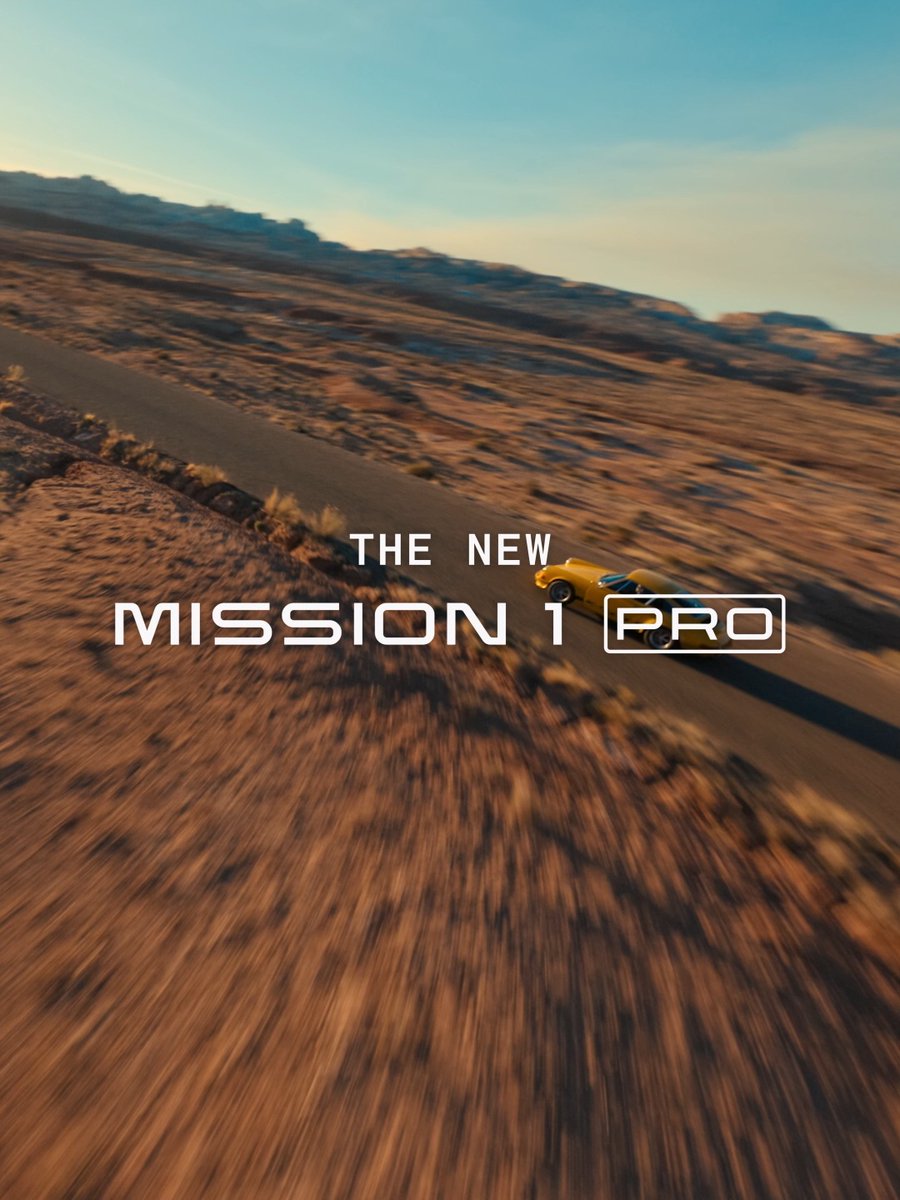
This is #GoProMISSION1 PRO 🎥 The only 8K60 camera with a 1-inch sensor. Our compact, cinema-grade camera features a proprietary GP3 processor and 50MP sensor that enable intelligent low-light capture, industry-leading frame rates and resolutions, and groundbreaking thermal performance. ✔️ 1-inch Quad-Bayer sensor with up to 14-stops of dynamic range at the sensor for low-light capture ✔️ Longest continuous runtimes + most dependable thermal performance of any GoPro ever—over 5 hours in 1080p + over 3 hours in 4K at 100°F ✔️ Industry-leading 8K60—300% more pixels than 4K ✔️ 4K240 + 1080p960 ultra slo-mo with real frames—not AI-interpolated ✔️ 8K30 + 4K120 Open Gate capture ✔️ Gallery-ready 50MP photos + 44MP frame grabs ✔️ Up to 240 Mbps bit rate out of the box + 300 Mbps with GoPro Labs ✔️ 10-Bit color + GP-Log2 with LUTs for Rec.709 + Rec.2020 outputs ✔️ HLG HDR with Simultaneous Dual-Gain Readout—the industry standard for pros ✔️ New intelligent capture modes: Dive, Vlog, Low-Light, Sport POV, + Subject Tracking ✔️ 13% higher capacity Enduro 2 battery in the same form factor with new fast charging ✔️ Rugged + waterproof, now to 66ft (20m) without a housing ✔️ Emmy® Award Winning #HyperSmooth in-camera video stabilization ✔️ New 4-microphone array, 32-bit float audio, multi-track recording, + manual audio controls ✔️ Timecode Sync to streamline multi-camera editing + GPS with telemetry data ✔️ New Point-and-Shoot Grip compatibility for elite handheld control ✔️ Removable Lens Hood included to reduce glare + flares ✔️ Bluetooth® 5.3 Super Wideband connectivity + USB-C port for external audio capture ✔️ A cinema-grade camera that anybody can use Enhanced by a GoPro Subscription: ✔️ Unlimited cloud backup at 100% quality ✔️ Camera replacement guarantee ✔️ Up to 50% off select accessories Order your MISSION 1 Series camera now to get a free Point-and-Shoot Grip ($100 value) + free shipping at Pro-tip: Existing GoPro Subscribers save $100 with the annual camera discount.

GoPro

29,966 Aufrufe • vor 3 Monaten

M64 is to the Nintendo 64 what the iPhone was to the 3310 Developed by ModRetro, the M64 is presented as the ultimate alternative to the original hardware, featuring the most advanced components on the market and the highest-quality finish that enhances every little detail of the system you remember. Presented in packaging with a ’90s aesthetic, this console comes in a dual-textured plastic case (frosted translucent in any of the five available colors or clear). It’s capable of playing original cartridges, reproductions, backups, homebrew, and, of course, remastered releases and new titles from ModRetro. Through its HDMI output, it supports resolutions of 720p, 1080p, 1440p, and 4K, as well as displaying images at their original resolution on a CRT TV via its own adapter. As you’d expect, the system has no region lock, so you can enjoy your NTSC-USA, NTSC-JAP, and PAL-EUR cartridges like never before. Additionally, both the Expansion Pak and—coming soon—the Controller Pak are emulated by the console, ensuring that the entire original catalog is available in the best possible quality. Its architecture is open-source, easy to disassemble, with no degradable electronics, and gold-plated traces and connectors that ensure optimal preservation of the system over the years. Of course, just like with the Chromatic, its firmware is updatable via Wi-Fi or USB cable, and it features a front-end menu that allows, among other things, for detailed on-the-fly customization of resolutions and filters, as well as the implementation of different overclocking levels that take the 64-bit experience to unprecedented heights. And I can’t forget one of its main selling points: the Pro Controller. A controller that stays true to the original form factor but incorporates improved ergonomic solutions, a ceramic-coated aluminum finish, high-end PBT crystalline polymer buttons, and a state-of-the-art TMR joystick coated in soft polymer and free of any drift; which offers a wider travel range, with four levels of spring tension and a greater degree of tilt, achieving unbeatable precision with no dead zones. Additionally, the stick gates are interchangeable, allowing you to customize your experience by installing the classic octagonal, equidistant hexagonal, or circular models. It also features an ERM vibration motor. You can play with the controller connected via cable or wirelessly using Bluetooth 6.2, which reduces response latency to below 0.65 microseconds. It is powered by a rechargeable battery with a USB-C port or by two AA batteries housed in an included module. Like the console, its firmware is updatable and it’s available in the same colors. You can purchase the M64 for $229.99 and the Pro Controller separately (since the system supports your old N64 or third-party controllers) for $89.99. I can guarantee that with this new ModRetro ecosystem, you’ll not only dust off games you may not have touched in decades, but it will also serve as the perfect incentive to dive into one of the most interesting and iconic game libraries—featuring both single-player and multiplayer titles—with undeniable appeal.

Pre-Rendered Backgrounds Aesthetics

23,792 Aufrufe • vor 24 Tagen

‼️SHOCKING: New High Frame Rate VIDEO Shows Multiple Projectiles FIRED By Compressed Air Device RIGGED In Top Of Tent Behind Charlie😱 I was the first person to notice this object and reported on it back in October of last year. At the time I believed it was a single shell casing falling from the top of the tent. After further evaluation and now obtaining this new higher frame-rate 4K video, it is clear that what we are seeing is a secondary pneumatic device that fired a volley of approximately four low-speed projectiles toward the back of Charlie Kirk. These projectiles line up perfectly with a separate video discovered by John Goodman that was posted late last year. We now have clearer visual evidence of what happened in the seconds Charlie Kirk was hit. A secondary device powered by compressed air fired at least four projectiles in rapid succession toward Charlie. In the higher frame-rate footage you can see the streaks of the projectiles and, critically, the visible puff of compressed air exiting with them. That jet of air is the signature of a pneumatic system, not a conventional firearm and not insects. Multiple independent witnesses described hearing a distinct pneumatic or compressed-air sound at the moment of the event. The “bugs” explanation does not hold — insects do not travel in straight, high-speed linear paths across the frame like this. Dan Flood’s reaction is also notable: he appears startled by something occurring right beside him beyond whatever he may have anticipated from the microphone area. This matches the earlier lower-quality clips but with far more clarity. The device, the air discharge, and the multiple projectiles are visible. Combined with the rapid cleanup of the scene, the taped-over wires, and the handling of the SD cards, the official single-gunshot story continues to face serious visual problems. The footage is available in the livestream linked below. Watch it frame by frame for yourself. TAG Candace Owens and Baron Coleman , RT and watch the FULL clip below. Speal thanks to my guest host @ZREIKMIESTERjjk

Project Constitution

161,223 Aufrufe • vor 28 Tagen

$AMD| The FOMO to buy AMD Chips is NOW 🧵 Not Financial Advice! DYOR! Research Purpose Only! The Inference Queen is the biggest winner in Agentic AI where all other CPUs are struggling to compete with a 2yr old EPYC Turin and EPYC Venice is in mass production phase. AMD stresses deployability today on standard x86 platforms (no proprietary architectures required), full software compatibility, and open standards. This positions Venice + Helios as a practical, high-density alternative to competing solutions while underscoring that agentic AI shifts the balance toward CPU-rich racks alongside GPUs, and most importantly, lowering the cost of token to accelerate adoption and innovation. Context: The Wall Street Journal yesterday came out with an article that OpenAI is condiering drasstically lowering the token prices to win more customers from Anthropic. The narrative "they" are trying to exacerbate the current AI selloff won't last long. This is a fundamental misunderstanding of what is going on, or what I already discussed for months and years. Followers and Subscribers already knew this for years, that this day would come, where token cost will bcome the central discussion among enterprises as there is no such thing as unlimited budget or Tokenmaxxing when they use $NVDA chips or In-house Hyperscalers chips. I will link various threads if you are interested in understanding the full picture from supply chain to recent TSMC Rapid 2nm expansion up to 12 Fabs total by 2027/2028. Hyperscalers and AI natives effectively have no choice but to buy more AMD system for Agentic AI as leadership in economical, power-aware, high-volume internal + agentic use. However, due to supply constraints where Supply is far behind Demand, this makes multi-vendor reality along with in-house chips drive faster industry progress, lower overall costs, and better sustainability. NVIDIA’s Vera Rubin cannot compete with a 2 years old EPYC Turin, but AMD under Dr. Lisa Su has engineered the lowest cost-per-million-tokens, highly competitive energy-efficient solutions, and superior CPU orchestration for agentic AI at scale with Helios. Dr. Su has championed this shift since at least 2023, foreseeing the rise of agentic workflows that demand far more orchestration, parallel agents, and balanced compute well before the industry fully embraced it. Her long-term vision of AI moving from simple prompts to always on, multi-agent systems has driven AMD’s investments in high-core EPYC CPUs and integrated rack-scale solutions, perfectly positioning the company for today’s realities. The OpenAI-AMD 1GW Helios deployment (starting H2 2026) represents a pivotal vertical integration move that directly supercharges the inference economics. This isn't incremental; it's a structural shift toward ownership of massive, optimized rack-scale capacity, enabling the lowest token costs and triggering the enterprise adoption flywheel. We need to be honest, $AMD is the only company that made a big bet on Inference since the day Chatgpt became sensational where $NVDA and others were betting big on Training. At the end of the day, Token bill from Anthropic has to obey economics. Meaning the bills rise, companies have to get more out of it to justify the cost. It cannot be an unlimited inference budget, and it has to show up on efficiency, profitability and operating leverage. 1. Tokenomics After you understand this, you will understand why Citi cited Anthropic is likely to sign a deal with $AMD along with Hyperscalers, AI Labs, Sovereign AI like Softbank 5GW in France and many other countries. However, OpenAI and $META are now wanting faster deployment, and they are AMD shareholders now, they have prioritized allocation. Anthropic and Hyperscalers just cannot compete when Helios Rack lower token cost to$0.0003–$0.0005 per million tokens at GW scale. Cost to build 1GW data center 1GW Helios Rack full build is estimated $30-$35B 1GW Rubin Rack full build is estimated $45-$55B Inference (Cost per Million Tokens) ~$NVDA B200 / HGX: ~$0.02–$0.08 on optimized workloads (FP4/MXFP4, speculative decoding). Significant improvement over Hopper but still premium-priced. GB200 NVL72 rack-scale: $0.05–$0.25+ ~$AMD Helios Racks: $0.0003-$0.0005 per M tokens, dramatically lower than NVIDIA equivalents in owned infra. MI355X node-level: Up to 40% more tokens per dollar vs. competing solutions ( B200), driven by higher memory capacity (up to 288GB+ HBM), strong bandwidth, and lower acquisition costs. Training ~$NVDA Rubin Rack is estimated $0.7-$1.2/M Tokens ~$AMD Helios Rack is estimated $0.65-$1.0/M Tokens Now, OpenAI, META and Hyperscalers can lower Inference cost even further with $AMD EPYC Venice "dense rack" or Agentic AI Rack. AMD published a detailed technical blog emphasizing that the future of agentic AI autonomous, multi-step AI systems requiring heavy orchestration, databases, caching, APIs, and control planes demands massive CPU-dense rack-scale infrastructure, not just GPUs. The catalyst prominently positions their upcoming 6th Gen EPYC "Venice" processors as the key enabler for next-generation dense racks, delivering leadership throughput under real-world power, cooling, and density constraints. ~EPYC Venice (Zen 6 architecture, up to 256 cores / 512 threads per socket) is projected to deliver exceptional rack-level performance. In AMD’s modeled 100 kW rack comparisons, Venice-powered systems are expected to achieve ~3.30x the throughput of NVIDIA’s Vera (88-core Olympus) baseline across a broad mix of agentic-supporting workloads. ~This builds on current-generation 5th Gen EPYC "Turin" (up to 192 cores), which already delivers ~2.37x rack throughput vs. Vera and ~1.6x vs. Intel’s Xeon 6980P (128 cores). ~ Liquid-cooled Turin deployments already support >27,000 CPU cores per rack today. Venice is architected to push this beyond 36,000 cores in the same rack class, dramatically increasing concurrent agent capacity and overall infrastructure efficiency. 2. Ownership vs renting compute from Hyperscalers matter to OpenAI and only owning $AMD chips can meaningfully lower token cost for enterprises. ~Eliminates cloud overhead: No provider margins, utilization buffers, or egress fees. Direct control over power contracts, cooling, scheduling, and orchestration at dedicated facilities. ~Helios optimizations at GW scale: Rack-level density (1.4+ exaFLOPS FP8 per rack), high HBM4 bandwidth, EPYC orchestration for agentic workloads, and superior TCO/TDP. AMD's long-standing focus on tokens per dollar/watt shines here 20-40%+ efficiency edges in inference-heavy scenarios. ~At 1GW+ optimized deployment, inference hits $0.0003–$0.0005 per million tokens (community/analyst models tied to Helios metrics). This is dramatically lower than typical rented/cloud equivalents, especially for high-volume output tokens in agentic flows. High token bills today, enterprises running heavy agentic/coding/analysis workloads can face $50-100M+/month at current API rates (flagship models $5-30+/M output, scaled to massive volumes). Post-Helios compression, same volume will drop to $10-15M/month (or better) via lower underlying costs passed through as pricing flexibility, volume tiers, caching, or batch discounts. ROI thresholds collapse. More companies greenlight pilots → production → massive scaling. Agentic AI (autonomous workflows) multiplies token demand exponentially, but affordability removes the friction. OpenAI gains flexibility, Unlike more cloud-dependent rivals (Anthropic), they can lower effective pricing, offer aggressive enterprise bundles, or absorb volume without margin destruction directly tackling "high token bill" complaints while maintaining profitability as usage explodes. 3. Agentic AI Models shifted CPU:GPU Ratio to 1:1 toward 3-5:1 with Explosively Token-Hungry Workloads Agentic AI (autonomous, multi-step agents with planning, tool use, iteration, and self-correction) is fundamentally more compute and token intensive than conversational or single-turn generative AI. Agentic AI. autonomous, multi-step workflows with orchestration, tool use, parallel agents, data movement, and enterprise integration has dramatically increased the importance of strong host CPUs alongside GPUs. This shifts the CPU-to-GPU ratio higher and makes balanced systems critical toward 1:1 to 5:1 as enterprises testing more than 5-10 agents. AMD EPYC Venice excels ~Leadership core density (up to 256 Zen 6 cores per socket) for running many agents in parallel, orchestration layers, and high-throughput control-plane tasks. ~Superior performance-per-core and power efficiency ( up to 2.1x higher perf/core and 2.26x better SPECpower vs. NVIDIA Grace in benchmarks). ~Tight integration in Helios: One Venice CPU + multiple MI450 GPUs per node, enabling efficient data feeding to GPUs ("zero-copy"), parallel execution, and full rack utilization for complex agentic loops. Hyperscalers (Meta, Microsoft, Amazon, Google, Softbank) and AI natives (OpenAI, Anthropic...) are adopting high-core EPYC at scale specifically for these agentic demands, as CPUs now handle a larger share of non-model work (orchestration, policy enforcement, tool calls). This complements AMD’s lower-cost GPUs for overall TCO wins. ~Agents often generate 10–100x+ more tokens per task due to iterative reasoning chains, multiple tool calls, verification loops, and long-context orchestration. ~Goldman Sachs forecasts token consumption multiplying 24x by 2030 (to 120 quadrillion tokens/month) largely driven by agentic adoption in consumer and enterprise. ~Enterprise data shows agent-pattern workloads growing at 680% annualized rates, projected to surpass conversational AI in token volume by Q3 2026. ~Daily enterprise agent token consumption is already in the billions, with complex workflows (coding, workflows, analysis) amplifying this dramatically. 4. Competitive Edge: Winning Customers from Anthropic Anthropic’s Claude models (especially Opus/Sonnet) excel in complex reasoning and agentic coding, commanding premium positioning. However, their higher underlying costs (heavier reliance on third-party cloud with margins) limit pricing flexibility compared to OpenAI’s owned Helios capacity. Anthropic is on track to generate $10.9 billion in Q2 revenue. The company expects to achieve its first-ever quarterly adjusted operating profit of $559 million. However, sustaining full-year profitability remains challenging due to immense computing and model training costs The truth is, Anthropic has no choice but to buy as much $AMD chips as possible if they want to compete with OpenAI or get investors attention. This 5% adjusted operating profit to revenue ratio is just pathetic. Current pricing dynamics (2026): OpenAI already undercuts on many tiers ( flagship output tokens significantly cheaper than equivalent Claude Opus). Nano/mini models offer 5–10x advantages for volume work. Anthropic holds edges in long-context flat pricing and certain reasoning quality. OpenAI after Helios Rack Ownership, At $0.0003–$0.0005/M effective costs, OpenAI gains massive headroom to: ~Aggressively discount high-volume agentic tiers or bundles. ~Offer “unlimited” enterprise plans or usage-based models that Anthropic struggles to match without margin erosion. ~Target cost-sensitive, high-throughput agent deployments (dev tools, automation platforms) where token bills explode. Enterprises facing $ millions in monthly agentic bills will migrate to the provider delivering better economics at scale. OpenAI’s combination of strong models (o-series reasoning) + lowest TCO positions it to erode Anthropic’s enterprise share, especially as agentic becomes the dominant token consumer. Cheaper tokens expand the total addressable market dramatically. This feeds the data/model improvement loop, justifying further capex. AMD benefits from proven scale pulling in more customers (Meta, Oracle, Microsfot, Amazon, Softbank, TensorWave, LumaAI ... already aligned on Helios). Conclusion: Dr. Lisa Su has been laser focused on inference economics since at least 2022–2023, repeatedly emphasizing that the real battleground for AI scalability would be TCO, power efficiency (TDP), and ultimately tokens per dollar and per watt not just raw training FLOPS. While many viewed inference as a secondary, commoditized workload, Dr. Su architected AMD’s roadmap around rack-scale systems optimized for high-volume, sustained inference that would dominate as models matured and usage exploded. Helios represents the culmination of that multi-year bet: a fully integrated, open platform designed precisely for the economics of massive token throughput. This deep, strategic partnership with OpenAI starting with the 1GW Helios deployment in H2 2026 and scaling to 6GW, is the embodiment of that shared vision. Both companies foresaw a future where agentic AI models evolve to become extraordinarily token-hungry: autonomous agents executing complex, iterative workflows with planning, tool use, verification loops, and long-context reasoning. These workloads can consume 100x+ more tokens per task than traditional chat or single-turn generation, driving exponential demand as capabilities improve and enterprises deploy them at scale. By owning and optimizing this massive Helios capacity at GW scale, OpenAI achieves inference costs as low as $0.0003–$0.0005 per million tokens. This structural cost advantage allows OpenAI to absorb the coming token explosion profitably, dramatically lower effective pricing for enterprises, and win high-volume agentic workloads from higher-cost competitors like Anthropic. What was once a prohibitive monthly token bill becomes an affordable accelerator for productivity and innovation. The OpenAI-AMD alliance validates Dr. Su’s prescient strategy and turns the Agentic flywheel into reality: Collapsing inference costs → explosive token consumption → richer data and better models → accelerate greater demand. This partnership doesn’t just address today’s economics, it positions both leaders at the center of the infrastructure buildout that will power AI’s next decade. By delivering the lowest inference economics at scale, OpenAI not only solves enterprise bill pain but gains a decisive weapon to win share from higher-cost rivals like Anthropic. And that is why OpenAI and $META will deploy EPYC Dense Rack Not Financial Advice! DYOR! Research Purpose Only!

Mike

84,951 Aufrufe • vor 2 Monaten