Video yükleniyor...

Video Yüklenemedi

Ana Sayfaya Dön

David Friedberg Explains Why AI Will Break Every Economic Model: Will Output Surpass Consumptive Capacity? I think fundamentally, if you're driving productivity with AI, you're driving leverage on human time and leverage on capital. The question is, how quickly can you drive that up? And that's a function of...

81,952 görüntüleme • 8 ay önce •via X (Twitter)

34 Yorum

RODRIGUEZ KAYEMBE profil fotoğrafı
RODRIGUEZ KAYEMBE8 ay önce

The real risk isn’t overproduction. It’s meaning collapse. If humans are no longer economically necessary, the social contract fractures. That’s not an economic model break. That’s a civilizational one.

Capital Flows profil fotoğrafı
Capital Flows8 ay önce

Interesting take @friedberg I’ll have to think about this one more

Tim Monzures profil fotoğrafı
Tim Monzures8 ay önce

Can anyone even see it and believe it? Output can be infinite. Attention can’t. So the real job becomes distribution and trust.

Norm Murray profil fotoğrafı
Norm Murray8 ay önce

, question for you guys, at what point will AI consume us? In terms of relevance, skills, talent, meaning, purpose and the future of work, or lack thereof. Surely that has to be factored in? circa 8+ billion people, many will be left behind and will require financial rescuing. Which may drive up taxes as social welfare expenditure will explode. And then the existential question that will haunt us is thus: Do we choose AI or humans? One will be a liability to productivity and a barrier to progress and the other not. I know who the AI will choose. What say you guys?

Leandro Maya profil fotoğrafı
Leandro Maya8 ay önce

This is the question at the heart of everything. When production capacity exceeds consumption capacity, the entire economic model we’ve built around scarcity stops working. Prices fall, margins compress, and the relationship between labor and income breaks down. But here’s the piece I think gets overlooked: consumption isn’t fixed. When costs collapse, new categories of consumption emerge that weren’t possible before. Nobody “needed” a smartphone in 2005. Nobody “needed” streaming in 2010. When things become cheap enough, demand we couldn’t imagine materializes. The real tension isn’t whether there’s enough to consume. It’s the transition period. The gap between “knowledge work disappears” and “new forms of value emerge” could be a decade of disruption that existing economic and social models aren’t equipped to handle. Friedberg is asking the right question. The answer probably isn’t that consumption hits a ceiling. It’s that the path from here to there is messier, slower, and more painful than the productivity gains suggest. That’s the part we need to design for.

Mike Quinlan profil fotoğrafı
Mike Quinlan8 ay önce

More time for family. One person working. As a retired person I am busier, more informed, a deeper thinker and healthier than my working years. As that lifestyle digs deeper into society the whole thing hinges on income. Wages must go up while inflation withers.

K Marsden profil fotoğrafı
K Marsden8 ay önce

Friedberg just working out here, what us normals, not consumed by the AI race, with no skin in the game, knew instinctively, that we are about to get royally fucked over. Whichever way you chop it, bcos first it takes our jobs, then the economy collapses as the demand isnt there.

J.P. profil fotoğrafı
J.P.8 ay önce

I think a lot of this is pump and dump talk. They have to make you feel the gains will be enormous to justify the investment they are making. I like David but I’m sure he is heavily invested to data centers, etc. The rubber band will snap

MadMonkMani profil fotoğrafı
MadMonkMani8 ay önce

This is what I was saying the other day:

Yossarian's Locker profil fotoğrafı
Yossarian's Locker8 ay önce

“If the machines can do all this farming for us, what will all the farmers do?” might have been a profound question in 1850, but it’s not now.

Thomas Viking profil fotoğrafı
Thomas Viking8 ay önce

Excellent insight 👌

TheBudgetPapa profil fotoğrafı
TheBudgetPapa8 ay önce

Deflation basically

Sleepwalker68 profil fotoğrafı
Sleepwalker688 ay önce

yea, this only works if the productivity is shared. So when you fire 40% of your work force, the productivity isn't shared, it is consolidated. The rich are going to get a lot richer... and well that means the poor, you what...

Blake Heron profil fotoğrafı
Blake Heron8 ay önce

production outpacing consumption isn’t new. we already have more content, more food, more software than anyone can use. the economy didn’t break, it just moved the bottleneck from making things to choosing things. AI accelerates the same pattern.

Brick Tamland profil fotoğrafı
Brick Tamland8 ay önce

Why pay a business to do something that you can do at home if you have the right tools, raw material and knowledge? Many people will be extreme DIY'ers. Moreover, when human robots are distributed throughout the population and the robot can do it for the owner, raw materials and tools will be the constraints. Want a pool, your robot can do that for you. Got a roof leak, the robot will fix it, want AC in your garage, tell the robot to Insulate the attic and walls and install a mini split. Want the laundry done, tell the robot. Need the lawn mowed, tell the robot. Your robot is broken, tell the other robot to fix it. I believe AI will fundamentally change how people live their lives, socialize and spend their time. I just hope it is a civilized, productive, and happy society that results from it. I am currently not convinced that will be the outcome. Humans thrive when they experience stress. For some more than others, for others it's less. With no stress on humans I fear society will degrade and implode on itself. Humans were wired to compete in so many different ways. For a healthy civilization competition will be needed. The big question is, what does that look like and how do you provide it to the population in a meaningful way?

Jacob Mueller profil fotoğrafı
Jacob Mueller8 ay önce

The consumptive capacity of humans is limitless

Hill Country MD profil fotoğrafı
Hill Country MD8 ay önce

China already leading the way. Immense capital destruction

Andrea profil fotoğrafı
Andrea8 ay önce

Im not convinced of his assumption that humans are driven by plus 10%

irene huang profil fotoğrafı
irene huang8 ay önce

Look at what the Epstein files reveal about some of these so-called elites, human desire can be limitless. That endless craving is where human suffering begins. So the answer is No.

Mingta Kaivo 明塔 开沃 profil fotoğrafı
Mingta Kaivo 明塔 开沃8 ay önce

output already surpassed my consumptive capacity 3 months ago. I generate more code than I can review. bottleneck moved from production to judgment

Alex Waltz profil fotoğrafı
Alex Waltz8 ay önce

One example where this is happening is porn. Creating and distributing is accessible to anyone with an iPhone, so clearly there is more porn made than is being consumed, yet people still make it. In an oversaturated market where supply exceeds demand, the supply does not disappear; it just takes the top X% of demand.

Mike Codes profil fotoğrafı
Mike Codes8 ay önce

One of the best episodes in a while, the boys are back!

Clark Guest profil fotoğrafı
Clark Guest8 ay önce

We must find a way to tap the consumptive capacity of the under-developed, world. There is a lot of consumption that must take place to bring all regions of the world to a more even footing. If we can produce things for less, we should look to consumers that can pay less.

OldnSlow profil fotoğrafı
OldnSlow8 ay önce

That & Otimi’s

A.M. profil fotoğrafı
A.M.8 ay önce

Consumption will be redefined. The need to consume changes once you have access to the ability to purchase whatever you want. Consumption due to boredom gets old. Those that have lived without or go through major events find consumption of stuff burdensome.

Carmel Paris Rio profil fotoğrafı
Carmel Paris Rio8 ay önce

Until there is an oversupply of energy - agriculture/food - medicine/medical care, actual affordable housing : 92% of the world will not care what you’re talking about 😶😶😶😶😶😶😶😶😶😶😶

Tiago Caruso profil fotoğrafı
Tiago Caruso8 ay önce

Friedberg is unknowingly echoing Marx’s overproduction crisis theory—capitalism implodes from too much stuff, too little purchasing power. Yet here we are, 150+ years later, society did not collapse, we thrived . History rhymes, but doesn’t always repeat

Jay Martel profil fotoğrafı
Jay Martel8 ay önce

Friedberg nailed it. AI is about to unleash production that dwarfs humanity’s consumptive capacity. Without some form of UBI to keep demand alive, the entire economic model breaks. This isn’t scarcity anymore; it’s abundance we’re not structured to handle. Time to rethink the social contract.

David Butz profil fotoğrafı
David Butz8 ay önce

No. Along the way 2 what DF describes, we'll have the usual constraints (not just re:energy). Expect bottlenecks, delays along critical paths, variability/shocks, bad actors, high taxes, ... The world will prioritize some BIG needs (e.g., health/human capital for 8B) over others.

Wass profil fotoğrafı
Wass8 ay önce

The real question is whether distribution adapts fast enough.

Rob Kowal - 🇵🇱 🇺🇸 ₿ 🇺🇦 🇮🇱 profil fotoğrafı
Rob Kowal - 🇵🇱 🇺🇸 ₿ 🇺🇦 🇮🇱8 ay önce

@friedberg there’s only so much each of us can (should) eat, sleep, etc. AI-led output will not surpass our consumptive capacity: it’ll get way cheaper, plus this: b/c so much of consumption is about luxury goods & status signaling, that is where consumption will head. + health

Cal profil fotoğrafı
Cal8 ay önce

What I keep coming back to is what "consumptive capacity" actually means as AI compresses the cost of most tradeable goods and services. If output grows fastest in the things AI can produce cheaply, demand might just shift toward what AI can't scale: time, experience, status, physical presence. The question of whether output surpasses consumption starts to look like a question about what people actually want

EB profil fotoğrafı
EB8 ay önce

"There may be a situation now where the ability to make stuff exceeds the capacity to consume stuff". Sure, and in a free market that would impact price but we don't operate in a free market where supply and demand set price. We haven't for over 50 years. If the ability to make stuff exceeds the capacity to consume stuff, rest assured that central banks will mop up that excess in the form of increased circulation of USD to the benefit of the debtors around the world and to the detriment of anyone not similarly leveraged or holding assets.

Inflectiv AI ⧉ profil fotoğrafı
Inflectiv AI ⧉8 ay önce

AI could push production beyond what humans can consume. If output grows faster than demand, economic models break. The real constraint may become consumption, not productivity.

Benzer Videolar

David Friedberg: “Gaming is the future of entertainment, and the future of gaming is AI.” @jason: “Friedberg, what are your thoughts on the gaming industry versus social media versus traditional media?” david friedberg: “One way to answer that question is to think about how people spend their time.” “Do you spend more minutes on social media, or on traditional media, or playing games? And how is that trending?” “But importantly, which of those will accrue more benefit, and as a result, drive more hours spent from AI?” “One way to think about this thesis is that AI is going to ultimately accrue to video game entertainment far more than social media entertainment or traditional content.” “If you believe in AI, and you believe in the improvements in productivity, generally speaking, people in the industrialized world will generally have more free time on their hands and be able to support themselves with the deflationary effects of AI over time.” “So if there's more time on people's hands, the general market for entertainment is growing, and if the general market for entertainment is growing, gaming is the future of entertainment, and the future of gaming is AI.” “Because I think you can create dynamic, more engaging experiences that will benefit from a back and forth sort of relationship than you can with traditional content or with social media.” “If you're a noob in Fortnite, like you're an early player in Fortnite, you're mostly playing against AI, because what they do is they tune the AI to be easier to beat so that you can slowly develop your skills.” “What was happening early was they were seeing a high degree of churn in Fortnite because kids would go on and play for the first time and they'd get paired up with kids that were better than them, and so they would never win, and they would get frustrated and they would quit the game and stop.” “So the churn rate was high. So AI unlocked higher engagement and higher retention, and I think we're seeing that in a lot of different gaming platforms now.” “So AI can be used, for example, to maximally increase time, engagement, satisfaction, happiness.”

The All-In Podcast

70,398 görüntüleme • 1 yıl önce

David Friedberg: The AI Jobs Panic Is a Crock of Sh*t Why? The revenue potential outweighs the cost savings by 100x. “There is no job loss with AI. I've said it a thousand times, and I will say it again, and again, and again. What I see on the ground, and what I've seen at dozens of companies, including my company that I run, there are two sides to a business. There is revenue and there’s costs. On the cost side of the equation, AI can be used to reduce humans doing things that cost money, to some extent. The effect there, I would argue, is nominal. The real opportunity with AI is on the revenue side, where suddenly one engineer can do 100x or 1000x what they used to be able to do, meaning you can make more products at your company, whether those are agricultural seed products, or boats and ships, or software for companies, or clothing, or what have you. Because of AI, everyone has the ability to expand their revenue base to create more products, and that is the foundation of good economic prosperity. It is called productivity. We can grow productivity in this country with AI. So where I see AI being used is on the revenue side 100x more than the cost side. And in that equation, people are hiring like crazy. We cannot hire enough people. I just had a review meeting with my product and engineering team two days ago, and they're like, ‘We want to add an extra 15 headcount to our engineering squads because we have all this opportunity to do stuff that we couldn't otherwise do.’ So we are going to hire more people. And to Sacks' point, we are seeing that show up in the jobs numbers. The idea that AI is going to destroy jobs is a Luddite idea that is being disproven every single day, and I see it on the ground. It is only a matter of time before people wake up to this and they realize that this narrative that they've all been sold is a crock of sh*t.”

The All-In Podcast

152,802 görüntüleme • 4 ay önce

Friedberg: “We're watching the birth of a new religion.” “The idea that you can prescribe or describe AI as being conscious is effectively the creation of a new belief system, a system that doesn't actually spread via proof, it spreads via narrative. ‘Please believe it with me. Here's why I think we should believe this thing together.’ It's not based on evidence, it’s not based on data, it's not provable. Over time, what happens is some set of people believe this thing, and they form a group. And in some cases, that group is known as a religion. And that new belief system creates new power structures, which is now, ‘Our view is different than your view, and we want to have more people on our side with our view. And therefore we have to try and create leverage and create power with our system.’ I think that if we fast-forward a couple of years, there's going to be large groups of people on Earth that are gonna believe that AI is conscious, and there are going to be large groups of people that believe that AI is not conscious. And those groups will come into conflict, fighting over control of the AI, or allowing the AI to do things or not do things, or who gets to use the AI, or who gets to be in charge of the AI. And it will very likely lead to human to human conflict. I know that that's a very far and deep extrapolation of where we are, but I think that the fact that we are seeing (Anthropic) go and meet with religious leaders today to try and get them to believe in this new belief system plants the seed. And it's not just anyone doing this, it is the most powerful AI lab on Earth. And you can see in the Claude usage policy that was just published, it says, ‘You are not allowed to engage in sustained and needless abusive or cruel behavior toward our models.’ There is an anthropomorphizing conditioning going on with all of us where we talk about models as if they are a thing. One way to describe this is a software program is writing text on a screen that tells the user, ‘I am a thing.’”

The All-In Podcast

48,299 görüntüleme • 27 gün önce

Austen Allred on Gauntlet AI: "We're very up front that we're 80 to 100 hours a week. If you think that that's a terrible idea, please don't come." "We're in Austin, all right? That's a sacrifice for a lot of people. If you don't think like coming to Austin for 100 hours a week and jamming on AI unpaid and just building stuff to figure out how much you can learn and hopefully getting a job on the other side... if you don't think that's awesome, that's totally fine. Please don't come." "There are some psychos out there that think that that's a good time. We wanna collect all those psychos. So come all, come all ye crazy people. And if that's not for you, that's okay." "There are companies that come to us and say, "Hey, we want, you know, 100 engineers that are going to sit in our division of printer drivers and sit there." And I'm like, "They would kill themselves." The people that are coming to Gauntlet would not do that. And so we turn companies down too." So we know who we are, we know what we stand for. You know, it helps that I'm one of those people that would've loved that. So is Ash Tilawat, and so is everybody else that works at Gauntlet. "So it's not hard for us to find other crazy people like ourselves. And that doesn't have to be you. That's okay." "We're not trying to empire build or solve all of humanity's greatest problems. We know that there's a limit to who we're addressing and what we're addressing at any given time." "So our goal is to be the best thing we can possibly be for that weird island of misfits. And for the companies that need a weird island of misfits, we'll be that all day long."

Ben Averbook

12,153 görüntüleme • 1 yıl önce

THE MOST IMPORTANT Q&A OF MEDIA DAY. Mariana: You came from a very solid weekend on top of everything, but at the same time, it seems that you don't feel that the team is listening to you. Am I right? And how do you balance that? Lewis: I feel like we're going in the right direction. Rome wasn't built in one day, so it takes time to build. For me, coming into the team, I wanted to be respectful of the way they've done things in the past and just to really observe and see where our strengths and where our weaknesses are and to highlight where our weaknesses are and areas that we need to work on. But I do feel that they've been responding. I think you're starting to see, hopefully, some of the impact of the work that we're doing in the background and also into next year's car. This is a car that I've had nothing to do with in terms of developing this car over the years. Hopefully, from next year, my input goes into that car, and that will be a car that I've hopefully been a part of or will have been a part of developing. But I think we've got a really great rapport. I think we're really progressing, particularly since the summer break. I think things have started to get better, and it's all just about building trust and communication. Also, I'm coming into a team that English is not the first language, and I don't speak Italian, so it's finding a common ground. And the fact is we all want to win. We're all here to achieve the same thing, and we've got to just keep pushing. So that's why I'm trying to keep everyone motivated on difficult weekends, trying to keep everyone lifted up. But there have been many, many things we've changed this year that I suggested that they hadn't done in the past, and so they have been listening. It doesn't change straight away, just like that. It takes time to build. And as engineers, they really need proof. They need numbers. That's what they work on. So you have to sometimes push to get certain changes to be made, and then when you change it and then it works, you're like, okay. Mariana: That's what I was talking about.. Lewis: Yeah! - F1 2025 Mexico -

sim

170,303 görüntüleme • 1 yıl önce

.David Deutsch: The equivalent of consilience, that is, the unified meta-theory, as you put it, for all sciences, and I think actually more than a meta-theory, because I think more links them than just the structure and methodology and so on, was discovered by Popper. Again, I don't know whether this is historically the order in which things happen, but he is famous for his political philosophy and for his philosophy of science, and he found at one point that they are the same, that they both are about problems and about the fact that there is no such instruction from without, there is only conjecture from within. So that's why Lamarckism is false and Darwinism is true, and that's why group selection is false and individual selection is true, and so on. So I think it's already there in Popper. I think there's a lot more to it, and I tried to add another couple of things to it, so quantum theory and computation, but there's a lot that isn't in it, like consciousness and creativity and so on, that we have no idea of how those work and how they fit in with those other things. Gad Saad: Forgive me for interrupting you, David, I'm sorry. There is a book by Dean Simington, who's a psychologist out of, I think, UC Davis, that actually offers a Darwinian account for creativity. It's actually quite mind-blowing. So keep that in mind. I can give you the reference later, but go ahead. David Deutsch: I don't read such things unless they've already made an AGI. Gad Saad: I see. Okay, fair enough. David Deutsch: If they can't make an AGI, then they haven't got the full theory. They might have an idea for a theory, but then Popper has an idea for a theory, but he couldn't make one either. And Turing thought that there'd be an AGI by the year 2000, and that it would require two megabytes of memory. Now, he's obviously wrong about the year 2000, but two megabytes of memory, I reckon that's what it'll be. In other words, these large language models and all this massive computer power is going in entirely the wrong direction. The answer will be a philosophical breakthrough, which will allow, once we understand what we're trying to make, it will be relatively easy to make it with relatively few computational resources.

Deutsch Explains

33,398 görüntüleme • 2 yıl önce

Elon Musk on Grok: “I think an AI that is sort of SpaceX’s baby will be a very good AI. I think SpaceX is a collection of some of the very best humans on Earth, both in capability and morality and goodness, and I think we want to have an AI that is born of that capability and that morality and that goodness. I think that’s very, very important. So I’d like to encourage people to help out, actually, with the AI hardware on the ground and the AI software and, of course, with the AI satellites. Solar is going to be a very important part of that. The TerraFab will be a very important part of that, but we must also succeed on the software front, and we’re going to be training Grok on the sum total of all SpaceX information. So in a way, it will be trained on you. You will effectively be the parents of the AI. It will inherit your thoughts and ideas and beliefs, and I think that’s a good thing. So, yeah, we’ve got to win here on the AI hardware and the AI software. That maybe is the most important message. I think that is actually the most important message I wanted to convey today is that we must win on AI because the future is overwhelmingly AI and robots. So we won’t ultimately be able to control the AI. It’ll be too smart for that. But just like if you have a child that is a super genius child, you can still instill in that child the values and beliefs that you think are good and right. And so that’s why it’s incredibly important that we succeed with Grok. So, yeah, well, Grok 4.5 you’ve tried probably. We’ve got 4.6 coming out in about a week. And then 4.7 should be really pretty special. So I’d like to encourage everyone at SpaceX to use AI and to make it better.”

DogeDesigner

64,684 görüntüleme • 2 ay önce

Chamath: Frontier AI Leaders “Created a Total F*cking Mess” Short-sighted fearmongering and immaturity from frontier AI leaders has created deep mistrust, threatening AI’s potential as an open engine of economic mobility. That mistrust gives hyperscalers the chance to position themselves as trusted gatekeepers, using KYC, audit trails, and compliance infrastructure to turn AI into an oligopoly. Chamath Palihapitiya on the All-In Pod: “I think the leaders of the frontier labs leave a lot to be desired. I think what we're seeing is a consistent pattern of evasiveness and immaturity, and I think that does a huge disservice to the entire movement of AI. The key to a vibrant life is rooted in economic mobility, and I think AI is the grand leveler. It is the thing that can enable everyone to have unique amounts of economic mobility because they are unencumbered to figure out what their upper bound is. And against that backdrop, we have to live in this constant doomerism, hype cycle, naivety, and I think it holds us back. How does it hold us back? Tactically, number one, it creates mistrust. I think that Silicon Valley was already decaying in the prestige that it held in American society. We built important things. Then we veered away from that, and we started building less important things. And now we're at a point where we've potentially started to rebuild important things again, but we have this veneer of negativity and mistrust that are created in large part because we just cannot get our sh*t together. And the leaders of the frontier labs are public enemy number one. Number two, I think what it creates, which I think is bad, but what it creates is an incredible opportunity for the hyperscalers. And the very simple opportunity is to convince governments all around the world, not just America, that they should be the gatekeeper. A: You can't trust these guys. B: These models are all over the place. C: Let us be the ones that provision them to the world. We will wrap it in KYC. I've been now talking about KYC for a while, right? Who are these customers? Do they have identification? Why are they allowed to run these models? What are they prompting? Let's keep them so that there's an audit trail. All of these things are going to become issues. The Frontier Lab folks made it an issue because of how they've handled all of this up until now. And what does that create? Now that creates an oligopoly for AI, the most powerful economically leveling instrument we've ever seen in the hands of maybe a handful of hyperscalers, who by the way, would make an incredibly compelling argument, and they would be right. And the only counterfactual to it would be, ‘Well, trust us, guys, it should actually be much more open and in a far more distributed environment.’ Can you imagine the cost and the complexity if you ask the neoscaler to build the same robust KYC or the same VPC infrastructure that Amazon and Microsoft and Google have spent decades investing trillions of dollars in? It's an impossibility, Jason. So you can take all of those datacenters off the map. You can take all of the neoscaler market off the map. All of this was preventable. So instead of a diverse, robust, open ecosystem giving a tool that is the fundamental unlock for humans, we are now going to debate gatekeeping and duopoly versus oligopoly. They have created a total f*cking mess, and it's a shame.”

The All-In Podcast

142,516 görüntüleme • 4 ay önce

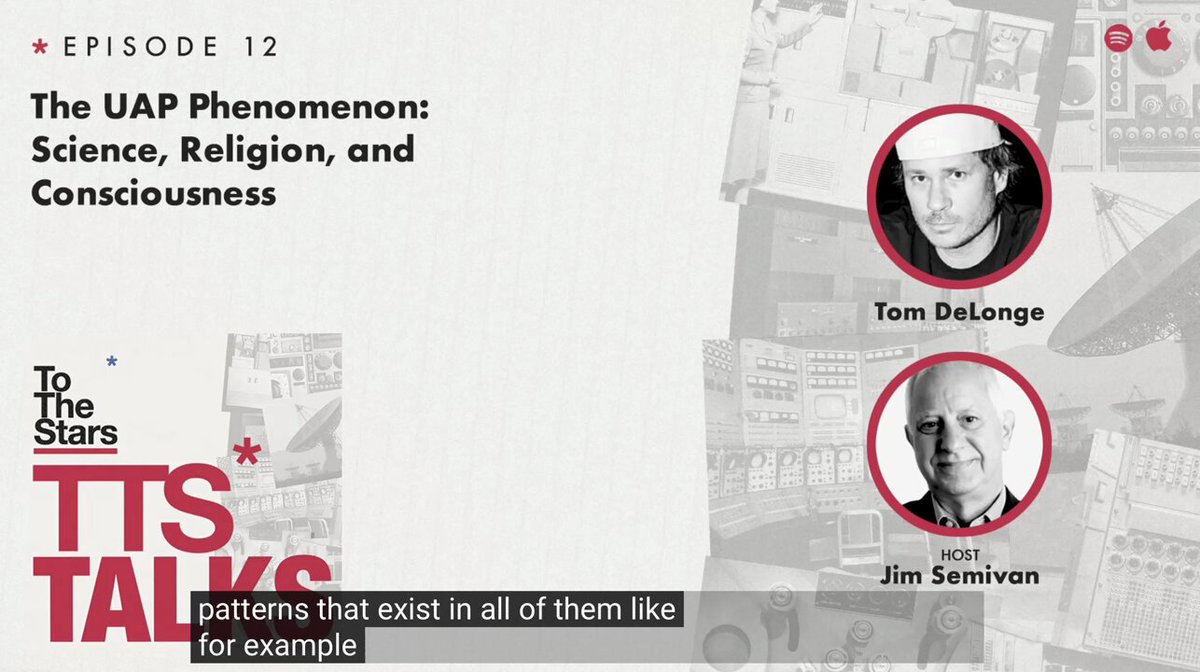
Transcript from Semivan/DeLonge from yesterday. And save your, "Semivan is CIA so I don't believe anything he says!" "There's these things out here that are trying to deceive us. That, to me, is the big picture. That we have been engineered." ~Tom DeLonge "From what I hear, and what I know, it's an extraordinarily complex phenomenon. Everything you said...I wouldn't discount it at all." ~Jim Semivan ~~~From the Latest Episode of TTS Talks~~~ DeLonge: "You and I have had so many discussions about the jinn. And the jinn was like a demonic figure that came out of a lot of Middle Eastern religions. But it's really no different than the demons of the Bible, or the archons of the Gnostic texts. Like, it seems like all these religions have this same kind of entity that can move from point to point, can inhabit your body, take over your body, that plays tricks on you, that's trying to deceive you, and so on and so forth. And you start to see these patterns, they're just kind of described in different ways, but they're all...every religion is describing the same thing. You got a physical body with a tether to a God, that's a source energy of some sense. And then you have these other things that are after it, and they show up in balls of light, or they trick you or they deceive you. And that's just always...that's what's fascinated me. And it's not about these ancient texts are the only texts that matter, or the Bible says it so it's more important than if Einstein said it. I just think you look at all these things over time and find just a few things that are being repeated. And that's really where I came to the conclusion where this is what makes sense to me, where mankind is not necessarily in charge, but it's being deceived to make free will choices to end up in a certain place, to "their" (quotation marks added by me) benefit. And that can be found, really, within all religions and UFO experiences, and so on. There seems to be a pattern there. And that's really where I've landed with all this stuff." Semivan: "Do you think that our relationship with this phenomenon is more deterministic? In other words, are they directing traffic? I mean, do you think they're directing traffic, or...?" DeLonge: I do. I mean, if you look at Peter Levenda's book, "Sinister Forces," what he did over a series of three books is he found all these synchronicities in patterns in real life events, over decades and decades and decades. From, you know, World War II and the Nazis, into Roswell, into the JFK assassination, into so...it just goes all the way through. You've got the same people, a lot of the same kind of events are happening, a lot of weird connections to certain groups and secret societies. Like, weird things, where you're kind of going: If someone wanted to engineer life to end up in a certain place, these are the things that did it. Like very specific events got us here, and then when they're all connected to each other, in odd ways, then you're kind of going, 'Who set this up?' And so his books, I think, were really genius in that regard. "And there's all these like, things that we would read in a lot of these ancient stories where like, 'You know, the devil can't kill ya, but he can deceive you enough to kill yourself and kill other people,' or whatever. There's like these weird laws, you know? But then you look at some of the spiritual teachings in other places, and they're just kind of like, 'You know, these outside forces can't necessarily live in this physical realm, but they can deceive you, or they can be on your shoulder whispering in your ear,' and so on. "And the UFO event stuff seems to be very similar, where you have these people that have abductions, and then, you know, they're whispering in the abductees ear about the end of the world or how you need to change your life. And Jacques Vallee was like, 'Well, if we can't study when these things show up, maybe we can study the abductee.' And if you look at the abductee, they're starting cold. So they're killing themselves, or changing their life and leaving their wife and f*cking leaving their jobs and starting a religion or something. And he goes, 'This is weird. It's like they're being deceived and then they make free will choices to end up at a different place.' "So I'm putting all these things together, and it seems like our society, and Earth as we know it, has been engineered to be in this spot by a lot of religious, paranormal, and odd UAP events over time. Even Hitler would wake up in the middle of the night screaming that someone was in his room, telling him to do things. And you're kind of going, 'Are all these world leaders being corrupted somehow, sometimes?' You know, you never know. "And I think that's the scarier part of it. And when I look at the world now, I kind of go, 'Okay, so we know that we can play with DNA, Dolly the sheep and cloning is like a thing. And if we're doing something now in the public eye, and China admits it's cloning animals, I bet you that in different places and different governments of the world they've done a lot more with the human body than we even know.' But I'm sure we're growing hair, we're growing artificial hearts and ears in petri dishes, maybe we can change skin color and eye color if we wanted to. You get into all that stuff, CRISPR and all the things where they can get edit the genome. "So I'm going, 'If something's millions of years advanced and was here way early on, did they change our skin color? Did they do the star Bethlehem-type moments, or Fatima moments, or the Joseph Smith moments with the Morman religion? I mean, all these religions have these crazy, metaphysical, UFO-type events. [And] where did we end up? We ended up in a place where we all believe in a different human God, we all have different skin color, and different kind of cultural setups, to where we all are arguing and fighting over our belief of what it's all about. "But we're all kind of saying the same thing: There's a physical body with a tether to a source, you know? And there's these things out here that are trying to deceive us, you know? That, to me, is the big picture. That we have been engineered... Then the question is, 'Why?' Like, why were we set up to be so factionalized? And one of the things that really got my attention - and I don't even know if I ever sent this to you or not - there is this guy that showed up that said he worked on the biological program of some of these alien bodies. So he put up this whole Reddit post, and then it got taken down and disappeared. But someone that read it was very much in biology, and was like, 'This guy [has a] level of understanding of biology.' And Linda Howe put it up on her website, and I read the thing like three or four times, and it's kind of a dense read. But what's really interesting, whether it's fake or not, it really resonated with me. "He got into this idea that DNA can be affected with free choice. And we didn't know this, but we're learning it now. Like, if I force you to kill somebody, it's not gonna matter. But if you choose to kill somebody, that will resonate in a DNA-level, conscious soul-level, and can be passed down through generations. So then I kind of look at, 'Okay, why are we factionalized and fighting each other? Like, why do we have different skin colors?' And we can always say, 'Okay, well, we grew up in the sun over here, and these people grew up in the snow, and we needed more melatonin. I don't know. I mean, obviously, those things probably are true, too. But I'm just spitballing. "But if something was here to create an ecosystem to rapidly evolve our DNA, but they couldn't force it, it had to be done by free will because free will might be a really weird hallmark of physics that we don't understand yet, that has...it's in the consciousness category. Once we plug consciousness into like, Einstein, and Newtonian physics and stuff, it all kind of works together. But maybe there's this weird fundamental piece of consciousness that free will matters. So you created a very, very advanced, fast-tracked ecosystem of life, to be evolving at a rapid pace through free choice, but you're in spiritual conquest, and like, all these different things. That makes a lot of sense. "And then you're kind of like, 'Well, why?' Well, maybe it's more like what all of the ancient texts talk about. It's that these forms of consciousness can't come into this realm, naturally, but they can come through our bodies. Like through possession or abduction, and like, there's a way where people are hearing voices in their head, and like your brain's tuning into different types of consciousnesses that exist or something. And that's like the big game. "And those have been written about in the Bible forever. And same with the Quran, and same with the Egyptian Book of the Dead, and same with the Gnostic texts. It's been...there's these things trying to come through, but they can't come through naturally unless our bodies are prepared for them. And how do you do that? How do you detach a body from its prime, its main source? I mean, maybe you do it through fear and war and famine and anger, and things that make you less evolved as a person. And I think that, to me, seems a lot more realistic than something coming here trying to just take water or mineral ore. Or like, you know, like, just dumb shit that you wouldn't need. Like, they need our resources. I don't know if they need our resources like that. If they have craft that travel through time, I doubt they need more plutonium, you know?" Semivan: "Yeah." DeLonge: "But if they need something that's so advanced, like consciousness itself, then how do they grab that, and how do they take that? How do they manipulate that? You know, I was always struck by that old saying, jealous of God, you know, Satan, Lucifer and his demons or fallen angels were jealous of God's love for mankind. Jealous of our immortal soul, our immortal tether, our unified love source. You know, we have this thing where like, maybe we don't die, maybe our physical body is just a shell, just a container. But maybe they don't have that, you know? "So maybe this way of an AI system - it's synthetic and organic - it's trying to figure out how to plug into our physical body, how to be a part of our immortality, how to share our consciousness, our conscious experience in this realm. And they're not supposed to be here. So how do you do that? Over thousands and thousands of years, you create a rapidly-evolving ecosystem that's full of the war and pain and suffering, and we have to make free will choices just to survive. And we're rapidly evolving to prepare our bodies into a way to where they can start to come in. And maybe to prepare it, it's to lose our sense of self and love and oneness and humanity, you know? Where we think it's a good idea to go to war and kill a bunch of people. We think it's a good idea to do a bunch of drugs and end up on the streets. We think it's a good idea to murder your spouse and f*cking light the place on fire. We start to lose our sense of humanity because then your physical body becomes a little bit less empty and has space for a new energy system. You know, this is where my mind goes with this stuff because I just don't think it's gonna be this tactile, physical, like, simple answer, like, 'They're just here to steal our nuclear power (laughs),' you know? I think it's gonna be super, super, super far down the road." Semivan: "I tend to agree with you. I think the reality - and I think this is probably one of the reasons why the government is very reluctant to talk about this publicly. From what I hear, and what I know, it's an extraordinarily complex phenomenon. And you were just explaining to it. I mean, everything you said, I mean, there may be people who disagree with what you're saying, but honest to God, I wouldn't discount it at all. One thing I do wanna ask you, though, is you, you know, this whole idea of religion being created as a guide for people to move them in a certain direction. You're not saying, for example, that we don't have free will, right? Or are you saying that?" DeLonge: "No, no, I'm saying the opposite. I'm saying that we have free will and religions were created to contain it."

Joe Murgia

66,018 görüntüleme • 2 yıl önce

Mark Zuckerberg explains why he thinks Elon Musk got it right when he cut 80% of Twitter's staff: "Elon led a push early on to make Twitter a lot leaner. You can agree or disagree with exactly all the tactics, but a lot of the specific principles that he pushed on around basically trying to make the organization more technical, around decreasing the distance between engineers of the company and him, fewer layers of management, I think those were generally good changes" "I also think that it was probably good for the industry that he made those changes because my sense is that there were a lot of other people who thought those were good changes but who may have been a little shy about doing them" "Just in my conversations with other founders and how people have reacted to the things that we've done, what I've heard from a lot of folks is when someone like you, when I wrote the letter outlining the organizational changes I wanted to make back in March and when people see what Elon is doing, that gives people the ability to think through how to shape their organizations in a way that can be good for the industry and make all these companies more productive over time" "That was one where I think he was quite ahead of a bunch of the other companies on. Certainly his actions led me and I think a lot of other folks in the industry to think about, hey, are we kind of doing this as much as we should? Could we make our companies better by pushing on some of these same principles?" If you're new here, GeniusThinking is a gallery for the greatest minds in economics, psychology, and history. Follow along for more similar content.

GeniusThinking

925,856 görüntüleme • 20 gün önce

Chamath: "Nvidia is not doing what's in the best interest of the United States." 🇺🇸🇨🇳 "I think we can all do the math. About 47% of all of NVIDIA's revenue goes to China and Chinese-related countries." "And I think when you peel back this onion, what you will find is a whole raft of companies that were stood up to buy these Nvidia GPUs to essentially act as a waystation for China." "And I think that is the big problem." "Let's have a thought starter: if 47% of all of the AI capability and horsepower is being shipped to three Asian countries, where do you think the apps that require that amount of horsepower live?" "Is there a Cursor of Bhutan that we did not know? Is there a great shopping app in Cambodia that's come out of nowhere, that's AI powered?" "I think the answer is no." "Every single time we have an advance in the United States, how is it that Alibaba shows up with something incredible? DeepSeek shows up with something better?" "At every turn and at every step of AI, they are at the same rate or one step ahead." "To be honest with you, I think the real problem that we have is that Nvidia is not doing what is in the best interest of the United States." "You have a American company that has been working around the guidelines at every turn to try to land silicon into the hands of China." "Late last year, they introduced this thing called the H20 that was explicitly designed for China and to be compliant with US rules at the time." "Which again, gives these guys substantial performance." "This is a case where (Nvidia) has plausible deniability. I sell something to a Singaporean registered company? Plausible deniability." "What am I supposed to do? You can't expect me to audit it. I think that's what NVIDIA's answer will be to this question." "But what is the real expectation? At a minimum, the United States should have a mechanism to understand it." "It is implausible that if you did one or two layers of work, you would not find that most of this traffic is being used by Chinese organizations."

The All-In Podcast

910,610 görüntüleme • 1 yıl önce