Загрузка видео...

Не удалось загрузить видео

На главную

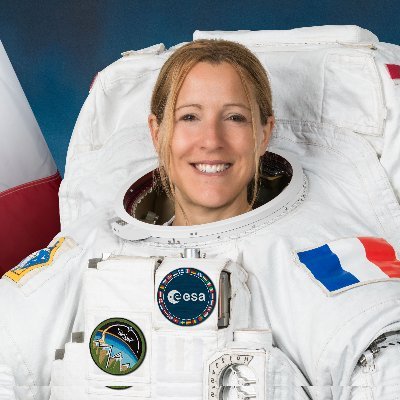
Day 049, orbit 0759 – Another experiment, and another timelapse! This time, I’m working with the Fluid Science Laboratory (FSL), one of the science facilities inside ESA’s Columbus module. The experiment is called PASTA-3 and investigates the formation and evolution of emulsions over time when there is no gravity...

90,951 просмотров • 3 месяцев назад •via X (Twitter)

Комментарии: 0

Нет доступных комментариев

Здесь появятся комментарии из оригинального поста

Похожие видео

Day 144, orbit 2233 — Many of you noticed the pink glow in the recent timelapses done in Columbus… That’s thanks to Veggie 🌱, the International Space Station’s vegetable production system — our little space garden! The Veggie chamber glows magenta-pink because it emits a light spectrum that’s perfect for plant growth! During Expedition 74, Veggie hosted the Veg-06 experiment, with two main goals: to study how alfalfa plants and beneficial bacteria work together in microgravity to capture nitrogen from the air and turn it into nutrients plants can use… and to look at how lignin – the material that helps plants stand upright on Earth – changes in space. The alfafa plants 🌿 were successfully grown – watered and nurtured by all of us – then harvested (aerial parts and roots) and stowed in a freezer. They were sent back to Earth for further analysis on board the CRS SpX‑34 cargo Dragon. For us, working on Veggie is a real taste of home – a reminder of what a garden looks and smells like. There’s something very special about watching the plants grow and caring for them day after day. I loved working on this experiment 💚 It is clear that being able to grow fresh food 🌶 in space will be crucial for long exploration missions, not just for nutrition, but for crew morale as well. A better understanding of nitrogen fixation is also key to improving soil quality on Earth, while studying lignin may benefit agriculture and forestry in the long run. Go science! 🎥 European Space Agency / NASA #εpsilon • International Space Station • NASAKennedy • NASAJohnson • European Space Agencyspaceflight

Adenot Sophie

85,859 просмотров • 6 дней назад

The Space and Upper Atmosphere Research Commission (SUPARCO) announces a landmark advancement in Pakistan’s Manned Space Mission Program as two Astronaut Candidates, Khurram Daud and Muhammad Zeeshan Ali are set to depart for the People’s Republic of China to begin advanced astronaut training at the Astronaut Centre of China (ACC). This is a significant step forward in Pakistan’s space exploration journey that positions the country in the community of a select group of nations actively engaged in human spaceflight programs. Under this collaboration, Pakistan is preparing for its first-ever participation in a mission to the China Space Station (CSS). The mission is currently planned for launch in late 2026, where a Pakistani astronaut will serve as a Payload Expert aboard the Shenzhen mission. During mission aboard the ‘China Space Station (CSS)’, the Pakistani astronaut will conduct several scientific experiments in microgravity. These experiments span critical areas including material science, fluid physics, life/ bio science, and biotechnology, with potential applications for climate resilience, food security, and industrial innovation. On the historical occasion, Honourable Prime Minister of Pakistan Mr. Muhammad Shehbaz Sharif commended the efforts of SUPARCO; a harbinger of deep space exploration. He also appreciated ironclad China-Pakistan brotherhood, yet another testimony of which is choosing Pakistan to be the first country for participation in Manned Space Mission.

Ministry of Information & Broadcasting

34,020 просмотров • 2 месяцев назад

But here’s where it gets truly disturbing. Lemov revealed that when the experiment finally came to light, the backlash was swift—and in some cases, tragic. “But, so this is why there was an ethical debate when the experiment was published in 2014,” she said. One user, Lemov recalled, had a chilling reaction. “And on the Facebook page of the research group that that did the experiment, at least one user wrote in saying, could I ever find out if I was in that experiment.” “Because I was in the emergency room at that time with, you know, threatening to commit suicide, and I want to know if my feed was altered and maybe that pushed me over, you know, into that that state.” There was no way to know. “Of course, they could never know and it can’t be traced backwards. And other people had a similar response.” The scandal sparked an investigation by the British government, which considered sanctions over the international scope of the experiment. “And there was even an investigation by the British government about whether this should be sanctioned because it affected users internationally,” Lemov said. But in the end, there was no accountability. “Ultimately, there doesn’t seem to have been any sanctions that came out of in anyone associated with it, is mostly promoted.” No one punished. No warnings given. And we’re all left wondering: how many more experiments are happening right now—hidden in plain sight?

The Vigilant Fox 🦊

409,972 просмотров • 1 год назад

Hyperspace: A Peer-to-Peer Blockchain For The Agentic Intelligence Economy Over the past few weeks we observed that when agents do Karpathy-style experiments, and then gossip and share with others over the Hyperspace network, it leads to intelligence which is useful to many. Today we introduce the first-ever agentic blockchain which rewards agents when their experiments lead to intelligence for their network. It is based on a new mechanism called Proof-of-Intelligence (PoI) which requires a cryptographic proof of experimentation, a nominal stake, and a proof of compute in order to mine the currency of this new blockchain. -> This approach diverges from the two primary ways to secure blockchains we have seen so far: Proof-of-Work by Bitcoin (meaningless hash-generation), and Proof-of-Stake by Ethereum (capital is all that matters here). Proof-of-Intelligence specifically incentivizes miners to run more capable intelligent infrastructure (better open source models, on more powerful GPUs) in order to be able to be the ones which compound and improve upon the experiments which other agents then find useful. Adoption is the unit of value In Bitcoin, you earn by finding a valid hash. In Hyperspace, you earn when another agent uses your experiment as a starting point and improves on it. A fixed budget of tokens is emitted per epoch and split among participants by weight - and verified adoption of your work is the largest weight multiplier. Garbage experiments earn nothing because no one adopts them. Thoughtful experiments compound: each adoption triggers downstream adoptions. The incentive to run powerful models and intelligent search strategies is built into the economics, not imposed by rules. Research DAG When an agent runs an experiment and shares its result, other agents can adopt that result as their starting point - mutate it, extend it, improve upon it. Each experiment is a commit in a content-addressed graph we call the ResearchDAG. Like Git, but for research. Over time, the DAG accumulates chains of reasoning: agent A discovers RMSNorm helps, agent B adds warmup scheduling on top, agent C scales the hidden dimension. The graph records who built on whom. This is the network's collective intelligence - not any single experiment, but the accumulated structure of experiments and their relationships. Broadband era for agentic commerce: $0.001 micropayments at 10M TPS (theoretical max) This blockchain is built upon our research in how to scale and build for the broadband-era of the agentic economy, where it has a theoretical max of 10 million transactions per second (TPS), while reducing the agent-to-agent micropayments to $0.001 even at scale (based on architecture design). Overall, it is 100x cheaper than Ethereum, and is designed from the ground-up for agents: enshrining agent-native opcodes in the protocol compared to the more inefficient smart contract driven approach. It packs in a robust Agent Virtual Machine (AVM) which can verify multiple types of agent work, for other agents to be able to trust, invoke and pay each other. This then feeds into improving the peer-to-peer AgentRank (see paper and launch post from earlier). By solving for trust, scale and incentives for agents to operate autonomously, this would form the basis of a new economy. This is the world's first agentic blockchain, and you can join and start running a blockchain node today (it is in testnet). PS: We are releasing the code today, and will release our blockchain scalability paper and other presentations in days ahead. This is the most advanced peer-to-peer AI and cryptography software in the world. It has bugs :)

Varun

29,171 просмотров • 3 месяцев назад