Video yükleniyor...

Video Yüklenemedi

Ana Sayfaya Dön

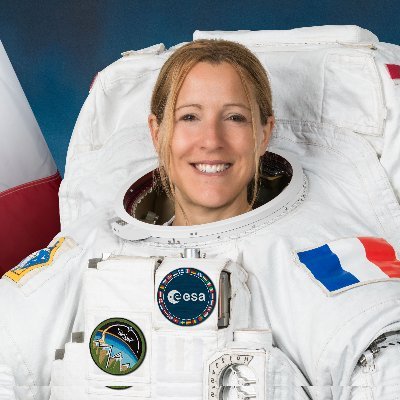
Day 049, orbit 0759 – Another experiment, and another timelapse! This time, I’m working with the Fluid Science Laboratory (FSL), one of the science facilities inside ESA’s Columbus module. The experiment is called PASTA-3 and investigates the formation and evolution of emulsions over time when there is no gravity...

90,951 görüntüleme • 5 ay önce •via X (Twitter)

0 Yorum

Yorum bulunmuyor

Orijinal gönderinin yorumları burada görünecek

Benzer Videolar

Day 144, orbit 2233 — Many of you noticed the pink glow in the recent timelapses done in Columbus… That’s thanks to Veggie 🌱, the International Space Station’s vegetable production system — our little space garden! The Veggie chamber glows magenta-pink because it emits a light spectrum that’s perfect for plant growth! During Expedition 74, Veggie hosted the Veg-06 experiment, with two main goals: to study how alfalfa plants and beneficial bacteria work together in microgravity to capture nitrogen from the air and turn it into nutrients plants can use… and to look at how lignin – the material that helps plants stand upright on Earth – changes in space. The alfafa plants 🌿 were successfully grown – watered and nurtured by all of us – then harvested (aerial parts and roots) and stowed in a freezer. They were sent back to Earth for further analysis on board the CRS SpX‑34 cargo Dragon. For us, working on Veggie is a real taste of home – a reminder of what a garden looks and smells like. There’s something very special about watching the plants grow and caring for them day after day. I loved working on this experiment 💚 It is clear that being able to grow fresh food 🌶 in space will be crucial for long exploration missions, not just for nutrition, but for crew morale as well. A better understanding of nitrogen fixation is also key to improving soil quality on Earth, while studying lignin may benefit agriculture and forestry in the long run. Go science! 🎥 European Space Agency / NASA #εpsilon • International Space Station • NASAKennedy • NASAJohnson • European Space Agencyspaceflight

Adenot Sophie

86,912 görüntüleme • 1 ay önce

The Space and Upper Atmosphere Research Commission (SUPARCO) announces a landmark advancement in Pakistan’s Manned Space Mission Program as two Astronaut Candidates, Khurram Daud and Muhammad Zeeshan Ali are set to depart for the People’s Republic of China to begin advanced astronaut training at the Astronaut Centre of China (ACC). This is a significant step forward in Pakistan’s space exploration journey that positions the country in the community of a select group of nations actively engaged in human spaceflight programs. Under this collaboration, Pakistan is preparing for its first-ever participation in a mission to the China Space Station (CSS). The mission is currently planned for launch in late 2026, where a Pakistani astronaut will serve as a Payload Expert aboard the Shenzhen mission. During mission aboard the ‘China Space Station (CSS)’, the Pakistani astronaut will conduct several scientific experiments in microgravity. These experiments span critical areas including material science, fluid physics, life/ bio science, and biotechnology, with potential applications for climate resilience, food security, and industrial innovation. On the historical occasion, Honourable Prime Minister of Pakistan Mr. Muhammad Shehbaz Sharif commended the efforts of SUPARCO; a harbinger of deep space exploration. He also appreciated ironclad China-Pakistan brotherhood, yet another testimony of which is choosing Pakistan to be the first country for participation in Manned Space Mission.

Ministry of Information & Broadcasting

34,242 görüntüleme • 4 ay önce

But here’s where it gets truly disturbing. Lemov revealed that when the experiment finally came to light, the backlash was swift—and in some cases, tragic. “But, so this is why there was an ethical debate when the experiment was published in 2014,” she said. One user, Lemov recalled, had a chilling reaction. “And on the Facebook page of the research group that that did the experiment, at least one user wrote in saying, could I ever find out if I was in that experiment.” “Because I was in the emergency room at that time with, you know, threatening to commit suicide, and I want to know if my feed was altered and maybe that pushed me over, you know, into that that state.” There was no way to know. “Of course, they could never know and it can’t be traced backwards. And other people had a similar response.” The scandal sparked an investigation by the British government, which considered sanctions over the international scope of the experiment. “And there was even an investigation by the British government about whether this should be sanctioned because it affected users internationally,” Lemov said. But in the end, there was no accountability. “Ultimately, there doesn’t seem to have been any sanctions that came out of in anyone associated with it, is mostly promoted.” No one punished. No warnings given. And we’re all left wondering: how many more experiments are happening right now—hidden in plain sight?

The Vigilant Fox 🦊

409,972 görüntüleme • 1 yıl önce