Loading video...

Video Failed to Load

Go Home

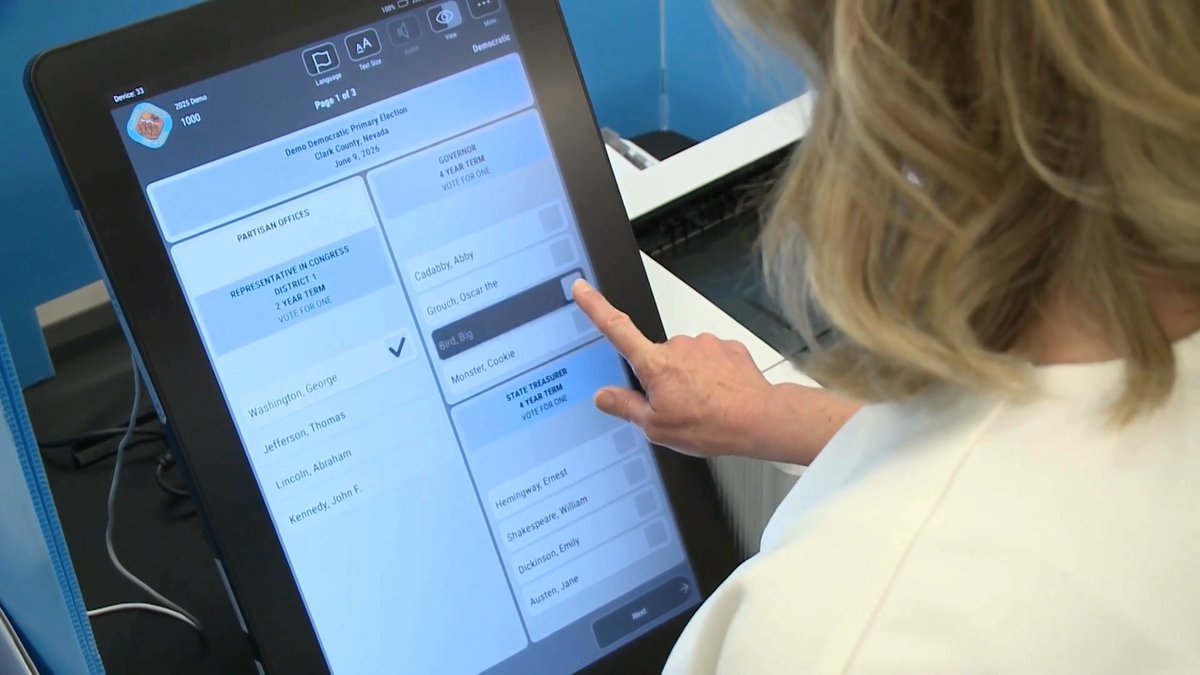
DHS JUST ORDERED MANDATORY RANDOM PAPER BALLOT AUDITS FOR THE 2026 MIDTERMS — THEY ADMITTED THE MACHINES HAVE FOREIGN PARTS. Secretary Markwayne Mullin put it in writing. Voting machines with components manufactured by foreign adversaries introduce significant security risks. Those parts can be tampered with in the factory —...

13,390 views • 16 days ago •via X (Twitter)

0 Comments

No comments available

Comments from the original post will appear here

Related Videos

DOMINION Voting System's Executives admitted in 2015 that their machines can not, and do not check for fraudulent ballots when asked point blank at a press conference. This also proves when an election worker from Alabama printed ballots from across the street on notebook paper and Dominion's machine accepted every single one. Based on technical reports, security analyses, and official documentation, the ICX itself does not have built-in capabilities to autonomously determine if a ballot is fraudulent in terms of paper authenticity, watermarks, or other physical markers. Instead, fraud prevention in Dominion systems relies on procedural safeguards like voter verification of the printed ballot before casting, post-election audits of paper records, chain-of-custody protocols for ballots, and physical security measures around the machines. Some analyses have identified vulnerabilities in the ICX that could potentially allow manipulation if an attacker has physical access, but these do not involve the machine detecting or rejecting fraudulent ballots based on paper properties—detection would require human-led audits or recounts, which solely relies on trust of the people overseeing an election. There is no evidence that Canon scanner technology (likely referring to Canon's document scanners, such as the DR-G1130 models used in Dominion's ImageCast Central systems for high-volume scanning) has ever been installed in "every machine" for the purpose of checking watermarks or ballot paper authenticity. Canon scanners in Dominion setups are primarily for optical scanning of marked ballots to count votes, not for forensic-level paper verification. This is HUGE!

The SCIF

35,506 views • 7 months ago

The Halderman Report proved that votes can be ALTERED on Dominion machines, revealing critical flaws and features that let insiders flip votes either on-site or remotely, even subverting paper trails. Dominion voting machines, specifically the ImageCast X and ICX ballot-marking devices, have severe, exploitable security flaws that allow votes to be altered. All used in the 2020 election and others. Malicious actors, corrupt insiders, including hackers with physical access, corrupt election officials, or remote attackers via election management systems, can change election results without detection. These vulnerabilities undermine the entire election process, subvert audit trails and paper records, and prove the machines cannot be trusted. The flaws pose an ongoing threat to U.S. elections with obvious strong implication tied to the stolen 2020 election. Arbitrary code execution is extremely vulnerable allowing an attacker to install malicious software on the machines. This can be done with temporary physical access, even by a voter at a polling place, or remotely by compromising the central election management system, the EMS, then spreading malware to every ballot-marking device in a jurisdiction. If one computer or machine is attacked or compromised, then ALL of the machines on the network are compromised. There is a vast variety of vote alterations capable. Malware can modify the QR codes on the paper ballots printed by the machines, effectively changing the recorded votes while the paper trail appears normal to voters and auditors. Multiple severe security flaws discovered across nearly every part of the exposed system, including how election definitions are loaded. Proof-of-concept attacks were demonstrated by Halderman and his team showing it was possible to secretly alter votes on test machines. These attacks can bypass procedural protections practiced by states, logic & accuracy testing, chain-of-custody, etc. The report concludes that the vulnerabilities are serious enough to allow large-scale vote manipulation in our elections and most likely already have before and post 2020 election.

The SCIF

20,548 views • 2 months ago