Video yükleniyor...
Video Yüklenemedi
Did you know an issuer on Stellar can set flags on the asset itself: require approval before an account can hold it, freeze a balance, or claw it back. Those controls run at the protocol level rather than inside a smart contract, which is why regulated funds and stablecoins... show more

39,566 görüntüleme • 9 gün önce •via X (Twitter)
12 Yorum

@StellarOrg Of course we know. That’s why we’re here 😂

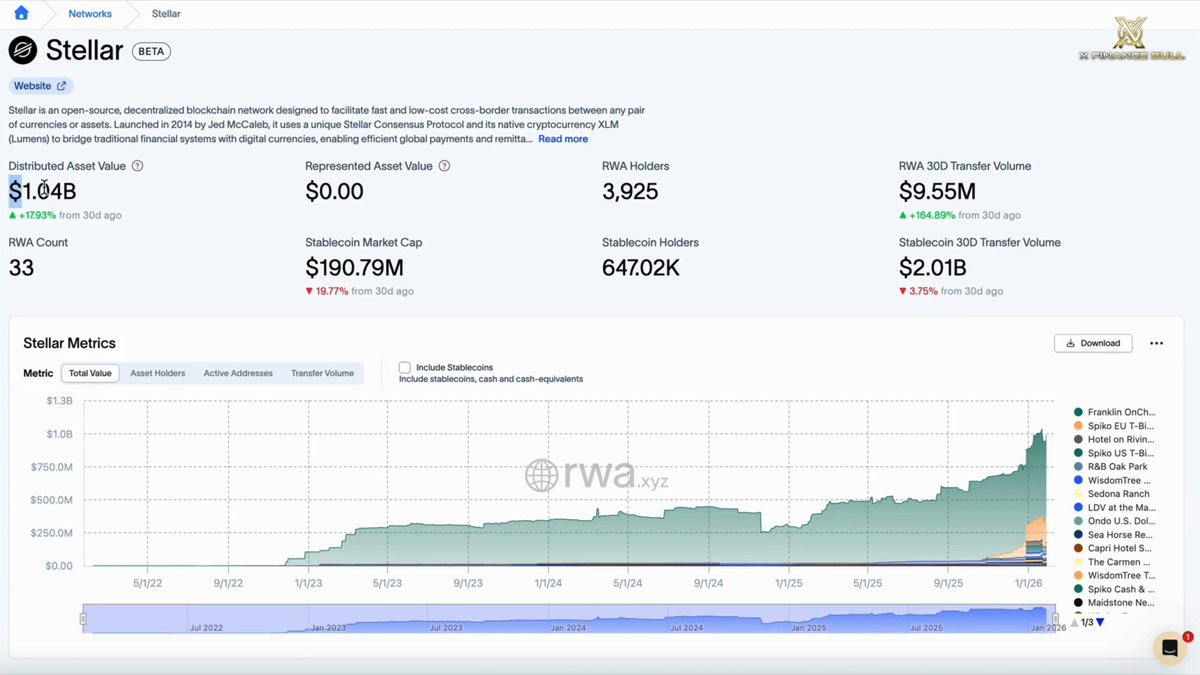
For institutional assets, programmability sometimes means adding constraints rather than removing them. Approval, freezes and clawbacks may look restrictive from a crypto perspective, but they allow legal ownership rules and onchain settlement to exist on the same rail. That helps explain why Stellar keeps appearing in regulated finance.

@StellarOrg Protocol-level compliance primitives are mandatory for institutional RWA adoption. Smart contract risks are fine for DeFi, but traditional finance requires immutable, network-native control frameworks. This is how real-world assets scale on-chain.

@StellarOrg Đọc tới phần đóng băng số dư thấy thú vị ghê, kiểm soát ở cấp giao thức nghe nghiêm túc hơn hẳn 😯

@StellarOrg Protocol-level freezes and backdoors disguised as "regulatory compliance" for institutional funds. The desk loves building walled gardens where they can trap your capital and rewrite the rules whenever the trade goes against them.

@StellarOrg Built-in clawbacks and authorization flags are why enterprise-grade programmable payments belong on Stellar.

@StellarOrg more on regulated onchain trading here:

@StellarOrg This is one of the most important parts of Stellar’s RWA story. It’s not just about putting assets on-chain. The issuer can actually enforce the rules required by regulated assets at the protocol level. BENJI already proves the model — and with DTCC coming next

Those native protocol flags make Stellar ideal for regulated funds, but retail users often don’t know if a token has clawback or freeze permissions enabled. Surfacing these flags and screening transaction payloads before signing is essential so users always know what they’re holding.

@StellarOrg This is the part of tokenization people often miss: “on-chain” doesn’t automatically mean permissionless. The asset rules matter.

@StellarOrg Same with trc20 network

That distinction matters: protocol-level controls make the trust boundary visible instead of hiding it in app logic. Launches deserve the same standard—publish the cutoff, allocation rule, and refund path before anyone commits, so “fair” is auditable rather than a promise after the fact.






![Etherealize CEO Vivek Raman: Banks are looking at Larry Fink and Ethereum “It’s impossible not to be bullish now. […] The [Ethereum] network has never been stronger, more resilient, or future-proofed to scale with Layer 2s plugged in and ready for the institutional moment right now. Asset price will follow.” “[BlackRock CEO] Larry Fink is a pioneer in the space. He has been a visionary, and his voice is heard and listened to by everyone else on Wall Street. The banks are looking at him. The asset managers are looking at him. He’s one of the leaders that’s digital assets-forward, and when he tokenized BUIDL — their money market fund — on Ethereum before there was regulatory clarity and before we got out of the Gensler SEC, that set the standard for Ethereum to be the default.” “Ever since then, the money in money market funds on Ethereum has multiplied. Stablecoins on Ethereum have multiplied. And now Larry Fink is coming in and saying, ‘We need one common blockchain’ so that we don’t have fragmentation and all tokenized assets can be in one place. That means Ethereum — it’s the best set up for it.” Source: The Rollup (Mar 2026)](https://image.24vids.com/tw-2032532144430493956/amplify_video_thumb/2032433306541690880/img/-8hosjDZ35Fwn0c4.jpg)
