正在加载视频...

视频加载失败

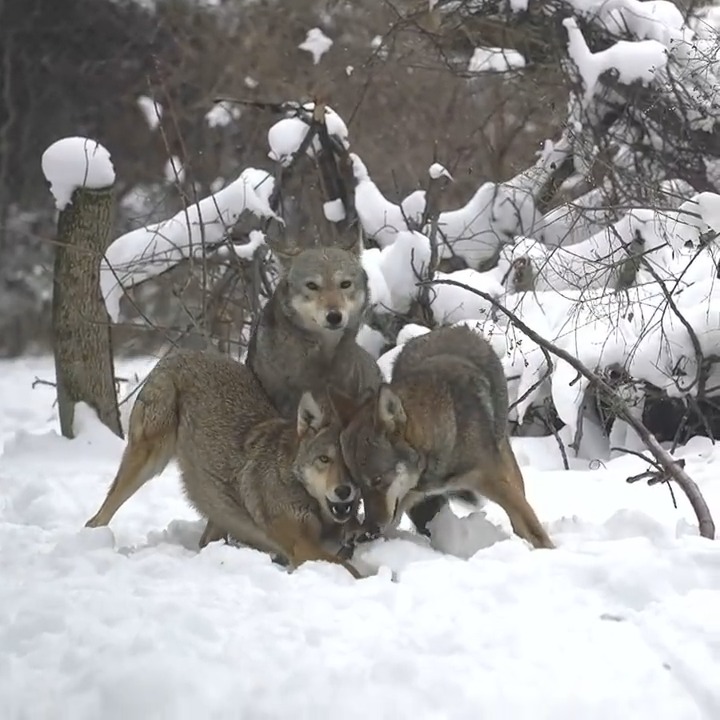
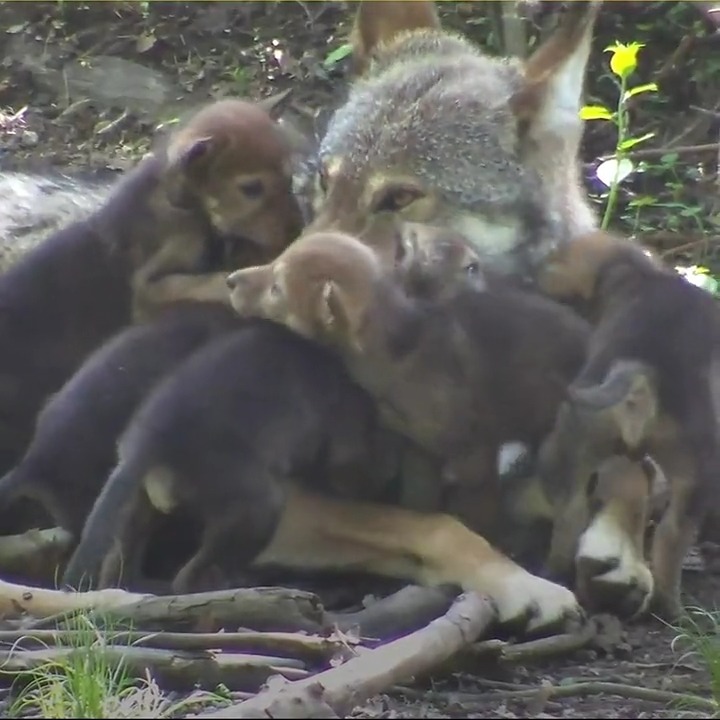
Did you know that wolves across the world speak in 21 different dialects? The largest-ever study of howling in the canid family, including wolves, jackals, + dogs, has shown that the various species + subspecies have distinguishing repertoires of howling or vocal fingerprints.
145,573 次观看 • 3 年前 •via X (Twitter)

9 条评论

Jacqueline MacDonald 🇺🇦 的头像
Jacqueline MacDonald 🇺🇦3 年前

Cool. Love that they have 'distinguishing repertoires of howling or vocal fingerprints'. I love hearing the sounds made in the canid family. (Different point: but I'm loquacious, too.) And don't you just love wolves!?!

am in umbria 的头像
am in umbria3 年前

Nikai you are a good singer. Poor Alawa she missed Zephyr, Nikai and I do too.

Bob Antonietti 的头像
Bob Antonietti3 年前

Love this!!! ❤️

jeffverellen 的头像
jeffverellen3 年前

@Huskymom2018

Carol Boxberger 的头像
Carol Boxberger3 年前

Such beautiful sounds!!❤️

Javier Martinez Salazar 的头像
Javier Martinez Salazar3 年前

@carla_dra @NatiCartolini

(((kid yid & her jew dog))) 的头像
(((kid yid & her jew dog)))3 年前

and hairry's squeak ...

Karambit Krunch 的头像
Karambit Krunch3 年前

Floofy danger-dawggeh awoo's!

Mahalo 的头像
Mahalo3 年前

🔊💗

相关视频

The first footage of wolves eating raspberries to our knowledge! We captured this footage last summer when the Bug Creek Pack pups spent a good while foraging for berries in this patch. Of course, we have known for a while wolves eat raspberries as we have sifted through many scats full of raspberry seeds. However, we’ve never observed the behavior before. Just a few months ago, before we were aware we captured this footage, we actually published a scientific paper on the “berry-eating” behavior of wolves. The big takeaway from our study (link to study below!): based on our data, wolves foraging on berries in our area is an extremely widespread behavior and one that almost every wolf we have studied engages in when berries are abundant. We have captured trail camera footage of wolves of all ages, sexes, and social statuses (i.e., breeding or subordinate wolf) from several packs foraging on berries. All of this indicates “berry-eating” by wolves is likely pervasive across large portions of southern boreal ecosystems in places like Minnesota, Michigan, Wisconsin, Ontario, Manitoba and Quebec. However, given the lack of summer research on the foraging ecology of wolves in these areas, we think this behavior has just gone unnoticed. Although, there is evidence based on scats collected in these areas that wolves are foraging on berries. Now, it is important to understand why wolves eat berries and to not misconstrue this finding with the notion that wolves eat berries because they prefer berries over animal prey. Wolves do not have digestive systems that are meant to digest plant matter and berries effectively. Thus, berries are almost certainly "starvation food" for wolves; as in, the wolves are starving and berries are the best option given the circumstances to stave off hunger and slow weight loss. All this to say, wolves are not eating berries instead of other animals because they prefer berries over meat. We have no doubt that if a wolf had an option between a meal of berries or of deer/ beaver that it would choose the latter every single time. Catching deer and beavers, wolves primary summer prey, is extremely challenging for wolves in late summer, and likely requires extensive energy expenditure. Thus, instead of spending substantial energy hunting prey they likely cannot catch, wolves turn to berries, which are abundant, taste good, and likely make them feel full. In other words, all evidence suggests wolves are just eating berries to slow starvation and weight loss. Read our recent study on the “berry-eating” behavior of wolves for free here:

Voyageurs Wolf Project

23,594 次观看 • 1 年前