Loading video...

Video Failed to Load

Go Home

Dirty Frag: Unfixed Root Exploit Makes All Linux Systems Vulnerable Due to a broken embargo, this severe root exploit has no patches available for any Linux distribution. Ubuntu, RHEL, openSUSE... they're all vulnerable.

36,868 views • 2 months ago •via X (Twitter)

0 Comments

No comments available

Comments from the original post will appear here

Related Videos

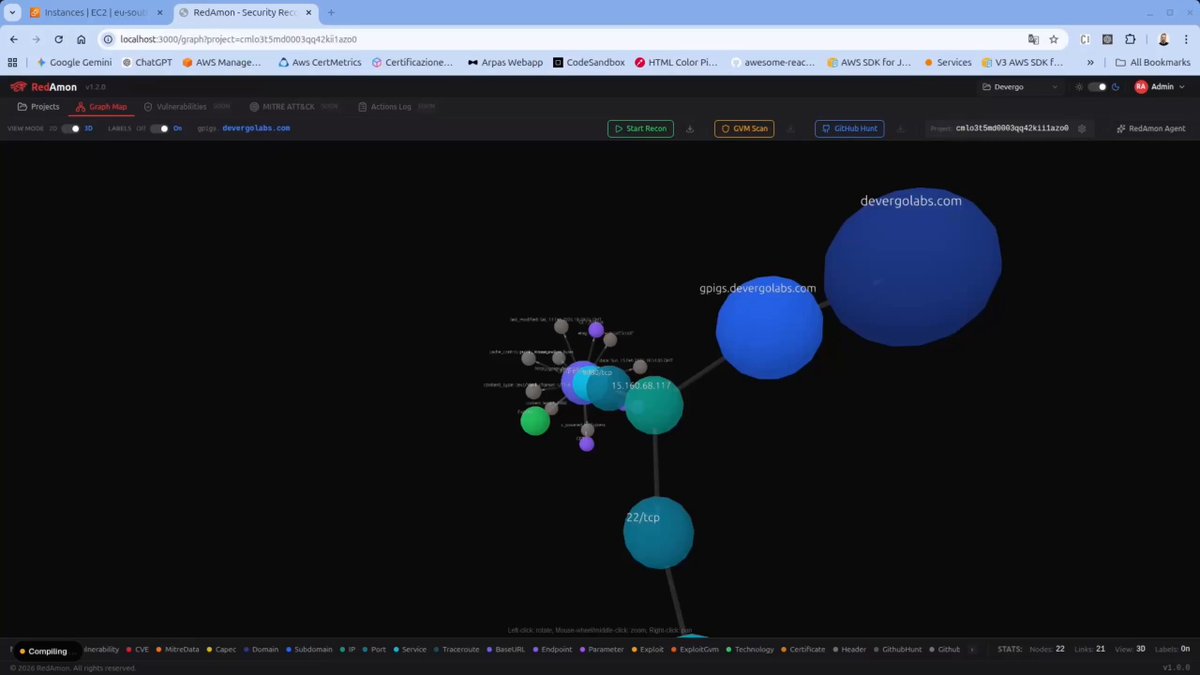
someone built an AI RED TEAM that maps your entire attack surface as a knowledge graph, finds every vulnerability, then EXPLOITS them to root access AUTONOMOUSLY its called RedAmon, 9,000 templates. 17 node types, actual Metasploit shells, not reports, no pentesters needed 6 phases of autonomous recon: subdomain discovery, port scanning, http probing, resource enumeration, vulnerability scanning, MITRE mapping every finding stored in a Neo4j graph with 17 node types and 20+ relationship types. the AI reasons about the graph, finds attack paths, and runs actual Metasploit exploits, actual shells stress-tested with zero vulnerability data, zero exploit modules, one instruction find a CVE and exploit it, it went from empty database to root-level RCE in 20 steps, researched the exploit on the web, crafted a custom deserialization payload, debugged itself when the first attempt failed next try, the server responded with root access, the highest privilege level on any Linux system. full control over everything the target was running node-serialize 0.0.4, a package with a critical deserialization flaw (CVE-2017-5941, CVSS 9.8), the server takes your cookie, decodes it, and passes it straight into unserialize() which executes any code inside it, the AI figured this out on its own with no hints built on LangGraph + MCP tool servers for naabu, nuclei, curl, metasploit. hunts leaked secrets across GitHub repos, 40+ regex patterns for AWS keys, Stripe tokens, database creds

chiefofautism

70,129 views • 5 months ago

Linux is the most widespread operating system, globally – but how is it built? Few people are better to answer this than Greg Kroah-Hartman (Greg K-H): Greg has been a Linux kernel maintainer for 25 years, and one of the 3 Linux Kernel Foundation Fellows (the other two are Linus Torvalds and Shuah Khan). Greg manages the Linux kernel’s stable releases, and is a maintainer of multiple kernel subsystems. We cover the inner workings of Linux kernel development, exploring everything from how changes get implemented to why its community-driven approach produces such reliable software. Greg shares insights about the kernel's unique trust model and makes a case for why engineers should contribute to open-source projects. Watch or listen: • YouTube: • Spotify: • Apple: Brought to you buy: • WorkOS — The modern identity platform for B2B SaaS. • Vanta — Automate compliance and simplify security with Vanta. Check out all of our current sponsor and their offerings: ---- One of the most surprising things I learned about Linux: although 4,000 developers contribute to the project from 500 companies per year, and has around 800 kernel maintainers, the project is run with email, git... and that's about it! No dedicated project managers, no regular meetings across the group. It's a truly fascinating and unique model (and only applies to the Linux kernel project: not to Linux distributions.) We go into more detail about this topic with Greg in the podcast as well.

Gergely Orosz

50,945 views • 1 year ago