Video yükleniyor...

Video Yüklenemedi

Ana Sayfaya Dön

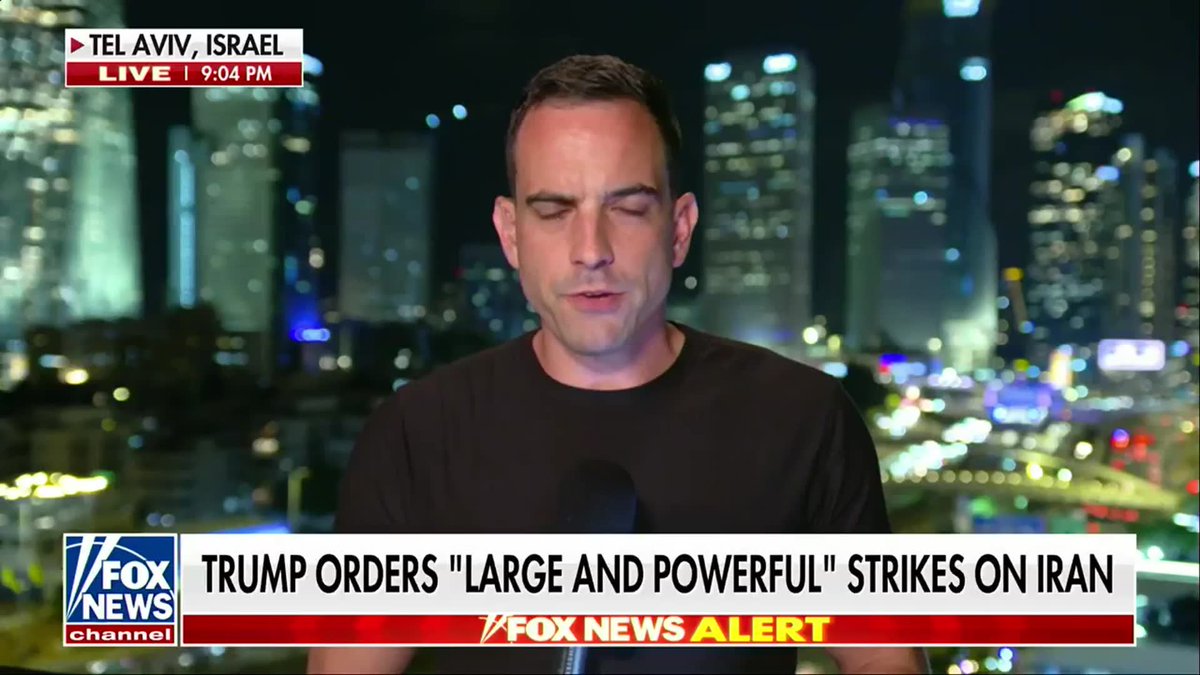
🇺🇸❌🇮🇷⚡️ Donald Trump has issued an explicit warning that another Iranian retaliation could trigger an even more devastating U.S. response, saying that if Tehran keeps escalating, “they will no longer exist.” In an interview with Fox News, Trump said the United States would strike Iran much harder if Tehran...

22,255 görüntüleme • 1 ay önce •via X (Twitter)

0 Yorum

Yorum bulunmuyor

Orijinal gönderinin yorumları burada görünecek

Benzer Videolar

🇺🇸🇮🇷 Trump says the U.S is going to “hit Iran hard,” while Tehran is warning that from now on, every American attack will be met with a response “dozens of times greater.” That's an extremely dangerous change in the rules of this war. The latest U.S strike was deliberately limited: American forces hit rocket launchers on Larak Island that CENTCOM says were preparing to deploy sea mines into the Strait of Hormuz. Iran didn't respond proportionally; it launched a much larger barrage of missiles and drones toward U.S positions in the region. And that's the part that matters. Earlier in the war, Iran largely calibrated its responses because it still believed there was a deal to be made with Washington. That calculation appears to be disappearing, because Tehran believes America no longer possesses the escalation dominance it had at the beginning of the war. And Iran is now willing to prove it by deliberately responding harder than it gets hit, meaning Trump now faces a brutal dilemma. If he doesn't respond after publicly promising to “hit them hard,” Tehran can portray it as proof that American threats have lost their force. But if he does hit Iran hard, Tehran is explicitly threatening to escalate even more, and warning that no target in the region is beyond its reach. The most dangerous assumption Trump could make now is that the U.S still gets to decide where the escalation ends. Iran's telling him it has a say in that. Brandon Weichert

Mario Nawfal

339,651 görüntüleme • 1 ay önce

My interview CNN International #newsroom: 1. Trump’s Iran Dilemma: No Good Options The fundamental problem for President Trump is that it remains unclear what his exit strategy from the confrontation with Iran actually is. What is increasingly clear, however, is that Washington has no easy options. Destroying or overthrowing the Iranian regime cannot realistically be accomplished through airpower alone. It would require a level of military commitment, resources and potentially boots on the ground that President Trump has shown little appetite for. But diplomacy is difficult as well. Returning to an agreement would require compromises that Washington has so far been unwilling to make, while maintaining the current situation is increasingly costly. The confrontation continues, energy markets remain under pressure, and the parallel escalation between Saudi Arabia and the Houthis is adding another source of instability. So Trump faces a classic strategic dilemma: escalation carries enormous risks, but maintaining the status quo is also becoming increasingly expensive. There is no obvious military solution — and no easy diplomatic one either. 2. The Houthis Serve Iranian Interests — But They Are Not Iranian Proxies It is important to distinguish between alignment and control. The Houthis clearly serve Iranian strategic interests, particularly by increasing pressure on Saudi Arabia and threatening critical energy and maritime infrastructure. But that does not mean Tehran simply gives them orders. That distinction matters because there is now an effort to convince Iran to restrain the Houthis. Pakistan, for example, has reportedly urged Tehran to use its influence with the group. But Iranian influence should not be confused with Iranian command and control. The immediate Saudi problem is becoming increasingly serious. Houthi missile and drone attacks have targeted Saudi territory and Aramco facilities, while Riyadh has struggled to obtain direct military assistance from its partners. Saudi Arabia therefore faces a dilemma remarkably similar to Washington's dilemma with Iran: escalate and risk an even larger Houthi response, or pursue an agreement that will almost certainly require significant concessions to the Houthis. Neither option is attractive. And unless there is a political arrangement, there is little reason to assume that military escalation alone will end this confrontation. 3. How Divided Is Tehran? I would be cautious about some of the reporting regarding deep divisions inside the Iranian leadership. There are certainly disagreements within Tehran about tactics, priorities and how to manage the confrontation. That is normal in the Iranian system. But when it comes to the fundamental strategy toward the United States, I see considerably more consensus than some reports suggest. The basic Iranian position appears straightforward: Tehran is unwilling to accept a regional energy order in which Gulf states continue exporting oil while Iran itself is prevented from doing so. I am also skeptical of suggestions that major missile operations could simply be conducted outside the knowledge of the senior IRGC command structure. The Iranian system has become more decentralized in some respects, but decentralization should not be confused with the absence of command and control. That does not mean every report suggesting internal disagreement is wrong. It means we should distinguish between disagreements over tactics and a genuine breakdown in strategic decision-making. 4. Why Trump’s Meeting With Gulf Leaders Matters President Trump’s planned meeting with the leaders of the six Gulf Cooperation Council states on the sidelines of the UN General Assembly could be one of the most important diplomatic meetings of this phase of the conflict. The Gulf states have their own interests, and they are not identical. But the central question for Washington will be how they view the choice between renewed escalation and a diplomatic off-ramp. My assessment is that most Gulf governments would prefer stability to another major round of war. That does not mean they are abandoning their relationship with Washington. The United States remains their most important external security partner. But the war has also reinforced an uncomfortable lesson for the Gulf states: American power is indispensable, yet relying exclusively on Washington carries risks of its own. The Gulf states therefore increasingly have an interest in maintaining multiple channels — with Washington, but also with Tehran and other major powers. That is why this meeting matters. Trump will be listening to Gulf leaders as he considers his next move toward Iran. And the message he may hear from many of them is relatively simple: #IranWar‌ #iran

Danny (Dennis) Citrinowicz ,داني سيترينوفيتش

18,651 görüntüleme • 14 gün önce

⭕️ Trump Threatens New Strikes on Iran, Says U.S. Will “Take Out Pickaxe Mountain” President Donald Trump issued a series of new threats against Iran during an interview on The Hugh Hewitt Show, saying the U.S. is preparing further attacks and dismissing the possibility of reviving the collapsed memorandum of understanding. ➤ On Iran’s Pickaxe Mountain nuclear site: Trump said the location is “on the list” and being closely watched. While claiming the U.S. has seen no activity there, he said Washington would “probably give Pickaxe a shot relatively soon” and later declared: “We’re going to take out Pickaxe Mountain.” ➤ Trump said the U.S. would strike Iran “very hard tonight” and again tomorrow, adding that “there’s not a damn thing they can do about it.” ➤ On the failed MOU: Trump described the agreement as a “test” rather than a deal, claiming Iran repeatedly walked away from it after negotiations had been settled. He called Iranian officials “extremely unreliable” and said agreements with them are “made to be broken.” ➤ On Iran’s leadership: Trump said the U.S. had already “knocked out” two Iranian governments and taken out “about 25%” of the current leadership. Asked whether the U.S. knew the locations of remaining senior officials, he said: “Yeah, I do,” but declined to provide details. ➤ On Iran’s nuclear program: Trump claimed Iran would use a nuclear weapon “within one day” if it obtained one and said the U.S. destroys Iranian nuclear capabilities whenever new activity is detected. ➤ On anti-government protests: Trump discouraged Iranians from returning to the streets unless they were armed, arguing that government forces would kill demonstrators. He claimed, without providing evidence, that the Iranian government has killed 52,000 people, a figure about 10 times higher than documented estimates from pro-regime change groups.

Drop Site

32,175 görüntüleme • 2 ay önce