Загрузка видео...

Не удалось загрузить видео

На главную

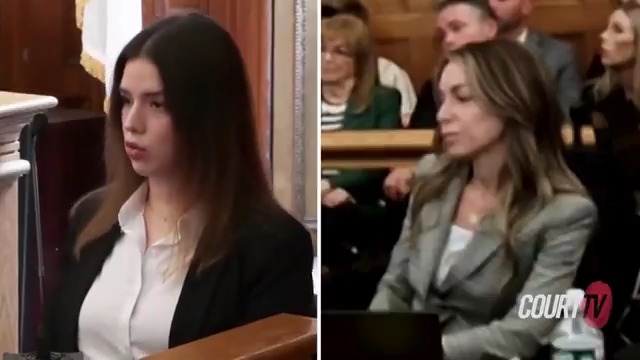
Dr. Laposata literally teaches dog bite wound pattern recognition classes. In fact, she’s taught no less than thirteen dog bite wound pattern recognition classes. I think that makes her an expert. #KarenRead #KarenReadTrial #FreeKarenRead
Комментарии: 10

Фото профиля Robbieee
Robbieee1 год назад

I thought the judge was incompetent until now. I've changed that to actually corrupt - putting her thumb on the scale. There's no other explanation.

Фото профиля Michelle #AmericaFirst
Michelle #AmericaFirst1 год назад

Hank opened the door regarding DOG BITES during his cross of Russell. AJ's right, this is OUTRAGEOUS!

Фото профиля Karen 🍀
Karen 🍀1 год назад

How the hell is Pee Wee Herman allowed to sit there and make faces continually? And WOW, the judge says “are you going to read all three pages? I’m not going to let you read three pages” How the hell does she get that much power over how the case is presented??

Фото профиля #MedicareForAll 🔥
#MedicareForAll 🔥1 год назад

for the nth time: in a NORMAL courtroom this is obvious, NOT in a corrupt Cannone courtroom

Фото профиля Tony Cordasco
Tony Cordasco1 год назад

This judge is on the take

Фото профиля oneflgirl
oneflgirl1 год назад

This is ridiculous, they are entitled to put on a defense.

Фото профиля Kk
Kk1 год назад

The commonwealth and Bev know this is detrimental to their case. This is the biggest load of horse 💩 I have ever seen. Corrupt. Pathetic

Фото профиля pipernd
pipernd1 год назад

Maybe she should have been the designated dog bite expert pathologist then. . .

Фото профиля jplala
jplala1 год назад

Hank is the Judge here. That's pretty obvious. Bev is just wearing the robe.

Фото профиля RARD
RARD1 год назад

If this doc isn’t qualified to testify about dog bites then who in the world is??

Похожие видео

Remember when Hank Brennan tried to have a “gotcha!” moment with Dr. Marie Russell, acting as if he knows more than her about dog bites, when he claimed that they’re “routinely referred to as an hourglass shape”? Brennan went so far as to represent that “hourglass” is the industry standard term used to describe the shape of dog bites by experts in an attempt to imply that being unfamiliar with this term suggests one isn’t an expert. ———— Brennan asked: “Well in most professional studies by experts, isn’t it routinely referred to as an hourglass shape?” Dr. Russell replied: “I haven’t seen that at all.” Brennan asked: “Well have you read books on dog bites?” Dr. Russell replied: “I’ve read articles on dog bites.” Brennan asked: “Have you read books on dog bites?” Dr. Russell replied: “No. I have read articles on dog bites.” Brennan asked: “Have you ever read this book (Brennan holds up book)? Do you recognize this as an authority?” Dr. Russell replied: “No.” ———— There’s just one problem for Mr. Brennan. This—the term “hourglass” for describing the shape of dog bites—isn’t a standard known or used industry term, in fact, it isn’t even a term used by experts in the field, nor is it a term used in “professional studies” to describe the shape of dog bites. Unable to find any instances where the term “hourglass” is used in any of the literature, “professional studies”, scientific papers or expert testimony, I decided to consult Hank Brennan’s Dog Bible (I mean book) since he specifically cited to it as being a source that substantiates the supposed established & routine use of this terminology by experts in the field. However, in my quest to determine if this was in fact the case, I scanned through the entirety of Brennan’s “Dog Bites: A Multidisciplinary Perspective” book in order to find what he was referring to. Shockingly, for a term like “hourglass” that Brennan portrayed as being industry nomenclature, or specific verbiage used by experts & in books—particularly Brennan’s book—to describe & expertly qualify the distinct shape of dog bites, this book used the word “hourglass” one time across its 450+ pages. In its singular mention of the word “hourglass”, the book states: “The hourglass shape of a generalized dog bite is clearly different from the typical bow shape of a human bite” (pg. 237). Nowhere in this sentence, page or chapter of the book does it indicate that the word “hourglass” is a widely accepted & used term in the field for describing the shape of dog bites. Based on its singular reference & lack of routine use in this entire book about dog bites, I think it’s safe to say that Hank Brennan is not only wrong, but apparently didn’t read his own reference book—other than perhaps the one page mentioning “hourglass”. ———— Final note on Brennan’s apparent lack of discernment on what constitutes an authoritative source in the field, especially in the areas of science & medicine, and particularly as it relates to expert witness testimony: It’d also appear that Brennan is confusing “professional studies” with peer reviewed studies. This seems to be further reinforced by the fact that he leaned on “books” as a default authority source, when in actuality, it is very well understood both in the medical/scientific community, as well as in the legal world of expert witnesses, that the unequivocally reliable authoritative source is the peer-reviewed study—sometimes referred to as “articles” (aka academic research articles). You probably recall hearing Dr. Russell refer to many such “articles” (peer reviewed studies) throughout the hearing. Peer-reviewed studies, unlike “professional studies”, are academic research articles that undergo rigorous scrutiny by experts in the field (peers) before publication. This process ensures the quality, validity & originality of the research—unlike say a book, for instance, which has no barrier to publication. #KarenReadTrial

Olivia

31,675 просмотров • 1 год назад

UgandaVsMollyKatanga Senior Forensic Pathologist calls the possibility that Mr Henry Katanga was shot and killed by his wife Molly Katanga, “extremely slim and highly unlikely”. He said the case before Justice Rosette Comfort Kania is not a homicide but a homicide-suicide where Mr Henry Katanga beat his wife, thought she was dead then sat or stood on the bed and shot himself. He lambasted the postmortem report presented by the state to back up their case as a “very dangerous postmortem report that couldn’t have passed peer review” in a serious entity. Dr Sylvester Onzivua was the first defense witness in this trial. He holds a Degree in Medicine and Surgery, from Makerere University (1993), a Masters of Medicine in Pathology (2003), a Post Graduate Diploma in Forensic medicine from the Colleges of Medicine of South Africa (2005). He’s also trained in Forensic Anthropology from Durban. He worked with Mulago Hospital, attached to the Department of Pathology of Makerere University and part of his deployment was in the City Mortuary where he was the Head of City Mortuary. He worked there from 2005 up to 2013. He said he has testified in numerous cases, mostly for the prosecution, including in the military courts. In a session whose start was marked by early heated exchanges between defense attorney Elison Karuhanga and Chief State Attorney Jonathan Muwaganya, Dr Onzivua took on the mantle of courtroom forensic pathology Prof, basically reliving a teaching role he continues to play in real life at Makerere University, even after his retirement. Early court proceedings were anything but smooth, with the Judge calling both sets of lawyers to her chambers for more than 2 hours because the state was adamant that Dr Onzivua shouldn’t use the postmortem report on court file but should instead use copies availed to him by the defense. On resumption and with a 50 slide PowerPoint presentation, Dr Onzivua took Justice Kania through the science of bullets and bullet injuries. He told her how to tell a bullet entry wound from an exit wound. He then used images of the late Henry Katanga, taken during postmortem, to show that the pathologists who conducted that postmortem wrote an erroneous report that misled the court to think the bullet that killed Mr Katanga went from left to right as opposed to what he said was a scientifically incontrovertible conclusion that the bullet direction was right to left. This point is very key because when Justice Kania put Mrs Katanga to her defense, she relied in part on prosecution evidence that claimed that Mr Katanga was shot on the left side of his head and since he was right handed, this would be very difficult. Dr Onzivua scoffed at that and using a combination of human props and postmortem images, he showed that indeed the state had it wrong; that it was scientifically wrong to conclude as they did. He pointed to the absence of tattooing, lacerations on the hole on the left side of Mr Katanga’s head and wondered why the state pathologists concluded that it was an entry hole despite showing all characteristics of an exit hole. He said there’s “no tattooing, no blackening, no muzzle imprint on a close contact bullet entry wound? So how, how, hoooow would they have called this an entry wound in the absence of blackening, tattooing or muzzle imprint? There’s no scientific basis of calling the wound on the left an entry wound.” “The wound on the right was stated to be 5cm by 3cm and this was described as an exit wound. The entire dimensions of the ear were taken and then stated to be the dimensions of the exit wound. This, scientifically is not correct. The true dimensions of the skull defect on the right side were not taken and there is therefore no scientific basis to call it an exit wound. A comparison of the right and left ear shows blackening on the right and none on the left. On the contrary, the external features of the wound on the right side are those of an entry hole” Cont’d…

Anthony Natif

40,323 просмотров • 2 месяцев назад

Everyone remembers the crazy run that Dogecoin had to an ATH of $0.736 but everyone forgets the -93.2% correction to $0.0497 just one year later Interestingly at the exact moment of me writing this $DOG is also down -93.2% from its ATH We must remember that memecoins are the most volatile asset class in the world There is no escaping the volatility Even the most valuable memecoin in the world that was bull posted by the richest man in the world relentlessly for months had a correction equal to what $DOG is experiencing right now Volatility is both a curse and a blessing The same thing that allows $DOG to drop from $1B to $67M is what may allow it to one day go to the moon and become the #1 memecoin in the world With no other asset class is something like that possible The roller coaster ride is part of the experience for better or worse The reason I want everyone in the $DOG Army to internalize this is because it makes us sharper and stronger Not every $DOG soldier has gone through 4 cycles Every cycle without fail when the bear market arrives the vast majority of people think that Bitcoin and crypto are dead forever But the true believers who understand the significance of this technology know that this is only the beginning I've attached a short clip from a conversation I had with Vincent (Cryptolution) 👑 over a year ago in the middle of the bull run that I believe is quite prescient right now that I encourage everyone to listen do I need each and every one of you to realize that this will not be easy We did not pick an easy mission But what matters right now is that we hold on and keep fighting even in the hardest of times because these are the moments that define us These are the moments where true conviction is forged Our work is not done In fact we are just getting started I want you all to know that it is an incredible honor to serve in the $DOG Army every day with each of you If you are here today reading this you are a $DOG legend You will be the reason for $DOG ATHs You are the real $DOG soldier who I have been waiting two years to meet 🫡

Leonidas 🧡 $DOG

46,296 просмотров • 3 месяцев назад

So Jefferson Morley says that "the evidence does not support the notion that Lee Harvey Oswald killed the president." Jeff relies on the eyewitness account of one of the Parkland doctors who treated JFK at Dallas, Bob McClelland. And he says I failed in Case Closed to challenge Dr. McClelland's credibility. Below is an excerpt from CASE CLOSED, Chapter 13, “He Had A Death Look: Parkland and Bethesda." Read it and decide for yourselves what you believe. And check my source notes, almost all based on my own interviews in 1992 with the chief attending Parkland doctors. It is their judgment of Dr. McClelland's account that is critically important. “However, some of the Parkland doctors who treated the President described a gaping wound in the rear of JFK’s head (the occipital region), not the right side (the parietal). If true, this not only contradicted the findings of the autopsy team but was evidence that the President was probably shot from the front, with a large exit hole in the rear of the head. Several Parkland doctors also thought they saw cerebellum, tissue from the base of the brain, on the stretcher or in the operating room. Yet, the autopsy photos of the brain show the cerebellum intact. If the Parkland descriptions of the cerebellum were true, this raised legitimate questions over the authenticity of the photographs of JFK’s brain, which showed no such damage. Robert Groden and Harrison Livingstone, in their book High Treason, devote more than thirty pages to highlighting this conflict between the Parkland and Bethesda descriptions of the head wound. However, it is questionable to rely on the Parkland doctors for any assertion about the head wound since, by their own admission, they did not examine it in detail. When Dr. Kemp Clark looked at the wound to determine whether the President could be revived, it was the first time it had been examined. “From what I read in later books, everyone looked at it in detail from the beginning, but that is not true,” recalls Dr. Jenkins. “We were trying to save the President, and no one had time to examine the wounds. As for the head wound, they couldn’t look at it earlier because I was standing with my body against it, and they would only have looked at my pants.”83 “We never had the opportunity to review his wounds,” Dr. Carrico told the author, “in order to describe them accurately. We were trying to save his life.”84 Dr. Adolph Giesecke agrees: “We had no time to examine the wounds. That was to be done by a forensic pathologist, not by us.”85 “I don’t think any of us got a good look at the head wound,” confirms Dr. Perry. “I didn’t examine it or really look at it that carefully.”86 “And when we realized he was dead,” Dr. Baxter recalls, “none of us had the heart to go and examine the head wound while Mrs. Kennedy was in the room. We all just made our way out of the room.”87 “When things were over with,” Dr. Jones says, “you felt it was her time and you should get out of there and let her be alone with him.”88 Dr. Baden of the Select Committee concurs: “Parkland was not concerned with whether the bullet was going from front to back or vice versa, they were only treating the symptoms, not the wounds. Some of them could be good surgeons but lousy pathologists. A third of the time, an autopsy shows something was missed by the treating doctors at the hospital. In unnatural deaths, it is common for the treating physicians to mix up stab wounds and gun shots, and they are wrong half the time about exit or entrance. The Parkland doctors did not clean Kennedy off—there is just no way they could have hazarded a real guess about that wound, since it was covered with blood and tissue. If they say they saw cerebellum, they are just wrong because the cerebellum was perfect. And if they say there was a large hole in the rear of the head, they don’t know what they are talking about since there is nothing there but the entry injury in the rear cowlick. The mistakes in judgments from Parkland are exactly why we have autopsies. “One of the most important aspects of the Zapruder film, often overlooked by the critics, are the frames immediately after the President was shot in the head. It’s very clear on the enhanced frames that there is a wound over the right ear, but the back of the head is clean. That film is incontrovertible evidence that there was no defect on the rear of the head.”89 Yet mistaken descriptions of what the Parkland doctors did and saw continue to be published. High Treason asserts that some doctors examined the wound with a flashlight and that Dr. Jenkins picked the head up from the stretcher to show other doctors the extent of the rear wound.90 The eight principal doctors who attended to JFK on that day all told the author that such reports were false. Moreover, Groden and Livingstone cite early interviews and some testimony before the Warren Commission to support their hypothesis that the Parkland doctors saw a different head wound than the one described at Bethesda.* Yet the Parkland physicians, in their discussions with the author, were almost unanimous in supporting the autopsy findings that the massive exit wound was on the right side (parietal) of the President’s head, not the rear (occipital), and that there was no sign of damaged cerebellum tissue. They insisted that the explainable differences in the wound descriptions between them and the Bethesda doctors have been exploited by conspiracy writers, who created a controversy where none exists. Some admitted that their early statements about the wounds, which they now consider to be mistaken, may have contributed to the confusion. Dr. Bill Midgett, who helped wheel the President from the limousine into trauma room one, says, “The President had quite thick hair, and there was a lot of blood and tissue. All of us were so shocked … and to have Mrs. Kennedy there—none of us stared very closely to see the wound. But it was more parietal than occipital—that much I could see. I did not turn the President over to look, but there was no cerebellum in that car or on the people.” “We did say there was a parietal-occipital wound,” recalls Dr. Carrico. “We did say we saw shattered brain, cerebellum, in the cortex area, and I think we were mistaken. The reason I say that is that the President was lying on his back and shoulders, and you could see the hole, with scalp and brain tissue hanging back down his head, and it covered most of the occipital portion of his head. We saw a large hole on the right side of his head. I don’t believe we saw any occipital bone. It was not there. It was parietal bone. And if we said otherwise, we were mistaken.”91 Dr. Giesecke also admits an error in his original testimony when he described the wound as more occipital. “I guess I have to say that I was wrong in my Warren Commission testimony on the wound and in some of my pronouncements since then. I just never got that good of a look at it. But, for instance, Lifton spent six hours with me trying to get me to say the wounds were like he wanted them. The truth is there was a massive head wound, with brain tissue and blood around it. And with that type of wound you could not get accurate information unless you feel around inside the hole and look into it in detail, and I certainly didn’t do that, nor did I see anyone else do that.”92 Dr. Peters had said that the cerebellum was damaged. “I saw the photograph of the brain when I was in Washington for the Nova program, and I saw the cerebellum was depressed, but it was not lacerated or torn. It is definitely pressed down and that would be the damage I referred to in 1964.… The only thing I would say is that over the last twenty-eight years I now believe the head wound is more forward than I first placed it. More to the side than the rear. I tried to tell Lifton where the wound was, but he did not want to hear.” Dr. Jenkins’s original report also stated he saw cerebellum. “The description of the cerebellum was my fault,” he says. “When I read my report over, I realized there could not be any cerebellum. The autopsy photo, with the rear of the head intact and a protrusion in the parietal region, is the way I remember it. I never did say occipital.”93* “I did not really look at it that closely,” says Dr. Perry. “But like everyone else, I saw it back there. It was in the occipital/ parietal area. The occipital and parietal bone join each other, so we are only talking a centimeter or so in difference. And you must remember the President had a lot of hair, and it was bloody and matted, and it was difficult to tell where that wound started or finished. I did not see any cerebellum.”94 Dr. Baxter agrees that it was difficult to determine the precise location of the wound when treating the President: “He had such a bushy head of hair, and blood and all in it, you couldn’t tell what was wound versus dried blood or dangling tissue. I have been misquoted enough on this, some saying I claimed the whole back of his head was blown away. That’s just wrong. I never even saw the back of his head. The wound was on the right side, not the back.”95 Dr. Jones makes the same observation, saying he did not even know there was a head wound for several minutes, and then finally realized it was a “large side wound, with blood and tissue that extended toward the rear, from what you could tell of the mess that was there.”96 Dr. Giesecke agrees “that the occipital and parietal region are so close together it is possible to mistake one for the other.”97 The only Parkland doctors who still believe they saw a wound in the rear of the head, as well as seeing cerebellum, are Robert McClelland and Charles Crenshaw. “I saw a piece of cerebellum fall out on the stretcher,” says McClelland, who claims he was in the best position of any of the doctors to view the head wound.98 He drew a sketch in 1967 for Josiah Thompson’s book Six Seconds in Dallas, which showed a gaping wound in the rear of the head.99 “I am astonished that Bob would say that,” says Dr. Malcolm Perry. “It shows such poor judgment, and usually he has such good judgment.”100 “I don’t think Bob McClelland was in the best place to see the head wound,” says Dr. Peters. “He wasn’t in that position the way I remember it, as he was on the other side of the table. As for Dr. McClelland saying he saw cerebellum fall out on the table, I never saw anything like that.”101 “Bob is an excellent surgeon,” says Dr. Jenkins. “He knows anatomy. I hate to say Bob is mistaken, but that is clearly not right. In 1988, when I went to the National Archives, the photos showed the President’s brain was crenelated from the trauma, and it resembled cerebellum, but it was not cerebellar tissue. I think it has thrown off a lot of people that saw it. I guess a last point is that Bob and Groden [co-author of High Treason] are such good friends, I believe it has changed his attitude.”102 “McClelland may be a fine surgeon, but he is a lousy pathologist,” says Baden. “I am sure he thinks he saw that, and has developed it in his mind. But his memory is just completely wrong, and the autopsy photos and X rays prove that.”103* Dr. Crenshaw wrote a book in 1992 in which he claimed he examined the wound, that the hole was in the rear of the head, and that the cerebellum was lacerated.104† Crenshaw, a junior resident at the time, arrived late at trauma room one and assisted for only a few minutes near the end. He was in no position to make the judgments he sensationally proclaimed in his book. In fact, his role was so minor that most of the other doctors do not even remember him. “I don’t remember Dr. Crenshaw in the room,” says Dr. Ron Jones. “I don’t remember him in there at any time, but he may have been,” recalls Dr. Jenkins. “Neither do I,” says Dr. Baxter. “I feel sorry for him,” says Dr. Perry. “I had thought about suing him, but when I saw him on television [promoting his book], my anger melted. He has to know that what he said is false, and he knows the rest of us know that. You have to pity him. What a way to end his career. His story is filled with half-truths and insinuations, and those of us who know him know he is desperate.… He is a pitiful sight.” A senior Dallas doctor who is a close Crenshaw friend told the author, “I think it is a bag of worms of ego, going over the hill, the last hurrah.” While almost all the Parkland doctors who treated JFK support the findings of the autopsy team, their confirmation may not be as important as the studies conducted by subsequent panels of experts. The Clark and Rockefeller commissions, as well as the House Select Committee’s medical panel, affirm the original autopsy conclusions about JFK’s head wound. The most detailed work was done by the Select Committee. All nine forensic pathologists agreed that the beveling of the skull and the damage to the brain meant the small rear hole in the President’s head was an entrance wound.105 The exit hole was consistent with a wound caused by the two large bullet fragments found in the front of the President’s car.106* SOURCE NOTES 83. Interview with Dr. Pepper Jenkins, March 10, 1992. 84. Interview with Dr. Charles Carrico, March 8, 1992. 85. Interview with Dr. Adolph Giesecke, March 5, 1992. 86. Interview with Dr. Malcolm Perry, April 2, 1992. 87. Interview with Dr. Charles Baxter, March 12, 1992. 88. Interview with Dr. Ron Jones, April 14, 1992. 89. Interviews with Dr. Michael Baden, February 1, 1992, and November 7, 1992. 90. Groden and Livingstone, op. cit., p. 46. 91. Interview with Dr. Charles Carrico, March 8, 1992. 92. Interview with Dr. Adolph Giesecke, March 5, 1992. 93. Interview with Dr. Pepper Jenkins, March 3, 1992. 94. Interview with Dr. Malcolm Perry, April 2, 1992. 95. Interview with Dr. Charles Baxter, March 12, 1992. 96. Interview with Dr. Ron Jones, April 14, 1992. 97. Interview with Dr. Adolph Giesecke, March 5, 1992. 98. Interview with Dr. Robert McClelland, March 9, 1992. 99. Thompson, Six Seconds in Dallas, p. 140. 100. Interview with Dr. Malcolm Perry, April 2, 1992. 101. Interview with Dr. Paul Peters, March 10, 1992; Dr. Peters also drew a diagram that showed the doctors’ positions around the table and provided it to the author. 102. Interview with Dr. Pepper Jenkins, March 10, 1992. 103. Interview with Dr. Michael Baden, February 1, 1992. 104. Charles Crenshaw, op. cit., p. 88. 105. HSCA Vol. VII, pp. 110, 115. 106. Ibid., p. 128. AND the Footnotes to that section *Although no one at Parkland saw JFK’s back wound, Dr. Pepper Jenkins later told Dr. John Lattimer that he had felt it with his finger when he positioned the President’s head and neck to facilitate the passage of oxygen (Kennedy and Lincoln, p. 153). * After the autopsy, Humes and Boswell wrote their report from memory, without the benefit of the photographs or X rays. Robert Kennedy, who feared the public display of the X rays and photos would be offensive to the Kennedy family, reached an agreement with the Warren Commission not to publish the materials, and except for Earl Warren, the commissioners did not examine them. When the film was turned over to the custody of the National Archives in 1966, a metal box containing the President’s brain was missing from the inventory, together with some tissue slides. Humes had given everything from the autopsy, including the brain, to JFK’s personal physician, Admiral George Burkley. “He told me,” said Humes, “that the [Kennedy] family wanted to inter the brain with the President’s body” (Journal of the American Medical Association, May 27, 1992, Vol. 267, No. 20, p. 2803). The House Select Committee concluded that Robert Kennedy likely disposed of the material for fear it would become a lurid public exhibition (HSCA Vol. VII, pp. 367–68). * In 1988, four of the Parkland doctors—Pepper Jenkins, Richard Dulaney, Paul Peters, and Robert McClelland—went to the National Archives at the invitation of a PBS documentary show, Nova, about the assassination. They were the first Parkland physicians to see the autopsy photographs, and each confirmed the photos represented what they remembered seeing that day, including a picture of the rear of President Kennedy’s head, which shows no defect. It has been suggested that the reason the photo shows the rear of the President’s head as undamaged is because the doctor (whose fingers are present in the picture) is holding a large flap of skin to cover the rear defect. “False,” says Dr. Michael Baden. “There is no flap of skin there. There is a bony protrusion from the right side of the head, but the rear is undamaged, except for the entry hole near the top of the skull” (Interview, January 23, 1992). * High Treason asserts that Jenkins originally said JFK was shot in the chest. Jenkins laughed when the author read him the Groden and Livingstone charge. “I don’t know where they get this stuff from. We put tubes into the President’s chest, but there were no chest wounds caused by anything else.” * In his original report, McClelland said there was a wound to the left temple, one that does not show up on any autopsy X ray or photograph. This has caused some to charge that Kennedy was shot by a second gunman from another location at Dealey, and that the autopsy team either negligently or intentionally overlooked that wound. “I’ll tell you how that happened,” Dr. Jenkins explained to the author. “When Bob McClelland came into the room, he asked me, ‘Where are his wounds?’ And at that time I was operating a breathing bag with my right hand, and was trying to take the President’s temporal pulse, and I had my finger on his left temple. Bob thought I pointed to the left temple as the wound.” † Crenshaw also said the autopsy photograph of the tracheotomy opening on Kennedy’s neck shows that it was larger than it had been at Parkland, implying that additional surgery might have been done between Parkland and Bethesda. “That’s ridiculous,” Dr. Malcolm Perry told the author. “I did the procedure. Tracheotomies are not pretty things, as speed is of the essence. Tissue can sag and stretch after death, but the photos I have seen look like the opening I remember making.” * While the Select Committee’s forensic panel agreed that a bullet had entered from the rear and exploded out the side of the President’s head, there was a lone dissent. Dr. Cyril Wecht said that such a finding did not preclude a shot also entering from the front. Dr. Wecht believed that the large exit wound on the right side “could hide an entrance wound at the same spot.” In other words, just as Oswald fired from behind and his bullet exited the President’s head, a front shooter fired into the wound created by the rear bullet. That is Wecht’s way of explaining why there is not another entry hole on JFK’s head. However, the X rays and photographs show no exit for a front bullet. The author raised the issue with Wecht, and he admitted that “the question of where did a front bullet exit is a very good one.” He first suggested that the front shot may have been a frangible bullet, which would have exploded upon impact in the brain. However, the X rays do not show any metal fragments in the brain from such a bullet, and when this was pointed out to Wecht, he acknowledged, “Yes, that’s true, there should be more fragments.” Finally, he suggested that the front bullet may have been plastic, and penetrated the brain but did not exit. He argued that since the brain is not available for examination, his speculation is possible—except that plastic bullets were rarely available until 1968, five years after the assassination. * The author viewed a video taken of the execution of a journalist by army troops in Central America. When the victim, who was lying flat on his stomach on the ground, was shot in the rear of the head, his upper torso and legs arched off the ground, in the opposite direction of the bullet. It was similar to the neuromuscular reaction JFK suffered. Also, when Governor Connally was struck in the rear shoulder by a bullet, he did not fall forward, but is clearly visible on the Zapruder film, his wounded shoulder pushing back into the car seat, toward the direction from which he was shot.

Gerald Posner

18,994 просмотров • 1 год назад

On a scale of 1 to 10, how dishonest was Hank Brennan in court last week for the Daubert-Lanigan hearing on Dr. Marie Russell’s expertise in dog bites? I got and have been going through the dog bites book, that he so desperately hid behind, so you don’t have to. This book was an interesting choice for Brennan to prop up and rely upon given much of the information contained within is largely supportive of and beneficial to the defense’s case, and conversely—quite damaging to the Commonwealth’s case. In fact, I don’t think it’s possible that Hank Brennan even read through this book, because if he had, he never would’ve used it. In my next few posts, I’ll be comparing passages from the book alongside Hank Brennan’s representations made in court. It’s unclear what Brennan’s intentions are, but if last week’s hearing is any indication, they don’t appear to be honest or interested with the truth. Unfortunate for Mr. Brennan—he likely didn’t foresee that Daubert hearing going longer than an entire day (clearly he hadn’t seen Dr. Russell’s CV yet), and likely didn’t account for the substantial gap in time whereby the defense & Dr. Russell can fact check his claims—something that can’t really be done on the spot—before the next hearing. Apparently he thought he could make things up on the spot as a form of impeachment material, not accounting for the fact that the defense and Dr. Russell now can, and should, confront his blatant misrepresentations and deceptions with the court at the next hearing. Talk about a reverse uno card! Imagine impeaching oneself in the process of desperately attempting to impeach someone else’s credibility? That is the Commonwealth’s case. #KarenReadTrial

Olivia

34,447 просмотров • 1 год назад