Video wird geladen...

Video konnte nicht geladen werden

Zur Startseite

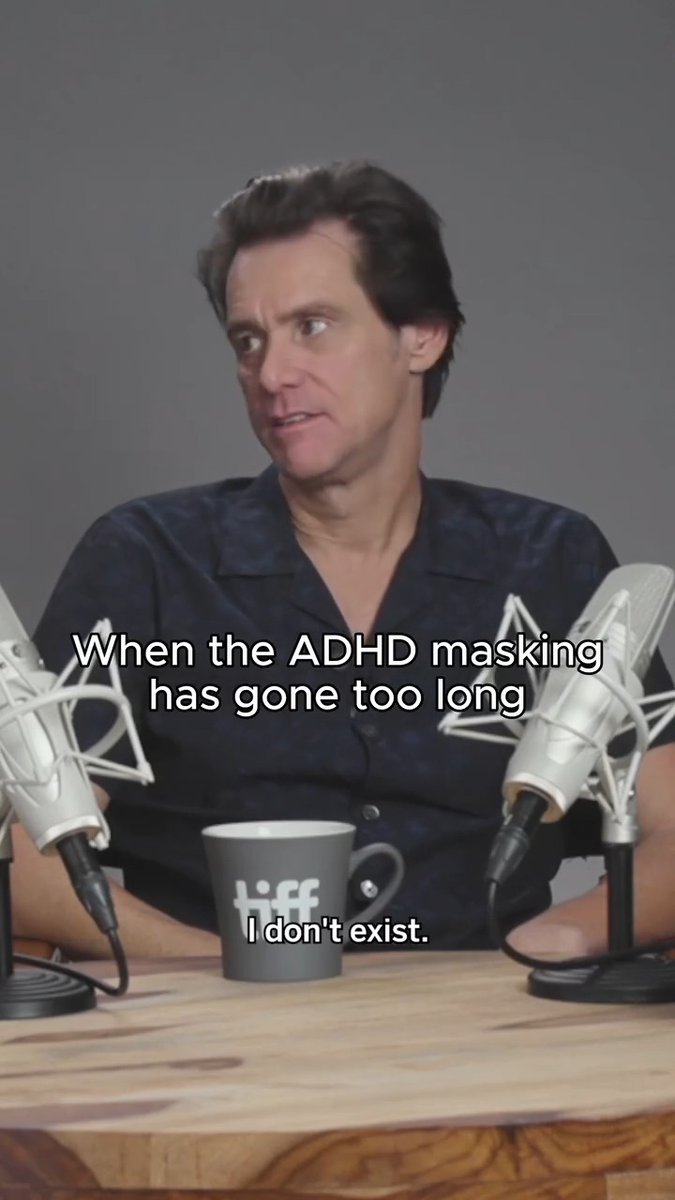
Dr. Russell Barkley delivers a clear, myth-busting message on ADHD that every parent needs to hear: ADHD is not caused by bad parenting. It is not learned behavior. It is not a character flaw. It is a neurogenetic developmental delay — largely inherited. Key facts from decades of research...

13,119 Aufrufe • vor 6 Monaten •via X (Twitter)

0 Kommentare

Keine Kommentare verfügbar

Kommentare vom Original-Post werden hier angezeigt

Ähnliche Videos

I just listened to Gabor Maté on Steven Bartlett’s podcast and it genuinely made me rethink everything I thought I knew about ADHD. He said it plainly: No gene for ADHD has ever been found. Not one. What gets passed down isn’t the disorder itself — it’s sensitivity. Sensitive kids feel the environment more deeply. In a stressed home (and our society is making parents more stressed than ever), that sensitivity often turns into tuning out as a survival mechanism. That’s what gets labeled as ADHD. Recent stats for context: - In the US, ADHD diagnoses in children nearly doubled over the past 20 years — from ~6.1% in the late 1990s to 11.4% today (about 7 million kids aged 3–17). - Worldwide, prevalence in children is estimated at 5–7%. - In Europe, rates are generally lower but still significant, around 5–7% in many countries. The same child, raised in a calm, supportive environment, might become highly creative, empathetic, or a natural leader instead. We’ve been telling millions of kids (and adults) they have a “brain disease” when many are simply reacting to the stressed world we’ve built around them. This shifts the conversation from “what’s wrong with you” to “what happened to you?” It feels like a much more compassionate — and honest — way to look at it. Do you think many ADHD diagnoses today are more about environment and sensitivity than an innate “disorder”? Have you seen this play out in your own life or with people close to you?

Camus

84,989 Aufrufe • vor 4 Monaten

ADHD isn’t an “attention deficit.” It’s a profound developmental disorder of self-regulation. Dr. Russell Barkley (one of the world’s leading ADHD researchers) explains why the name “ADHD” has done massive damage: - It trivializes a condition as serious as autism, schizophrenia, or bipolar disorder. - It makes people think “just drink coffee and focus” — when the real issue is far deeper. The core problem isn’t just distractibility. It’s three interlocking executive deficits: 1. Persistence toward the future — inability to stay motivated by delayed rewards 2. Resistance to distractions — constant derailment by immediate temptations 3. Working memory — struggling to hold goals, plans, and consequences in mind Together, these create a devastating impairment in self-regulation — the ability to consciously inhibit impulses, direct actions toward yourself (self-talk, self-monitoring), and align behavior with long-term welfare. Barkley: “This is not an attention problem. This is a disorder of self-regulation… as serious as manic depression, and in its own way, as autism.” Parents often hear “he’s just lazy” or “she needs to try harder.” The truth is far more compassionate and urgent: The child’s brain is developmentally behind in the very mechanisms that allow other kids to stop, think, plan, and protect their future selves. If we renamed it Self-Regulatory Developmental Disorder (SRDD), the conversation would change overnight. How many adults do you know who still struggle with exactly these same three deficits — and were never properly understood as kids?

Camus

465,211 Aufrufe • vor 6 Monaten