Sensitive content

This media may contain sensitive content.

Video yükleniyor...

Video Yüklenemedi

Ana Sayfaya Dön

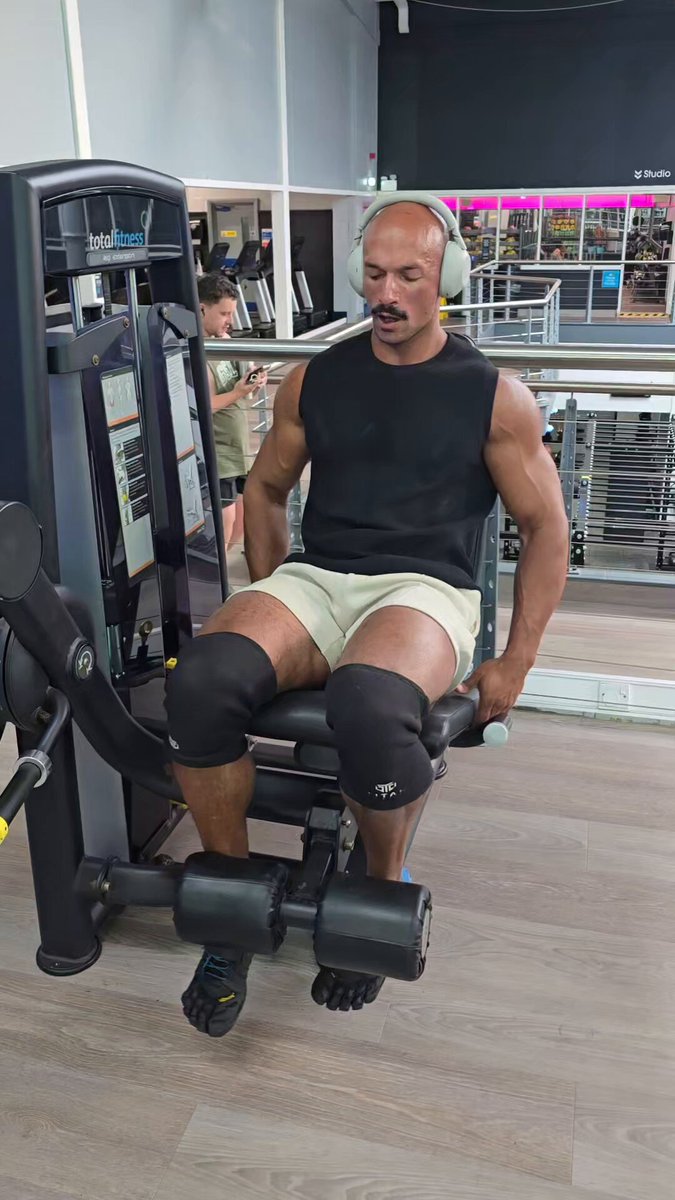
Edging x LondonGirthPlus 🔥Some sessions I go for speed. I still get a massive load 👌🏻The full session ➡️ #GayUK #GayLondon #GayMelbourne #GaySydney #GayOrlando #GayMiami #GayNewYork #GayParis #GayBerlin #GayChicago #GayToronto #GayMontreal #GayLad

0 Yorum

Yorum bulunmuyor

Orijinal gönderinin yorumları burada görünecek

Benzer Videolar

Back in January when Megan and I charted out the year, the dream of the Leadville 100 course record was overwhelming. But big dreams should be overwhelming. It was time to get to work. Our plan started from 3 principles: 1. I’d need to be capable of running a 13:xx 5k at altitude, or around sub-4 min mile fitness. 6-minute mile pace would need to be a jog on race day, and that all came from improving my running economy. 2. I had to get stronger to handle the unknown distance, both in terms of threshold climbing and actual muscular strength. 3. I’d have to run every step of the race, including Hope Pass. Most interestingly, none of those goals required lots of training volume. I did 8-12 hours of aerobic training most weeks with very few doubles given life constraints, usually around 60-75 miles of running and 1-2 bike rides (pulsing up and down for adaptations, with some bigger weeks and a longer down period for my accident). You don’t need to do consistent 100+ mile weeks to be good at this sport. I have been building endurance bricks for 18 years, and every brick counts. With that time, we applied 6 ideas: 1. Most weeks had a speed workout (often pacing Allie Ostrander ahead of the Olympic Trials 🔥), culminating in 12 x 400 on short rest in 63-64 seconds at altitude in June 2. I’d do threshold sessions approximately every other week, often on the uphill treadmill at 8% or 15% grade, culminating in a massive 12 x 5 minute session a few weeks before race day 3. I did uphill treadmill runs in Z2 at 20% grade all year, including for 10 min after as many aerobic runs as I could 4. I did 3-4 days of strides every single week. My strength is my speed. 5. I biked once per week in place of a run, often using Zwift races for hard sessions (A+ racing category in Zwift!) 6. Every week, I did Ultra Legs strength + squats and took a rest day, plus did heat training Big takeaway: you don’t need to do wild volume to have success in ultras. Get fast, stay fast year round, spend time in Z2, and stack some fun bricks in the context of your life. The record may have shocked the ultra world. But as Megan said, it only shocked people who haven’t been following my Strava for the last decade 🧡

David Roche

158,587 görüntüleme • 2 yıl önce

In 2025, the Western States 100 is going to be a track meet. I think that in 5-10 years, almost every major ultra is going to be a track meet. Our big theory is that as ultrarunners probe the limits of human physiology, athletes will be leaving time on the table if they aren’t developing their true speed. And most athletes can’t leave time on the table as the margins get more and more narrow. That theory doesn’t mean you need to be ready for a track race—I would get my doors blown off at the Olympic Trials. It just means that every aspect of running economy has a relation to top speed. Mile speed is connected to 5k speed is connected to 100-mile speed is connected to multi-day speed. We all have our limiters, and pushing back the speed limit via strides and workouts causes immediate and sustained improvement even at very low effort levels. The same principles apply to athletes doing their first ultra or dreaming of staying ahead of cutoffs (it might even apply more). Plus, it’s fun. The amazing Cody Bare filmed my workout yesterday for The Feed (for an upcoming video series), and this is the finish of the final 3 minute interval. The session: 4 miles Z2 warm-up 6 x (3 min on/1 min easy/1 min on/1 min easy) GI training consisting of 32 oz fluid at once 2.5 miles Z2/Z3 steady running after workout At the end of the video, I go to my arms, inspired by track/trail runners like Allie Ostrander and Anna Gibson and Grayson Murphy (hitting 3:50 min/mile pace). As I said at the end with my hands on my knees: “fun.” It’s so exciting to see how our understanding of human limits is changing with big fueling, an emphasis on long-term health, and fun training. I am so inspired by everyone out there pushing their own limits, wherever those limits happen to be. I can’t wait to see where all of you go in 2025. Let’s have some fun 🧡 WE LOVE YOU ALL (even more than we love strides)

David Roche

60,917 görüntüleme • 1 yıl önce

Took the morning to mess around with Opus 4.6. My go-to model eval is always the same. I ask for a one-shot, browser-based STEP viewer plus a tolerancing/markup app. Took me two coffees to get it running. This is what I constantly beg every US-based online manufacturer to offer. I think it’ll be a game changer for the industry. Everyone hates parsing paper drawings, so we default to blanket .005 tolerances. Go a tiny bit further and let users tag a few faces. There’s a nugget of the future in this approach. Probably half stupid. Definitely inappropriate for some parts. I know, I know. I deal with real aerospace-grade drawings every day. My hands still wet with coolant as I type this. Still has the taste of the future. Anyway, I digress. Basically a PDF equivalent for CAD. Turn a STEP file into a traveling source of truth by layering metadata onto face IDs. Colors, threads, tolerances, notes, whatever. The model isn’t the CAD file anymore. The STEP plus its annotations are. Of course it’s never actually one-shot. It’s an hour of back and forth. Tight loop. Tiny spec changes. “No, not like that, like this.” I run the same test on every new GPT/Claude release. I’m still not sure I’m good at programming. I just know how to ask for things clearly, write specs that don’t leak ambiguity, and iterate like a maniac until the thing works. Manifest the idea into existence, then it becomes the spec for the next iteration. Humans are awful at defining requirements upfront. You manifest the idea into something real, then that artifact becomes the spec for the next loop. This feels like the primary skill of the future. It’s project management, but hyper-accelerated. Micro-management. Pico-management. An iteration speed you could never ethically apply to humans. And I’m slowly realizing the harness isn’t for the model. It’s for me. I’m the bottleneck. The model can sprint forever. I’m the one that runs out of clarity. Anyway, this is a throwaway idea. Maybe some YC kids will raise on it. Whatever. Ideas are cheap. This took an hour. Repo link below. Have fun.

Andrew McCalip

161,540 görüntüleme • 6 ay önce

“I was driving up 75, and saw the trooper in the turnout...checked my speed, oh I'm good. A few minutes later, I see a dog in the ditch by one of the signs for exit 20. She looked bad. I was in the left lane, heading to an appointment, and was torn. I decided I would go back southbound and risk a ticket by going to the turnout. I turned in and the trooper was still there! Yay! He rolled down his window and said "yep! I'm here" to which i told him about the dog and I didn't want a ticket, but if I could help that dog, it was fine by me. He just asked where the dog was and was on his way! I followed and we found her, still there, panting like she was fixing to die. That trooper dumped his jug out and fashioned a water bowl for her. Then poured a couple bottles of water. The dog was scared of him, but frozen in weakness. She sniffed the water, then realized this kindness was for her! She drank that water down in minutes! The trooper went and got her some more, plus a Little Debbie. She watched him warily the whole time. She sniffed his hand but was still wary. Next thing, he goes to his vehicle and gets a chair and an umbrella. He told me he will stay here until she trusts him, so he can get her to a shelter, or take her home. I believe his being there at the right time, was one of those little messages reminding us of the good in our world. Meet Trooper Tudors of the TN State Highway Patrol. One of the good guys for sure." Credit: Kaye Fiorello

Mr PitBull Stories

136,800 görüntüleme • 4 ay önce

vibe coding metahuman with threejs and codex: spitting FACS ok, i'll admit 3D modeling has a lot of depth, going from a cube to a full facial action coding system is.. a lot of work, but really it isn't all that hard to learn like some people want you to believe it took me about 10 evenings to go from scratch (no idea how to even model in blender beyond the famous donut) to a working rigged and shape keyed expression system the actual vibe coding parts are very manageable, i'm not even hitting any session limits the past week since codex is basically just reading the glb file and it writes the drivers to have a full animation system in a single turn after that i usually notice that some things don't look as professional as i like it to be, followed by codex sending my ass back to blender and telling me what i need to do to make it better so here we are, the expression system is still very very simplified, no micro expressions yet and i believe i will need probably 500+ shape keys to actual achieve realism, but why not? Doing the 52 ARKit expressions for this demo wasn't too hard either, just tedious and boring The final driver in the demo uses a mix of bone movements and blendshapes to smoothly animate the face I might mix up some terminology here but i usually do cause it's been like what, 10 days since i started? Guess next up i'll look into face deformation parameters and then we'll move to the fun part of skinning. Once the head/neck area works (hairs are also still missing), full body next and finally LOD systems and we can call it a day Demo (pls use a desktop i'm not optimizing the ui for mobile):

robot

29,357 görüntüleme • 3 ay önce