正在加载视频...

视频加载失败

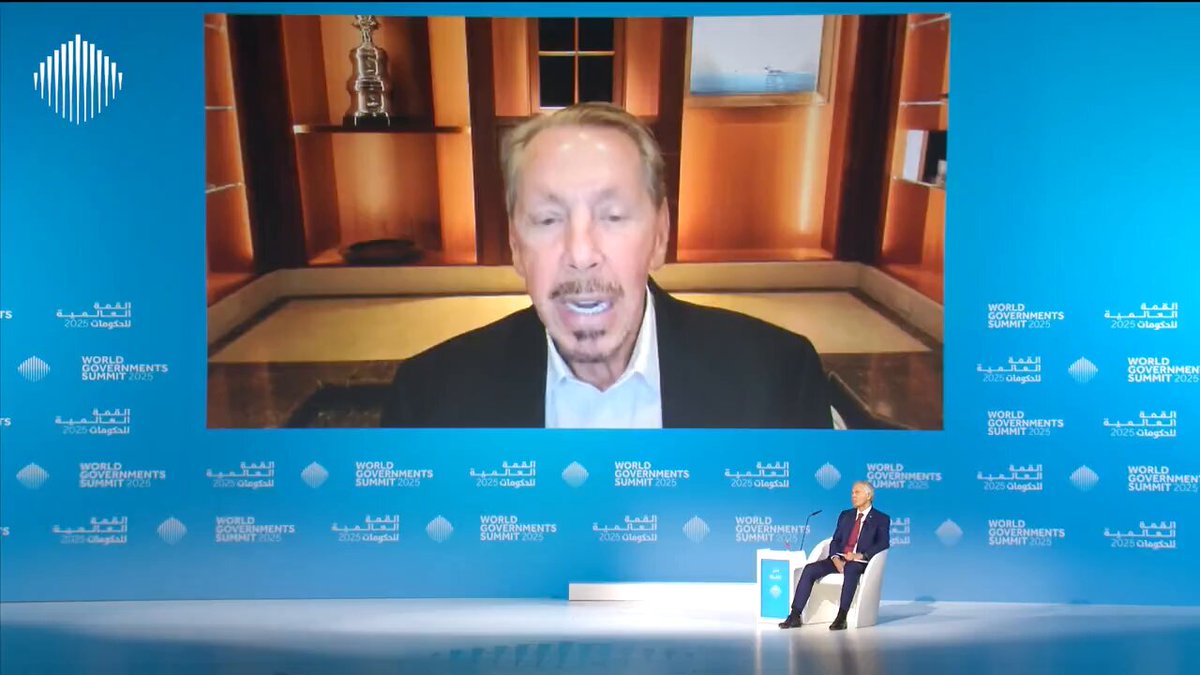
ELON: AI HAS DRAINED HUMAN KNOWLEDGE DRY - NOW DRINKING FROM ITS OWN WELL "You take the entire internet, all books ever written, all the interesting videos, and you distill that down into tokens, essentially bits of information. We've now exhausted all of that; the cumulative sum of human...

1,938,848 次观看 • 10 个月前 •via X (Twitter)

0 条评论

暂无评论

原始帖子的评论将显示在这里

相关视频

Elon Musk On What It Takes To Build A Competitive AI Model Elon Musk breaks down the three factors that decide whether a foundation model can compete, and why the next frontier isn't human data at all. Speaking with Garry Tan, President and CEO of Y Combinator, Elon lays out what's actually required to build a large foundation model that's competitive: "You've got to get a lot of GPUs and have them train coherently and stably. Then it's like, what unique access to data do you have? I guess distribution matters to some degree as well like, how do people get exposed to your AI? Those are critical factors." But there's a problem with the data part of that equation. Echoing what a friend in the field has said, Elon explains that the industry has essentially run out of human-generated pre-training data: "You run out of tokens pretty fast, certainly of high-quality tokens. And then you need to essentially create synthetic data, and be able to accurately judge the synthetic data that you're creating, to verify: is this real synthetic data, or is it a hallucination that doesn't actually match reality?" That verification step is the hard part: "Achieving grounding in reality is tricky. But we are at the stage where there's more effort put into synthetic data. Right now we're training Grok 3.5, which is a heavy focus on reasoning." On reasoning, Garry Tan adds an interesting detail from researchers he's spoken to: hard science, particularly physics textbooks is very useful for training reasoning, whereas social science is "totally useless" for it. Elon's response: "Yes, that's probably true." He then points to where all of this is heading: "Something that's going to be very important in the future is combining deep AI in the data center or supercluster with robotics. So, things like the Optimus humanoid robot."

High Signal AI

21,696 次观看 • 1 个月前

Elon Musk just put a 12-month countdown on the end of human cognitive dominance. Musk: “I think we might have AI that is smarter than any human by the end of this year. And I would say no later than next year.” Not a decade. Not five years. This year. Or next. A machine that surpasses the smartest human who has ever lived. Every Nobel laureate. Every genius. Every person at the absolute peak of human intellectual capability. Eclipsed. Within twelve months. Think about the smartest person you have ever met in your life. The one whose mind made you feel like you were operating on a different level. That person. Gone past. This year. But that’s just the first threshold. The second one is where the human mind stops being able to process the implications. Musk: “Probably by 2030 or 2031, call it five years from now, AI will be smarter than all of humanity collectively.” Not smarter than any individual. Smarter than every human being alive. Combined. Eight billion minds. Centuries of accumulated knowledge. The entire cognitive output of our species. Surpassed by a single system inside of five years. For all of recorded history, human intelligence was the most powerful force on earth. Every civilization. Every discovery. Every advancement in the human story. All of it produced by biological minds working at the edge of their capability. That era has an end date now. And the nation that builds the system crossing that threshold first doesn’t just win the AI race. It dictates the terms of every race that comes after it. The countdown Musk is describing isn’t a prediction anymore. It’s the last chapter of a story that took 300,000 years to write.

Dustin

102,904 次观看 • 5 个月前

Coinbase CEO Explains “Reverse Prompting” and the Rise of the AI CEO Brian Armstrong: “One of the big pushes we made in the last year was we got our own internal hosted AI model that was connected to all of our data sources, right?” “So it's like every Slack message, every Google doc, Salesforce data, Confluence, you know.” “So now the data is all aggregated and I've started to ask it really… it's not just like prompting it, ‘Hey, can you write this kind of memo for me,’ or something.” “I'm asking these AI agents now, ‘As CEO, what should I be aware of in the company that I might not be aware of?’ And it'll tell me, ‘Did you know that there's actually disagreement on this team about the strategy?’ And I was like, actually, I didn't know that.” “This is like reverse prompting. So instead of telling the AI agent what you want it to do, you ask it what you should be thinking more about.” @jason: “It's a mentor. It's a coach.” Brian: “Yeah. Like, what could make me a better CEO? And it's like, ‘Well, I looked at how you spent your time in the last quarter and here's how you said that you wanted to spend it, but you actually spent 32% of your time on this instead of 20%.’” “I've asked it other questions like, ‘What's the thing that I changed my mind on the most over the last year?’ Things like that.” “It'll prompt you with information you should be thinking about instead of the other way around.” Thanks to our partner for making this happen!: Our episode is sponsored by the New York Stock Exchange - a modern marketplace and exchange for building the future. It all happens at the NYSE 🏛.

The All-In Podcast

80,524 次观看 • 6 个月前