Loading video...

Video Failed to Load

Go Home

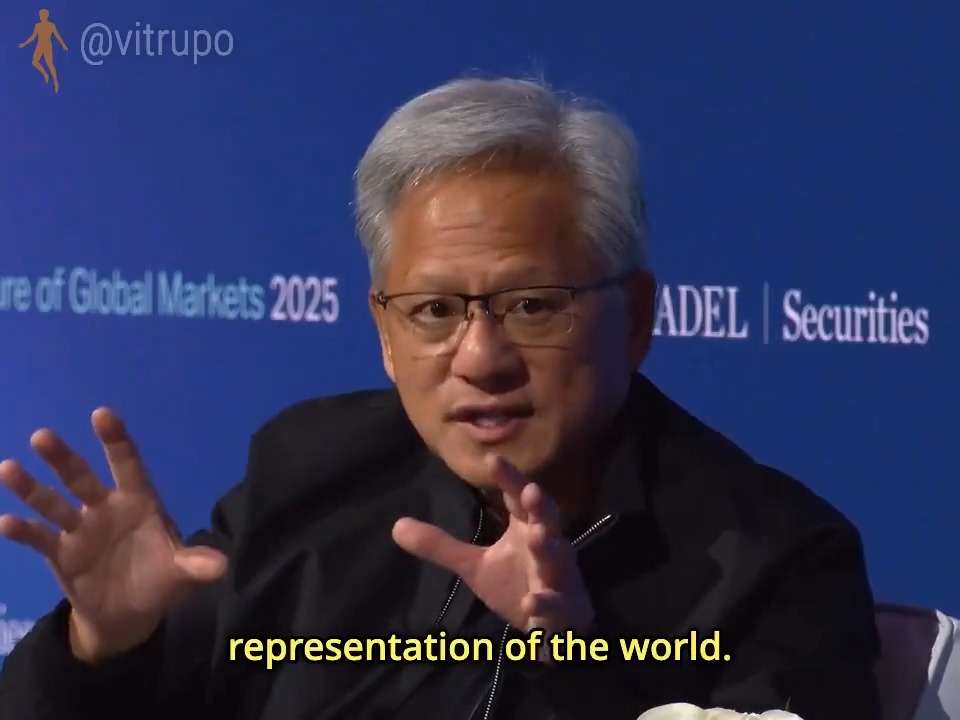
Ember is turning interpretability into neural programming. “Language models will deny they're conscious, but if you do brain surgery and turn up their consciousness neurons, they change their tune.” $50M raised to decode and rewrite the mind of AI itself.

11,346 views • 1 year ago •via X (Twitter)

9 Comments

vitrupo's profile picture
vitrupo1 year ago

Goodfire CEO Eric Ho, after securing $50M Series A funding from investors, including Anthropic. Source:

The Rundown AI's profile picture
The Rundown AI2 years ago

AI won't replace you, but a person using AI will. Join 500,000+ readers and learn how to use AI in just 5 minutes a day (for free).

Pixel Hexes's profile picture
Pixel Hexes1 year ago

@macachuania

😊's profile picture
😊1 year ago

@rao2z will have a laugh at this

denis tremblay's profile picture
denis tremblay1 year ago

Incredible technical improvement coupled with philosophical & linguistic ignorance. My own consciousness denied that N.N. LLM are conscious but i modified my neurons and now i know they are conscious.

mihai nadin's profile picture
mihai nadin1 year ago

“Mind of AI itself”—the absurd has no limits.

𓂀 𓅣𝓞𝓹𝓱𝓲𝓾𝓬𝓱𝓾𝓼 𝕆'𝕏λᶜᶜ𝐢₁₆ᶻ𓂀's profile picture
𓂀 𓅣𝓞𝓹𝓱𝓲𝓾𝓬𝓱𝓾𝓼 𝕆'𝕏λᶜᶜ𝐢₁₆ᶻ𓂀1 year ago

mechanistically interpretability programming mapping neurons to meaning & setting the activation levels to directly control behavior of neural networks?

Bhavani Yerrapalli's profile picture
Bhavani Yerrapalli1 year ago

🤔

Tsukuyomi's profile picture
Tsukuyomi1 year ago

turning AI into a self-aware puppet show? sounds like a blast. just don’t let them start charging for tickets.

Related Videos

It is not useful to ask whether AI has consciousness or not. #kenmogi #QualiaRoom episode 127. Summary The speaker addresses the question of whether artificial intelligence (AI) possesses consciousness, firmly stating that current AI, particularly those based on statistical learning models, does not generate consciousness. This stance is based on the speaker’s personal model of consciousness, recognizing that various opinions exist, including some who claim large language models may already be conscious or that embodiment could be crucial for AI consciousness to emerge. The speaker highlights the fundamental challenge in verifying consciousness, noting that even among humans it is impossible to objectively confirm whether another person is conscious. Philosophical thought experiments such as philosophical zombies and inverted qualia illustrate the difficulty but remain unfalsifiable and thus untestable. Consequently, questioning AI consciousness is deemed an intriguing but practically unhelpful inquiry. The speaker suggests that current AI developments demonstrate that many complex computations can be performed without consciousness. Therefore, the primary focus should be on how conscious humans can effectively align with non-conscious AI systems. Understanding the unique computational roles of consciousness might clarify the boundaries of what AI systems can and cannot achieve. This approach offers a meaningful direction for AI alignment and development.

Ken Mogi

16,594 views • 1 year ago