Loading video...

Video Failed to Load

Go Home

Equalization is broken and discouraging economic growth The Fraser Institute has released a report declaring that equalization is broken. In 15 of the last 25 years, one or more provinces with higher living standards received equalization payments while provinces with lower per-capita GDP received nothing. The most glaring example:...

12,445 views • 2 months ago •via X (Twitter)

0 Comments

No comments available

Comments from the original post will appear here

Related Videos

Once Alberta leaves Canada it has a clear path to becoming one of the most prosperous countries on Earth. Alberta already produces 4.3–4.5 million barrels of oil per day with only 5.1 million people — roughly 0.85 barrels per person every single day. That is higher than Kuwait, higher than Qatar, and far higher than the UAE on a per-capita basis. Those countries used the same kind of oil wealth to eliminate personal income tax and generate enormous surpluses. Alberta starts from an even stronger resource position. Right now Alberta sends tens of billions net out of the province every year through equalization and federal transfers while receiving nothing back. Independence ends that outflow overnight. The full value of Alberta’s energy production stays here. That creates a structural surplus large enough to fully fund every service currently provided by Ottawa and still leave a massive residual for lower taxes, higher public investment, or direct returns to citizens. Critics claim Alberta would be weak after separation. Reality is the opposite. Alberta supplies critical energy to British Columbia and Ontario. Those provinces need the oil and gas. That physical dependence is real leverage. Alberta would be positioned to demand proper pipeline access and commercial terms that unlock further production growth to meet global demand. Expanded egress capacity becomes a mutual interest once the alternative is tighter supply for the rest of Canada. High oil output per person, an end to the fiscal drain, and energy leverage that forces better infrastructure — that combination is how a jurisdiction of 5 million people turns into one of the richest countries in the world. Independence doesn’t risk Alberta’s future. It unlocks it.

Rise Of Alberta

11,597 views • 1 month ago

⚜️🖕🇨🇦 : I am so fed up with Quebec demanding they get special treatment in Canada, at the expense of everyone else. Are you just as fed up? The Bloc Québécois demand that Quebec tax dollars to only be invested in Quebec. The Bloc Québécois says they must protect key sectors of the Quebec economy & the French language. At the same time Quebec takes in huge sums of taxes from the rest of Canada through a rigged equalization formula that gives Quebec over $13 billion every year in “equalization”. This despite Quebec having a comparable economic strength to British Columbia, which is forced to pay into equalization. Quebec gets to hide their #1 source of natural revenue (Hydro) from the equalization formula, making them poor on paper only. Quebec also gets extra Canadian taxpayer cash for… 💰Immigration 💰Heritage 💰Culture 💰Languages 💰French only government jobs 💰Corporate bailouts 💰SNC Lavalin contracts across 🇨🇦 Meanwhile Quebec demands the rest of Canada shift away from oil & gas to Quebec approve clean energy. This directly hurts Alberta and the rest of Canada that relies on equalization payments, to keep their Provinces from becoming super poor. This also stifled foreign investment because it adds an extra layer of uncertainty to any major oil & gas project. Yet Quebec is quite happy to allow foreign oil to pour into the Canadian economy. Time to treat Quebec like everyone else. There is nothing special about a Province that leeches off the poor, while claiming they're a Nation in waiting.

Bruce McGonigal

158,696 views • 1 year ago

Carney punishes Albertans again with failed trade negotiations Alberta celebrated its 121st birthday as a province on September 1, after it was created by splitting a proposed mega-province, which would have been known as Buffalo, into what we now know as Alberta and Saskatchewan. Sheila Gunn Reid joined Ezra Levant on Tuesday's episode of The Ezra Levant Show for an in-depth conversation on all things Alberta to mark the occasion. The conversation started with the good news first. Alberta was projected to run a $9 billion deficit this year, but instead, the province pulled an $11 billion turnaround and posted a $2 billion surplus — its sixth consecutive budget surplus. The provice allso created 91,000 jobs last year, more than half of the roughly 180,000 jobs created across the entire country. "Things are good here in Alberta," Sheila said. "But they're good here in spite of the federal government and not in any way because of Confederation." Ezra then shifted to a New York Times report, saying he had to learn from an American news outlet, rather than a Canadian one, about Mark Carney's apparent offer to revive the Keystone XL pipeline as part of trade negotiations with the U.S. — only to then walk away from a deal at the last moment. Premier Danielle Smith, speaking at a press conference that Rebel News reporter Angelica Toy attended, said she had explicitly told the prime minister he had her full support to pledge additional barrels — another million or two million barrels a day — as a way of bridging the divide and closing the deal. Carney, it would seem, did not take her up on the offer. "Just walked away from $30 billion a year," Ezra said, "and I think it's because Brookfield doesn't have a share in it and the Liberal government doesn't have a cut of it. So they can't really praise themselves like they do when they give away every dollar in public investments." Sheila said the pipeline is a shared interest, "something that Alberta wants, but it's also something the Americans want." "It was an easy win in these negotiations and Carney took it off the table. Danielle Smith has explicitly said, 'You will not use Canadian energy as a bargaining chip. We don't want it. We're not going to hurt people on both sides of the border by doing this.' And yet Mark Carney, as an affront to the Western premiers, decided to use it as a bargaining chip anyway. It's such disrespect to us," she said. The failure to complete Keystone XL is one of many, as Ezra detailed, pointing to projects like the Trans Mountain, Northern Gateway and Energy East proposals. Each was privately funded, but each was killed before being completed, with the Liberals ultimately nationalizing the Trans Mountain pipeline for a cost of $35 billion. "The Liberals destroyed a hundred billion dollars of oil pipeline wealth and a quarter of a trillion dollars of oil wealth," Ezra said. "And Venezuela's going to fill up those U.S. refineries," he added, following a major announcement from the two countries this week. Carney, Sheila said, "used the oil patch as a weapon." In the end, "the only people who were punished were Albertans. So maybe Carney doesn't think of it as a failure." Alberta "could be like Dubai" if the province wanted to be, Sheila said, "but we're shackled to this anchor called Confederation." FULL REPORT by Sheila Gunn Reid:

Rebel News

21,639 views • 19 days ago

Alberta separatism rising because Canada is 'broken' and 'can't be fixed': Bruce Pardy 🍁 "They're looking for a different solution, and that solution is to leave. And I agree with them about the necessity for doing that," said law professor Bruce Pardy. On last night's episode of The Ezra Levant 🍁🚛 Show, law professor Bruce Pardy joined the show to discuss Alberta's rising independence movement and its potential future implications. Pardy discussed the likely thought process behind the rising number of Albertans who see independence as the most logical path forward after years under a federal Liberal government. "Canada is broken. It's become apparent, through the COVID period, but not limited to COVID, that there's something seriously wrong in this country in all different kinds of ways," he said. "And second, it can't be fixed. It seems like we've arrived at a place in this country, both in terms of our constitutional order and the way we're governed and the way that people think even, that contemplating any serious reform of the way the country works is not on the table," Pardy continued. "So if the country is broken and cannot be fixed, then what else do you got? And what appears to be the case is that in Alberta there's some kind of critical mass of people who understands both those two things ... And therefore they're looking for a different solution, and that solution is to leave. And I agree with them about the necessity for doing that," he added. The Alberta Prosperity Project is currently leading a citizen-led petition drive to reach 177,732 signatures in order to trigger a referendum on independence later this year. Proponents of Alberta's independence cite the province's untapped economic potential through natural resources and unfair treatment by the federal government as key reasons for seeking separation.

Rebel News

10,757 views • 6 months ago

Could Alberta actually leave? Keith Wilson joins Glenn Beck Americans with an interest in their northern neighbours are curiously looking on, wondering about the possibility of Alberta breaking away from the rest of Canada to create a new province. Glenn Beck raised the subject with Keith Wilson during the prominent Alberta independence activist and constitutional lawyer's appearance on Blaze Media's The Glenn Beck Program. “Is there enough support in Alberta to actually get that done,” Beck asked, in addition to whether Wilson actually thought “Canada would allow” the province, “the Texas of Canada,” to leave Confederation. Wilson pointed to the unique legal framework in Canada, which allows a province the ability to exit through a referendum. “If a clear majority of voters within a province vote on a clear question for independence, that triggers two routes to independence,” the constitutional law expert said. “One is the parties have to enter into good faith negotiations, meaning Alberta needs to go into a meeting room with the federal government and the other provinces and say, 'alright, we've got national parks here; we've got military bases in Alberta. We'll pay you, the federal government, a certain amount of money for those bases and national parks,'” Wilson explained. “The other path is if the parties don't enter into good faith negotiations,” he continued, noting that was “something we're very concerned about here in Alberta.” This route could see a “unilateral declaration of independence,” something that “relies on international recognition,” he cautioned. “If the United States and other countries are prepared to recognize Alberta independence, it creates a clear pathway,” Wilson told the American host. Wilson and Beck also discussed two other federal policies that are contentious in Alberta — the Liberal government's gun grab and its continued expansion of the Medical Assistance in Dying program. Independence campaigners assert they've collected enough signatures to trigger the citizen-led referendum, with a vote expected to take place in fall 2026.

Rebel News

43,303 views • 5 months ago

Jason Kenney calls for nationalization of Alberta oil The former premier's demand that Alberta use its oil as a negotiating tool with the United States is nearly indistinguishable from Pierre Trudeau's National Energy Program. The political pressure on Alberta Premier Danielle Smith to join the anti-Trump chorus has been extraordinary. Doug Ford, Mark Carney, Naheed Nenshi, the NDP official opposition, Olivia Chow, David Eby, and Jason Kenney have all been demanding that Alberta weaponize its oil exports — to cut off shipments, impose export tariffs, or otherwise use the private sector's work as a political cudgel. Smith recorded a public video address and walked through exactly what would happen if any of them got their way. If Canada imposed a 50% export tariff on the four million barrels of oil it sends daily to the United States, she said, the U.S. would immediately respond with 50% to 100% tariffs on the oil, natural gas, diesel, and gasoline it exports back to Ontario and Quebec. Texas refineries, currently tooled for Alberta heavy oil, would immediately begin sourcing Venezuelan heavy oil as a replacement — and would reverse their pipelines northward to get it. "As a result," Smith said, "we would lose the United States as a customer entirely and likely forever." The results would be disastrous: Toronto Stock Exchange would collapse, half a million jobs would be gone, mostly in Alberta but hundreds of thousands more in Ontario and Quebec. Ontario and Quebec, which import refined petroleum products from Midwest U.S. refineries, would face fuel shortages heading into fall and winter — with no strategic petroleum reserve to buffer them, something the U.S. but Canada does not. Saskatchewan Premier Scott Moe made the same point, saying "20 to 50% of Canadians' refined petroleum products — our diesel, our gasoline — travel through the United States of America back into Canada to be refined and utilized," he said. An export tariff on Western Canadian oil would hit Eastern Canada harder than it would hit the energy industry itself. It was a "flawed policy 10 years ago," Moe said, and it's a "flawed policy today." In the long chorus of critics calling for Premier Smith to take drastic measures, Ezra's focus was on Jason Kenney. The former Canadian Taxpayers Federation executive director, former Harper cabinet minister, and former Alberta premier — whose lifeblood was always oil and gas — is now calling for Alberta to cut off U.S. oil exports as a political weapon. "What's the difference between Jason Kenney ordering a stop to oil production," Ezra asked, "and Pierre Trudeau and Marc Lalonde doing it in the National Energy Program? Both are a de facto nationalization." Ezra noted that Alberta oil companies have decade-long contracts with American refineries, private contracts no politician has the legal authority to order a company not to fulfill. And if anyone tried, the U.S. legal and financial response would be immediate and catastrophic. Ezra also drew the parallel to the Emergencies Act and the frozen bank accounts of Freedom Convoy supporters. His theory: American banks and insurance companies operating in Canada were quietly told by Washington that if they actually complied with Trudeau's order to freeze accounts — violating U.S. customer privacy laws in the process — they would withdraw from Canada entirely, the same way they withdrew from Venezuela after its nationalizations. "Faced with this," he said, "Trudeau and the finance minister said, 'If there was a run on the banks, that would tank the economy.'" The Emergencies Act was revoked shortly after. Ezra speculated that the motivation behind Kenney's call to use oil as a bargaining chip is a combination of personal bitterness toward Danielle Smith, a desire to undermine Conservative Leader Pierre Poilievre, and an ambition to position himself as the federal Conservative who sold out Alberta to win Ontario and Atlantic seats. "He wants to get back to the big game," Ezra said. "He's always wanted to be prime minister." He added that Kenney has still not been publicly identified as working for any particular client — and said he wants to know who is paying him. He also connected the broader phenomenon to what he described as a deranged cult of personality against Trump, more powerful and more irrational than any cult of personality for him. "Every part of our political society — the media, industry leaders, politicians — are acting as if your life, that liquor merchant, that oil man, and that politician must all become political weapons," he said. "I'm furious. And I'm disgusted with what's happening with Jason Kenny."

Rebel News

42,231 views • 25 days ago

ANNOUNCING: The Alberta Independence Tour! Get your tickets NOW! Alberta’s future is up for debate — and this time, the conversation won’t be controlled by Ottawa or the legacy media. For years, Alberta has been told to sit down, shut up, and pay the bill. Pay equalization. Pay for federal failures. Pay for policies dreamed up in Ottawa — and dumped on the West. And every time Albertans asked a simple question — is this still working for us? — they were told not to ask it. That ends now. This winter, Rebel News is hitting the road with the Alberta Independence Tour — a live, in-person series of events across Alberta focused on the province’s future, its rights, and its place in Confederation. And we’re not coming alone. I will break down what Alberta can learn from Quebec’s independence movement — not the slogans, but the strategy — drawn from years of reporting and research. Also on tour is Tamara Lich, one of the most recognizable figures to emerge from the Freedom Convoy. Now a Rebel News reporter, Tamara covers government power, civil liberties, and political movements that legacy media either ignores or deliberately distorts. And you’ll hear from the Western Standard's Cory Morgan, a senior Alberta columnist, veteran commentator, and author of The Sovereigntist’s Handbook. Cory will walk through the political and practical realities of Western independence — what’s possible, what’s legal, and what’s pure fear-mongering. These aren’t sanitized panels. These aren’t media-approved conversations. This is straight talk. Real debate. And honest discussions the establishment won’t host. We’ll talk autonomy. We’ll talk sovereignty. We’ll talk about what Alberta can do — legally, democratically, and peacefully — when the status quo keeps failing. And this isn’t a spectator sport. You’ll ask questions. You’ll challenge ideas. You’ll be part of the conversation. Because Alberta’s future should be decided by Albertans — not dictated by Ottawa insiders who never pay the price for their decisions. The Alberta Independence Tour is coming to cities across the province.

Rebel News

35,784 views • 7 months ago

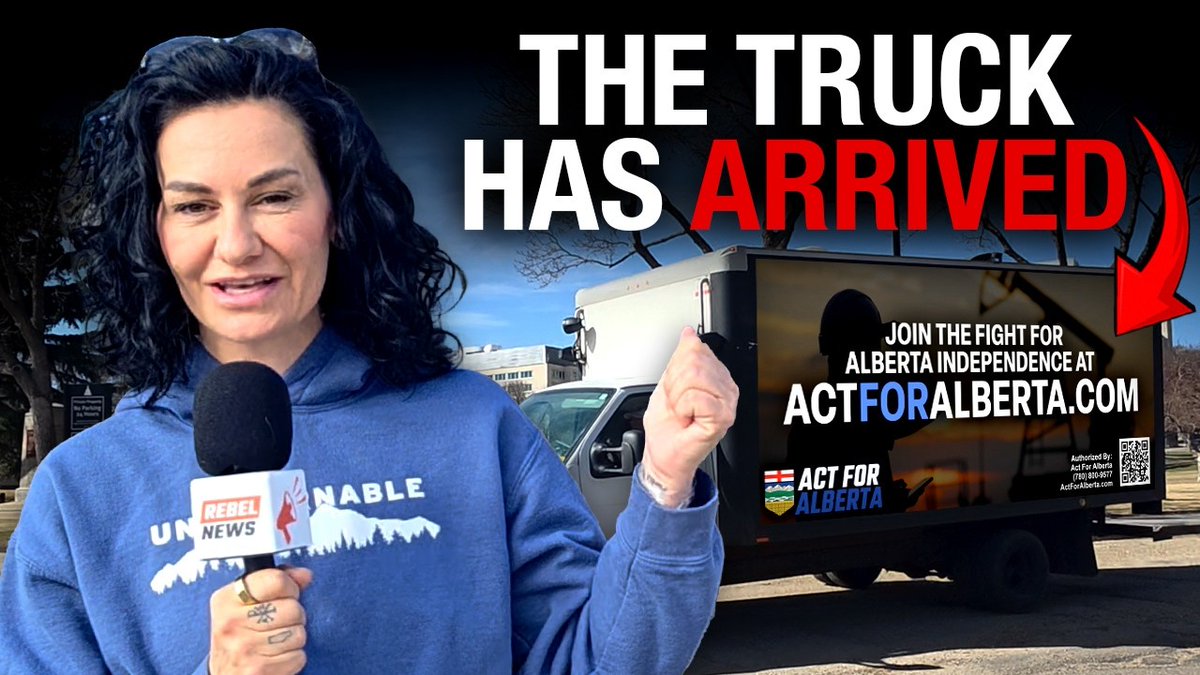
Act For Alberta launches billboard truck campaign to fuel independence movement Act For Alberta has kicked off a provincewide mobile billboard campaign aimed at building support for Alberta independence and pushing back against Ottawa’s grip on the province. The registered third-party advertiser has hired Rebel News’s famous “Big, Beautiful Billboard Truck” to roll across Alberta with messages supporting sovereignty and challenging the federal political class. The truck made its first stop at the Alberta Legislature Building — and Rebel News was on scene to welcome it as the campaign officially hit the road. Albertans have spent decades being ignored, overtaxed and overruled by Canada’s Laurentian elite, while decisions affecting Alberta jobs, energy and freedoms are made thousands of kilometres away in Ottawa. Unlike legacy media outlets that often dismiss Western frustration, the billboard truck takes the message straight to the streets; impossible to censor, impossible to spin, and built for viral attention online and in person. Act For Alberta is one of several groups tapping into long-running anger over blocked pipelines, equalization payments, firearms policy, federal overreach and a political system many westerners believe is rigged against them. While separatism has long sat outside the mainstream, support tends to surge whenever Ottawa tightens the screws. And are they ever! The province will hold a direct referendum on independence and the right to choose its own future on October 19, 2026. REPORT by Sheila Gunn Reid:

Rebel News

10,572 views • 5 months ago

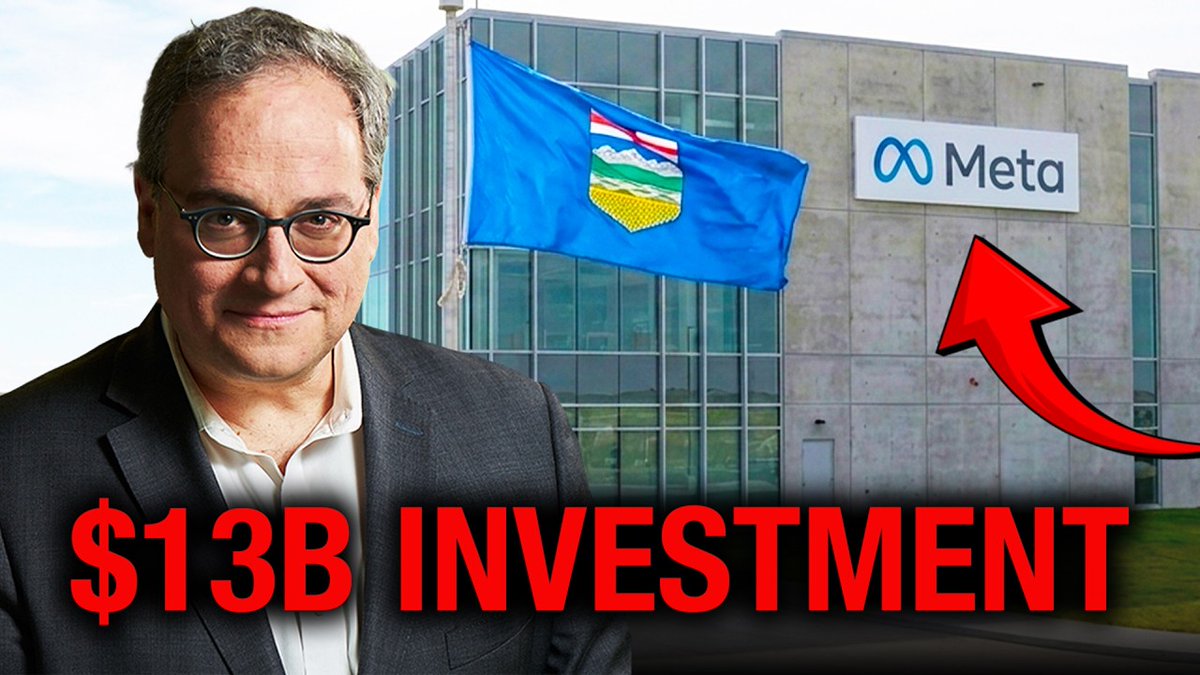
🚨 David David Knight Legg: Why Meta chose Alberta for a $13-billion investment 'This is something that takes Alberta into the next century,' said Legg on Thursday's episode of The Ezra Levant 🍁🚛 Show. On Thursday's episode of The Ezra Levant Show, David Knight Legg joined the show to discuss Meta’s $13 billion Alberta project, the failure of crony capitalism and Alberta’s resurgence as a tech powerhouse. Here’s something you haven’t seen in Canada for a long time, a colossal industrial investment that didn’t come with a government handout. Meta, the company formerly known as Facebook, is putting $13 billion into a new data centre in Sturgeon County, Alberta. Not in Ontario, not in Quebec and not with a single federal minister claiming credit. Private capital, real jobs and a bold new stake in the digital economy. Contrast that with what’s become the norm in Canada. Under Justin Trudeau and Mark Carney, industrial projects have meant government projects, taxpayer-funded battery plants and wind farms, mostly in Ontario and Quebec, with politicians demanding their cut of the credit. Tens of billions shovelled into factories that only exist because governments paid them to. That’s called crony capitalism. But Meta’s announcement flips that script. This isn’t a backroom deal cooked up in Ottawa. There’s no major project office smoothing the path, no prime ministerial intervention. Instead, what Alberta has built is a climate for investment, tax cuts, regulatory reform and a pro-business attitude that says if you want to build, build. And they have. Meta’s data centre will mean 3,000 construction jobs at the peak, more than 300 permanent roles and $60 million in local infrastructure upgrades. Not a cent of it was paid for by taxpayers. In fact, the money that governments are bragging about is tax revenue and salaries, not outflows but inflows. David Knight Legg, who helped shape Alberta’s investment strategy, spells it out: Alberta’s approach is paying off. Private investors are coming back. Meta isn’t alone. Dow, Linde Corporation, and Air Products have all chosen Alberta recently, drawn by the same formula: low taxes, stable regulation and abundant energy. Alberta has done what the Irish Development Agency did for Ireland, turning the province into a magnet for global capital with policy, not handouts. This is the clearest sign yet that Canada can compete when the government gets out of the way. Meta’s centre is a next-generation, AI-optimized hub, one gigawatt of power, fully matched by renewable energy and designed for zero operational water consumption. It’s the 33rd in Meta’s global fleet but the first in Canada and the largest outside the United States. This is exactly the kind of project politicians say they want: high-tech, green and future-focused. Only this time, they didn’t write the cheque. What those advocates for government-led industrial policy won’t tell you is this: When you let the market work, when you set the right incentives and when you stop treating business as a cash cow, real investment follows. Alberta is proving it. And Meta’s $13 billion bet is just the start.

Rebel News

13,097 views • 2 months ago

I was in Rocky Mountain House recently for a massive pro Alberta independence rally. Hundreds of people were waving Alberta flags and driving around town, and I found a small group of about seven pro-Canada counter protesters and decided to engage them. One man challenged me. He said that if Alberta independence loses, I should give up. I told him plainly that yes, if we lose, I will respect the will of the voters. Then I asked him the same question back. If Alberta wins, will you accept it? He reluctantly said yes, but the moment I pressed him on what percentage he would accept, he would not even engage with the argument. He would not clearly accept a majority. That tells you a lot. For too many on the pro-Canada side, this is not really about democracy. It is about imposing their will on Albertans who disagree with them, then using shame and fear to pressure us into silence. The second part of his argument was that the independence movement is hurting investment in Alberta. My answer was that Ottawa already did that and we have nothing to loose. For years, federal policy has blocked pipelines, restricted market access, and damaged confidence in Alberta’s future. Then, when Albertans finally start pushing back, we are told that we are the problem. He even claimed there is no tanker ban. That is factually false. Canada’s Oil Tanker Moratorium Act does restrict large crude oil and persistent-oil tankers from stopping, loading, or unloading at ports on BC’s north coast. The details matter, but the broader point stands: Ottawa has put real barriers in the way of Alberta getting its resources to market. His response was basically, if that is true, then why is Alberta still so rich and prosperous? My answer was simple: because we work hard, we have a lot going for us, and it takes a lot to sink us. But that does not prove Canada is working. It proves Alberta is strong enough to keep carrying a country that keeps dragging us down. Canada feels more and more like a sinking ship, and Alberta is the last thing holding it up. That is why I support independence. Please sign the petition. Go to to find a signing location near you. See the full video on YouTube here:

Jon Alberta Patriot

14,445 views • 5 months ago