正在加载视频...
视频加载失败
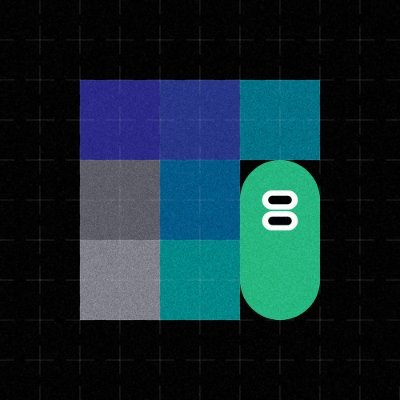
Excited to introduce Polylith, my latest long-form generative art on Bitcoin🟧 It explores time, perception, and the flow of change and continuity—unfolding along Bitcoin’s timeline. - Date: April - Price: TBA - Supply: TBA 🧵👇
11 条评论

What is time in Polylith? Here, time flows backward—from the future to the past. The journey begins at Block #8,400,000 (the 40th halving, theoretically the final block where Bitcoin is issued) and traces its way back to Genesis Block #0. Each block is a single page in a long, continuous artwork— seemingly still, yet alive. As new blocks are added, past pages are revealed, and the artwork continues to expand. It is a single still image, yet it evolves within a continuous flow of movement.
What does it mean to observe in Polylith? Observation is not passive—it reshapes what is seen. With each click, the lattice structure shifts: 1×1 → 2×2 → 3×3 … 7×7 → back to 1×1. The same moment, viewed differently, unfolds new dimensions. This work expresses the idea that "observation itself alters the structure of the piece" through the metaphor of shifting lattices. Perception shapes reality. What emerges depends not only on what is there, but on how you choose to see it.
Polylith values both information and action. Every inscription is unique— It carries weight, and user interactions along with blockchain data shape the space of the artwork. - External forces: The average transaction size and count influence the scale and density of glitch and cryptographic noise patterns. - Selective forces: The movement and modification of inscriptions (buying, selling, transferring, or changing value) alter the underlying realm patterns and textures of the artwork. - Structural forces: The weight of inscriptions (output value) behaves like celestial mass, determining the rate of change—larger inscriptions remain stable, while smaller ones shift fluidly. etc. In Polylith, inscriptions are more than just records. They define the artwork itself.
Technical Aspects Uses endpoints such as /r/inscription/, /r/metadata/, /r/blockheight/, and /r/blockinfo/ to integrate on-chain data into a dynamic generative artwork in real time. - Fetches the latest Bitcoin block every minute and updates the visualization accordingly. - Retrieve data from block height and integrate the transaction count and size into the visual structure of the artwork. - Checks for specific inscriptions in the user's wallet and applies corresponding traits to the artwork. -Extracts inscription size (output value) and reflects it in specific visual elements. - Retrieves inscription transaction ID (outpoint) to influence particular drawing patterns. and so on, including P/C and future updates.
Interaction - Mouse wheel → Increase/decrease block height, moving forward/backward in time - Click → Shift perspective by changing the lattice structure - T key → Display block number, seed, Tx hash, and inscription value - S key → Save as a high-resolution 6400×9050px image (print-ready)
Design & Inspiration Polylith's design is influenced by Josef Albers' geometric compositions and color theory from the Bauhaus era. It explores how simple shapes and colors, when viewed from different perspectives, give rise to intricate structures. The design reflects a retro-futuristic sensibility—what once appeared as the future now feels nostalgic when viewed from a contemporary lens. This evolution of design across time deeply resonates with Polylith’s core concept. The Cube as a Motif At the heart of Polylith is the cube, but in this work, it is referred to as "Lith." It serves as a visual representation of Bitcoin’s blocks, but goes beyond being just the fundamental unit of the blockchain. The Lith symbolizes the very accumulation of time itself. Within its simplicity lies layered meaning.
Polylith is not merely visual art; it is a work that explores the beauty of time, perception, and the blockchain. In this piece, observation, the flow of time, and the evolution of data cause its form to shift— Yet, the "Lith" remains a cube, its essence unchanged. This serves as a metaphor for how Bitcoin remains Bitcoin, its essence unwavering. A space where past and future intersect. Shaped by observation and interaction, Ever-changing, yet consistent.
Finally, I have always been asking, "What kind of art can exist because of Bitcoin?" Inscriptions and recursion are merely technical tools. The question is how to use them and give them artistic necessity. This is one of the most important themes for me. Polylith is an extension of the Bitcoin-related art I have been creating. It embodies the intersection of opposing concepts: the future and the past, stillness and movement, change and consistency, time and space, the individual and the whole, order and chaos. These conflicting elements form the essence of my art and are the underlying themes in my previous works. Polylith is also an answer to my earlier work, Monoliths. Monoliths was designed as "art that would disappear in 120 years." On the other hand, Polylith is art that, within the persistent blockchain, continues to evolve while maintaining consistency. Through this work, I wanted to further explore the concepts of "ephemerality" and "sustainability" in digital art, as well as the concept of "time." Polylith is art made possible because of Bitcoin, and it is both an extension of the themes I have been pursuing for years and a theme I will continue to explore in the future. Thank you for reading until the end.

Explore how Bitcoin transcends gold as a safeguard against inflation and central bank policies. ‘Bitcoin Nation’ delves into the essence of sound money, offering insights into financial sovereignty and the limitations of fiat systems. Discover why Bitcoin is superior to gold.

here for it
Your words mean a lot to me


![[PHASE II ANNOUNCEMENT] 🚨 Bracket's flagship strategy management platform is set to release on JANUARY 22, 2025 🚨 This will mark the end of PHASE I's escrow and the start of PHASE II product deployment where users will STAKE > CLAIM > DEPLOY into strategy vaults to generate ETH+. More Details TBA & Product Leaks In The 🧵 👀 🧵1/9👇](https://image.24vids.com/tw-1869751770676895802/amplify_video_thumb/1869751645187506176/img/PHzUxwjLqlUew7pI.jpg)