Video yükleniyor...

Video Yüklenemedi

Ana Sayfaya Dön

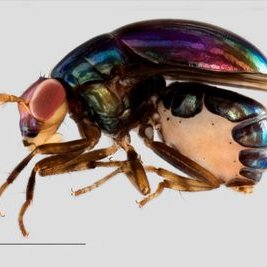
Express DNA barcoding published! We combine DNA leaching, NextGenPCR, and MinION to go from specimens to barcodes in hours without breaking the bank. Say hello to fast pest identification, food authentication and species sorting in the field. Oxford Nanopore
24,609 görüntüleme • 2 yıl önce •via X (Twitter)

5 Yorum

Rudolf Meier profil fotoğrafı
Rudolf Meier2 yıl önce

@shump_2 @nanopore Sealing the plates was tricky in the initial experiment. That's why the published paper includes an optimized sealing protocol that worked smoothly for us.

Greg Tucker-Kellogg (gtuckerkellogg.bsky.social) profil fotoğrafı
Greg Tucker-Kellogg (gtuckerkellogg.bsky.social)2 yıl önce

@nanopore Congrats!

Saleh Abohadi profil fotoğrafı
Saleh Abohadi2 yıl önce

@nanopore Hallo😅🌹

Carlos🌍🦠🔬🧪🧫🇪🇺🇪🇸🇮🇹🇺🇲🇬🇧 profil fotoğrafı
Carlos🌍🦠🔬🧪🧫🇪🇺🇪🇸🇮🇹🇺🇲🇬🇧2 yıl önce

@BabyBoomerWritr @RudolfMeier15 @nanopore Certainly!

Dani Paulo profil fotoğrafı
Dani Paulo2 yıl önce

@nanopore Awesome! Would this work for bulk samples?

Benzer Videolar

Kearney Disinformation Correction Yesterday, Aidan Kearney attempted to attack the lack of canine DNA detected on John's clothing by tweeting two misleading claims. 1. Canine Swab Collection Kearney Disinformation: Michael Proctor was the source of DNA collected. Factual Information: The swabs were neither from Proctor's body nor collected by him. The swabs were collected by Maureen Hartnett at the MSP crime lab from John's shirt per instructions of Teri Kuhn at UC Davis and were received packaged appropriately. 2. Inhibitors Caused The Lack of Canine DNA Kearney Disinformation: There were inhibitors on John's clothing that masked the presence of canine DNA. Factual Information: UC Davis was asked to perform two tests: a nuclear DNA test which would be used to identify a specific animal and, if the nuclear DNA test failed to yield results, a mitochondrial DNA test called Meat ID to determine presence of DNA from a variety of species. Nuclear DNA is found in the nucleus of the cell and only 2 copies exist whereas mitochondrial DNA is found in the cytoplasm and is significantly more abundant with hundreds of thousands of copies. Nuclear DNA tests are far more accurate in determining the exact source, ie one dog from another dog, whereas mitochondrial DNA is less specific but will be able to determine if DNA from a specific animal species is present. In this case, the presence of DNA from 12 different animal species, including canine and pig, was tested. The results of the QPCR testing for nuclear DNA were that the swabs "did not indicate the presence of canine (nuclear) DNA, but did indicate the presence of inhibitors. This result is obtained when 1. Canine DNA is degraded, 2. The DNA is obscured by inhibitors, or 3. There is no nuclear DNA present." The less specific test using mitochondrial DNA, Meat ID, was then completed. This test showed no canine DNA and further, showed no inhibitors. In other words, had canine DNA been present, it would have been identified on the Meat ID mitochondrial testing since there were no inhibitors. The below video contains questioning from both the defense and prosecution supporting the identified factual information.

Julie Carpenter

10,660 görüntüleme • 1 yıl önce

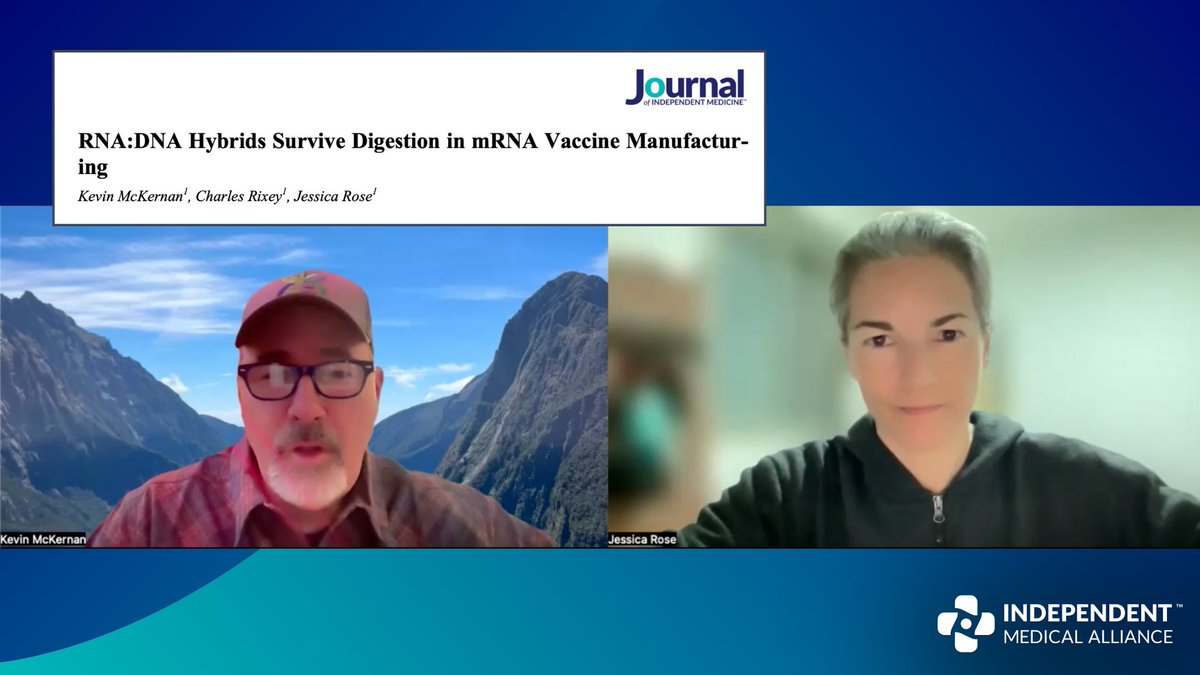
🚨🚨 EPIC Paul Offit takedown! PLEASE LIKE AND SHARE WIDELY! A point by point analysis of the false claims and lies he presented as scientific fact in his infamous 2024 "DNA fragments in COVID vaccines are completely harmless" video: LIE #1: The mRNA vaccines contain fragments of DNA, but these are in very small quantities, measured in nanograms - Counterargument: Even though the DNA fragments may be in small quantities, their presence still poses a risk. DNA integration into the genome, even in small quantities, could still have long-term, unpredictable effects that we are not yet fully aware of. LIE #2: Impossibility of DNA entering human DNA: For these DNA fragments to integrate into our DNA, they would have to overcome several barriers, including crossing the cytoplasm and nuclear membrane, which is virtually impossible - Counterargument: The entire purpose of the LNP (lipid nanoparticle) in mRNA vaccines is to allow for the mRNA to enter the cytoplasm in order to transcribe the desired proteins. While fragments integrating into human DNA might be low, it's not "impossible." Scientific literature on gene editing technologies, like CRISPR, demonstrates that foreign DNA can be integrated into the genome under certain conditions. LIE #3: Role of innate immune system in rejecting foreign DNA: The innate immune system and enzymes in the cytoplasm work to destroy foreign DNA - Counterargument: While our immune system does recognize and destroy some foreign DNA, the immune response isn't perfect, especially if the foreign DNA is introduced in a manner that is not immediately recognized such as via the LNP. In certain environments or under specific conditions, foreign DNA can evade immune detection. LIE #4: Lack of integrases in mRNA vaccine DNA: The DNA fragments in the mRNA vaccine do not have the necessary integrases to integrate into our genome - Counterargument: While the fragments might lack integrases, it's possible that they could still interact with the genome in other ways, for example, through epigenetic changes or by influencing gene expression as is commonly achieved in laboratory settings. LIE #5: Comparison to naturally occurring foreign DNA: We are constantly exposed to foreign DNA through our food from bacteria, plants, and animals, which is much larger and more abundant than the DNA in vaccines - Counterargument: Although we are exposed to foreign DNA regularly through the digestive tract, the introduction of DNA through vaccination is a more controlled and concentrated process. The body is not naturally prepared to deal with such DNA in the same way it handles the ingestion of plant or animal DNA. LIE #6: Fear-mongering accusation: The physician scientist who raised these concerns was just scaring people unnecessarily - Counterargument: Raising concerns about potential risks is an important part of scientific discourse, especially when it comes to public health. It's better to err on the side of caution and investigate these possibilities rather than dismissing concerns outright, especially when the long-term effects of mRNA vaccines are still being studied. LIE #7: Assurance that these risks are negligible: The DNA fragments from the vaccines are clinically harmless - Counterargument: The assertion that these fragments are harmless is premature. Without long-term studies specifically addressing the potential risks of vaccine-derived DNA integration, it's impossible to claim with certainty that there will be no adverse effects in the future. Paul Offit knows all of this, so WHY IS HE LYING TO THE AMERICAN PUBLIC? Please share this important video with everyone you know and DEMAND TRANSPARENT RESEARCH INTO THE QUESTION OF DNA CONTAMINATION AND INTEGRATION IN THE #COVID #vaccinated POPULATION! @P_J_Buckhaults Kevin McKernan Danny Jones Bret Weinstein Vejon Health - Dr Philip McMillan John Campbell Robert F. Kennedy Jr Steve Kirsch #AwfulOffit

Vaccine Safety Research Foundation

338,841 görüntüleme • 1 yıl önce