Video wird geladen...

Video konnte nicht geladen werden

Zur Startseite

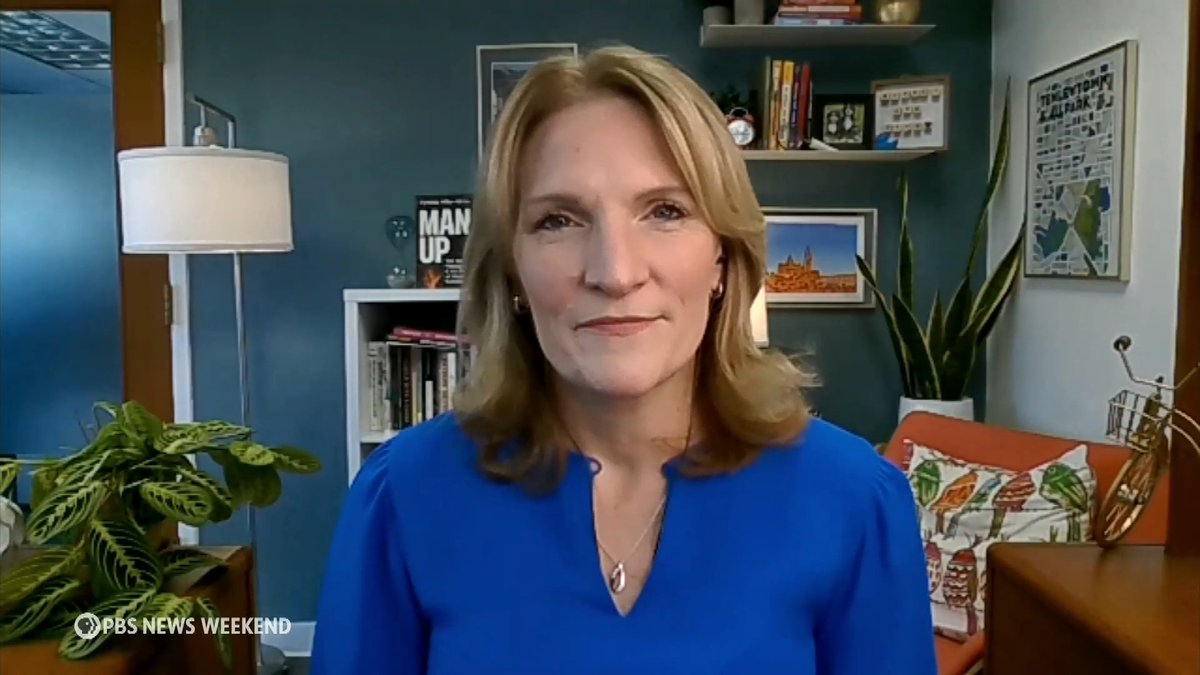
🇨🇱 Far-right José Antonio Kast has defeated Communist Party candidate Jeannette Jara, who ran as part of the Unidad por Chile coalition, in Sunday’s presidential runoff with about 58% of the vote, ushering in Chile’s most right-wing leadership since the end of the Pinochet era. While Kast centered his...

54,242 Aufrufe • vor 8 Monaten •via X (Twitter)

0 Kommentare

Keine Kommentare verfügbar

Kommentare vom Original-Post werden hier angezeigt

Ähnliche Videos

Professor Lovemore Madhuku in his Own Words Making the Case for Parliament to Indirectly Elect the President as an Electoral College: “We must not put in the Constitution of the country a provision that is dependant on what happens in a political party. That’s the point I’m making. We must never say in our Constitution of Zimbabwe that if a sitting President dies or resigns, we will wait to hear what the political party of that President is saying. No. That is not the best way of running a country. Political parties remain the preserve of those people who are in those political parties. But the country is run on the basis of either an election by the people—direct election—or you have Parliament as an institution sitting as an electoral college. Where parties have influence, they must do the influence within Parliament, but never to allow the political party to sit there to say I’m giving you this President, and so forth. That’s the point I’m making. And on that point, I’m making it right across the world; that’s what they do.” - Professor Madhuku, addressing a “Heal Zimbabwe Trust” public meeting in Harare on 22 February 2020. COMMENT: Professor Lovemore Madhuku’s 2020 remarks make a clear, powerful and enduring case for Clause 3 of the Constitution of Zimbabwe (Amendment No. 3) H.B.I. Bill, 2026. This clause replaces the direct election of the President with an indirect election by Parliament sitting jointly as an electoral college; both after every general election and, when necessary, to fill any vacancy in the office of President. The current direct election of the President was first introduced in anticipation of a legislated one-party-one-man rule through Constitution Amendment No. 7, Act 1987 in the old Lancaster Constitution repealed in 2013. Professor Madhuku put it plainly: The Constitution should not—as it currently does— depend on the internal decisions of a political party to select a successor to the President of the country. When a sitting President dies, resigns or is removed, the nation should not have to wait and hear what that President’s political party “is saying.” That is not a constitutionally proper way to run a country. Political parties exist for their own members. The country, however, belongs to all Zimbabweans. The proper solution is straightforward: Parliament—the institution chosen by the people—should act as the electoral college. Inside that open forum, parties may exercise their influence transparently and accountably. No party should ever stand outside the Constitution and simply “give” the nation its next leader. This principle is not abstract. Worldwide, presidential by-elections to fill mid-term vacancies are extremely rare. Most stable presidential systems instead use automatic succession by a deputy or, increasingly, allow the legislature to elect a successor who serves out the remainder of the term. These arrangements place national continuity and stability above partisan interests. Clause 3 of the Bill follows exactly this proven path. By giving Parliament the clear duty to elect the President—whether at the start of a new term or in an unforeseen vacancy—Zimbabwe will secure stronger democratic stability, and keep the highest office firmly within the people’s constitutional framework rather than the private control of any single party. In short, Clause 3 is a mature, practical and principled reform that directly honours Professor Madhuku’s wise 2020 counsel. As such, it deserves the full support of every well-meaning Zimbabwean who values good governance, democratic constitutionalism, institutional integrity and the long-term strength of the country’s democracy in the national interest!

Prof Jonathan Moyo

88,259 Aufrufe • vor 3 Monaten

POLITICAL EARTHQUAKE! Ex-Obi Campaign Chief Dumps Obidient Structure for Tinubu, Vows 12 Million Votes in 2027 Nigeria’s political landscape witnessed another dramatic twist on Friday as former Deputy Campaign Manager of the Obi/Datti Presidential Campaign, Comrade Isaac Balami, led a delegation of Obidient leaders and professionals to a meeting with President Bola Ahmed Tinubu’s son, Seyi Tinubu, where they declared support for President Tinubu’s 2027 re-election bid. Balami, who served as a key figure in Peter Obi’s 2023 presidential campaign, presented members of his political structure and several conveners of Obidient support groups during the meeting in Abuja, pledging to work for President Tinubu’s return to office in the next general election. The former Trade Union Congress (TUC) spokesman, who joined the All Progressives Congress (APC) after the 2023 elections, said his decision followed what he described as a lack of purposeful leadership within the Labour Party. Addressing the gathering, Balami reaffirmed his commitment to the APC and expressed confidence that the political network he now leads would play a significant role in strengthening President Tinubu’s support base ahead of 2027. He also pledged to mobilise what he described as 12 million votes for President Tinubu’s re-election campaign, saying the coalition of professionals and former Obidient leaders under his platform was prepared to work across the country to deliver the ambitious target. The development marks another high-profile political realignment ahead of the 2027 elections, as parties intensify efforts to consolidate support and attract influential political figures from across the country’s opposition landscape.

A. Ayofe

21,945 Aufrufe • vor 13 Tagen

Zuma Family Influence in MKP Sparks Criticism from Mayibuye Youth President The recent appointment of Duduzane Zuma to the uMkhonto weSizwe Party (MKP) Presidential Task Team has raised concerns about the role of former president Jacob Zuma and his family in the party’s leadership. The MKP announced the creation of the task team on 6 February 2026, naming Duduzane among 11 members tasked with supporting party operations ahead of local government elections. Critics argue that this move reinforces the perception that major decisions within the MKP are driven by family interests rather than party members or democratic processes. Keamogetswe Masike, President of the Afrika Mayibuye Youth, said the development confirms long-standing concerns that the MKP is “a family project of Jacob Zuma and his children.” Masike claimed that strategic decisions are “taken at a dinner table” and then presented as party policy, reducing ordinary supporters to “a family trust and a surname project.” According to Masike, the MKP is no longer a true vehicle for liberation. “The ANC is dying a natural death, and the MKP has become a family-run continuation where decisions are taken by Zuma and his family,” he said. He added that Mayibuye is the only left-wing organisation with a clear political strategy capable of delivering “Total Freedom and Emancipation Now” to South Africans frustrated with political mediocrity. The MKP a breakaway formation rooted in the legacy of uMkhonto weSizwe, the ANC’s former armed wing has been influential yet polarising since its launch, further complicating South Africa’s political landscape.

MDN NEWS

38,273 Aufrufe • vor 6 Monaten

In my recent discussion with Jacob Rees-Mogg, he asked me an intriguing question. We'd been discussing which were our favourite monarchs of each century. Sir Jacob was tempted to skip over the 19th century, on the grounds that there wasn't a lot of choice. Queen Victoria, after all, ruled the country for almost two-thirds of the 1800s. But I suggested we discuss the thoroughly short, unpopular, but hugely valuable reign of William IV. A debauched roisterer with a disastrous marriage and long-term mistress, William IV nonetheless oversaw momentous political change. He was the King at the time of the Great Reform Act of 1832. And though sympathetic, as any royal of his day was likely to be, towards the Tories, he was persuaded that the case for reform was unanswerable, and didn't stand in the way of it. As we survey our own political landscape, history is an incredibly rich resource from which we can learn and judge affairs. The early 19th century was a time of tumult and political disorder, street violence and economic disquiet. But the men of the age were able to accept change while retaining the essential elements of the British constitution. Indeed, one of the eventual products of that acceptance was the emergence of the Labour Party. For the Labour Party and the progressive establishment now to behave like some ancien regime, and seek to thwart the political aspirations of British people as expressed at the ballot box and polls is, in historical terms, the height of hypocrisy. Take, for example, the issue of peers in the House of Lords. Given their level of popular support, shouldn't Reform by now be permitted to have have at least one? Sir Keir Starmer won't hear of it. He could take a leaf out of the book of William IV. The King who loved nothing more than sailing, swearing and shagging, but who had the sense to know that standing in the way of political reform is a road to ruin and desiccation.

David Starkey

50,224 Aufrufe • vor 5 Monaten