Loading video...

Video Failed to Load

Go Home

Festive blessings cross distances & languages. Students from China-Equatorial Guinea Friendship Primary School in Yunnan wrote Spring Festival couplets & “福” (blessing), while kids from an Equatorial Guinea school sang a Chinese song to express gratitude. Friendship knows no bounds!🌸🎶
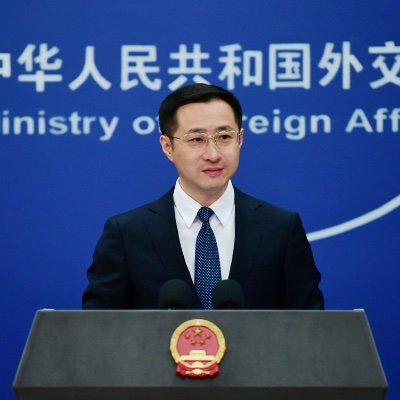
15,500 views • 1 year ago •via X (Twitter)

8 Comments

iHebei's profile picture
iHebei1 year ago

Greetings from an international student of Equatorial Guinea studying in Hebei, China

Power Homeschool's profile picture
Power Homeschool2 years ago

Start your child's independent homeschooling journey with our flexible, self-paced platform. We offer a full PreK-12 curriculum with electives & hundreds of engaging video-based lessons taught by experienced educators! Enroll now! ✅ No Contracts. Cancel Anytime.

山中旭日's profile picture
山中旭日1 year ago

👍,林副司长早安

临时来这儿里's profile picture
临时来这儿里1 year ago

林司长辛苦了🥃

Hồng Hà hấp dẫn's profile picture
Hồng Hà hấp dẫn1 year ago

孩子们彼此的祝福最清澈纯真❤️

Qinghua Li's profile picture
Qinghua Li1 year ago

全人类重醒的时刻 人类同源,互通有无,合作同乐! 孩子们来自更新的正能量 他们期待地球上幸福美好的生活! 2025年,有意识地传递正能量 唤醒更多沉睡的灵魂, 开始享受人生及地球时光! 地球是人类智慧的展厅!

Justice for Cambodia's profile picture
Justice for Cambodia1 year ago

Chinese communist 💯

Ivy Yu's profile picture
Ivy Yu1 year ago

lovely!

Related Videos

While in Xihaigu, one of the poorest regions in China, I had the opportunity to attend an eighth-grade English class. I've always been curious about how Chinese rural children see the world and how much they know about it. Language is essential for understanding a country and its culture. Most Chinese students are familiar with Alphonse Daudet's "La Dernière Classe", in which a French teacher teaches his students the final French lesson before the Germans occupy the region and French is banned. In contrast to Daudet's story, Chinese youngsters in villages are now taught other languages to understand the world better and learn from different cultures. Yuanhe Middle School, which I visited, is located in Xiji County. The World Food Programme listed the region as one of the "most unfit places for human settlement" in the 1970s. On November 16, 2020, Xiji became the last county in Xihaigu to be removed from the poverty list; this was a tremendous victory for the region and the country. Most students at Yuanhe Middle School are "left behind" kids whose parents work in cities to make a better life. Taking care of rural children is critical to China's poverty alleviation efforts. The school provides boarding services and free breakfast and lunch to students, who can also video chat with their parents daily. The school provides outdoor hiking, technology and art electives, and foreign language programs to help local youngsters understand the outside world. This is a story of how better education changes the lives of rural Chinese children.

Eivor

80,260 views • 2 years ago

An 82-year-old Cuban pilot went viral on Chinese social media after recounting his friendship with and studies in China during the 1960s and asking about the cost of a flight from Havana to Beijing to a Chinese tourist. Living in a cramped room with just one bed in Cuba, the 82-year-old is known as "Tito" on Chinese social media. When a Chinese female tourist walked by his door, he tried to converse with her despite her language barrier and initial shock. The girl later discovered that Tito was a Cuban pilot who studied aviation in Shanxi Province, China, from 1961 to 1963. Tito showed her his Chinese PLA graduation certificate and told her that he missed China and that most of his pilot friends had already died. After that, he asked how much a plane ticket from Havana to Beijing would cost. The girl later shared the video on Chinese social media, describing Tito as "the lonely grandfather in Cuba." She mentioned that Tito kept a little notebook in which he planned to jot down his inquiries for the Chinese and his wish lists for sites to visit in China. It appears that he had made repeated attempts to strike up conversations with Asian tourists who passed his door, but they all thought he was strange and quickly left. In Tito's notebook, you can still see Chinese expressions like "How are you?" "When will you leave?" and "When are you planning to return?" Tito's story has moved many Chinese internet users, who are rallying to help him get a plane ticket to China or locate his Chinese friends. In September 1961, the Cuban Air Force chose 223 young pilots (average age less than 20) to study in China. They were among the first international students to come to China, as the Chinese netizens learnt later. A Chinese netizen later claimed on social media that his grandfather was Tito's teacher at the time. The story of Tito has gone viral on Chinese social media. The official account of the Chinese PLA Air Force left a comment under Tito’s video, stating that they had been attempting to get in touch with Tito. The comment said that the Chinese PLA will never forget a friend like Tito and that their friendship will transcend space and time. Today is the Lantern Festival in China, a time for family reunions. The Chinese embassy in Cuba invited Tito and other Cuban pilots who had studied in China for their youth to attend the festival feast, where they reminisced and sang many Chinese songs together. The Chinese have an old proverb: "滴水之恩当涌泉相报" (A drop of water shall be returned with a burst of spring), being grateful is a virtue in Chinese culture; we always give back when someone helps us. The life and work of Canadian surgeon Norman Bethune is a topic included in Chinese school curricula; his heroic contributions to our cause during World War II are emphasized in our textbooks, and his legacy lives on in China. John Rabe, a German merchant who rescued some 250,000 Chinese people from the Nanjing Massacre, and his family are still very much loved and respected by the Chinese people. Thomas Rabe, a doctor at the medicinal Faculty of Heidelberg University in Heidelberg, southwest Germany, and grandson of John Rabe, sent a plea to the Chinese embassy in Germany in March 2020 for medicinal supplies to help his hospital battle the COVID-19 pandemic. In April 2020, with all of the necessary assistance and coordination, medical supplies given from various sources, including medicines, protective suits, and masks, arrived in Germany from China. Chinese embassy staff raced from Berlin to Heidelberg, a distance of 700 kilometers, to expedite the delivery of supplies to the Heidelberg administration, the Medical Faculty of Heidelberg University, and Dr. Thomas Rabe.

Eivor

252,386 views • 1 year ago

I taught my Primary 2 students magnetic fields, and how they help us determine magnetic north and bearings using a compass. At the later half of the class, the students did a small experiment that used a magnet and compass to test what we learned. This is what Nigeria can take away from this: 1. LANGUAGE: Using Chinese to explain magnetic fields was so easy for them to understand, and took less than 4 mins. They never have to worry about understanding the grammar or remembering new vocabulary if another language was used. Language skill is not for everyone, just like technical and creative skills. While you or your son can learn a new language fast, others might be more technically inclined. Nigeria should use native languages to teach primary school children right from the first day in school. With many native languages, autonomous regions with different official languages will be ideal, with an option for international classes which are more English focused. 2. CURRICULUM: Unless we are really oblivious, there is no way a Nigerian primary 6 student can compete with my primary 2 students. These are kids that first came to our school so tiny and sometimes crying, many of them don’t even know how to write their names. A Nigerian taught them most of what they know today in less than 2 years, and because we have a curriculum that is modern, targets what the students really need to know, and its always modified to reflect their realities, they have acquired so much knowledge about how the world around them works like electricity, engines, space, aerodynamics, mechanics and environmental protection in a short time. What they are learning is directly linked to where their economy is headed, so by the time they are in university, they can easily understand advanced practical and theoretical knowledge and be useful to their economic development after graduation. Our curriculums in Nigeria are old and mostly useless to the growth of our economy, so let’s do the needful. Don’t wait for miracles to change them for you. We must demand this change. 3. GROUP WORK: Students are encouraged to work in groups, divide tasks and roles and they mentored to understand their strengths and challenges and resolve conflicts. They learn to work with others who are different from them, giving them a diverse perspective and mindset about working together. Nigeria cannot succeed without all of us uniting and learning to work with each other, irrespective of tribe, religion, region and family background. When we win as individuals, we will still be surrounded by helpless people, but when we win as a society, everyone develops. 4. TEACHERS: Here in China, we are always happy and encouraged to learn new things and ways to teach our students. We are free from worrying about food, shelter and pocket money. We are paid more than enough, so we have enough time and mental space to throughly research information and knowledge, and also design useful and interesting lessons for our students. Nigerian teachers should be paid a minimum of 800k to 1 million Naira per month. Primary school teachers lay down the crucial foundations for our economic growth, development and future. It is one of the most important professions in the country and the compensation and benefits MUST be more than senators and representatives. Liking, commenting and retweeting are nice because they help spread the message, however what’s more important is us uniting as Nigerians with our common interest to ensure that our needs are addressed.

Dan Bello

161,014 views • 2 years ago

The Red Flags of the Cagayan Governor Mamba Few days ago Cagayan Governor Mamba said that he sees no threat from the influx of the Chinese students in Cagayan, but what do we expect from a pro-Beijing governor? It makes sense, right? He knows! If what the sources are saying is correct, thousands of Chinese students are hard to miss especially in a provincial set-up. In fact if thousands of Chinese students enroll even in a university in Metro Manila, I highly doubt people will not notice it and wonder. I clearly remember how Cagayan Governor Mamba opposed the EDCA sites in his province and cannot stop praising China at the same time. But then there’s more… reading a lot about this last night and I guess even with the publicly available information, there’s really a basis to be concerned of this “friendship” between Gov. Mamba and China. A country with a direct conflict of interest with us, our national security and our national interests! :/ Mamba wants China to invest in Cagayan airport and seaport Chinese Ambassador to Manila Huang Xilian visited Cagayan November last year, he even went as far as saying that China is not just their steadfast ally and friend but “more so of a big a big brother” lols During the said visit Gov. Mamba urged China to invest in a seaport and an airport with a three-kilometer runway. Hayyy this Gov. Mamba is something else :/ Read more here: Mamba wants stronger ties with Beijing I do not understand how despite the repeated harassment of China in the West Philippine Sea against our own men and fisherfolks, within our EEZ… Governor still hopes for stronger ties with China. “I have always believed that neighbors cannot be enemies, otherwise you will never feel safe in your own home,” -Governor Mamba, Hangzhou China May 24 Read more here: Video (c): Senate of the Philippines Youtube Page Link:

Just

68,403 views • 2 years ago

A 13-year-old girl has become an internet celebrity on Chinese social media after a video of her saving a 4-year-old child from drowning in an icy lake went viral. The girl and her family modestly declined money from the boy's family, noting that "the gratitude is good enough." Li Jiating, a girl from the Ningxia Hui Autonomous Region in northwest China, witnessed a 4-year-old kid falling into the ice lake. Li made an effort to save the boy, believing that her weight would allow her to crawl across the ice and reach him. Both were eventually rescued by firefighters and passers-by. Li quietly left the scene when the boy was saved, fearing that her parents would be concerned, and informed her father that she was drenched in water after a watering cart sprayed water on her by accident. The courageous actions of Li were only realized by her parents after Chinese internet users attempted to find her through internet. The girl's school later awarded her with prizes for saving the kid, urging students to learn from her kindness while also being mindful of their own safety when danger arises. The local authorities have dispatched officials to pay the girl a visit, providing her with a bonus and a "life-long health check" at the public hospital. Chinese enterprises have also offered the girl a bonus, urging society to learn from her, and local medical specialists have given her a complete health check to confirm that she is healthy after soaking in ice water. So proud of Chinese youth and a society that values and encourages compassion and charity.

Eivor

76,885 views • 9 months ago

Norway might be onto something big. They lock students’ phones and tablets away on arrival and return them at the end of the day. Prime Minister Jonas Gahr Støre reports kids actually love it: more actual play during breaks, girls no longer afraid to shower after gym, and noticeably better social interaction overall. A study from Sara Abrahamsson at the Norwegian Institute of Public Health showed the policy cut girls’ need for psychological specialist visits by nearly 60%, improved GPAs, and reduced bullying by 46% for girls and 43% for boys. Right now in 2026, Norway is expanding mobile-free school guidelines and preparing a full social media ban for under-16s by the end of the year. This fits a global wave: 114 countries (58% worldwide) now have national phone restrictions in schools, up from just 24% in 2023. France has enforced bans since 2018, the Netherlands saw 75% of secondary schools report better concentration after their 2024-2025 rollout, Poland is implementing primary school bans from September 2026, and similar moves are active in Italy, Belgium, China, South Korea, and Australia. Giving kids phone-free space during school hours is one of the highest-leverage, lowest-cost interventions we have for attention, social skills, and mental health. The results speak louder than the convenience arguments. What do you think — should more countries follow Norway’s lead with strict phone-free school policies, or is it too late in our connected world?

Camus

46,275 views • 4 months ago

Enoch Burke Stands in Defiance of Court Order Again, Returning to Work One Day After Release Enoch Burke returned to the gates of Wilson’s Hospital School at Multyfarnham Co. Westmeath this morning, less than 24 hours after his release from Mountjoy Prison, continued his defiance of a long-standing court order that bars him from the premises. Shortly after his release yesterday, Mr Burke posted a video statement on X in which he described the High Court decision to free him as an “utter travesty of justice”. He accused Mr Justice Brian Cregan of previously threatening him with indefinite imprisonment and claimed the judge was now improperly “counselling” the Disciplinary Appeals Panel on how to defend against his legal challenge. He further alleged unfair procedures at a 13 December appeal hearing, including the blocking of cross-examination of witnesses and a remark from one panel member that she would follow any instruction from a principal on pronoun usage without question. Arriving early at the school today, Mr Burke told reporters he was “at work” and remained resolute in his position. He expressed appreciation for the widespread public support he received throughout the day.Supporters, including locals, community groups and members of Dublin Says No, gathered outside the school gates in solidarity. Students repeatedly came to the boundary to wave and call out in support, while passing motorists frequently beeped their horns. The school authorities, prevented Mr Burke from entering the premises and swiftly moved to initiate fresh contempt proceedings. Although Gardaí were present there was no intervention and Mr Burke was allowed to remain peacefully at the gates all day. This afternoon, the High Court granted an application facilitating steps toward his potential re-imprisonment. Mr Burke has consistently maintained that his refusal to comply with the school’s directives on transgender pronoun usage stems from his religious beliefs and has refused to purge his contempt or stay away from the school. SnD Media were on the ground today and we spoke to a number of supporters including one elderly gentleman that stated "God created Man and Woman" and that Mr Burke was "right right right, no matter what the judges say".

SnDMedia

21,020 views • 7 months ago