Loading video...

Video Failed to Load

Go Home

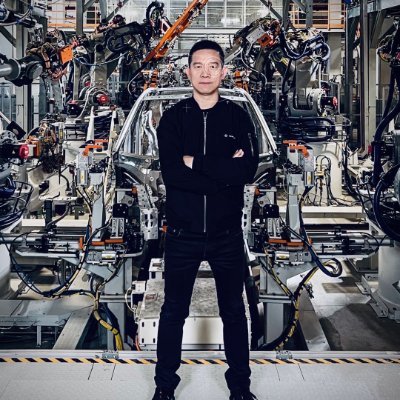
FFAI Co-CEO Structure Weekly Update 048 First-month robotics delivery target exceeded, FFAI Annual report to be released on March 31st. ① FF EAI Robotics has signed sales contracts for 22 units in its first delivery month, ahead of schedule; shipments will exceed the initial 20-unit target by month-end, with...

24,470 views • 6 months ago •via X (Twitter)

0 Comments

No comments available

Comments from the original post will appear here

Related Videos

China's humanoid robotics market is on fire. With orders expected to top 30,000 units this year—a tenfold jump from 2024's total of less than 3,000—2025 is officially shaping up to be the "Year of Mass Production." This surge, driven by an expansion into new sectors like industrial manufacturing, logistics, and elder care, is reflected in a wave of new deals across the industry. Here's a look at some of the key commercial progress: Astribot: A 1,000-unit order for industrial and logistics deployment over two years. TianTai Robotics: Signed a major 10,000-unit order for caregiving robots. Noetix Robotics : Received over 2,000 intent orders in one month, valued at over 100 million yuan, with a focus on education and commercial performances. AgiBot: Expects to ship thousands of units this year and tens of thousands in 2026. Unitree Robotics: Has orders for thousands of units and is one of the most visible products in the industry. UBTech: Aims to deliver 500 industrial humanoids in 2025, with educational robot orders already exceeding 300 units. Robot Era: Delivered over 300 units by July 2025 with 500 more on hand. TLIBOT: Has around 1,000 intent orders. Galbot: Secured orders for its supermarket security robot, Galbot, in 100 stores. AI² Robotics: Has nearly 500 orders for its general-purpose robots for industrial and public service scenarios. But here’s the crucial reality check. While the order boom is exciting, it doesn't automatically translate to fulfilled deliveries. Many companies lack the production capacity to keep up. A significant portion of these are "intent orders" or framework agreements, not guaranteed sales. Furthermore, the market is heavily B2B-focused, with consumer demand representing only about 5% of sales. Some orders are even symbolic, for public relations or strategic purposes. This “order frenzy” is a starting point, not the finish line. The true test for China's humanoid robot industry isn't who can secure the biggest order, but who can consistently deliver on it and build a stable market for the future.

RoboHub🤖

199,146 views • 1 year ago

March is almost here… And IDOs will start blooming 🌺 We have some really cool projects lined up that we think you will love! The first one is here: say hello to Ordify 👋 Let's face it… in the blockchain playground, currently, there are two biggest guys who call the shots: Bitcoin and Ethereum. Both the chains and currencies reign supreme in the crypto world. Ordify is now entering the scene as the first launchpad on the Bitcoin blockchain, pioneering the integration of BRC20 tokens in a never before scene move in the space. They aim to streamline the token launch process by integrating BRC-20, Stacks, and Rootstock layers, providing end-to-end support for projects. As part of their efforts to enhance user investment experiences across chains, Ordify is set to launch the multi-chain ORFY wallet that boasts compatibility with BRC-20, ERC-20, Stacks, and Rootstock tokens, enabling seamless participation in Ordify's IDOs. The team has everything carefully thought out, so if you're wondering how this project works with tokens from different chains, they already have an answer for you. The ORFY Bridge is crafted to enable transfers of native BTC tokens to the Ethereum network. This will be a key feature for projects aiming to operate on both ecosystems, that will be able to enjoy this disruptive connection in the crypto scene. This connection not only allows BRC20 projects to access dApps within the ERC20 ecosystem, but also solves the liquidity limitations that may be found on the Bitcoin network, by opening the doors to other chains. Their token $ORFY will be the first one to cross the bridge, as it will be minted on Ethereum, for broader ecosystem access, and then a certain percentage will be transferred to the Bitcoin network, capitalizing on its robust security and inherent value. Ordify's expansion plans are ambitious: become a launchpad across multiple chains, such as Ethereum, Polygon, Avalanche and others, create their own NFT platform and turn the ORFY wallet into an app, continuously integrating more features, with a common goal in mind: enhancing user experiences across various blockchains. The IDO of Ordify is arriving at Seedify in March, and we're certain you don't wanna miss it 😌 Stay on the lookout for more news!

vibe/vibe

90,072 views • 2 years ago

Japan Just Built a HouseBot You Control Without Speaking and It Changes Everything! Donut Robotics has officially unveiled its first bipedal humanoid, Cinnamon 1, and instead of focusing on louder voices or bigger motors, the company went in the opposite direction. Silence. Cinnamon 1 introduces what Donut Robotics calls Silent Gesture Control, a system that allows the humanoid to be guided using simple hand and finger movements rather than spoken commands. This approach feels especially well suited for real world environments where traditional voice control falls apart. Busy factory floors. Construction sites filled with constant noise. Even quiet indoor settings where voice commands feel awkward or intrusive. It also opens the door for far more accessible human robot interaction, particularly for users with impairments. While the current Cinnamon 1 hardware is built on an OEM platform, the intelligence driving it is where Donut Robotics is placing its long term bet. The team is actively developing custom Vision Language Action AI that allows the robot to interpret what it sees, understand intent, and respond with physical action. The goal is not just smarter robots, but robots that feel more natural. Even more ambitious is the company’s plan for full domestic production. Donut Robotics has stated its intention to localize both manufacturing and AI development in Japan, reinforcing the country’s reputation for precision engineering and thoughtful robotics design. If timelines hold, Cinnamon 1 units are expected to begin deployment in factories and construction environments by the end of 2026. That puts this humanoid squarely in the category of near term reality rather than distant concept. The takeaway is simple but important. As humanoid robots move out of labs and into daily work environments, the winners may not be the loudest or flashiest machines. They may be the ones that understand us without a word being spoken.

The AI Robot Guy on X

257,928 views • 8 months ago

Everything Elon said about Optimus on the Q4 2024 earnings call: ⦿ I see a path for Tesla to be the most valuable company in the world, possibly bigger than the next five companies combined, overwhelmingly due to autonomous vehicles and autonomous humanoid robots. ⦿ The training compute needed for Optimus will ultimately probably be 10× what is needed for cars. Humanoids likely have 1,000× more useS than a car, which doesn't mean training scales by 1,000×, but probably close to 10×. The training compute will scale progressively as Optimus becomes more productive. ⦿ Long-term, Optimus has the potential to generate $10 trillion in revenue. In that scenario, we can support a lot of training compute. Even $500 billion in training compute is a good deal (chuckles). ⦿ There's a lot of uncertainty with timing because several aspects are being iterated simultaneously. The internal plan is for roughly 10,000 robots to be built this year, but we'll more likely produce several thousand. ⦿ I'm confident those several thousand robots will be able to do useful things. ⦿ The lessons from Production V1 will inform the changes in Production V2, which we expect to launch around mid-next year. ⦿ Our goal, aspirationally, is to ramp 10× every year, but perhaps we end up with 5× growth per year. With that kind of growth, it won't be many years before we're making 100 million robots a year. ⦿ The off-the-shelf components didn't work well, so we had to design everything in-house, including the most sophisticated hand ever made. Optimus will be able to play a piano and thread a needle. ⦿ My long-term prediction is that Optimus will overwhelmingly be the value of the company. ⦿ Optimus is not design-locked. It is rapidly evolving in a good direction. Tesla has by far the best humanoid robotics engineers in the world. Tesla also has all the other necessary ingredients: battery pack, power electronics, charging, communications, real-world AI, and the ability to scale production. ⦿ What other companies are missing is real-world AI and the ability to scale to millions of units a year. ⦿ This year, we aim to use Optimus internally at Tesla. We can easily use several thousand robots at Tesla for repetitive tasks, such as loading sheet metal at the welding line. ⦿ The Production V1 line is roughly 1,000 units per month. The Production V2, launching around mid-next year, will be for 10k units per month. The line after that will be for 100k units a month. Of course, it takes time for any given line to reach its maximum potential. ⦿ A very rough guess: we'll start delivering Optimus to companies outside of Tesla in the second half of 2026. The ramp is going to be exponential, and demand will not be a problem. ⦿ Once we're above 1 million units per year, the production cost of Optimus will be less than $20,000. Its total mass and complexity are much lower than a car. At a similar production volume to the Model Y, Optimus should be about half the cost of a Model Y. ⦿ The price is a different matter than cost. The price of Optimus will be set by market demand. [This is by far the longest Elon has ever spent discussing Optimus on an earnings call.]

The Humanoid Hub

96,475 views • 1 year ago

FLOKI LAUNCHES TOKENFI (with "TOKEN" ticker) TO CAPITALIZE ON THE TRILLION-DOLLAR TOKENIZATION INDUSTRY Floki has launched a crypto and asset tokenization platform named TokenFi to capitalize on the trillion-dollar tokenization industry. The tokenization industry is projected to be a $16 trillion industry by the year 2030. BlackRock, the world's biggest institutional investor with $10 trillion of assets under management, strongly believes in the industry's potential, which they call "the next evolution in markets". TokenFi, with the ticker TOKEN, aims to simplify the crypto and asset tokenization process and eventually become the foremost tokenization platform in the world. We will unveil the platform website on the 27th of October, and you can finally see what we've got planned, but for now, you can find the token details below. TOKENFI TOKEN DETAILS: - Token name: TokenFi - Token Ticker: TOKEN - Total supply: 10 billion tokens split across BSC and ETH (5 billion tokens on each chain). - Launch market cap: $50,000 circulating and $500,000 diluted market cap. - Industry targeted: Tokenization, Real World Assets, Launchpad. An initial 10% token supply will be added to Liquidity Pools on Uniswap and PancakeSwap to provide public liquidity and allow interested parties to trade. TRADING WILL COMMENCE ON UNISWAP AND PANCAKESWAP BY 3PM UTC ON OCTOBER, 27 2023. - BSC contract address: 0x4507cEf57C46789eF8d1a19EA45f4216bae2B528 - ETH contract address: 0x4507cEf57C46789eF8d1a19EA45f4216bae2B528 (NOTE: The contract address is the same on both the BSC and ETH chains). FLOKI stakers will earn 56% of the supply over a period of 4 years. The Floki community is known for being diamond-handed, and with TokenFi being in an industry with MASSIVE potential, FLOKI holders are the best candidates to receive the majority of TokenFi tokens. Since they would be staking their FLOKI tokens to get the new token, this will also ensure stability for the FLOKI token! TokenFi supply will be split evenly between the BSC and ETH chains: In other words, there will be 5 billion tokens on BSC and 5 billion tokens on ETH, to make for a combined total of 10 billion tokens. 5% of the supply will be paired with LP on BSC and the other 5% on ETH. This will make the starting circulating market cap on BSC a $25k market cap and on ETH a $25k market cap to make a combined initial circulating market cap of $50k and an initial fully diluted market cap of $500k (which will be gradually released to FLOKI stakers over a four year period). IMPORTANT INFORMATION FOR THE FIRST HOUR OF LAUNCH We understand that with this being a Floki token, there is a lot of hype. As a result, we have put measures in place to limit the impact of snipers on the token: Specifically, there will be a 1% wallet cap (of total supply) within the first hour of launch. That means no individual wallet can buy more than 100 million tokens within the first hour of the token becoming tradable. In addition, there will be an initial buy/sell transaction tax of 20% within the first hour. This transaction tax will do two things: 1) potentially limit the impact of snipers and 2) ensure a significant portion of whatever snipers/early buyers spend goes to the Floki treasury, which can be used for growth and development efforts. After the first hour, the wallet cap will be removed, and the transaction tax will be lowered to 5%. This 5% tax will remain in place for a week, after which the Floki DAO will vote on whether or not to remove or reduce it. We have instructed our exchange partners not to list TokenFi until this DAO vote. OUR PLAN FOR TOKENFI TokenFi is a well-thought-out concept that we have a strong capability to deliver on! We will unveil our roadmap with the launch of the TokenFi website on the 27th of October, 2023. However, we assure you that several TokenFi products are in advanced development on testnet and are due to go live in Q4 2023. In addition, we are working with some of the biggest names in the industry - especially from an institutional perspective - to make TokenFi a success, and they are quite excited about the concept and its potential. In our original DAO proposal, we already announced DWF Labs as our main institutional partner and market maker for TokenFi. We also announced a strategic partnership with World Table Tennis that will introduce TokenFi to a massive audience of 120 million people. We will announce many more partners in the coming weeks and months, and I'm sure that when you see the moves we have made, you will see why there is no better person to execute this vision than Floki!

FLOKI

1,956,042 views • 2 years ago

AheadForm just raised a new A1 round worth hundreds of millions of RMB (~tens of millions USD) 🤖 That matters because this is not another humanoid company chasing locomotion first. AheadForm is building around the part most robotics startups still underestimate: face, emotion, and real-time human connection. The new funding will go into multimodal embodied interaction, emotion foundation models, facial hardware and materials, standardized delivery, and global expansion. Founded in June 2024, the company is still young, but the founder’s research trail is not. Yuhang Hu, a Columbia PhD and AheadForm’s CEO/CTO, has published work spanning facial coexpression, realistic lip motion for humanoid face robots, and self-supervised robot self-modeling. That is the deeper signal here. In a market crowded with hands, arms, and walking demos, investors are now putting serious money behind embodied AI that can express, respond, and hold attention face to face. And the company is moving fast. According to public reports, AheadForm has completed five funding rounds since the second half of 2025, while its robots have already broken out of lab-only visibility through public activations like the NetEase Justice mobile game collaboration and large robot-stage appearances. If humanoid robotics is about physical labor, AheadForm is making the case that the next layer is emotional presence. That may end up being one of the more important categories in embodied AI.

RoboHub🤖

155,548 views • 5 months ago

The hype train just hit reality. For the first time ever, you can buy shares in a walking, working humanoid robot company. On June 24, 2026, Agility Robotics announced a definitive merger agreement with special purpose acquisition company $CCXI (Churchill Capital Corp XI). The deal will take the company public on the Nasdaq under the ticker $AGLT. The transaction is expected to close in the second half of 2026, subject to SEC and shareholder approvals. This marks the historic first debut of a pure-play humanoid robotics company on the U.S. stock market. Stripped of the usual AI marketing noise, here is a cold, financial and technological breakdown of the industry's first true public market test: 1. Deal Structure & Redemption Risks > Pre-money Equity Value: $2.5 billion. > Capital Infusion: Total gross proceeds of over $620 million ($420 million from $CCXI’s trust account + $200 million via a private placement (PIPE) priced at $10.00 per share). > Key Players: The PIPE round is anchored by manufacturing titan #Foxconn. Existing strategic backers, including #Amazon, #SoftBank (Vision Fund 2), and #GXO Logistics, are rolling 100% of their equity into the combined company and are bound by a 180-day lock-up agreement. > Financial Safeguard: The deal includes a minimum cash condition of $200 million. This structural floor protects the company against high redemption rates from SPAC shareholders = a historical pain point for late-stage tech mergers. At the current burn rate, this capital injection secures a stable operational runway of 24 to 30 months. 2. Unit Economics & Technical Guardrails While competitors rely heavily on edited video demonstrations, Agility is anchoring its valuation on verified operational metrics from its signature bipedal robot, Digit: > Commercial Traction: Over 65,000 hours of real-world commercial work logged across customer deployments (including facilities owned by $AMZN Amazon, $GXO GXO Logistics, $TM Toyota, and $SHA0.DE Schaeffler). > Narrow Specialization: It is crucial to temper expectations - the upcoming Digit v5 is not a general-purpose artificial agent. It is a highly specialized logistics asset built for repetitive tote-flipping and tote-handling. It operates within predefined industrial workflows alongside human workers without safety cages. > RaaS (Robotics-as-a-Service) Model: Current commercial leasing rates for these bipedal units hover around $30 per hour. > The Cost-to-Scale Target: The current total operating cost (including maintenance, high-wear harmonic drive components, and battery cell depreciation) sits at roughly $10–$12 per hour. Proceeds from the IPO will fund the mass scaling of their "Robofab" facility in Oregon, aiming to drive this operational cost down to a target of $2–$3 per hour. > Sales Pipeline: The company claims a backlog of multi-year commercial contracts and commitments valued at over $300 million, primarily tied to the deployment of the Digit v5 platform. 3. The Wall Street Outlook CEO Peggy Johnson is leveraging the accelerated timeline of a SPAC merger to secure a capital and manufacturing lead over well-funded, private, or conglomerate-backed competition like #Tesla (Optimus) and #FigureAI. However, public markets are notoriously unforgiving. The company is in its pre-earnings infancy and operates with a steep net loss. Institutional investors will disregard traditional P/E ratios; instead, the stock will be priced on a forward-looking P/S (Price-to-Sales) multiple tied to hardware delivery milestones and net burn rate. Given the inherent volatility of the SPAC structure, significant stock fluctuations are expected post-merger. Wall Street has officially established its first direct barometer for the commercial viability of Physical AI. What’s your take on the $AGLT debut? Is entering the public markets through a SPAC the right fuel to outrun the competition, or is it too early for retail investors to handle this level of hardware volatility? 🎁Bonus for those who made it to the end: $AGLT 3D LiDAR sensors supplied by $OUST. Drop your thoughts below and let's discuss.

Finn Stockinger

14,639 views • 3 months ago