正在加载视频...

视频加载失败

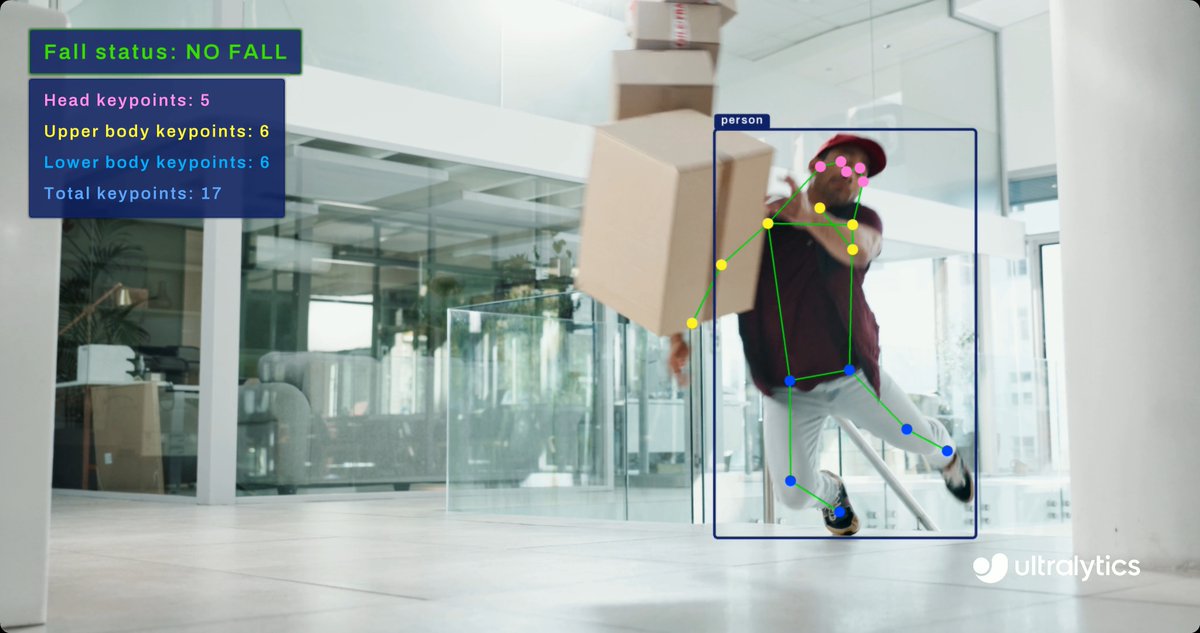
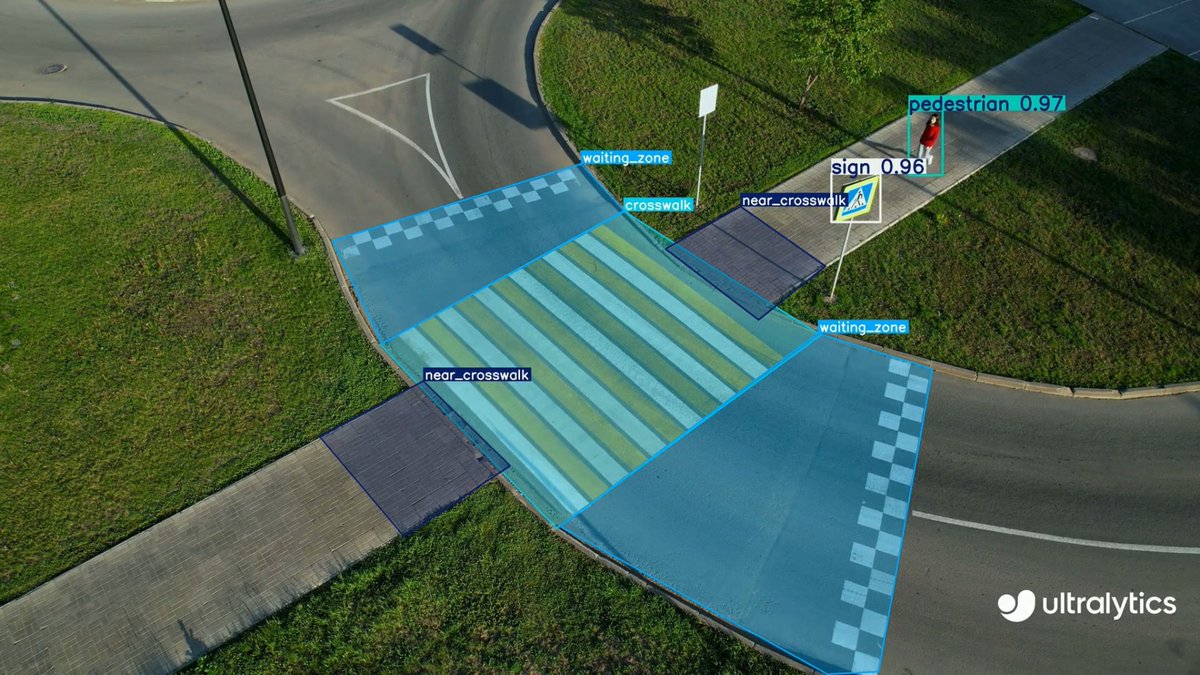
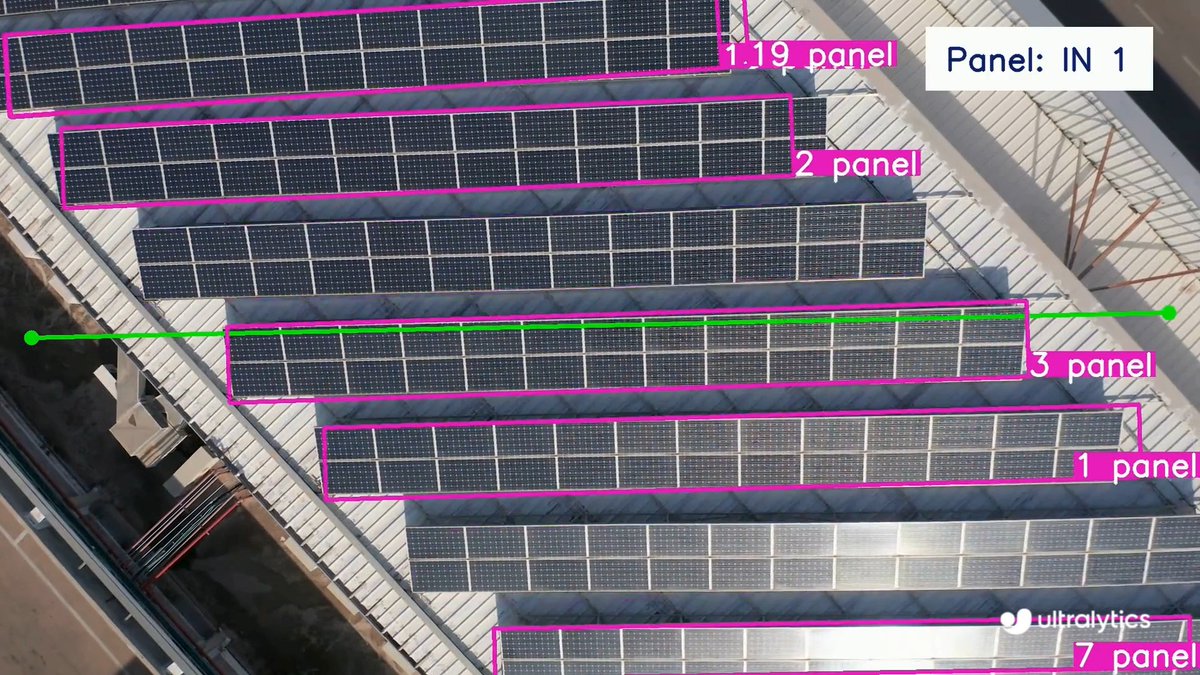
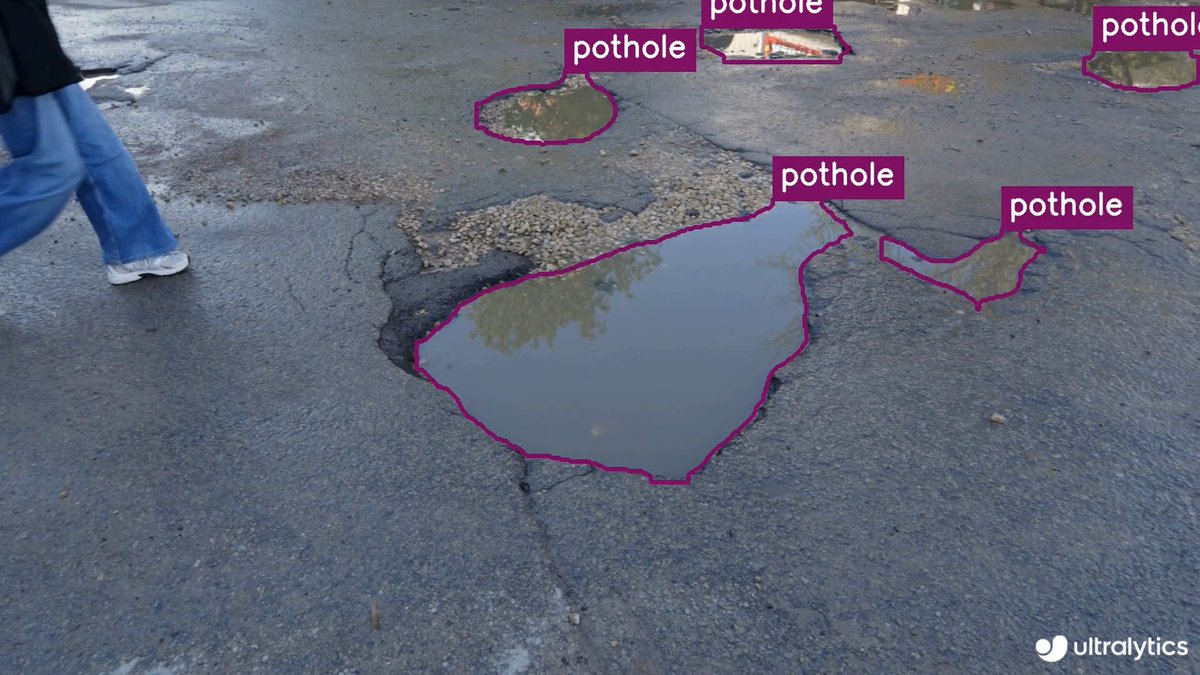
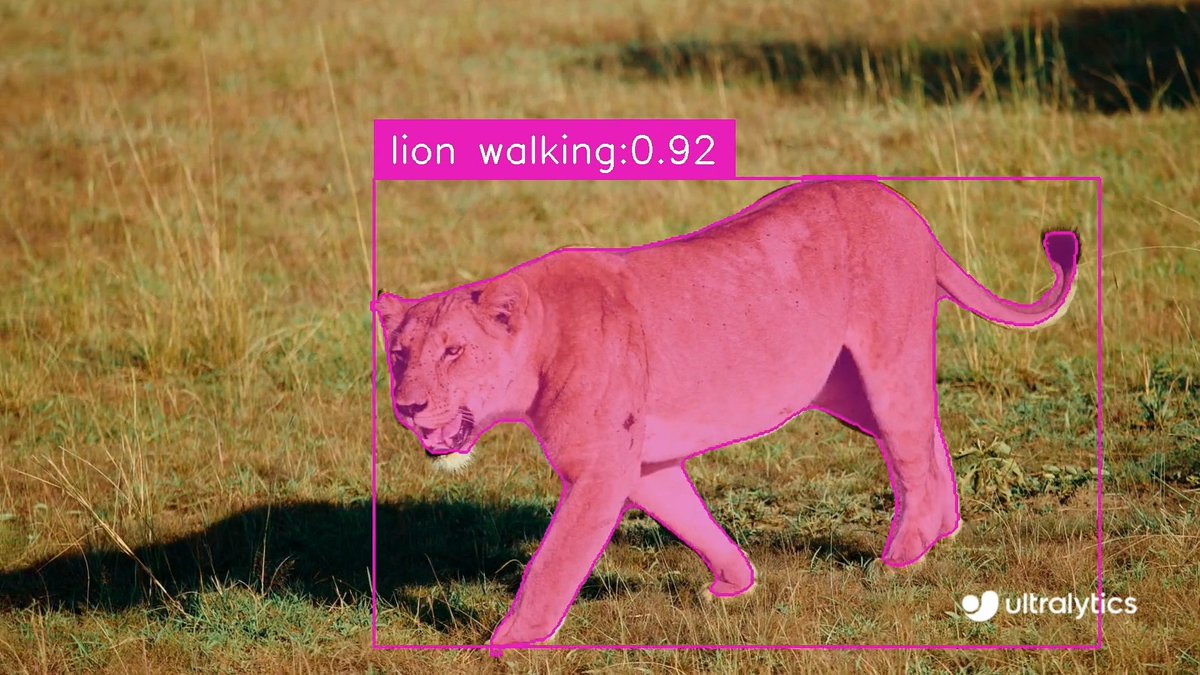
Floor plans are data hiding in plain sight 🗺️ Ultralytics YOLO26 instance segmentation can identify walls, rooms, corridors, doors, and other architectural elements, helping to convert floor plans into structured layouts, support facility management, inform construction planning, and enable digital twin workflows. Explore more ➡️ #Ultralytics #YOLO26 #AI

11,416 次观看 • 25 天前 •via X (Twitter)

0 条评论

暂无评论

原始帖子的评论将显示在这里
相关视频

🚨 Hedera recently posted their plans for 2025 so I’ve put together a summary of what the next year should look like for $HBAR. 👀 Key Highlights: 🔥 •AI and Tokenization: Hedera plans to emphasize AI integration and tokenization, aiming to advance blockchain technology. This includes new partnerships with tech giants like Nvidia, Intel, and Chainlink to push forward in these areas.  •DeFi Accessibility: The Hedera Foundation is set to launch initiatives in 2025 to make DeFi more accessible. These include providing secure and straightforward tools for managing digital assets, ensuring that users can engage confidently in the emerging financial landscape. •Institutional DeFi and RWA: Hedera anticipates integration with Stargate Finance to expand Hedera USDC liquidity into the DeFi ecosystem, further supporting institutional DeFi and real-world assets (RWAs) on the network. •Ecosystem Development: Hedera is investing in its developer ecosystem by offering new tools and services to attract a broader range of developers. This includes the launch of a transparent blockchain grant management platform in Q2 2025 to empower community funding of projects directly. •Partnerships and Rebranding: With new leadership, including CEO Charles Atkins, Hedera is planning a rebranding effort alongside its focus on AI, which is expected to solidify its position in the tech sector through strategic partnerships. •Technical Enhancements: There are plans for JSON-RPC relay access in 2025 by hGraph, which will streamline developer onboarding, allowing them to use Ethereum Virtual Machine (EVM) tools to interact with Hedera just like they would with Ethereum. 2025 will be groundbreaking for Hedera as these moves are part of a strategy to position Hedera as a leader in the evolving blockchain landscape, focusing on scalability, security, and compliance. The future is being built on $HBAR 🚀 🔥 💰

Mark

61,538 次观看 • 1 年前

eXoZymes (eXoZymes) (Nasdaq: EXOZ) CEO Michael Heltzen was featured on Session 20 of the GeneCoda podcast Executive Insights for Life Sciences Innovators, in an episode titled “AI-enabled cell-free biomanufacturing and the future of enzyme engineering,” streamed live on YouTube on April 17. eXoZymes is a B2i Digital (B2i Digital) Featured Company. See their full profile at In the conversation, Heltzen discusses the company’s thesis that producing complex molecules outside living cells can enable greater control, scalability, and speed compared to traditional biologic manufacturing. The discussion also covers how AI is helping identify and optimize enzyme pathways, the strategic considerations involved in building a platform company in today’s capital environment, what differentiates cell-free systems from established synthetic biology approaches, and where cell-free biomanufacturing could create commercial impact across nutraceutical, pharmaceutical, and industrial markets. Watch or listen here: Separately, eXoZymes and Cayman Chemical were featured in a Springwise case study on how the two companies are rethinking chemical manufacturing. The piece focuses on eXoZymes’ work bringing enzyme pathways from biology into the world of chemistry, with Cayman Chemical helping to scale the approach. CCO Damien Perriman is featured in the article. See the eXoZymes summary: eXoZymes is a Los Angeles, California-based biotechnology company that has developed a biomanufacturing platform offering the tools and insights to design, engineer, control, and optimize nature’s own natural processes to produce highly valuable natural products via a commercially scalable, sustainable, and abundant alternative: exozymes. eXoZymes is led by an experienced management team including Michael Heltzen, CEO; Damien Perriman, CCO; Dr. Tyler Korman, CSO and Co-founder; Dr. Paul Opgenorth, VP of Development and Co-founder; Fouad Nawaz, VP of Finance; Lasse H. Görlitz, VP of Communications; and Amy Lunzer, Chief of Staff. Learn more about eXoZymes Inc. at For investor inquiries, visit and learn about other B2i Digital Featured Companies at Disclosure: David Shapiro, Chief Executive Officer of B2i Digital, personally purchased in the open market and currently owns shares of unrestricted EXOZ stock, in line with B2i Digital’s practice of investing alongside its Featured Companies. This post is not intended to solicit the sale of EXOZ or any security, and it is not intended to offer any opinion on EXOZ as an investment. Conduct your own research and consult with your own professional advisors prior to making any investment decisions. See the complete disclosure in the Risks and Disclosures section of

B2i Digital

70,350 次观看 • 4 个月前

What is Plume Network? Plume (Plume) is a blockchain built specifically for bringing real-world assets onchain and making them usable in DeFi. Unlike blockchains that treat tokenization as just another application, Plume is building an entire financial ecosystem around real-world assets, or RWAs. Treasuries, private credit, commodities, funds, and other traditionally illiquid assets can be represented as blockchain-based assets and then used across decentralized financial applications. Plume calls this model RWAfi, or real-world asset finance. So what makes Plume different? (1) ) It is purpose-built for RWAs Plume launched its Genesis mainnet in June 2025 as a permissionless blockchain designed around RWA finance. In October 2025, Plume was approved by the SEC as a registered transfer agent, a regulatory step most general-purpose chains don't hold. The network is EVM-compatible, allowing developers to use familiar Ethereum tooling while accessing lower-cost execution. (2) It focuses on more than tokenization. Plume wants tokenized assets to actually do something once they reach the blockchain. Its ecosystem allows RWA-backed assets to be used for lending, borrowing, trading, staking and yield strategies. Its flagship Nest protocol, for example, lets users gain exposure to institutional-backed assets through yield-bearing RWA positions that can then become useful across DeFi. (3) Compliance is built into the infrastructure. Real-world assets come with regulations, investor restrictions and identity requirements that ordinary DeFi tokens usually do not face. Plume has therefore built compliance and screening capabilities directly into its network rather than treating them as an afterthought. Its blockchain includes protocol-level AML, ATF and sanctions screening infrastructure. (4) It is trying to make institutional assets composable. A tokenized Treasury or private credit position does not have to sit idle in a wallet. The goal is to make these assets usable across different financial applications, similar to how USDC, ETH and other crypto assets move through DeFi today. Plume's Portal already allows users to swap, lend, borrow, loop and earn against RWA-backed assets. (5) Plume is also building cross-chain infrastructure. Its SkyLink infrastructure is designed to distribute RWA yields across other blockchain networks. That means Plume does not necessarily need every investor to move onto Plume itself. Instead, the network can act as infrastructure for bringing institutional yield into other ecosystems. (6) The network has attracted major institutional names. Apollo Global Management, WisdomTree, Hamilton Lane and Securitize are among the institutions connected to Plume's ecosystem. Securitize, for example, announced plans to deploy assets through Plume's Nest protocol, linking institutional tokenization infrastructure with Plume's RWA holder base. So where does PLUME fit in? $PLUME is the network's native token. It can be used for gas, staking, governance, collateral and ecosystem access. Plume also says protocol fees can eventually support token buybacks, ecosystem incentives and further network growth. Plume is betting that the next major phase of crypto adoption will not only involve digital-native assets. It will involve putting traditional financial assets onchain and making them programmable. The challenge is turning that vision into deep liquidity, compliant infrastructure and genuine demand. If Plume can solve those problems, it could become an important piece of the infrastructure connecting traditional finance with DeFi.

BSCN

22,412 次观看 • 17 天前

Grok Bot is not just another chatbot. It is an always-on AI teammate with its own computer. It can sign in to your tools, work across apps, inboxes and websites, keep working 24/7 and return with finished work. Here are 100 useful tasks you could give Grok Bot: Sales: • Research companies, customers, leads and competitors • Build targeted lists of potential customers • Find and score high-intent sales prospects • Enrich contact details and company records • Draft personalized emails and LinkedIn messages • Turn call transcripts into CRM notes and follow-ups • Prepare detailed account briefs before meetings • Keep CRM records and customer details updated • Flag stalled deals, risks and overdue next steps • Prepare weekly sales reports and pipeline scoreboards Marketing and content: • Research content ideas and trending topics • Prepare marketing campaign briefs • Create and manage campaigns across different tools • Research competitors’ marketing strategies • Build weekly or monthly content calendars • Repurpose content for social media, email and other platforms • Draft social posts, newsletters and blog content • Create multiple versions of advertisements and copy • Monitor brand mentions and prepare responses • Prepare campaign performance reports Inbox and administration: • Monitor your inbox and organize emails • Draft replies in your preferred writing style • Create a daily summary of important messages • Extract tasks, deadlines and action items from emails • Follow up on stalled conversations and forgotten tasks • Prepare meeting agendas and discussion points • Turn meeting notes into tasks and follow-ups • Organize email attachments and cloud files • Enter information into forms and internal systems • Update project trackers, documents and dashboards Finance and operations: • Process invoices received through Gmail • Extract invoice information automatically • Match invoices with purchase orders • Track expenses and prepare finance updates • Organize receipts and expense claims • Clean and reconcile financial spreadsheets • Compare vendor prices and prepare recommendations • Monitor software subscriptions and renewals • Track inventory and flag low supplies • Handle repetitive office operations Hiring and HR: • Help onboard new employees • Organize seating, accounts and equipment for new hires • Draft job descriptions • Research and identify potential candidates • Organize applications and candidate information • Coordinate interview schedules • Prepare candidate briefs before interviews • Combine interview feedback into one report • Create training materials and onboarding guides • Prepare employee offboarding checklists Customer support and success: • Monitor incoming customer requests • Create and categorize support tickets • Prioritize urgent customer issues • Draft customer support replies • Search internal documentation for answers • Escalate important problems to the correct team • Send product updates to customers • Keep follow-up tasks synchronized across tools • Prepare customer health and renewal reports • Turn customer feedback into clear themes Product and engineering: • Prepare and test product demo environments • Fix stale demo data and create readiness checklists • Reproduce software bugs inside the product interface • File detailed bug reports with steps and evidence • Hand bugs to another debugging Bot to work on fixes • Test websites and apps for common problems • Run repetitive quality-assurance checks • Test logins, forms, buttons and checkout flows • Update project boards and release notes • Turn user feedback into organized feature requests Research and reporting: • Conduct detailed web research • Collect sources and prepare cited summaries • Compare competitors’ products and pricing • Monitor industry news and important announcements • Organize research findings into tables • Clean and analyze large spreadsheets • Create daily, weekly or monthly reports • Update internal dashboards with new information • Prepare presentation outlines and meeting briefs • Summarize long documents, emails and transcripts E-commerce and online business: • Update product listings across platforms • Check inventory and identify low-stock products • Monitor competitors’ prices • Analyze customer reviews and common complaints • Track delayed or problematic orders • Prepare return and refund cases for approval • Follow up with vendors about missing orders • Create promotional campaign drafts • Clean product catalogs and remove outdated information • Prepare daily store performance summaries Events and project management: • Research venues, vendors and service providers • Compare quotes and prepare options • Create event checklists and timelines • Coordinate invitations and attendee lists • Track project deadlines and responsibilities • Remind team members about overdue work • Collect progress updates from different tools • Prepare weekly project status reports • Identify blockers before they delay a project • Keep everyone aligned on the latest information Bots, routines and automation: • Watch you complete a workflow and learn how you do it • Save workflows as reusable routines • Repeat multi-step tasks without being taught again • Learn your voice, preferences and edge cases • Manage several specialist Bots simultaneously • Let Bots communicate and share information • Place Bots in group chats to coordinate work • Use one chief-of-staff Bot to manage the others • Run research, reporting and other jobs overnight • Ask for your approval only when a decision requires you You can message Grok Bot like a coworker, teach it how you prefer things done and let it improve over time. The real value is not just getting an answer. It is handing off an entire job and getting finished work back.

DogeDesigner

83,462 次观看 • 1 个月前

President Zelenskyy is in Canada today. His visit is primarily about air defense for Ukraine and how Ukraine can survive the winter. This is the right priority: the sky above Ukrainian cities is currently more important than any concepts. But I would look at this visit more broadly. Canada is currently restructuring its defense policy toward Europe, and Ukraine can take a significantly more important place in this restructuring than is visible from the list of aid packages. We are talking about the Canada–EU–Ukraine triangle. This is not an alternative to NATO, but rather an additional mechanism within Euro-Atlantic security. Why is this happening right now? There are four reasons: the lasting confrontation with Russia, growing threats in the Arctic and North Atlantic, Europe's need to take care of its own defense, and uncertainty regarding the duration, terms and conditions that the US will remain a guarantor of security. I will start with Canada. In 2025, PM Carney said that about 75 cents out of every dollar of Canadian capital defense spending goes to American suppliers. Therefore, Canada is now setting a course toward diversification. At the same time, there are no intentions to sever ties with Washington. Canadian defense-industrial strategy explicitly emphasizes strong relations with the United States. The second Canadian motive is the Arctic. Seven out of eight Arctic states are now in NATO. Russia remains the main military threat in the region, while China is increasingly taking an active interest in resources and routes. But for Ottawa, the North is also a matter of sovereignty. At the Canadian-Nordic Summit in Oslo in March, leaders specifically emphasized the territorial integrity and sovereignty of states. Against the backdrop of disputes surrounding Greenland and talk about a "51st state," a closer security partnership with Europe gives Canada more political support in these matters. And thirdly, let's be honest: in terms of military capabilities, Canada is not a giant. It only plans to reach 2% of GDP on defense this fiscal year. Canada's strength lies in geography and coalitions: in the fact that, together with the US, it secures NORAD while simultaneously building bridges to Europe. And why does Europe need Canada? Because Europe's need is not just weapons, but also the ability to move troops, equipment, and resources across the Atlantic. The JFC Norfolk command, which is responsible for maritime communications between North America and Europe, as of December 2025 also covers Denmark, Finland, and Sweden. The Atlantic, the North, and the East of Europe in NATO planning are increasingly becoming a single space. Canada in this scheme is the other shore of the Atlantic. The most interesting thing is that elements of the Canada-EU-Ukraine triangle are already working. SAFE is the first of them. This is a European concessional loan mechanism for joint defense procurement, worth EUR 150 billion. The main condition is that the money must work for the European defense industry. Therefore, at least 65% of the component value in a contract must be European. Under SAFE rules, items produced in Ukraine count as European, on equal footing with products from EU countries, Norway, or Iceland. Canada was also admitted to the mechanism, becoming the first non-European country to join. Joint production is the second one. In May, the defense ministries of Ukraine and Canada signed an agreement to produce Ukrainian reconnaissance drones in Canada for the Armed Forces of Ukraine through the Airlogix-Sentinel joint venture. Ukraine provides battle-tested technology; Canada provides manufacturing capacity and funding. This is no longer aid, it's a manufacturing partnership. The third one: money. The NATO Ankara Declaration recorded that European allies and Canada are already funding the vast majority of security assistance to Ukraine. The threats facing all three sides are also shared. The most vivid example is underwater infrastructure. According to Reuters that cites two Western officials, in the spring, Britain, Norway, and the US tracked Russian GUGI submersibles that were practicing the use of means for covertly disabling cables near Svalbard. For Canada, this concerns trans-Atlantic communications and Arctic surveillance. For the EU: cables, ports, and energy grids. For Ukraine: energy infrastructure and the Black Sea infrastructure. What does Ukraine bring to this arrangement? We bring experience that neither Canada nor most European armies possess: high-intensity warfare against Russia, mass deployment of drones, electronic warfare, intelligence, and protecting infrastructure under constant attack. Chatham House, in a May report, directly proposes integrating Ukraine into NATO's Eastern Sentry, as well as into the EU's Eastern Flank Watch and Drone Defense Initiative, arguing that Ukrainian solutions could make the defense of the continent against drones more cost-effective. Ukraine, without a full-fledged navy, forced the Russian Black Sea Fleet to withdraw its main forces from Sevastopol, Crimea. This experience is directly relevant to both the Baltic and the North Atlantic. Shared maritime situational awareness from the Black Sea to the Arctic (Canadian space capabilities, European surveillance programs, and Ukrainian practical experience) would allow monitoring the Russian navy, shadow tankers, and underwater infrastructure as a single theater. Cooperation between Canada and the EU can reduce dependence on unstable supply chains. Canada possesses significant reserves of critical materials, important among other things for the defense industry, whereas the EU depends on China for critical raw materials. Combining Canadian resources, European manufacturing capacity, and Ukrainian technology could create a distinct trans-Atlantic supply chain. Energy cooperation should be long-term. Canada does not yet have sufficient infrastructure on its Atlantic coast to quickly replace Russian energy resources in Europe. However, it can gradually become one of the sources of the EU's energy security. This applies not only to LNG, but also to critical materials, nuclear fuel, and the protection of energy infrastructure. The role of the United Kingdom should not be underestimated, as well. It plays a significant role in the security of the North Atlantic, the GIUK gap, the protection of underwater infrastructure, and the development of the Atlantic Bastion concept, fitting naturally into a broader security system beyond the Canada–EU–Ukraine format. However, this specific triangle holds distinct significance because it combines Canada, European institutions, and Ukraine's gradual integration into the European defense market. Thus, Ukrainian president's visit to Canada does not create a triangle in itself. But it shows that there are elements that are already working: SAFE, where Ukrainian content is counted toward European content; JFC Norfolk, which stitches the Atlantic to the North and East of Europe; Ukrainian drones manufactured in Canada; and funding, the main share of which is already borne by Europe and Canada. The potential for deepening cooperation within the triangle lies in joint projects: air defense and counter-drone measures, maritime situational awareness from the Black Sea to the North Atlantic, protection of underwater infrastructure, and raw material supply chains.

Anton Gerashchenko

28,148 次观看 • 4 天前

DIRECTED ENERGY WEAPONS (DEWs) While typical civilian access to DEW technology is hyper limited, AI gives more insight into the reality of Directed Energy Weapons as used in combat. However, this is not a very comprehensive snapshot of what DEW munitions really are. First, they are not lasers, but rather known as sasers (sound outside of human audible range) that delivers more than just excited photons as per lasers, but envelopes microwave radiation delivered through linear particle accelerators and amplified by square-wave (jackhammer) ultrasonic concussion exceeding 20,000 pulses per second, where each impact doubles in energy through secondary emissions for every pulse. Secondary emissions are created on-the-spot through Neutrino Events that harvests brand-new energy directly out of atmospheric neutrinos, turning them into new ions. Hence why saser beams deliver more energy to the target than anything short of a nuclear blast. DEWs also actively draw energy out of surrounding capacitors at the scene of the target as well as from local sources in the path of the beam. Microwaves excite the electrons within the target structure, such as car batteries and the electric wires inside homes, that causes additional increase in amplitude. Since the energy being siphoned off is focused in the zero point of the beam, that area creates dual opposing twin vortices at zero target forming a hyperbola in the center of the affected area where the energy collapses in on itself, sucking oxygen out of the air which then amplifies the thermal radiation only within that toroidal vortex area, achieving crucible-level temperatures in an open-air setting. This is hyper-accelerated by the coupling of the SBX-1 mobile Vortex generator that delivers oxygen to the strike zone with hyper-focused accuracy at up to 70+ MPH winds. Which is why target zones see hurricane winds out of nowhere and from clear skies without any clouds. DEWs generate temperatures that are vastly higher than normal house or forest fires; 1200F and 1500F respectively. A self-imploding DEW saser strike can generate thermal signatures high enough to burn terracotta roofing tiles (2100F), melt glass (2900F), and vaporize stucco walls that are rated to hold up for 1 HOUR under direct torch flame, rendering it to tiny traces of powder. Even the concrete slab foundations of homes in the Santa Rosa fire of 2017 had been incinerated and literally gone as if evaporated into the air. Since the air surrounding the strike zone becomes immediately depleted, fire will not be readily sustained anywhere outside of the hyperbola area (just the home or automobile), leaving brush, trees, plastic, within just a few feet away barely seared and, in many cases, totally unscathed altogether. Houses that incinerate all the way down to ash within minutes will leave no soot, or flame marks on white-painted homes as little as ten feet away as if there was no heat or fire present of any kind. It is important to note that a normal house fire takes 3-4 hours to burn down, leaving large portions of the home and contents behind unconsumed. DEW crucible vortex fires consumed homes down to nothing but white ash in Santa Rosa, incinerated within 20 minutes that I observed after pounding on doors in one residential neighborhood of 2 story homes at 2:30 in the morning screaming to get out, then returning to that same location less than a half hour later, with nothing left but smoldering ash. There is nothing ‘normal’ about DEW remains. Kitchen stoves, pots and pans, washers, dryers, water heaters simply vanished. The cast-iron engines in cars just gone with their aluminum alloy wheels and windows melted on the street. Since DEW sasers work through the delivery of microwaves (that are radioactive) through encapsulation within tachyons (like protective bubbles), the resulting debris fields of target areas are also left contaminated, similar to the aftermath of nuclear detonation sites. The sites where homes once stood in the Santa Rosa fire for instance, had to have the soil under the vaporized concrete slabs excavated and stored in radiation containment casks before any new construction could resume, as reported by locals there that were involved in the cleanup. The Lahaina target homes in Maui are still blocked off with absolutely no entrance for any reason for this same reason almost a year and a half later. DEWs have been seen pulling massive arcs from lightning strikes, obviously generated by the extreme excitation of atmospheric particles of the beam, as well as from overhead electrical wires that supercharge the phonon shafts that are invisible to the naked eye unless backlit from flame or sparks. This technology has been shown to cut full size military ships in half from high altitude delivery systems in seconds, rendering all previous forms of explosive armaments, including nuclear warheads, obsolete. All the military weapons delivered from the US and other countries to Ukraine in recent years were outdated and considered unusable in a genuine modern conflict and were therefore literally being disposed of to make room for other, newer forms of weaponry in armories here at home. In other words, they were merely junk. US dark and black ops have had functioning DEW assault systems in place for many decades already. While AI admits to Turkey using them in combat in 2019, the real date of deployment of DEWs goes back more than just centuries, but prior to humans' arrival to earth in 560m BC. A recent use of DEWs shown here from the Great Chicago Fire of 1871. An even more recent DEW ‘Tara Cleansing’ as they’re called, was the Great San Francisco Fire of 1906 that was blamed on a 7.9 earthquake. And yes, the HAARP SBX-1 hurricane generator is also an earthquake generator as well. None of this is new tech, just new to you. Satellite and antigravity drone delivery of such weapons are entirely remotely-controlled, placing no mil soldiers' lives on the line to mount a siege, making military battlefield loss of life virtually a thing of the past at this time. VIDEO: DEW ATTACK PACIFIC PALISADES 1/8/25 gratis Kyle Zink

W.R. Schock, QBD

634,517 次观看 • 1 年前

🌟 Fortnite Ecosystem v41.00 Update Summary 📅 June 5, 2026 🎮 Major Creator Updates: 1️⃣ Sidekicks as NPCs in UEFN Sidekicks are now available as scriptable NPCs in UEFN. Creators can customize how they look, animate them, script behavior with Verse, and even bring a player’s own Sidekick into an island experience. Important note: 🔹 Publishing islands with Sidekick NPCs opens July 23 🔹 Creature based islands may get new Discover opportunities 🔹 Great for monster battlers, cozy farming games, creature RPGs, companion adventures, and more 🔹 Epic plans to feature creature-based islands in a new creature-based Collection page 2️⃣ Custom Weapon Templates Creators can now use Scene Graph weapon templates for: 🔸 Pistol 🔸 SMG 🔸 Assault Rifle 🔸 Shotgun You can customize how weapons look, sound, and play, including mesh, VFX, audio, damage, fire rate, spread, and recoil. Important note: These Scene Graph entities are not compatible with older saving methods like the Save Point device. Epic says to use Verse persistence. 3️⃣ Mobile Controls Upgrade (Experimental) Big step for mobile friendly Fortnite games. 🔹 Touch Input Gestures 🔹 Custom touchscreen control layouts 🔹 Tappable custom HUD widgets 🔹 Verse API to detect touch enabled devices 🔹 New Designing for Mobile guide This should help genres like tycoons, puzzle games, menus, inventories, and mobile first UI feel way better. 4️⃣ Community Events Starting June 8, creators can create events in Fortnite Communities and share them in game. Events can show in: 🔸 Following tab 🔸 Creator Profile page 🔸 Island page 🔸 Island Lobby, if enabled Epic is also testing a Community Events row in Discover, but it will not show for all players and placement is not guaranteed. 🛠 UEFN Workflow Updates: 🔸 Push Changes now incrementally cooks only modified project parts 🔸 New Edit List Panel shows what is live and what still needs a push 🔸 Launch Session now combines multiple session actions 🔸 New Session Inspector gives better visibility into launch and Live Edit status 🔸 New Publishing Report helps catch issues before publishing 🔸 Improved Verse warning panel with direct VS Code links 🔸 New Editor Gizmo System 🔸 Physics setting moved into Island Settings 🔸 New Memory Snapshot tools help identify asset memory costs 🔸 Asset validation now warns when static meshes exceed 30k vertices at LOD0 Important Live Edit note: Live Edit is improved, but some changes can still require Push Changes. The new tools make it clearer what is already live and what still needs to be pushed. ⚠️ Important Publishing Change: Illegal Property Override warnings are now errors in v41.00. That means new or updated islands with these errors are blocked from publishing. Current published versions where the warning appeared will stay live. 👤 Follow a Developer Update: In v41.10, Epic will remove the Follow a Developer button from the Developer Profile Link device. The device itself will still be usable, and existing follower counts are not affected. If your island currently tells players to follow you through that device, update those callouts before v41.10. 🧑‍🚀 Hero Device Star Wars Update: More Star Wars characters have been added to the Hero device for Star Wars islands: 🔹 Luke Skywalker 🔹 Obi-Wan Kenobi 🔹 Mace Windu 🔹 Kylo Ren 🔹 IG-11 🔹 Moff Gideon 🔹 Boba Fett 🔹 Mandalorian (Pen & Ink), Clone Wars Anakin, and Clone Wars Ahsoka were also added to cosmetic-based devices 📦 New Content: 🌾 Cozy and Creature Tools 🔸 Plumpton Architecture Kit 🔸 Plumpton Farm Gallery 🔸 Pet Props Gallery 🔸 Updated foliage 🔸 Plumpton Feature Example ☕ New Prefabs and Galleries 🔹 Latte Landing Prop Gallery 🔹 Latte Landing Bun Store 🔹 Latte Landing Big Shots Cafe 🔹 Latte Landing Krunchy Krickets 🔹 Latte Landing Espresso Experiments 🔹 Latte Landing floors, walls, and roofs 🔹 More Plumpton props, plants, farm, pet shop, tavern, farmhouse, and more 🔫 New Weapons and Items: Weapons: 🔸 Vanguard Burst Rifle 🔸 The Voidblade’s Burst Rifle 🔸 Extending Focus Shotgun 🔸 Reacher Extending Shotgun 🔸 Chaos Exploder Rifle 🔸 Dark Voyager’s Chaos Rifle 🔸 Exotic Overdrive Pulse Rifle 🔸 Exotic Recon Bow 🔸 Exotic Leaping Lightning Gun Items: 🔹 Seven Sliders 🔹 Limitless Seven Sliders 🔹 Brick-a-Bunker 🏃 Player Movement Device Update: More movement settings are now available directly in the Player Movement device, giving creators better control over which players are affected. Includes: 🔸 Jump Fatigue 🔸 Slide Kick 🔸 Shoulder Bashing 🔸 Wall Kick 🔸 Roll Landing 🔸 Glider Redeploy 🔸 Player Flight 🔸 Flight Speed 🔸 Infinite Wall Kicks 🔸 Sprint and boosted jump energy costs 🧪 Experimental and Beta Updates: 🔹 Skeletal Animation in Scene Graph is now experimental 🔹 Physics remains Beta 🔹 Mobile touch controls and gesture support are experimental 🔹 Skeletal Animation in Scene Graph cannot be used in published islands yet 🛠 Community Bug Fixes: 🔸 Fixed server degradation from adding and removing entities 🔸 Fixed some Physics Materials not being exposed 🔸 Fixed some session launch cook errors 🔸 Fixed Fortnite not closing properly after launching a session through UEFN 🔸 Fixed crashes after repeated entity spawning and despawning 🔧 More Fixes: 🔹 Fixed quickbar and phone tool freezes 🔹 Fixed thumbnail capture preview actor issues 🔹 Fixed building on Instanced Static Meshes 🔹 Fixed Live Edit visual update issues 🔹 Fixed several editor crashes and performance issues 🔹 Fixed inventory UI not showing Fortnite item info correctly 🔹 Fixed multiple physics, movement, swimming, gliding, and launch pad issues 🔹 Fixed Scene Graph prefab and Verse path issues

Immature

15,577 次观看 • 3 个月前

As we prepare to launch several projects, we're eager to provide a general update to our community. We are steadily approaching our end goal, thanks to the daily progress we're making toward our vision. Achieving our objectives will bring about a significant transformation in cross-chain interoperability and the flow of liquidity within protocols. This will address crucial challenges and drive mass adoption. Our future-focused approach and effective team collaboration keep us moving forward in an organized manner. Let’s delve deeper into the state of development of our current products and upcoming projects. Tao Bridge Starting with the Tao Bridge, which enables the #Bittensor community to unlock DeFi opportunities with their $TAO via a highly efficient blockchain like #MultiversX, known for its security, speed, and affordability. We deeply admire #Bittensor and believe a project like that is crucial for the future of not just the crypto space but also humanity, as it addresses the major challenges AI faces today: centralization, siloed and isolated work, which pose risks and hinder the technology's potential. We are committed to the vision of subnets and dynamic $TAO, convinced that this ecosystem is as groundbreaking as #Ethereum or #Bitcoin. We will continue to support #Bittensor wherever possible, and our bridge will also expand to other chains with Hatom V2. The TAO Bridge, deployed on and accessible through will launch on the Mainnet in 14 days, on March 27th. You can follow the countdown on the lending page at Given that our main priorities are security and stability, this period will be primarily focused on quality assurance to ensure a flawless Mainnet launch. The launch will also introduce TAO Liquid Staking at along with the integration of both $wTAO and $swTAO on the lending page. This allows #Bittensor users to leverage liquid stake, employ short or long strategies, among other DeFi strategies, or simply access stablecoin liquidity while maintaining exposure to their $TAO. Up to $1M will be distributed as additional incentives on top of the supply APYs at the launch of the $wTAO and $swTAO money markets, with $200K allocated for the first month specifically for bootstrapping. Initially, 70% of rewards will go to liquidity providers, and 30% to those using $HTM to boost their lending positions. This changes to a 50-50 split in the second month, and by the third month, all incentives are directed through the Booster. This approach encourages early participation and sustained engagement with $HTM. Introducing $TAO to #MultiversX will result in the creation of Liquidity Pools (LPs) on both AshSwap 🔥 and xExchange ⚡. These LPs will be incentivized by both entities, and Hatom will distribute extra rewards at launch. The goal is to make #MultiversX a one-stop hub for $TAO holders. Upon stabilizing the volumes, there will also be plans to integrate it on AshPerp 🔥. Furthermore, with the release of $USH, users will have the ability to mint it while retaining exposure to their $TAO. The TAO Bridge and TAO Liquid Staking smart contracts have been audited by Runtime Vеrification and @arda_project, while penetration testing and DevSecOps have been performed on our infrastructure by CertiK. We're excited to announce our exclusive partnership with TAONEW one of the top 5 validators on #Bittensor. TAONEW has been extremely helpful and supportive from day one. By sharing 50% of its service fee with its stakers, TAONEW enables Hatom to offer an optimized Staking APY to its users. Since our initial reference, #Bittensor has grown sevenfold, becoming the largest AI project in the crypto sphere. We reiterate our commitment to contribute to such technology and hope to address some of its current DeFi challenges. Syfy Moving forward, today marks a significant milestone, not only for our decentralized protocols but also for our development companies, which currently stand as the sole and primary contributors to the Hatom Labs and Soul Labs. We’re excited to unveil Syfy, the evolved identity of Hatom Labs and Soul Labs, now serving as the parent entity for our burgeoning development companies. Organization is crucial for scalability, which is why Syfy was established to cultivate an environment where our teams can collaborate more seamlessly, enhancing our effectiveness and efficiency. At the same time, we remain committed to upholding the financial independence of each project, supported by its own community of funding contributors. Feel free to explore our website at for more information! Additionally, don't forget to follow Syfy and explore their Genesis article highlighted in their initial post: Booster V2 The Booster V2 will introduce a range of new features and opportunities for $HTM holders: Optimized Position Boosting: Previously, boosting was done individually for each money market, necessitating $HTM token distribution and periodic rebalancing due to price fluctuations. With Booster V2, the system now considers the overall position, eliminating the need for manual rebalancing. Gas Fee Reduction: Booster V2 implements optimizations that result in reduced gas fees, making transactions more cost-effective for users. Incorporation of Governance: Users staking $HTM tokens gain voting rights directly within the Booster, allowing them to participate in governance decisions while maintaining their staked positions. (Note: Only $HTM tokens are considered for governance; LP tokens are not included.) Enhanced Boosting Mechanism: The Booster V2 enables LP Tokens to boost positions within the Booster, leveraging trading fees from swaps and farm incentives while boosting lending positions. Smart Contract Completion: The Booster smart contract has been completed and audited by @arda_project, ensuring security and reliability. Frontend Implementation: The frontend design for Booster V2 has been successfully implemented, providing users with an intuitive interface. Collaboration with xExchange: Exploration is ongoing for collaboration with xExchange ⚡ to enable LP creation, farming, and meta-staking within the Booster. Upon finalization of testing, we will launch the Booster V2 on the devnet to gather community feedback and begin preparations for the mainnet release. Soul Before delving into Soul Labs's developments, it's essential to summarize its core functionality briefly: Soul Labs seamlessly connects different lending protocols and blockchains, facilitating lending and borrowing across platforms like Aave, Compound Labs, and Hatom Labs, consolidating liquidity and users' borrowing capabilities. Utilizing LayerZero Labs and other messaging layers for cross-chain communication, Soul Labs bypasses asset bridging or synthetics, unlocking novel DeFi strategies and solidifying its position as the ultimate solution for cross-lending dilemmas. Soul V1 will be permissionless, holding censorship-resistant features, incorporating multiple redundancy mechanisms, and providing support for various DApps. We're thrilled to announce that, following the launch of the Tao Bridge in 2-3 weeks, we will introduce the Soul Labs website. This platform has been meticulously crafted over 250 days to not only provide a comprehensive overview of our vision but also to offer an engaging and captivating experience that promises to be memorable. Regarding the app, significant progress has been made on the V1 protocol, including: Smart Contract Development and Testing: • Completion of the initial phase of smart contract development. • Conducting advanced testing to ensure the system's robustness. • Establishment of a fully functional proof of concept. Successful deployment and testing on the #Goerli (#Ethereum Testnet) and #Mumbai (#Polygon Testnet), leveraging LayerZero Labs for seamless operation. Feature Enhancement and Protocol Optimization: • Enhanced testing procedures to bolster system resilience. • Integration of advanced features and significant code refactoring for optimization. • Incorporation of various communication methods, including LayerZero Labs, Formerly Axelar, now at @axelar, Chainlink CCIP), and wormholecrypto, into Soul Labs framework, enhancing its resilience and flexibility. This allows Soul Labs to maintain operation through alternative protocols if the primary one is temporarily paused. Website Development and Documentation: • Nearing the completion of the v1 app, with final touches being applied. • The preparation of comprehensive V1 documentation and the Yellow Paper, available upon Soul Labs's public launch, offering detailed insights into the platform's infrastructure and capabilities. USH Recognizing the critical need for stable liquidity within the ecosystem, we have positioned ourselves at the forefront of providing a solution by introducing $USH, the first native, decentralized, and over-collateralized stablecoin on #MultiversX. As market conditions have improved, we have observed a growing demand for stablecoins in the ecosystem, evidenced by the utilization rate in the Lending Protocol spiking to over 90% several times in recent months. Therefore, our goal is to tackle the current challenges faced by users by creating a robust product that will not only help them hedge against market volatility but also open up better opportunities to trade the markets and generate yield. We're happy to unveil the $USH website, now live with a sleek and intuitive user interface, designed for ease of use, which ensures that interacting with the protocol is straightforward and accessible for all. You can access it now through this link: For the technical side, we’re advancing steadily and we’ve accomplished the following milestones: Lending Protocol Facilitator: • Coded the first version to support multiple discount factors for different collaterals. • Implemented tracking of borrowing effectiveness to enable earnings forecasting for the module and support minting processes. Isolated Pools Facilitator: • Coded the first version of Isolated Pools Facilitator. • Use of $EGLD or $sEGLD as collateral, with positions stored always in $EGLD to benefit the protocol through Liquid Staking and lending interest. • Virtual account implementation for converting $sEGLD earnings into $USH, functioning like liquidation where users deposit $USH for a higher amount of $HsELGD. Staking Module • Coded the first version of the Staking Module that allows users to stake and unstake without any restrictions. We're currently focusing our efforts on the following tasks: • Implementation of HTM Booster in the discount model in the Lending Protocol. • Implementation of different depeg strategies and brainstorming further potential “soft” depeg mechanisms. • Research and implementation of rewards model for Staking Module. • Research and implementation of Boosted Vaults Facilitator. • Review and stress-test the first version of the code. Upon launch, $USH will be integrated into various protocols and AMMs across the ecosystem, further increasing both its utility and liquidity. The opportunities will be vast, enabling users to engage in a wide range of activities such as yield farming, staking, and arbitrage, all while leveraging a stable and reliable asset. Regarding the USH Airdrop campaign, it will continue until the official launch of $USH planned for late Q2-early Q3, rewarding all users who have actively participated in the initiative. Hatom V2 It is clear by now that we are driven to build a more robust, interoperable, and secure DeFi space, removing the current barriers that hinder users' capabilities to seamlessly interact with different blockchains. Through Hatom V2, we will introduce Hatom's cross-chain architecture, designed from the ground up for interoperability. This approach will elevate the protocol to unprecedented levels, enabling its deployment across various blockchains and facilitating seamless connections between them through Soul. By enhancing interoperability, Hatom V2 aims to foster a more inclusive and accessible ecosystem. This expansion will not only broaden the protocol's reach but also significantly increase its flexibility and utility, allowing users to interact with a diverse range of assets and products across different chains. We’re thrilled to share that we are currently crafting the V2 redesign of the Hatom webpage. Anticipate a jaw-dropping transformation that will truly astonish, blending cutting-edge design with an unparalleled user experience, elevating it to a dynamic, interactive hub, and making every interaction more engaging. Good things take time, but we are confident that the release of V2 website will take place in the second quarter of this year and will officially mark the start of our journey into the cross-chain landscape. We are excited about the future and we truly believe that this will mark the beginning of a new era for Hatom. It's crucial for us to develop rapidly without sacrificing the quality or the security of each product. We're strategically allocating resources to ensure smooth progress in every area of our work. As we push forward, we believe that the launch of Soul Labs will be the most important milestone due to its massive potential and disruptive technology. We would like to thank you all for the unwavering support you've shown over the past few months; it truly fuels our passion to push daily and make strides toward achieving our ambitious goals.

Hatom Labs

203,486 次观看 • 2 年前

my 8 GB VRAM gaming laptop is absolutely going to hate me for this. but I still did it. ran a 31b dense model (Gemma 4 31b Q4) with only 8 GB VRAM last week I ran Gemma 4 26B A4B a mixture of experts model on my RTX 4060 and hit 25–28 tokens/sec using llama.cpp's new MTP support. smooth. snappy. but MoE has a secret: it only activates 4B parameters per token despite having 26B total. that's why it flies. so the real question started haunting me. what if I throw a full, no tricks, every parameter fires on every token, 31B DENSE model at the same machine? # Hardware: GPU: NVIDIA RTX 4060, 8 GB VRAM RAM: 16 GB CPU: Intel Core i7 H Laptop. Gaming. Modest. The model: gemma-4-31B-it-qat-UD-Q4_K_XL.gguf (model's unsloth huggingface link in the comments) This is Google DeepMind's flagship dense model in the Gemma 4 family that can run on single consumer GPU. It packs a hybrid attention architecture, supports up to 256K context natively, and is QAT (Quantization Aware Training) optimized, meaning it retains far more quality than standard post training quants at the same bit depth. This is NOT the MoE. This is 31 BILLION dense parameters, every single one of them loaded. # the flags I used: -m gemma-4-31B-it-qat-UD-Q4_K_XL.gguf -cnv --spec-type draft-mtp --spec-draft-model mtp-gemma-4-31B-it.gguf --spec-draft-n-max 8 --spec-draft-p-min 0.6 -c 6000 -v Multi Token Prediction (MTP) is still active here. Separate draft GGUF required, same as the 26B setup. # Results: → Decode: ~3 tokens/sec → Prefill: ~2 tokens/sec → Context: 6000 tokens → Hardware crying quietly in the corner: yes so is 3 tps actually usable? For real time back and forth chat? Not ideal. You're not having a fluid conversation at 3 tps. but slow ≠ useless. And this is where it gets genuinely interesting. think about how senior devs actually work in a real team. But when something is architectural, deeply complex, or needs serious reasoning? they walk down the hall and escalate to the senior. That's exactly the local AI agent architecture this unlocks: → Fast orchestrator model (Gemma 4 26B MoE at 25+ tps) handles routing, simple queries, tool calls, memory. The junior dev. → Gemma 4 31B dense is the senior, called only when the fast model genuinely hits a wall. Hard multi step reasoning. Complex code generation. Deep architectural decisions. The agentic loop stays fast. Only the hard hops touch the 31B. That's a legitimate production grade local AI architecture on a budget hardware. (requires 2 8gb gpus) other workflows where 3 tps is completely fine: - overnight batch jobs. summarize documents, extract structured data, review code. Fire it off. Sleep. wake up to results. - One shot deep reasoning - Silent code audit loops, you write and test, the 31B reviews diffs and flags issues in the background between your sprints - Any workflow where output quality > output speed A few weeks ago, nobody was running a 30B+ dense model on a single consumer GPU with 8 GB VRAM. At all. Now we're doing it on an Intel i7-H gaming laptop with a NVIDIA RTX 4060, thanks to llama.cpp + QAT quants + MTP speculative drafting. Google DeepMind said the Gemma 4 31B targets "consumer GPUs and workstations." They were not exaggerating. The hardware bar to run serious frontier class models locally keeps dropping. the tools are here. the models are here. you just have to be willing to abuse your laptop a little. what workflows would you actually run on a local 3 tps 31B dense model? genuinely curious. drop it below.

Alok

63,689 次观看 • 3 个月前

🚨 Protocol Update #9 It's incredible how time flies when you’re laser-focused on building and delivering the essential products that form the backbone of decentralized finance. Hatom has now been live on the Mainnet for over a year, and we're proud to say that this entire period has been free of issues or downtime. Our platform has been battle-tested during volatile market conditions, and each of our products has performed exactly as expected—solidifying our place as a cornerstone in the #MultiversX ecosystem. Describing last year as “incredible” feels like an understatement. We’ve witnessed unprecedented growth across the entire #MultiversX ecosystem, particularly in terms of TVL and yield opportunities. The day before Hatom launched its Lending Protocol and Liquid Staking on Mainnet, #MultiversX had a total TVL of $95 million. Within two weeks, the ecosystem surpassed $200 million in TVL, with Hatom driving over 50% of that growth. At its peak, Hatom reached over $280 million in TVL, accounting for more than 70% of the chain’s total TVL. What's even more remarkable is that, after initially using Treasury funds to incentivize users, Hatom has shifted to distributing rewards solely from protocol revenue. This marks the start of a fully sustainable, real-yield model, proving our products' rapid product-market fit and long-term viability. A Recap of the Past Year Here’s a quick overview of what we’ve accomplished in the past year: • Launched the first Lending Protocol in the #MultiversX ecosystem, along with the Liquid Staking Protocol on Mainnet. • Surpassed $100 million in TVL within just five days of the launch. • Deployed the HTM Booster Module and Accumulator. • Launched the Tao Bridge and Tao Liquid Staking, bringing over 33k $TAO into the #MultiversX ecosystem in just two weeks. • Implemented multiple upgrades to core infrastructure. • $HTM became the second-largest ESDT token after $EGLD. • Distributed over $3.85 million in rewards to our users. We are happy to announce that Hatom V2 is now live! After an incredible year of growth, we’re excited to take the next step toward becoming the leading liquidity hub across multiple chains. We invite you to explore our newly rebranded website at marking the beginning of our omni-chain journey. This rebranding reflects our bold vision and sets the stage for a full overhaul of our dApps, delivering a fresh and enhanced experience for all users. Achieving self-sustainability in such a short time, we now focus on research and development. Instead of pursuing many ideas, we’re committed to building high-impact products that create perfect synergies within our ecosystem. With that said, let’s dive into the key topics of this update: USH and Booster V2. Hatom USD (USH) We’ve highlighted USH in several updates, and it’s great to see the community recognizing its potential. USH is set to be one of the most impactful products on #MultiversX, providing a key revenue stream for Hatom while helping us maintain competitive rates and long-term sustainability. USH is the result of extensive research and careful development, designed to seamlessly fit into the Hatom ecosystem. While many DeFi projects are raising millions for new stablecoins, USH stands as another powerful product within our hub. The time has finally come for USH to be unveiled to the public, and we are excited to announce that USH will officially launch on Devnet on 28th October. While we’ve thoroughly tested for bugs internally, we’re excited to engage the community in this critical phase. To encourage participation, we’ll offer incentives for those testing USH on the Devnet, with more details to be shared at launch. Understanding USH's architecture is key to how it functions within our ecosystem. Let’s break it down step by step, starting with an explanation of each component. Facilitators USH’s minting process is driven by Facilitators—smart contracts responsible for the controlled minting and burning of USH. At launch, two primary facilitators will handle these tasks, each with distinct functionality: 1. Lending Protocol Facilitator The Lending Protocol Facilitator allows users to mint USH using a variety of supported collateral assets directly into the Hatom Lending Protocol. Unlike traditional lending mechanisms, where interest rates fluctuate based on the utilization rate, the minting of USH has fixed interest rates, thanks to Hatom's unique role as the entity managing the minting process. In a scenario where a user is minting USH through this facilitator using multiple assets as collateral, the protocol automatically prioritizes collateral with the lowest Minting APY. Let’s consider an example where a user deposits: - $1,000 in USDC (with a collateral factor of 80% and a 2% Minting APY) - $1,000 in BTC (with a collateral factor of 75% and a 3% Minting APY) - $1,000 in HTM (with a collateral factor of 70% and a 4% Minting APY) Based on these parameters, the user can mint a maximum of $2,250 worth of USH, distributed as follows: - $800 from $USDC (80% of $1,000) at 2% Minting APY - $750 from $BTC (75% of $1,000) at 3% Minting APY - $700 from $HTM (70% of $1,000) at 4% Minting APY The overall Minting APY will be a weighted average of these individual APYs, calculated based on the proportion of USH minted from each collateral type. Now, if the user decides to borrow only $1,000 worth of USH, the APY is determined as follows: - The first $800 will be borrowed from $USDC at 2% APY - The remaining $200 will be borrowed from $BTC at 3% APY This results in an effective Minting APY of 2.2%, reflecting a weighted average of the APYs across the borrowed amounts. It’s important to note that EGLD and wTAO, along with their liquid staking derivatives such as sEGLD and swTAO, can only be used as collateral in the Isolated Pools (which will be explained in the next section), not in the Lending Protocol 2. Isolated Pools Facilitator The Isolated Pools Facilitator allows users to mint $USH at zero interest using $EGLD, $wTAO, or their liquid staking derivatives ( $sEGLD or $swTAO) as collateral. Here’s how it works: When depositing EGLD or wTAO • These assets are staked through the Hatom Liquid Staking Protocol, generating the staking APY. • The staked assets are then deposited into the Lending Protocol, earning a supply APY, but are not activated as collateral. When depositing sEGLD or swTAO • When users deposit staking derivatives into the Isolated Pools, the protocol holds the staking derivatives, but the user's exposure is immediately shifted to the underlying asset ( $EGLD or $wTAO). This means the user no longer benefits from the staking rewards of the derivative, and instead, their exposure is entirely tied to the value and price movements of the underlying asset. • The staked assets are deposited into the Hatom Lending Protocol, earning the supply APY, but again not being activated as collateral. Since the protocol generates revenue from staking and supplying assets in the Lending Protocol, this income is used to incentivize the USH Staking Module. The protocol buys HTM tokens from the open market and distributes them, along with all fees generated by other facilitators, as rewards to stakers. We believe that the Isolated Pools Facilitator is one of the most important pieces of the USH ecosystem. Its potential impact on the TVL within both the Hatom ecosystem and the broader #MultiversX blockchain is immense and the revenue generated by this facilitator through fees will significantly bolster the overall growth of the protocol. To illustrate the potential of Isolated Pools, let’s use the following example: • $50 million worth of $EGLD is deposited into the Isolated Pools, generating a 6% staking APY • $50 million worth of $wTAO is also deposited, earning a 15% staking APY The total staking rewards generated from these assets would be: • $EGLD staking rewards: $50 million × 6% = $3 million annually • $wTAO staking rewards: $50 million × 15% = $7.5 million annually In total, the protocol generates $10.5 million in staking rewards annually. These rewards are then used to buy back HTM tokens from the open market, driving significant buying pressure on the HTM token itself. The purchased HTM tokens are distributed to USH LP stakers in the USH Staking Module, alongside the revenue generated by the Lending Protocol Facilitator. TVL and Yield Impact As we explore the broader impact of USH and the Isolated Pools, it becomes evident how these mechanisms contribute to the overall growth of the Hatom ecosystem, particularly in terms of TVL and potential yield generation. Based on the above numbers, if $50 million worth of $EGLD and $50 million worth of $wTAO are deposited into the Isolated Pools with a 75% collateral factor, we could mint up to $75 million worth of $USH. However, to prioritize safety, we’ll mint only 50% of the maximum, resulting in $37.5 million worth of $USH. In an ideal scenario, but also very unlikely, the $37.5 million $USH would be deposited in the Staking Module to generate rewards. In order for $USH to be deposited in the Staking Module, it is paired with another token (e.g., $USDC or $EGLD) to form Liquidity Pool (LP) position, contributing $75 million to the USH Staking Module. Additionally, the $100 million deposited in the Isolated Pools cycles through Liquid Staking and into the Lending Protocol, contributing a total of $300 million in TVL. Total TVL Breakdown: • $300 million from assets flowing through Isolated Pools ($100m) → Liquid Staking ($100m) → Lending Protocol ($100m) • $75 million from LP positions in the USH Staking Module Total TVL = $375 million As mentioned above, the $100 million deposited in Isolated Pools generates approximately $10.5 million annually in staking rewards (6% APY from $sEGLD and 15% APY from $swTAO). If all minted $USH is deposited into the Staking Module, the $75 million staked would benefit from these rewards, resulting in a 14% APY for USH LP stakers. On top of the protocol’s rewards, liquidity providers earn additional fees from their LP positions on decentralized exchanges, creating the perfect opportunity for all the participants in the USH Staking Module looking for attractive yields. USH Stability: The Peg Mechanism Ensuring the stability of USH is paramount, and to maintain its value close to $1 under all market conditions, we’ve implemented a robust dual peg mechanism. This system consists of two key layers of protection—Soft Peg and Hard Peg—designed to keep USH stable through both market-driven incentives and other mechanisms for scenarios where the Soft Peg mechanism can’t reclaim the peg. 1. Soft Peg Mechanism The Soft Peg Mechanism helps keep USH stable around its $1 value by encouraging market participants to act when USH trades above or below $1. When USH trades below $1 Users can buy USH at a discount, on a DEX, and repay their USH loans on Hatom, as USH is always valued at $1 on the protocol. This action removes $USH from circulation, helping to restore its price. When USH trades above $1 Users can borrow USH from the protocol at $1 and sell it on the open market at the higher price, increasing the circulating supply of USH and pushing its price back down to $1. 2. Hard Peg Mechanism (Redemption Mode) In cases where the Soft Peg alone cannot restore USH to $1 and its price drops significantly below the peg, the Hard Peg Mechanism is triggered through Redemption Mode. This mechanism allows any market participant to step in and help restore the peg by repaying USH loans for other borrowers, seizing their collateral at the full $1 value. It's important to note that Redemption Mode is only activated in the Isolated Pools and does not impact users minting USH through the Lending Protocol. Here’s how Redemption Mode works: When USH trades below $1 and the Redemption Mode is activated, redeemers can buy USH at the lower market price (e.g., $0.95), and use it to repay borrowers' debts at the full $1 value within the protocol. The redeemer receives collateral in the form of liquid staked tokens(such as $sEGLD or $swTAO) equivalent to the USH they repaid at its full $1 value, profiting from the difference between the discounted purchase price and the redemption value. The borrower being redeemed also benefits by receiving a redemption bonus, which allows them to keep a portion of their collateral after part of it is seized after loan was repaid. This system ensures that borrowers are not penalized during redemption, creating a balanced mechanism where both the redeemer and the borrower have something to gain. Redemption Mode differs from Liquidation in several ways: Redemption is triggered by USH falling below $1 and involves repaying borrower accounts to restore the peg. Both the redeemer and the borrower benefit, with the redeemer profiting from the price difference, and the borrower receiving a bonus from their collateral. Liquidation occurs when a borrower’s collateral falls below a certain threshold, making them risky. During liquidation, a portion of the borrower’s loan is repaid, and the collateral is seized, while also incurring a liquidation penalty. Redemption Mode uses a data structure known as a Red-Black Tree to efficiently monitor and rank all borrower positions within the protocol smart contract itself. This structure dynamically tracks borrowers based on their Borrow Limit Used, which is the percentage of collateral they have utilized relative to their borrowing capacity. The system prioritizes borrowers with the highest Borrow Limit Used, meaning those who have borrowed the most relative to their collateral are considered first for redemption. USH Airdrop Regarding the USH Airdrop, we would like to inform you that snapshots will end once USH is deployed on the Public Mainnet. The airdrop will be concluded shortly after, once all liquidity pools are stable and we determine the optimal moment to distribute the rewards to the community. USH Staking Module & Booster V2 The USH Staking Module will play a critical role in maintaining deep liquidity for USH while offering users high-yield opportunities. By staking USH LP tokens, such as USH/USDC and USH/EGLD, users can earn rewards generated by USH facilitators. This approach strengthens USH’s liquidity pools, making them robust enough to handle significant trades without destabilizing its price, thus reinforcing USH’s peg and overall stability. Beyond creating robust liquidity, the USH Staking Module serves as the key utility module within the USH ecosystem, designed to provide users with an opportunity to earn high yields on their USH holdings in a sustainable and organic way. All rewards distributed through the module are generated by various products across the Hatom ecosystem, ensuring long-term sustainability. For users seeking a more stable yield, the USH/USDC LP provides lower risk and steady returns. Those looking to leverage their EGLD holdings can opt for the USH/EGLD LP, which can be staked in the USH Staking Module. A key advantage of staking in the USH Staking Module is that rewards are based on the full value of the LP, not just the USH portion, maximizing your yield potential. As we continue to grow, we’ll be adding more LPs, providing users with even greater flexibility and options for staking their USH in the module. While our current focus is on LP tokens, we’re also exploring the possibility of allowing direct USH staking in the future, expanding the staking opportunities across the ecosystem. The Integration of Booster V2 with the Staking Module Booster V2 will be available for testing with the USH Devnet release, and with its introduction, we’ve strengthened the relationship between the HTM token and USH. Our ecosystem now features two independent boosters: one for the Lending Protocol and one for the USH Staking Module, each operating with the goal of maximizing yields for users. Key Improvements in Booster V2 Booster V2 brings several enhancements that elevate the functionality and user experience: Support for Multiple Token Types: Users will be able to deposit Pool Tokens, Farm Tokens, Dual Farm Tokens, or Staked HTM Tokens (via xExchange). Only the HTM portion will be considered for boosting. Unlimited Staking: The cap on HTM deposits will be removed, allowing users to stake without limits. This will foster a competitive environment where the more HTM you stake, the higher your potential APY. Integrated xExchange Management: Users will be able to manage their xExchange positions directly from the Booster dashboard. This will include creating pools, farming, dual farming, and staking HTM tokens, all from one convenient dashboard. Energy Management Integration: Booster V2 will allow users to manage their xExchange Energy directly from the dashboard, providing an additional way to boost rewards even further. Seamless Migration: Users will be able to migrate HTM between the Lending Protocol Booster and the USH Staking Module Booster without any cooldown periods, making it easier to optimize strategies across both modules. How the Yields Work Booster V2 will introduce a more structured and competitive approach to yield distribution across both the Lending Protocol and the Staking Module. HTM Booster in the Lending Protocol Base APY (First Batch): This is available to all users who stake a specific percentage of HTM relative to their collateral value. Any user can achieve this Base APY by staking the required amount of HTM. Boosted APY (Second Batch): After achieving the base level, users can boost their returns further by staking additional HTM, competing for the second batch of rewards. The more HTM staked beyond the base threshold, the higher the potential yield. USH Staking Module Yields Staking APY: Users who deposit USH-related LP tokens without boosting through the HTM Booster will still receive a Staking APY. This ensures that even passive participants which are not looking to stake their HTM in the Booster can take advantage of the USH Ecosystem to generate yields. Booster APY: Similar to the system in the Lending Protocol, users can stake HTM to unlock a Base APY. Beyond this threshold, any additional HTM staked will increase their APY in a competitive manner, allowing users to maximize their returns based on the amount of HTM they commit to boosting their positions. Rollout Plan for USH USH will be deployed in a phased rollout to ensure smooth implementation: Public Devnet: Open for testing, with incentives for participants to explore and stress-test the platform. Private Mainnet: A limited launch with partners to mint USH, bootstrap USH liquidity and generate initial protocol revenue. Public Mainnet: A full-scale launch, enabling all users to mint, stake, and trade USH. We know DeFi can be complex, which is why we’re committed to providing the tools and resources needed to navigate our ecosystem. With the USH Public Devnet launch, we’ll release updated documentation offering clear guidance on Hatom’s products. Developer documentation is also in the works, and we’re exploring the idea of a Hatom Academy for educational resources. Plus, we’ll soon roll out content focused on USH, helping users fully tap into its potential within Hatom and the MultiversX ecosystem. What’s Next? Hatom Pulse As Hatom grows, our focus remains on pushing DeFi boundaries while expanding across multiple ecosystems. Although this update doesn’t include a full roadmap—that will come later—our priority is clear: expanding Hatom across chains. To stand out in the competitive DeFi landscape, we’re committed to developing standout products. With that in mind, we’re excited to give you an exclusive preview of one of our most innovative products in development: Hatom Pulse. Over-collateralized non-custodial lending protocols, liquid staking, and over-collateralized stablecoins already exist on #Ethereum. What sets us apart is the synergy between these components within a unified ecosystem. By integrating these pillars, we tackle capital inefficiencies, allowing one protocol to enhance strategies that benefit the others, maximizing returns across the board. For example, when USH is minted, it means that EGLD is deposited, liquid-staked, and supplied in the lending protocol—all three protocols working in harmony. Hatom Pulse will elevate this synergy to another level, solving key issues faced by Aave, Compound Labs , and other leading protocols. We believe this innovation will be pivotal as we work to gain market share while expanding cross-chain. Our proof of concept will be deployed and battle-tested on #MultiversX, but the real growth will come when we scale this to markets that are thousands of times larger. This will be a turning point for Hatom. So, what is Hatom Pulse? On Hatom, like on Aave and other leading lending protocols, the largest assets used as collateral are often not borrowed, leading to substantial revenue loss for the protocol. This also results in very low income on the supply side, as borrowing fees depend on utilization rates, which only increase when borrowing activity rises. Generally, lending protocols are used to provide assets for borrowing stablecoins or for leveraging liquid staking strategies. This inefficiency locks up billions of dollars in dormant assets, and users earn very low supply rates on their collateral, which doesn’t help offset their loan interest. Hatom Pulse is designed to address these inefficiencies by leveraging the synergy between our existing products. It creates sophisticated vaults that activate dormant assets, unlocking advanced yield opportunities through a delta-neutral strategy. By utilizing assets like $EGLD, $sEGLD, $wTAO, and $swTAO, Hatom Pulse enables users to engage in delta-neutral strategies, where we long and short these assets on (CEXs), earning funding rates and staking rewards while keeping their assets intact. (The exact strategy, along with all the details, will be shared once USH is fully established). Initially, these vaults will operate on CEXs, where liquidity is highest, and will be managed through custodians like Copper.co to mitigate counterparty risks. Later, we plan to extend this to DEXs where all operations will be governed by smart contracts, ensuring full decentralization. serves as a strong proof of concept for us in this regard. However, our strategy will differ, as our focus will be on protecting the unit value, rather than the dollar value. Although Hatom Pulse is still in its research phase, early estimates suggest that this product alone could generate over 18% annual returns on $EGLD and more than 35% on $wTAO, with what we believe to be minimal risk. It’s important to note that these figures reflect current metrics based on internal calculations and may slightly differ upon product launch. But imagine reaching this on #Ethereum, while allowing users to borrow using their assets—this could be a disruptive protocol. We believe Hatom Pulse has the potential to become a cornerstone product as we transition into an omni-chain future. In a competitive DeFi landscape, it could give us a significant edge by offering something truly groundbreaking, capable of competing with well-established protocols across various chains. This strategy represents immense untapped potential. Hatom Pulse is being developed for risk-averse users who seek higher returns without excessive risk. By addressing inefficiencies in current DeFi strategies, we aim to offer a secure, robust option for yield generation that could rival established protocols. It's been an intense year for our team, and we sincerely thank the community for their patience, trust, and unwavering support as we've worked hard to build and deliver these groundbreaking products. As Hatom's omni-chain expansion nears, we remain focused on improving our existing products and researching new innovations to stay ahead in this competitive market. Our goal is to build a comprehensive DeFi ecosystem, accessible across all blockchains. With USH approaching its Mainnet release, we're proud of how our products have reshaped the DeFi landscape on MultiversX. By filling key gaps in the on-chain economy, we've created opportunities for users to generate yield, unlock the potential of decentralized finance, and provide strong utility for EGLD. In just over a year, we’ve built a strong ecosystem, but this is only the beginning. We’re ready to go even further, developing better products and unlocking new opportunities for our users. We’ll share more about our expansion plans in a dedicated post, staying focused on what matters most. Rest assured, what’s coming will be truly impressive for Hatom and our growing community!

Hatom Labs

182,902 次观看 • 1 年前