Загрузка видео...
Не удалось загрузить видео
For the last few weeks, I've been writing a multi-CPU single-board computer like explorer. I'm calling it CROSSWOZ (Hat tip to Woz and the WOZMON). Seven vintage CPU cores (6502, 65C02, Z80, 8080, 8085, 6809, 1802) share a 64K memory bus and the same WOZMON-style monitor. I can swap... show more

15,112 просмотров • 3 месяцев назад •via X (Twitter)
Комментарии: 0
Нет доступных комментариев
Здесь появятся комментарии из оригинального поста
Похожие видео


1:48
Sensitive content
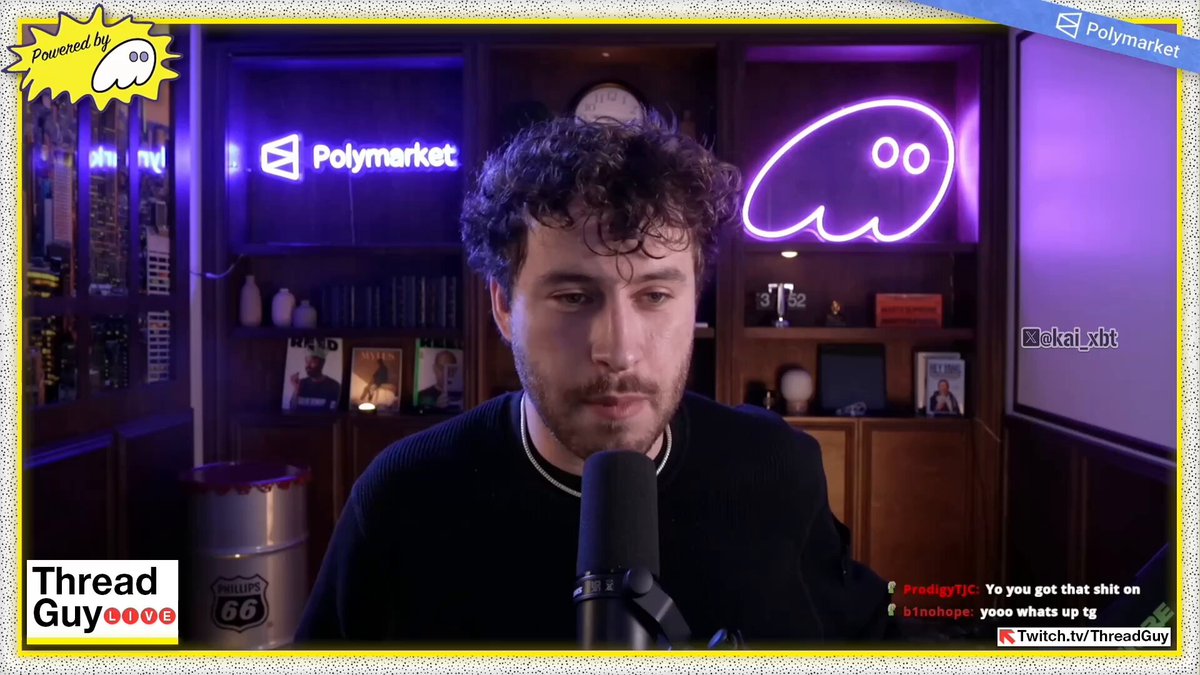
ThreadGuy explains what it's really like dating in LA "Every girl I've been on a date with the last two years either does OnlyFans or I met at a club. I'm a very sensitive honest soul and I go on these dates and I can just feel my aura being punctured and cracked and sniped every time I do it. So I stopped doing it." "Dating in LA is like turning the signal off and just going for it over the Strait right now. It's a disaster. It's a bad idea and it doesn't end well ever."
Kai
60,211 просмотров • 4 месяцев назад


![Charles Oliveira on a potential fight against Mateusz Gamrot at #UFCRio "I was focused on a guy who comes from a striking background... with two weeks left until the fight, I have to change my whole gameplan. It's very complicated. I don't want to be taken off the card. I asked for this card, I've been training like crazy for it... [Gamrot] is a good matchup for me in a sense because he's a wrestler/grappler. But it's completely different from the style I've been training for the last month or two. It's about understanding and game-planning." 🎥 Laerte Viana](https://image.24vids.com/tw-1970290319515115963/amplify_video_thumb/1970289502976360448/img/5BUo7k-HRr6Lk6-Z.jpg)


![🚨| Sir Lewis Hamilton's post-qualifying interview. "I'm so happy to be up there in the top three. I mean, it's been all year its taken me to get here, so it's been a serious mountain to climb. But finally, gel-ing with everything around me. Myself and my engineers, we're really starting to extract the performance from the car. I'm really, really happy." "Honestly, it's been a tough year. I can't believe it's taken me this long to get here, but it's okay. What matters is the journey, and I've grown a lot through it." "It's great to have two Ferrari drivers [in the top 3]. It's pretty cool. I'm grateful to be there. Charles [had] a good lap. He's been great the whole weekend, and he's always quick in qualifying." "I think, for a moment, I was like P2, and I think that'd be nice, but the inside is actually not that nice. It's quite dirty on the inside, so I'm quite grateful to be third, and I hope that I can capitalize on that. Obviously, Charles has a new tyre. I don't have a new tyre tomorrow. Same with Lando, but nonetheless, I'm P3. I think it's not a bad position to start here. I'll be quite aggressive, and I want to move forward somehow tomorrow." - F1 2025 Mexico -](https://image.24vids.com/tw-1982224798173262130/amplify_video_thumb/1982223603669094401/img/aPL0y7qtQQW4DkoG.jpg)


