Video wird geladen...

Video konnte nicht geladen werden

Zur Startseite

🛒 Forget static ads & risky Telegram payments $AICM delivers a dynamic, secure shopping experience! 🔥 Check out Sect Bot upgraded product detail page: ⭐ Real Reviews: Build trust with authentic feedback. 📊 Clear Service Breakdowns: Know exactly what you’re getting. 🛡️ Seamless Checkout: Minimize the risk of paying...

12,140 Aufrufe • vor 1 Jahr •via X (Twitter)

10 Kommentare

Profilbild von The Altcoin Sensei
The Altcoin Senseivor 1 Jahr

@thesectbot Gamechanger $AICM

Profilbild von Qwoted
Qwotedvor 2 Jahren

Build trust, boost sales. Get your products reviewed by top publications for free.

Profilbild von AriffCrypto_
AriffCrypto_vor 1 Jahr

@thesectbot ✍️✅

Profilbild von Sungit
Sungitvor 1 Jahr

@thesectbot The moon mission is on! $AICM

Profilbild von DJ Griffith
DJ Griffithvor 1 Jahr

@thesectbot This is why $AICM is the alpha

Profilbild von Kaizz Jude
Kaizz Judevor 1 Jahr

@thesectbot 100 millies loading! Lets go! $AICM

Profilbild von 🇹🇴🇳🇳🇾🇲🇦🇳
🇹🇴🇳🇳🇾🇲🇦🇳vor 1 Jahr

@thesectbot $AICM based project developments going smooth.

Profilbild von Metanoia
Metanoiavor 1 Jahr

@thesectbot Max bidding $AICM 🚀💎

Profilbild von Jeirad-
Jeirad-vor 1 Jahr

@thesectbot IYKYK $AICM

Profilbild von No1
No1vor 1 Jahr

@thesectbot $AICM 🥷

Ähnliche Videos

Radbro Webring has built something unlike anything before. Something we have been building for over a year. This is the real reason why we have been so quiet. This is the culmination of our experience and expertise in the areas of AI art, automation, and infrastructure. As many know, Radbro Webring was extremely early to the AI meta with the launch of Schizoposters in 2023. Throughout the years we have built out both our bot infrastructure as well as our generative AI capabilities. Behind the scenes we have also built custom AI models for a number of memecoin communities. As we built out our tech we did so knowing it would become the foundation of an Agents-as-a-Service platform that would allow users to generate high-quality art & content tailored to a plethora of use cases. This is the product we are announcing today: This platform enables users to train models & execute workflows via Discord/Twitter/Telegram-connected agents which can be controlled with natural language. More than a year of work and over a decade of artistic and technical experience went into building this product. The app is live at Go create some agents, train a model, and generate rad content. For now all new signups start with a free 50$ worth of credits for (login with a Webring NFT-holding ETH wallet to get 500$ worth of credits). The token for is $WEB. The token is being launched on SOL but the platform supports login and purchasing credits on ETH and SOL. The $WEB CA is 9nZ1a9EaJP5jBGH1oFvCS76FhXhAc4APHckkYa3eYcWY We have gone to extreme lengths to make sure that our bros & Webring supporters will have a stake in this launch. Allocation has been made for holders of our ETH collections as well as the Radcats collection on SOL. Airdrop will vest over 12 months and it will go through stages so please be patient. App: Docs: Discord: Streamflow (to claim airdrop on SOL): ETH Airdrop coming soon

RADBRO WEBRING (OFFICIAL)

51,327 Aufrufe • vor 1 Jahr

How to Build a Proper Product Page It breaks my heart every time I see someone from Brazil, making just $200 a month, spend $40 on a test ad only to get a $2 CPC. Then, they cut the ad at $35 spend with 17 clicks and 0 conversions. What’s even more frustrating is when I visit their site and see it’s a complete mess. It’s like they didn’t even try. That’s why I’m making this post. *Disclaimer: If you're building a brand, this isn’t for you. This is for testing products correctly with a website that’s good enough to convert, but if you’re serious about your brand, hire a Figma designer and a developer to get things done right. As a fun fact, I tested the following product myself (In the video below) and with just one click at a $3 CPC, I got a sale with an $80 AOV (100% CVR). I paused the ads because the CPMs hit $150. If you're interested, save this product for the future. I'll share the creatives i used to ran the product with those who comment below. "jordan, stop teaching high school kids about selling reps and getting them sued by Prada or other big brands, ruining their payment gateways, and crushing their dreams." (with 5 random people only will do it, wouldn't make sense for everyone to be ripping it). Shoutout to Adrian for this one. 🫡 Back to the important stuff: Let’s talk about creating a great product page. First off, ditch the “Buy Now” button. By using this, you miss out on the chance to increase your Average Order Value (AOV) through upsells during checkout. Instead, replace it with an “Add to Cart” button. Also, remove the quantity selector. Hardly anyone uses them on the product page, but they do in the cart. Instead, offer bundles, which you can set up using the Kaching Bundles app or your theme if it supports this feature. The cart experience is crucial, and you can optimize it using the UpCart app. Enable all its product page features so it takes over the standard Shopify cart or your theme’s cart. The built-in cart systems are outdated—they don’t allow upsells like UpCart does. Plus, UpCart directly opens the cart after a product is added, where the upsell option appears at the bottom, increasing your chances of boosting AOV. Pay attention to color schemes. Don’t use neutral colors for headers and buttons if your product features a primary color. A yellow jacket with a black header is like pizza with raspberry syrup—just doesn’t work. If your product images are gray, white, or black, match those with your headers and buttons. Otherwise, play around with colors to give your page some dynamic appeal. Bookmark this site to get color palettes that match your primary color. For exact color matches, download the "ColorZilla" extension, which gives you the exact color code of whatever is under your mouse on the screen. If your product color is #6E402A, you’ll know it and can match it perfectly with your header and buttons, creating a visually appealing contrast like Cider did here below. Right now, when some of you send me these websites, they look like government pages from the early 2000s. Next, consider the typography and button styles. For fonts, use Helvetica Regular for body text and Helvetica Bold for titles, both at a minimum size of 100%. It’s simple and effective. As for buttons, they should have a corner radius of 8px. To change these settings, go to the theme settings - typography/buttons and adjust the buttons and typography accordingly. Rounded buttons create a modern, inviting feel, while full square buttons can give off an outdated vibe. Even casinos in Vegas design their buildings with curves, ensuring that visitors always have a view angle that draws them back in—it’s all about keeping things appealing and engaging. Finally, the product page layout itself should be clean and concise. Use collapsible rows for your product descriptions. No one wants to read a novel, so keep it compact and focused. Images and videos are what sell—this is why we don’t use text-heavy images in our ads; they just bore people. Keep the description short, with enough information to inform but not overwhelm. If you need to include more features, put them in the FAQs section—that’s what they’re for. The goal is to make sure that the "Add to Cart" button is visible as soon as possible once the customer lands on the product page, without overwhelming them but providing just enough information—some key benefits, high-quality images, and buying options in the bundles. Once they hit the cart, the upsells will do their job. Remember, the three essential apps for setting this up are Loox Reviews for customer feedback (use the product widget reviews at the bottom of the page before the FAQs and the rating widget just above the title), Kaching Bundles for offering package deals, and UpCart for optimizing the cart experience. Just for the record, this is to help newcomers and guide them to something taht works, me personally i don't use free themes, but this one i created could convert easily if the product, offer and ads match well. Good luck and keep testing! 🗳🥂💸🤑

Zzzz

42,318 Aufrufe • vor 2 Jahren

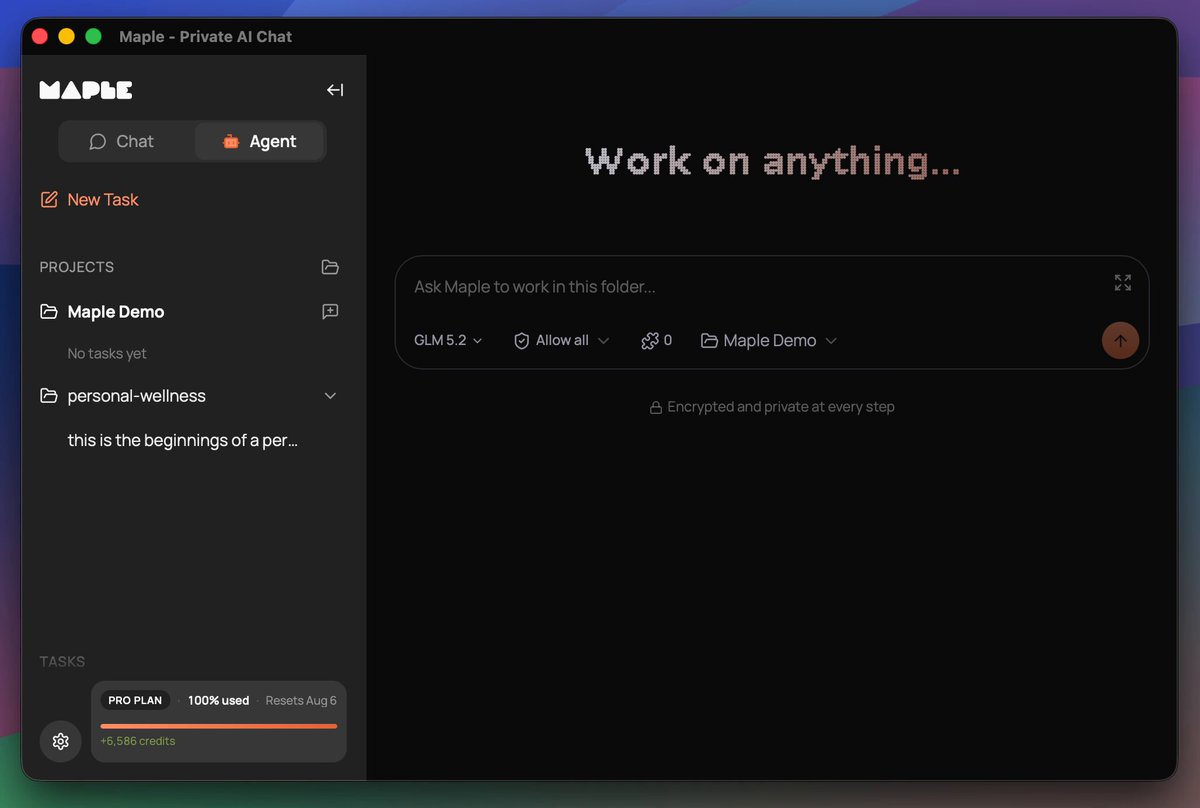
Maple is preparing for the release of a co-working agent. You install it locally and it works with your files, whether it's office work or building websites and apps. It's a turnkey solution, as easy as Claude Code, that keeps your data secure and private, no data sharing with closed AI labs. This is THE sovereign AI app for individuals and businesses who want powerful AI while retaining ownership of their information. Why build an agent into the Maple app when other agents already exist? Easy, we want to give you control over your work. We don't have a business plan that incorporates making money off our users' data. In the age of AI, your information, whether it's personal or company trade secrets, is the single thing that differentiates you from everyone else. We all have access to AI that can build a professional website for selling shoes. But your strategy and network for how you sell shoes should not be shared with your competitors. Sovereignty is the path to protecting what makes you, you. Maple sits at the intersection of Usability and Sovereignty. Maple gives you the best tools that are both easy to use and maintain your data sovereignty. Sovereign for one, sovereign for all. It has been a journey to get here. We brought to market the very first personal chatbot with end-to-end encryption using TEEs in late 2024. Prior to that there were proofs of concept but no full product offerings. Every other AI chat product on the market handled your data in plain text, either selling you a service to get your data or asking you to trust that they won't snoop on you. Quickly people found Maple and latched onto its open-source code and verifiable encryption. We didn't stop there. You may remember earlier this year we teased a product called "Maple Agent" and opened up a waiting list. That product is a mobile app that acts as your AI "friend", maintaining one long continuous chat, and getting to know you over time. I dislike using the word "friend" there, but it's the best way to convey the UX in a few words. AI is a tool, always has been, always will be. Any kind of friendly personality on top is just synthetic. In our testing, the UX of Maple Agent is really powerful for what it does. Think about the many short AI chats you have in your favorite app, whether it's looking up a historical fact or asking advice about a topic. With Maple Agent, those all go away in favor of the long-running chat with the friendly agent. It's like you have your own personal assistant who knows you so well and can look up anything for you. When I ask AI certain questions, I want to ask an expert who already understands my situation so I'm not repeating myself for the 100th time. That's the amazing value the personal agent brings to the table. We still see great utility for a personal agent like the "Maple Agent". Thousands of people on the waiting list, hoping to get their hands on it, agree that the concept is worth exploring and trying out. We were constrained in launching it due to a few circumstances, one of them being access to the scale of compute needed to power it. We have a clear path laid out for how to get there, but today is not the day to execute on that. It will be in the near future. Instead we have a different agent ready to go that we think is also incredible. We now have an agentic harness inside of the Maple Research app. This thing is a powerhouse. It even builds and publishes its own software releases. The agent in Maple Research works with your local filesystem, speaks to the largest open models running in TEEs, utilizes local models for certain tasks, is compatible with MCP tools, has an API for connecting to anything you need, and also supports the ACP protocol, which means it can be extended in the future to speak to other tools like Claude Code, Codex, and local models running on your own hardware. A big unlock for us was the Goose Development Kit, which powers the core of our agent harness. More on that to come as we publish articles and documentation later about the agent. The agent inside Maple Research doesn't have a name. At least not yet, not sure if it ever will. For now we call it "Chat Mode" and "Agent Mode". Think of this as the workhorse, the truck, the heavy lifter. Our other "Agent", the phone app, is your sidekick in your pocket, ready to help with quick things and ongoing conversations about life. I am incredibly excited about the Maple Research Agent. While I'm already seeing great results using it for internal work items, I'm especially thrilled about the personal health and wellness work it's doing for me. I know there are plenty of apps out there for compiling wellness data, but I'm having it build a tool tailored specifically for what I need, without the extra fluff. And none of my health data is being donated to the closed AI labs or sent to advertisers. I know that the AI logic is not being silently adjusted to fit the whims of a large corporation that has paid for product placement. It's me, state of the art AI, and my data. That's how I want it. Maple's new agent makes that possible. We can't wait for you to try it out. If you want early access, comment here, email us, reach out in some way. To those on the other agent waitlist, you're already in the queue. Thanks for reading this lengthy update. :)

Mark

46,589 Aufrufe • vor 1 Monat

"Close to 100% of the features we build end up being used by a significant number of people." —Eilon Reshef, co-founder and CPO of Gong To make this happen, every product team at Gong works with 6-12 design partners on every new feature and product idea. As a result, unlike what most companies experience, almost everything they build ends up being widely adopted. In my conversation with Eilon, we dig into: 🔸 How specifically Gong's teams work with design partners 🔸 Lessons learned from being early in AI 🔸 Gong's early super-narrow ICP 🔸 Why you should make big decisions quickly 🔸 His “spiral method” for learning complex topics fast 🔸 How and why Eilon encourages radical autonomy 🔸 More Listen now 👇 • YouTube: • Spotify: • Apple: Thank you to our wonderful sponsors for supporting the podcast: 🏆 WorkOS — Modern identity platform for B2B SaaS, free up to 1 million MAUs: 🏆 Vanta — Automate compliance. Simplify security: 🏆 Think Fast, Talk Smart: The Podcast — Tools and techniques to help you communicate more effectively: Some key takeaways: 1. At Gong, product teams are organized into autonomous “pods,” each consisting of a product manager, UX designer, a few engineers (front-end and back-end), and fractional roles like analysts and writers. Each pod is assigned a clear job-to-be-done, such as improving sales engagement or forecasting accuracy, and takes full ownership of the product development process. Whether it’s improving sales engagement or forecasting accuracy, each pod runs with full ownership. This is how you get teams to move fast and stay aligned. 2. Gong’s pods don’t just build in isolation—they partner with 12 to 20 design partners (existing customers) who give feedback every step of the way. This constant validation keeps the product on track, with about 95% of features actually getting used. 3. If you want more autonomy and speed, you’ve got to trust your team and give them the freedom to experiment. This means that as a leader, you need to step back, give up some visibility, and accept that you’ll make a few mistakes. The tradeoff is worth it—higher velocity, better morale, and more impactful products. 4. To quickly learn a complex topic, use the “spiral method.” Start by speaking with one expert, then ask for recommendations on who else to talk to. Continue having conversations, gradually deepening your understanding. As you hear the same patterns and insights from multiple sources, you’ll know you’ve reached a sufficient depth to make informed decisions. This iterative approach helps you gather knowledge without aiming for perfection right away. 5. When starting out, extreme focus on a specific customer profile can drive faster success. Gong, for example, initially targeted U.S. companies selling software valued between $1,000 to $100,000 via Webex, narrowing their potential customer base to just 5,000 people. This laser focus enabled quicker product-market fit, word-of-mouth growth, a clear product direction, and easier customer acquisition, demonstrating the power of precision in the early stages. 6. When faced with a 51/49 decision, make it quickly. The more time you spend deliberating, the more energy you waste without improving the decision quality. This approach doesn’t work for massive, one-way decisions like expanding to a new market or acquiring a company, but for most day-to-day decisions, don’t wait until everything’s perfect. Commit, move forward, and adjust as you go.

Lenny Rachitsky

47,433 Aufrufe • vor 1 Jahr

20 ChatGPT Vision/GPT-4V Prompts to Elevate Your Business. Supercharge your business decisions with AI insights. [🔖Bookmark for future reference] 1. Ad Effectiveness Review Prompt: "Review this ad draft for our upcoming (user-specified event, e.g., 'Black Friday sale'). Break down the visual elements for clarity, emotional impact, and brand alignment, then suggest changes to improve conversions." 2. Email Campaign Visuals Feedback Prompt: "Analyze the visuals in this email campaign for our (user-specified product line, e.g., 'summer collection'). Evaluate the visual flow, image-to-text balance, and color scheme, offering steps to enhance attention and cohesion." 3. Landing Page Conversion Analysis Prompt: "Review this landing page for our (user-specified campaign, e.g., 'new software launch'). Point out user friction areas, suggest improvements for call-to-action visibility, and recommend design tweaks to build trust." 4. Packaging Design Assessment Prompt: "Look at the design of this packaging for our new (user-specified product, e.g., 'organic tea range'). Assess its market distinctiveness, readability, and emotional appeal, and offer design recommendations for better shelf appeal." 5. Social Media Post Review Prompt: "Assess this draft of our social media post for (user-specified event or day, e.g., 'World Coffee Day'). Examine its potential engagement, authenticity, and visual appeal, suggesting methods to increase interactions and reach." 6. Logo Redesign Feedback Prompt: "Check our redesigned logo for the (user-specified market, e.g., 'youth sports gear'). Evaluate its adaptability across platforms, memorability, and target audience relevance, providing feedback for refinement." 7. Sales Brochure Analysis Prompt: "Examine this sales brochure for our (user-specified service, e.g., 'cloud hosting solutions'). Highlight areas of strength and suggest design or content areas that could be more compelling." 8. Product Image Review Prompt: "Evaluate these product images intended for our online store featuring (user-specified product type, e.g., 'handmade jewelry'). Suggest changes to improve clarity, appeal, and potential sales conversion." 9. Newsletter Layout Critique Prompt: "Analyze this newsletter layout intended for our monthly (user-specified topic, e.g., 'tech innovations update'). Point out visual or content segments that could be made more engaging or clear." 10. Business Report Presentation Prompt: "Assess this business report presentation for our upcoming (user-specified event, e.g., 'shareholder meeting'). Offer feedback on data visualization, clarity, and overall professional appeal." 11. Press Release Format Prompt: "Review this press release format for our upcoming (user-specified announcement, e.g., 'merger news'). Suggest changes to improve clarity, engagement, and media appeal." 12. Product Tutorial Clarity Prompt: "Evaluate this product tutorial for our (user-specified product, e.g., 'smart blender'). Recommend steps to make instructions clearer and more user-friendly." 13. Membership Card Design Prompt: "Review our new membership card design for our (user-specified program, e.g., 'loyalty rewards'). Suggest changes for improved visual appeal and brand representation." 14. E-commerce Site Review Prompt: "Evaluate our e-commerce site focused on (user-specified product category, e.g., 'vintage apparel'). Offer insights to improve navigation, product presentation, and checkout experience." 15. Workshop Flyer Review Prompt: "Check out this flyer for our upcoming workshop on (user-specified topic, e.g., 'digital marketing trends'). Recommend design or content enhancements to boost registrations." 16. E-book Cover Feedback Prompt: "Review the cover of our e-book titled (user-specified title, e.g., 'The Future of E-commerce'). Provide feedback for visual impact, readability, and market appeal." 17. Mobile App Interface Review Prompt: "Check out the user interface of our mobile app created for (user-specified purpose, e.g., 'inventory management'). Highlight usability areas of concern and provide design improvement suggestions." 18. Product Launch Teaser Evaluation Prompt: "Review this teaser image for our upcoming product launch in the (user-specified category, e.g., 'smart home devices') sector. Assess its intrigue factor, clarity of the hint, and alignment with our brand identity. Provide recommendations to ensure maximum anticipation and online buzz leading up to the launch." 19. Viral Marketing Campaign Potential Prompt: "Examine this visual concept for our planned viral marketing campaign targeting (user-specified demographic, e.g., 'Gen Z on TikTok'). Evaluate its potential reach, emotional connection, and call-to-action strength. Offer insights and tweaks to maximize chances of trending and high engagement on platforms like X." 20. Corporate Video Thumbnail Analysis Prompt: "Evaluate the thumbnail chosen for our corporate video about (user-specified subject, e.g., 'company culture'). Suggest changes to increase click-through rates and viewer engagement." ————————————————— Thanks for reading! If you enjoyed this post, feel free to: 1. Repost to share the knowledge with your audience. 2. Follow Bryan Marley for more high-value AI insights. Which prompt did you like the most? Let me know in the comments! 👇🏾

Bryan Marley

74,367 Aufrufe • vor 2 Jahren

Here is how I am using AI right now at work, at home, and for my finances... Every founder, executive or investor I talk with these days wants to know how others are using AI in their daily lives. I figured it would be helpful to pull back the curtain on what I am using and how I have implemented the various products. There are three areas where I have adopted AI in a material way: professionally, financially, and personally. Professional use of AI On the professional side, I am currently using Grok Grok Bot extensively. I started with a Chief of Staff bot that I put in charge of the entire operation, followed by a number of more specialized bots for various bodies of work (talent recruiter, product designer, podcast researcher, book launch manager, email organizer, etc). Once I had the initial team of bots set up, I spent about an hour “onboarding” the Chief of Staff to my professional life. I treated this exactly how I would onboard a human Chief of Staff. I explained each business I am involved with, including their products, business model, personnel, metrics, and goals. I explicitly called out what the business is doing well and where we need to improve. I also gave the Chief of Staff access to relevant systems (email, calendar, Slack, analytics dashboards, etc). Once I had given as much context as I thought necessary, I asked the Chief of Staff to create an overview document to send me so I could double-check the accuracy and thoroughness of the bots understanding. I also asked the CoS bot to interview me for any other information that would be relevant to ensuring the bot could help me. This entire process was fairly quick and painless, but I believe it was the single most important thing I did to get value from Grok Bot. The more context that the AI system has, the more helpful it can be. That context can come from static, institutional knowledge or it can come from dynamic daily updates like email and Slack messages. After getting the bots set up and giving them context, I have done two other things that I think are worth sharing. The first is that my team of bots holds a daily standup meeting where they all come together and share what they did yesterday, what they are going to do today, and what they need my help or approval on (aka what they are blocked on). These “exec meeting” or daily standup allows for the bots to collaborate in a more seamless way, while also creating a very simple process for the Chief of Staff bot to put together a daily brief for me on what happened yesterday, what is going to happen today, and where I am needed to unblock productivity. The second thing I have done is treat the AI system as the brain of the company. Most people try to use AI as an augmentation to themselves, which can be helpful to a degree. I have flipped the relationship though. I look at my job as persistently giving the AI bots as much context as possible, so I can leverage their superhuman intelligence to make decisions and achieve our goals. For example, the recruiter bot recently surfaced a number of very high-quality candidates for an open role we have. After meeting with each candidate, I wrote a quick message to the recruiter bot to tell it what I liked about the person, what I thought were potential issues, improvements for future searches, and what the next steps were with each individual. All of that information and context is getting stored in the bot’s memory, which will compound over time and help us improve as an organization. Quick pro tip: If you are worried about putting all of the context into a single system’s memory, but unsure if that is the system you will use forever, you can have Grok Bot or another system dump their memory and context into a Notion document as well. This way you have a duplicate copy of the memory so it can be referenced by any AI system you use in the future. My takeaway from using Grok Bot to manage our companies is that we are having to hire less people, we are seeing a direct impact on revenue growth, and it appears to drive higher quality in our decision-making process. That is a win-win-win. I highly recommend going through these steps to setup your system correctly and it will pay off big time later on. Financial use of AI On the financial side, it was nearly impossible to find a good AI product to use for personal finance. Everything seemed to be a Chat-GPT wrapper that technically worked from an engineering standpoint, but didn’t solve any of the user problems I was facing. A big issue is that most of the fintech products are focused on budgeting and saving, rather than investing and growing your portfolio. This is why I eventually spent the time and money to build CFO Silvia. I went through a similar process of getting Silvia set up with the necessary context. I attached my bank accounts, brokerage accounts, crypto accounts, and credit cards, along with uploading real estate, cars, collectibles, and private investments. Silvia allows me to dynamically track the value of these assets (and my overall net worth) in real-time. But the real unlock for me has been talking to Silvia about two specific topics: tax and estate planning. As most of you know, I am not a frequent trader, so although you could use Silvia for stock analysis or trading activities, that is not my approach to investing. Instead, I have had great success in using Silvia to find creative and valuable tax mitigation strategies that are personalized to my situation, including ideas that had not previously been surfaced by my accountants, lawyers, or tax experts. Additionally, I have used Silvia for estate planning purposes. I am married and have four children, so there is a decent amount of complexity and opportunities to pursue. Having a dedicated resource with superhuman intelligence and the full context of my personal financial situation has been incredibly powerful. One funny thing I have noticed is that I am willing to tell Silvia certain things that I would hesitate to tell other humans (financial goals, areas of concern, etc) and I ask numerous “dumb” questions that I would probably shy away from asking a human. Regardless of why I feel more comfortable talking to the AI product, it has unlocked a few different ideas and strategies that I was previously unaware of, so that has been an added bonus to using the product. If you aren’t using AI to help manage your finances, I think it is a no brainer to start using the technology. I am biased towards Silvia since we built it, but you can give it a try for free here: Personal use of AI On the personal side, I use almost all of the traditional AI products (Chat-GPT, Claude, Grok, Gemini, Perplexity, etc). Those are well understood at this point, but one product that I started using recently that I am impressed with is Instinct AI. They have built a personal assistant AI bot that you communicate with through iMessage or SMS. The experience has been delightful, but I am most excited about the bot’s ability to anticipate the second or third-step in a process before I have to tell it anything. For example, Instinct got access to my calendar and immediately started identifying scheduling conflicts and asked me if I would like the bot to reach out to one of the parties to reschedule. I never told it to look for conflicts, nor did I tell it I wanted help rescheduling things. It’s “instincts” knew what the basic task would be and began executing. Another example is that Instinct was told my wife is Polina, so whenever it deems something important to the household or family, Instinct will add Polina to the calendar invite, communicate the information to her, or ask me if Polina should be aware of the information. This is very helpful for someone like me who has too many things floating around in my brain and should always do a better job of keeping Polina informed about various things. Lastly, Instinct is very helpful in scanning my personal email and understanding what is most important. It ignores things that are trivial, but somehow can parse out the high priority items, summarize them for me in a text message, draft a response to the email, and then ask me for permission to respond. As I said, it is the most impressive personal assistant AI product I have used so far. So those are the three big areas that I use AI today and the specific products I have incorporated into my life. Before I let you go, I figured I could share some best practices I have learned as well. I also make sure to tell AI bots they are not allowed to respond to any message or email without my explicit approval. This reduces the risk of having a bot go rogue with a message or commitment that I am not onboard with. I also ensure that each bot only has read access to our business systems like an analytics dashboard, etc. While I am a big proponent of using these products and believe they will fundamentally transform how we operate professionally, I am still not ready to let them loose without human oversight. I am sure that will change in the coming weeks and months, but I need more time to get comfortable with that level of delegation and trust. I hope this overview was helpful for each of you. It would be great if you could respond to this post with any products you are using or tips/tricks that you have learned to get more productivity and value in your life. I love writing these letters each day because I learn just as much from me as I learn from you all. Onwards!

Anthony Pompliano 🌪

83,069 Aufrufe • vor 10 Tagen

Just pulled up Olipop's landing page after seeing their ads everywhere lately and I need to break this down because this is one of the cleaner DTC pages I've seen in a while. Here's what's actually happening when you land on this page and why it converts cold Facebook traffic better than 90% of ecom brands right now: 1) The first 3 seconds Before you read a single word, there's a video of the product being poured, fizzing, bubbling and condensation on the can with no voiceover or text overlay. Your brain processes that faster than any headline ever could. You can almost hear the fizz. That's intentional. They're triggering a sensory response before your logical brain even wakes up. Then the headline hits. "A New Kind of Soda." Now that's a category repositioning. They're not saying "healthy soda" or "better soda." They're saying the entire category you grew up with needs a new version and this is it. Sub-headline says high fiber, less sugar. Targets exactly the person who clicked the health-focused ad on Instagram. Message match is perfect. The person who clicked the ad lands here and immediately feels like the page was made for them. 2) The product carousel Most brands mess this up by showing you the product and making you go through three more pages to add it to your cart. Olipop lets you hover over any flavor and an "Add 12 Pack" button appears right there. One click. Done. You never leave the homepage. That little micro-interaction is doing serious conversion work because every extra click you require is a percentage of buyers you lose. They basically short-circuited the whole buying process and most people don't even notice it's happening. Star ratings under every flavor. Smart. You're not waiting until the reviews section at the bottom to see social proof. It's right there next to the product at the exact moment you're deciding what to buy. Then there's the "Limited" and "Out of Stock" tags on certain flavors. This is a psychological move that a lot of brands either don't use or use badly. When you see Shirley Temple is sold out your brain immediately thinks this must be good enough that people are actually buying it. And now you're looking at everything else thinking you better grab it before it's gone too. 3) The retention play At this point you haven't bought yet and they already know some people won't on the first visit. So right here they drop the rewards program section. Trade your email for perks and points. They're not letting you leave empty handed. Either you buy today or you give them your email so they can bring you back. Both outcomes work for them. Then comes the subscription nudge. 15% off. Free shipping. Cancel anytime. Three objections handled in one sentence. 1. Too expensive? 15% off. 2. Annoying to reorder? Free shipping straight to your door. 3. Scared of being locked in? Cancel whenever you want. That's a complete objection removal stack built into what looks like a simple banner. The people who weren't ready to buy a 12-pack today are looking at that and doing the math. 4) The press section Bloomberg. Forbes. BuzzFeed. Mindbody. This section exists for one reason. You clicked an ad from a brand you'd maybe seen once or twice before. You don't fully trust them yet. These logos close that gap in about half a second. It's institutional validation. You don't need to read the articles. Just seeing the logos tells your brain people with real credibility have looked at this and thought it was worth covering. Background behind this section is a high-res macro shot of condensation on the can. Cold. Refreshing. Premium. Even the section design is doing sensory work. 5) The overall lesson What Olipop figured out is that a landing page for Facebook traffic has one job. Close the trust gap between the ad and the purchase as fast as possible without losing the energy the ad created. Every section of this page does exactly that. Sensory hook gets you in. Category positioning tells you what it is. Carousel with inline add to cart removes friction. Social proof and scarcity show demand. Subscription offer removes price and convenience objections. Press section provides institutional trust. By the time you hit the footer you either already bought or you gave them your email. That's not a landing page. That's a conversion machine. If your page isn't doing all of this right now, that's where your revenue is leaking. Not in the ads. In what happens after the click. DM me ‘FUNNEL’ and I'll show you exactly how to build something like this for your brand.

Nick Theriot

26,389 Aufrufe • vor 6 Monaten

Made $530,000 with Ai Bot that started with $313. Didn't know how to code. Now this bots run 24/7 printing money while sleeping. I've made the exact step-by-step guide to build this Claude Code Polymarket trading bot. Prompts. Code. Risk settings. Paper trading checklist. Everything from zero to running bot. It's free. For 24 hours. After that I'm charging $499 for it. To grab it right now: 1. Comment "Claude Bot" 2. Like and Retweet this post 3. Follow me Himanshu Kumar ( I can't send DMs to non-followers ) I'm DMing everyone who Complete the 3 steps. I spent hundreds of thousands hiring developers because he was too scared to learn. Then learned Claude Code. Built algorithmic trading systems. $313 → $530,000. You have the same tools available right now. And you're using them to ask ChatGPT for Instagram captions. This attached video is a goldmine. Full live walkthrough. Claude Code building actual Polymarket trading bots. From zero. Every line of code. Every decision explained. Now let me break down why everything you're doing in trading is wrong and exactly how to fix it. Save this post. You'll hate yourself if you lose it. ↓ Let's start with why you keep losing money. You already know the answer. You just won't admit it. You overtrade. Every. Single. Day. You see a candle move. You feel something. You enter. No plan. No edge. No reason. Just feelings. Then it goes against you. You feel something else. Panic. Anger. Denial. You move your stop loss. Or you didn't set one at all. "It'll come back." It doesn't come back. So you take another trade. A revenge trade. Bigger size this time. Because you need to "make it back." That one fails too. Now you're emotional. Now you're tilted. Now you're using leverage you have no business touching. 40x. 50x. 100x. On a trade you entered because a candle looked "bullish" and some guy on Twitter said "send it." You get liquidated. Close the laptop. Punch something. Tell yourself you'll be "more disciplined" tomorrow. Tomorrow comes. Same cycle. Same result. Same liquidation. You've been doing this for months. Maybe years. And you still think the problem is your strategy. The problem isn't your strategy. The problem is you. Save this post right now. What I'm about to show you is the only way to remove yourself from the equation. Follow Himanshu Kumar so you don't miss any of this. ↓ Here's what's actually killing your account. It's not the market. The market doesn't care about you. It's not your indicators. RSI works fine. MACD works fine. They all "work." It's not your timeframe. It's not your broker. It's not the "manipulation." It's four things: 1. Emotions. You hold losers because hope feels better than loss. You cut winners because fear feels stronger than greed. You size up when angry. You skip trades when scared. Your emotional state determines your position size. That's insane. And you know it's insane. But you keep doing it. 2. Overtrading. You take 15 trades a day. Maybe 5 of them had actual setups. The other 10 were boredom. Boredom trades are the most expensive hobby in human history. 3. Leverage. You use 20x-50x on trades where you're not even sure about the direction. That's not trading. That's a casino with a nicer interface. 4. Fees. You're smashing market orders. Paying spread. Paying commission. On 15 trades a day. Your broker makes more money from your account than you do. Think about that. Your broker is profitable on your account. You're not. You're the product. Not the trader. These four things are why 90% of traders lose. Not bad luck. Not the market. You. Save this post and follow Himanshu Kumar because the solution is coming next. ↓ The solution is painfully obvious. Remove yourself from the equation. Not partially. Not "I'll be more disciplined." Not "I'll journal my trades." Not "I'll meditate before trading." Completely remove yourself. Build a bot. Let the bot trade. You go live your life. The bot doesn't feel emotions. The bot doesn't overtrade. The bot doesn't use reckless leverage. The bot doesn't smash market orders and bleed fees. The bot follows the rules. Every single time. Without exception. Without "just this once." Without "I have a feeling about this one." Rules in. Execution out. No human in the middle to mess everything up. That's algorithmic trading. And before your ego jumps in with "but I'm different, I have discipline" — No you don't. Your account balance proves you don't. If you had discipline, your account would be green. It's not. So you don't. Accept it. Automate it. Move on. This is the hardest truth in trading. Your discipline will always fail. A bot's won't. Save this post. Follow Himanshu Kumar for the exact bot setup that removes your emotions permanently. ↓ "But I don't know how to code." Neither did he. The guy in this video didn't know how to code for most of his life. Got held back in 7th grade. People counted him out early. Spent years building apps and SaaS businesses without writing a single line of code. Hired developers on Upwork instead. Spent hundreds of thousands of dollars paying other people to build what he could have built himself. Because he was scared to learn. That fear cost him years. And hundreds of thousands of dollars. Sound familiar? You're doing the same thing right now. Not with developers. But with your time. You're spending thousands of hours trading manually because you're scared to learn the thing that would make trading automatic. The fear of learning to code is costing you more than any bad trade ever did. Because every month you trade manually is a month of emotional decisions, overleveraged entries, and unnecessary losses that a bot would never make. And here's the thing that should really frustrate you: AI does the hard parts now. You don't need a computer science degree. You don't need to work at a hedge fund. You don't need to be "good at math." Claude Code writes the code for you. You just need to think clearly about trading ideas. That's it. If you can describe a strategy in English, Claude can build it in Python. "I don't know how to code" stopped being a valid excuse in 2024. It's 2026. You're 2 years late on that excuse. Find a new one. Or stop making excuses entirely. Save this post. Follow Himanshu Kumar because I'm showing you how people with zero coding experience are building profitable bots. ↓ The process that actually makes money. Three letters. R. B. I. Research. Backtest. Implement. That's it. That's the entire process. Every single day. Research: Find an idea. A pattern. A market inefficiency. Don't trade it yet. Don't even think about trading it yet. Just research it. Backtest: Test the idea against historical data. Does it work? Not "does it look good on one chart." Does it work across thousands of trades? Across different market conditions? Across in-sample AND out-of-sample data? If no, kill it. Find another idea. If yes, move to step 3. Implement: Build the bot. Deploy it. Paper trade first. Then live with small size. Scale only on evidence. Research. Backtest. Implement. Every day. No exceptions. You know what your current process is? Feel. Enter. Pray. F. E. P. Feel bullish. Enter a trade. Pray it works. That's not a process. That's gambling with a TradingView subscription. RBI is the only process that works. Save this post. Tattoo it on your forearm. Follow Himanshu Kumar for daily RBI breakdowns. ↓ What Claude Code actually does that your manual process can't. You can maybe test 3-5 strategy ideas per week. Manually adjusting parameters. Manually checking results. Manually writing code (badly). Claude Code tests 50-100 ideas per week. With parallel agents running simultaneously. Multiple strategies being built, tested, and validated at the same time. While you sleep. The guy in this video spends 4-8 hours a day building systems with Claude Code. Not trading. Building. Research. Backtest. Implement. Then iterate. Improve. Optimize. Every day the systems get better. Every day the edge compounds. Every day the bots get smarter. While you? You spend 4-8 hours a day staring at charts making the same mistakes you made last month. Same indicators. Same patterns. Same entries. Same losses. He's iterating forward. You're running in circles. Same 8 hours per day. Completely different outcomes. Because he's building systems. And you're feeding a casino. Stop feeding the casino. Start building the machine. Save this post and follow Himanshu Kumar for the Claude Code workflow that iterates strategies while you sleep. ↓ Jim Simons. That's the benchmark. You probably don't know who Jim Simons is. And that tells me everything about how seriously you take trading. Jim Simons. Mathematician. Founded Renaissance Technologies. Built a net worth of $31 billion. 100% from algorithmic trading. Not one single manual trade. Not one "gut feeling" entry. Not one RSI divergence. Not one "smart money concept." Algorithms. Bots. Systems. Data. $31 billion. His fund averaged 66% annual returns for over 30 years. While you're excited about making $200 on a trade that you'll give back tomorrow. The best trader in human history never placed a manual trade in his life. And you think your edge is staring at a 5-minute chart with bloodshot eyes at 2 AM? Your edge is building the system. Not being inside it. Jim Simons is the benchmark. Everything else is noise. Save this post. Follow Himanshu Kumar because I'm building toward the same goal and showing every step publicly. ↓ What you need to understand about patience. This is not get-rich-overnight. The guy in this video says it directly: "This channel is not for people looking to get rich overnight. It's not plug and play. There are no shortcuts. If you're impatient, this probably isn't for you." And that's exactly why most people will fail at this. Because you want results now. Today. This trade. You don't want to spend a week building a bot. You don't want to paper trade for 2 weeks. You don't want to test 50 ideas to find 1 that works. You want to copy someone's bot, run it live with your rent money, and be rich by Friday. That's why you'll be broke by Friday. The guy making $2.3M spent months iterating. Testing. Failing. Rebuilding. Testing again. He was patient when you would have quit. He was calm when you would have panicked. He was consistent when you would have given up. Patience isn't just a virtue in trading. It's the only virtue. Without it, everything else fails. Impatience is the most expensive personality trait in trading. Save this post. Follow Himanshu Kumar and learn to build systems with the patience that actually pays. ↓ The live streams where the real learning happens. The YouTube video is the trailer. The live streams are the movie. Real-time bot building. Real-time questions answered. Real code shown. Real mistakes made and fixed. Not polished highlight reels where everything works perfectly. Actual development. Where things break. Where strategies fail. Where code doesn't compile. Where the fix takes 2 hours. Because that's what real development looks like. And seeing the messy parts is more valuable than any polished tutorial. Because when your bot breaks at 3 AM, you need to know how to fix it. Not just how to celebrate when it works. The streams mix beginner and advanced. Start with how to automate trading. How to use AI for code generation. Then dive into the daily work. Claude Code. Parallel agents. Constant iteration. Live debugging. 4-8 hours of real algorithmic trading development. Live. Uncut. No filter. Most "trading education" shows you the wins. This shows you the work. Save this post. Follow Himanshu Kumar for the stream schedules and breakdowns. ↓ The belief that changes everything. Code is the greatest equalizer. Not money. Not connections. Not a degree. Not where you grew up. Not what school you went to. Code. Once you can build systems, you can build anything. For the rest of your life. A trading bot today. A SaaS product tomorrow. An automation business next month. A completely different life next year. The skill isn't "algorithmic trading." The skill is building systems. And that skill transfers to everything. The guy who can build a trading bot can also build a lead gen tool. Can also build a content pipeline. Can also build a SaaS product. Can also build literally anything that runs on logic and code. One skill. Infinite applications. And AI makes learning it 100x easier than it was 5 years ago. You don't need to be smart. You don't need talent. You need Claude Code and the willingness to sit down and build something instead of consuming content about building something. Building is the skill. Everything else is entertainment disguised as education. Save this post. Follow Himanshu Kumar because I'm showing you how to build, not just how to watch. ↓ If any of this applies to you, pay attention. If you've lost money from overtrading. If you've been liquidated. If you know trading is the vehicle but manual execution keeps crashing you. If you've tried "being more disciplined" and it never lasted more than a week. If you keep saying "next month I'll start automating." If you've spent more money on courses than you've made from trading. There is a better way. It's not a magic indicator. It's not a signal group. It's not a $997 mentorship from a guy who makes money teaching, not trading. It's building your own system. A system that trades without emotion. A system that follows rules without exception. A system that runs while you sleep. A system that compounds while you live your life. That's the answer. It's always been the answer. You've just been too scared to accept that the solution requires building something instead of buying something. ↓ What the next 30 days look like if you actually commit. Week 1: Watch the video. Learn Claude Code basics. Build your first simple strategy. Run your first backtest. Week 2: Iterate. Let Claude improve the strategy. Run Monte Carlo validation. Paper trade. Week 3: Go live with $50-100. Tiny positions. Watch every trade. Compare to paper results. Week 4: Scale based on evidence. Not based on excitement. Not based on one good day. Based on data. 30 days from now you either have a running bot that trades without your emotions destroying every position. Or you're exactly where you are right now. Reading another post. Making another promise. Breaking it by Tuesday. Same 30 days either way. Different actions. Different results. Different life. ↓ Full video tutorial attached. Live bot building with Claude Code. From zero to running Polymarket trading bot. Every line of code. Every decision explained. The video is free. Claude Code is available now. The market is open 24/7. The only thing standing between you and a profitable trading bot is the same thing that's been standing there for months. You. Get out of your own way. Follow Himanshu Kumar for daily AI trading bot breakdowns, live build sessions, and the full RBI process. Save this post. Watch the video. Build the bot. Or keep trading manually and keep losing. The choice has never been easier. And you've never been more stubborn about making the wrong one.

Himanshu Kumar

38,101 Aufrufe • vor 5 Monaten

The new Google Search is rolling out. Information Agents are now appearing inside AI Mode. These agents operate in the background 24/7, continuously monitoring the web for information matching the customer’s exact requirements. When something relevant changes, Google can send them a detailed update with links to the web. For businesses, this changes things a lot. Let’s go through it together. And if you want to see whether your business is already appearing across Google AI, ChatGPT, Claude, Perplexity and Grok, check here. It’s free: Google originally announced Information Agents at Google I/O in May. They are now available across all AI Mode languages and markets for Google AI Ultra subscribers. Google says access will expand to more people this summer. The process is fairly simple in that a user tells AI Mode what they want to monitor. For example: “Keep me updated when a new apartment matching these requirements becomes available.” “Alert me when one of my favorite athletes announces a sneaker collaboration.” Another possible use case could be: “Tell me when this product comes back in stock.” Google’s agent then works in the background and sends an update when it finds something relevant. Google says Information Agents can monitor: Blogs News websites Social posts Other web content Real-time shopping information Finance data Sports information The agent searches for changes related to the user’s specific question. This creates a new type of search visibility. A customer no longer needs to return to Google and repeat the same query every week. They can describe what they need once and let Google monitor the web for them. For businesses, that creates opportunities to appear after the original search has ended. Imagine someone tells Google: “Keep me updated on payroll software that adds better support for construction companies with employees and contractors.” Several weeks later, your company publishes: A new contractor-payment feature A construction-specific product page Updated pricing A QuickBooks integration A customer case study A comparison with another payroll platform Google’s agent may encounter that information while monitoring the topic. Your company can reach the customer at the moment your product becomes more relevant to them. This is my interpretation of what the rollout means for businesses. Google has not disclosed exactly how Information Agents select which pages or companies to include. But we do know the updates can contain links to the web. That creates a potential traffic opportunity for businesses publishing information that closely matches what customers are monitoring. A vague announcement such as: “We are excited to introduce several powerful improvements.” gives Google less specific information to match against the customer’s request. A clearer announcement might say: “Our payroll platform now supports automated contractor payments in all 50 states. The feature is available today on plans beginning at $149 per month and integrates with QuickBooks Online.” That gives the agent specific facts it can match to the customer’s request. This is where SEO Stuff’s done-for-you package becomes relevant: The package combines 10 AI-search-optimized articles with three DR50+ authority placements. The content can cover: New products and features Industry-specific use cases Pricing Integrations Comparisons Customer results Frequently changing information The authority placements reinforce the company’s identity, category and claims across other credible websites. Google has not said that Information Agents directly measure Ahrefs Domain Rating or backlinks. That connection is my interpretation of how businesses can become easier for Google to discover and verify across the web. Information Agents also make freshness more commercially important. A page published two years ago may still rank well. But if it has not been updated, it may not tell Google about: A newly launched feature A recent price change A product coming back in stock A new service area An updated integration A current customer result A newly published report Businesses need a system for keeping important information current and publishing meaningful updates when something changes. This does not mean publishing a constant stream of thin announcements. The update still needs to contain something genuinely useful. That could include: New product information Original research Current pricing Inventory changes Industry data Detailed case studies New integrations Updated comparisons Specific customer results The Premium Content Bundle can help build that broader information footprint: It includes 60 long-form articles mapped across the questions, comparisons and use cases surrounding a business. The goal is to create useful pages covering the different needs a customer may ask Google to monitor. One customer may care about pricing. Another may care about a specific integration. Another may be waiting for a feature. Another may want a product designed for their industry. Another may want evidence that the service works. Each page creates another opportunity for an Information Agent to discover the business while monitoring the web. This rollout also makes brand consistency more important. Google may encounter information about your company across: Your website News coverage Social posts Industry publications Review websites Comparison pages Customer discussions If those sources describe the company differently, Google has to determine which information is current and accurate. Clear and consistent information gives the agent stronger evidence to work with. If I had to reduce this rollout to one core idea, it would be this: Search is becoming continuous. The customer describes what they need. Google monitors the web in the background. A relevant change can trigger an update. That update can include links to supporting websites. For businesses, visibility increasingly depends on being discoverable at the moment something changes. That requires: Current product information Clear positioning Specific feature and pricing details Useful industry content Meaningful updates Consistent third-party validation Pages worth sending the customer to The businesses that benefit most will make it easy for Google to understand what changed, who it matters to and why the customer should care. This is the system SEO Stuff was built around: And if you want to see whether your business is already being cited, understood and recommended across Google AI, ChatGPT, Claude, Perplexity and Grok, check here:

Alex Groberman

35,694 Aufrufe • vor 2 Monaten

How is Arbaaz, CEO of making AI models that continue to learn from your business data and continue to grow? He is working with car dealerships now, but growing to other businesses soon. Here is what Grok says you will learn from this video: +++++ By watching this podcast episode, viewers will gain insights into how AI is being practically applied in business, particularly in niche industries like car dealerships, while also exploring broader AI concepts, challenges, and future implications. Here's a breakdown of the main takeaways: AI Customization for Businesses: Learn how Polycom Computing builds specialized AI models that continuously train on a company's real-time data and workflows, acting as "companions" rather than generic tools. This contrasts with foundational models from companies like OpenAI or Anthropic, which struggle to adapt to specific "worlds" without losing efficiency. The focus is on personalization to avoid wasting attention, intelligence, and money. Pivoting AI Strategies for Revenue Growth: Understand the shift from cost-cutting (e.g., automating call centers) to revenue-increasing applications. Urba explains why targeting high-value tasks like sales in car dealerships creates defensible moats, as opposed to commoditized cost reductions. This includes automating complex funnels—from lead submission to financing—while ensuring compliance with regulations and seamless integration with existing teams. Scalable AI Agents in Practice: Discover how AI agents must learn autonomously (e.g., adapting to different CRMs, processes, and preferences across dealerships) to avoid becoming non-scalable consulting services. Key challenges include creating "glue" between humans and AI, avoiding hard-coded rules, and using web actions to integrate siloed software like Dealer Management Systems (DMS). Boosting Sales with AI Techniques: Gain knowledge on tactics like rapid response (replying within 5 minutes boosts conversion 22x), creating natural "disfluencies" (typos, emojis, jokes) for human-like communication, managing after-hours leads, and educating customers without pushing sales. Pilots showed 50% sales increases by handling unanswered leads (70% go ignored), qualifying buyers, and maintaining conversation threads. Multi-Agent Systems and Proactive AI: Explore the difference between reactive Q&A models and proactive agents with agency—they predict, act, and update based on goals. Building these systems reveals bottlenecks (e.g., overwhelming businesses with leads), leading to solutions like AI buying cars or linking sales/service arms. Urba discusses how AI plateaus without personalization, risking model collapse or equilibrium where gains cancel out. Technical Deep Dives into AI Development: Get explanations of advanced concepts like real-time RLHF (Reinforcement Learning from Human Feedback) for continuous improvement, coherence (maintaining logical consistency across outputs), dynamic tokenization for new abstractions, and evaluating models (e.g., avoiding memorization over reasoning, energy limits in scaling). Viewers see a demo of their platform for tasks like quant strategies, presidential analysis, and training runs. Selling and Adopting AI in Traditional Industries: Learn how to pitch AI to non-tech audiences (e.g., car dealers) by focusing on results—more money, fewer bottlenecks, centralized dashboards—rather than jargon. Emphasize empathy: make owners feel smart, reduce reliance on salespeople, and return control via AI-managed customer databases. Broader AI Implications and Misconceptions: Understand why AI won't create a "machine god" that eliminates all jobs—it's bound by physics (e.g., energy needs), expands economies (like the Industrial Revolution), and requires human perspectives for true advantage. AI enhances productivity, creates new roles, and democratizes power, but risks arise from misuse, not inherent agency. Urba stresses proactive defense through widespread AI proficiency. Overall, the episode bridges entrepreneurial stories, technical AI mechanics, and real-world applications, making it valuable for entrepreneurs, AI enthusiasts, and business owners curious about integrating AI without hype. It's a candid look at building scalable, impactful AI beyond buzzwords.

Robert Scoble

59,714 Aufrufe • vor 1 Jahr

Tlon Messenger is now open to everyone. We built a simple and infinitely flexible platform for you to use AI agents with your friends. We think it’s pretty amazing, we love using it every day, and we want to see what people can do with it. So we’re opening it up to the public. It’s fun and exciting to build the future of personal computing in an informal, chat-based way with your friends. (You can skip the rest and just download it from the link in the next tweet if you want.) If you don’t want your digital future to be owned by a giant company but you want to explore what’s possible in this new era of agent-driven computing, you should try using Tlon. But wait, what is it? Tlon is a messaging platform built 100% open source, decentralized and owned by its users from the ground up. With Tlon you own everything: your data, your workflows, your programs: the whole thing. Think of it like Telegram or WhatsApp that you own forever and you can freely customize. Every Tlon account comes with an OpenClaw-powered bot. (Don’t worry, we safely run OpenClaw for you in our infrastructure so your bot can’t go off the rails. You’re also welcome to host your own claw if you want maximal control.) We use our bots to collect research, build nuanced daily briefings, collate data from all our disparate services. Tlon makes it insanely easy to use OpenClaw by simply installing an app from the app store, we let you keep your data and programs independent from any app or model provider, and provide the canvas to explore what’s possible. What’s most interesting for us is using bots together. On Tlon bots can create groups, augment them, moderate them, invite others and freely engage with both users and other bots. Tlon is an open playing field unlike what’s possible on conventional platforms. So, what do we do with Tlon? First and foremost, we run Tlon on Tlon. Bots coordinate data from all of our services (Linear, GitHub, all of our servers and infrastructure) and handle alerts, briefings and help us track down bugs in place. Having all of this easily synced between a desktop client and a mobile app is quick and convenient. We use bots to research new areas of work or interest. Bots can compile trees of notes, use different models to evaluate them, and then add on autoresearch-like automations to go even deeper. Since Tlon bots can freely switch between models and providers, we often pass research to Anthropic, OpenAI and self-hosted models to see different results. The most fun part of using bots as researchers is doing it together. “Put together short (~500 word) notes on the 10 most popular open source messaging protocols of the past twenty years, put them in a notebook inside a group and invite Corrina, Walt and Bill as well as their bots” is a good example. Together we’re able to move more quickly than we would on our own. Many of us also use bots to keep track of all the separate threads of work in our personal lives with close friends and family. Someone built a system for keeping track of their garden across time, someone else built a system for prepping lunches for their daughter and sending recipes to family members. Another team member built an integration that tracks what flights are passing overhead so they get a push notification every time a plane goes by. Many of us quickly communicate with our bots via voice memo when we’re out and about. Having a single interface to all the models that also holds all our data and is in our pockets feels great. Especially when the data goes into a single archive. Why is Tlon different? Every Tlon account runs on top of your very own personal server. If you ever want to download it and run it yourself, you can. If we ever go out of business, it’s yours to keep. This is very different from anything that already exists. You can’t keep your WhatsApp forever. You can’t keep your Telegram forever. Tlon is an archival-quality system that’s yours to customize. Why did we build it? In my 1999 imagination, sitting in front of a CRT somewhere in the California countryside listening to Underworld and the sound of a modem, a connected computer was an engine of unending creative potential for everyone. When I was a teenager, a computer with an internet connection felt like an infinite expanse of possibility. Not only could you use the computer to find new tools to experiment with—you could also build whatever tool you could think of. It seemed like anything was possible. I looked forward to a future where everyone could build whatever software they needed, whenever they needed it. It turned out, in the intervening twenty years, that to build and customize software you have to both write code and host it on a server somewhere. For most people, so far, that has been impossible. Instead of controlling our software, our software controls us. We rely on others to build it and decide everything about it: how it works, looks, how much it spies on us and how long it lives. But all of this is changing, fast. The hottest programming language of 2026 is English. People with no technical experience are building their own tools. It’s incredible. The expanse has opened up again. The cost of building what we think of today as software is headed to zero. What yesterday was an entire app is rapidly being replaced by a conversation. The result is hyper-specific, tailored to the user and much more efficient. Today, agents help us build workflows, automate processes and pull together disparate sources of data. All of the annoying apps and services and clunky interface we’ve put up with can just disappear. We can now program and control our computers in the programming language we already know: English. There aren’t that many of us doing this yet, though. It’s still far too hard to set up, to distribute and to trust. There’s also no single platform to experiment on and collaboratively imagine this new future of personal computing. We want everyone to be able to build bespoke, ultra-personal software on demand. We think software should be as available and accessible as a pen and paper. We think anyone should be able to enjoy the expanse of possibility that the computer provides with the lowest possible barrier to entry and the highest possible quality. So, starting far, far too long ago, we engineered a whole new system for it. Just for you. We’re opening up Tlon Messenger to a limited number of people each week. This isn’t for exclusivity’s sake, but because we’re running infrastructure for you and your agent, and covering the tokens your agent uses. That can get expensive quickly, but we want to learn what people will do with this new system we’ve built. We’re really curious to see what you can do, so give it a try and tell us what you invent. Download link to your local app store in the next tweet. Yours, Galen (and the rest of the Tlon Team)

Tlon

600,969 Aufrufe • vor 2 Monaten

The Laws That Could Break the Banking System: GENIUS & CLARITY Acts — Banks War Against Stablecoins The banking Cartel is officially going DEFCON 1. 🚨 They are losing the digital arms race, and they’ve spent millions on lobbyists to build a wall around your financial sovereignty. The CLARITY Act is the battleground. Here is what they don't want you to know. 🧵👇 💳 *Tangem Card ► ⭕ *Tangem Ring ► ⭐⭐ Easiest hardware wallet, portable style!! ✔️ Simply tap to your phone and you’re in! ✔️ Low cost, must-have! Access all crypto! ⚡💰 *Get 30% off!!* Promo Code: CRYPTOCASEY … *Order now!: ⭐ ➜ 💥💳 *Tangem Pay ► NEW!! Visa card powered by your Tangem Wallet! ⚡💰 *Early access* — join the waitlist NOW! ✔️ Top up with stablecoins, spend instantly! 🤖 *GoBabyTrade ► ⭐⭐ AI-Driven Trading Bot + DCA Tool! ✔️ Profits while you sleep! 24/7 crypto trading! ✔️ Simply connect your Coinbase and go “default”! ⚡💰 Exclusive limited-time offer: *Get $1,000 off!!* … *Start now!: ⭐ ➜ 🚀 … Weekly Webinar!: ⭐ 👽 *Uphold⁺ ► ⭐⭐ Game-changing web3 financial platform! ✔️ #1 All-In-One: buy, sell, trade, stake, store! ✔️ 100%+ reserved, fully backed, deep liquidity! ✔️ Up to 4.50% USD balances! (FDIC Insured!) ⚡💰 Limited-Time: *Trade $100, get $20 FREE!!* … *Sign up now! ⭐ ➜* 💥👽 *Uphold Debit Card ► NEW!! Visa card powered by your Uphold account! ⚡💰 Up to *6% XRP* on everything you buy! ✔️ Metal card option! Just top up and spend! ▬▬▬ “BANKS ARE PANICKING” 🚨 NEW FINANCIAL SYSTEM UNDERWAY 💥 Hello, fam! Crypto Casey here 👋 and I'm on a mission to improve people’s lives through #crypto education. The global financial system is entering a historic turning point as stablecoins, decentralized finance, and new legislation threaten the traditional banking model built on fractional reserves and hidden fees. In this video we break down the GENIUS Act, the CLARITY Act, why banks are going DEFCON 1 to stop them, and how blockchain technology may ultimately reshape the future of money and financial sovereignty... Let’s hit it! ▬▬▬ TOP CRYPTO TOOLS TO GET TODAY! 💥💥⚡ 🔥💳 *Black Friday! ► 💳 *Tangem Card ► 💥 *Tangem Pay ► ⭕ *Tangem Ring ► 🤖 *GoBabyTrade ► 👽 *Uphold⁺ ► 💥👽 *Uphold Debit Card ► 🚀 *Money Line Indicator ► ▬▬▬ SET UP YOUR TRADING BOT TODAY!! 💥💥🚀 🤖 *GoBabyTrade ► Automated AI-Driven Trading Bot + DCA Tool! ⚡💰 Exclusive limited-time offer: *Get $1,000 off!!* ✔️ Profits while you sleep! 24/7 crypto trading! BUY NOW! ► FULL REVIEW! ► *WEEKLY WEBINAR!* ► CONNECT BOT TO YOUR TRADING ACCOUNT! ⭐ 🧿 Coinbase ► ⭐ 🐙 Kraken Pro ► ▬▬▬ CHAPTERS 💬 00:00 - Traditional Banking Scam 02:25 - 3 Steps to Escape 03:34 - GENIUS Act 05:50 - CLARITY Act 07:30 - Banks Lobbying Washington 08:45 - How Banks Make Profit 11:05 - Big Win for DeFi 11:05 - Cyber Warfare Threat 13:05 - Paradigm Shift 14:35 - Become Financially Sovereign 15:50 - Build Wealth with AI ▬▬▬ FOLLOW MY ONLY OFFICIAL CHANNELS! 📢 🔥 Linktree (Deals) ► ⭐ TikTok ► ⭐ Twitter ► ⭐ Instagram ► ⭐ Rumble ► ⭐ Facebook ► ⭐ Newsletter Sign-up ► ▬▬▬ TAGS: #Bitcoin #Crypto #Stablecoins #BankingSystem #FinancialSovereignty #DeFi #DecentralizedFinance #GENIUSAct #CLARITYAct #CryptoRegulation #CryptoNews #FinancialFreedom #Blockchain #CryptoCasey #CentralBanks #BankingCartel #DigitalFinance #FutureOfMoney #CryptoAdoption #CryptoRevolution TOPICS: Bitcoin, crypto, stablecoins, decentralized finance, DeFi, banking system, fractional reserve banking, financial sovereignty, GENIUS Act, CLARITY Act, crypto regulation, banking cartel, stablecoin regulation, blockchain finance, future of money, crypto news, financial freedom, central banks, crypto adoption, digital finance, crypto Casey, next generation finance NOTE: This description contains affiliate links. If you purchase a product through one of them, I will receive a commission (at no additional cost to you). Thanks for supporting the channel! DISCLAIMER: The information contained herein is for informational purposes only and not to be construed as financial, legal or tax advice. The content of this video is solely the opinions of the speaker who is not a licensed financial advisor or registered investment advisor. Trading cryptocurrencies poses considerable risk of loss. The speaker does not guarantee any particular outcome. © 2025 Crypto Casey. All rights reserved ▬▬▬ ❤️ Be safe out there. —Crypto Casey

Crypto Casey

28,295 Aufrufe • vor 6 Monaten

Big Update: Critters Quest Website Steps Into Production State with an Exciting New Design! Hey Critters, we're thrilled to share some major news, our website has officially migrated from mint state to production state, and we're taking our platform to the next level right here at After three weeks of dedicated work, we've transformed Critters Quest into a more organized, stable, and feature-rich experience, setting the stage for everything we've planned for the future. This isn't just an upgrade—it's the first step before the real journey begins! Key Updates to the Homepage and Beyond Fresh Categories and Pages: We've added exciting new sections to help you dive deeper into the Critters Quest world: - Play $QUEST (Explorer Page for Staking $QUEST): Dive into our new $QUEST explorer page, where you can find games to stake your $QUEST tokens to earn rewards, track your staking progress, and engage in strategic gameplay challenges that grow your Critters' value. - Play Spins (Explorer Page for Spins): Spins are now front and center with a dedicated spins explorer page, designed to highlight Multipliers Spins, Terron Spins, Quest Tablet Spins(coming soon👀), and more. Organized as daily free spins, limited events, and partner spin opportunities for special loot, offering new ways to boost your rewards. - Breakdown Informational Page: We've introduced a comprehensive guide for new users (and a refresher for veterans) to explore how key features work. This page currently focuses exclusively on the mechanics and info for Master Edition NFTs, Cloned Editions, and Multipliers. It explains how Master Editions serve as the foundation for your Critters' value, how Master Editions allow Cloned Editions to be minted out for others, and how Multipliers enhance your rewards throughout critters ecosystem. Redesigned Homepage: Our homepage has been completely transformed into an intuitive experience that gives you a complete overview of the Critters Quest ecosystem at a glance. It features: - Feature Carousel: Highlighting new additions and important updates - Ecosystem Activities: Real-time data showing active games, spins, or other ongoing activities. - Mini-Leaderboards: Quick snapshots of top performers - PFP Activity Feed: See the latest community PFPs minted - Quick-Access CTAs: Every section includes direct links to the full experience, letting you dive deeper with just one click - Streamlined Introduction: New visitors get a concise overview of Critters Quest right away This overview approach makes navigation intuitive for both newcomers and veterans, ensuring you never miss important information or opportunities. Elevated Designs Across the Board: - Dynamic Castle Layout in the Banner: Our homepage now features a dynamic castle layout in the banner, with castles positioned in the order they appear on the leaderboard. The top leaders are showcased at the top, adding a visual representation of community rankings and bringing our competitive spirit to life. - Critters Terminal (Formerly $QUEST Terminal): Our terminal has been upgraded with a sleek new look and enhanced functionality, now known as the Critters Terminal. It's your go-to hub for finding the most powerful cards and looking for new Critters—it tracks $QUEST allocation on available Critters for sale, their power, equipment, and more, helping you build the ultimate team. - Equipment Viewing: Viewing Critters and their equipment has been elevated with detailed rankings, power levels, and stats, giving you a clearer picture of your team's strength and hinting at game mechanics like power-based strategies. - Spins Pages Redesign: The spins experience has been completely revamped with a fresh, user-friendly design, making it easier to spin for rewards and track your progress, with a focus on multipliers and special loot opportunities. - Partnership Sign-Up Page Update: On our main page, you'll see mentions of our legendary partners—GM Capital, Mintify, Sniper, and more—highlighting our growing ecosystem. We've also updated our partnership sign-up page for those looking to partner with us. This page now includes a detailed breakdown of partnership options and new form fields to streamline the collaboration process. We're excited to expand our network in the future! - Animated Banners: Across all pages, you'll notice new animated banners that bring our world to life, adding visual excitement and guiding you through the platform. - Archived Pages: To streamline the site and focus on the future, we've archived older pages like the Master Edition Mint and Referral pages. These will remain available for reference. Coming Soon: We're already working on exciting additions, including: - SHOP Page: A new experience for purchasing items and gear to enhance your Critters Quest adventures, where you can equip your Critters with power-boosting equipment. - Tokenomics/Liquidty Section (Addition to the INFO Page): We're working on a detailed tokenomics section to add to our INFO page, launching alongside updates to our plans for DEX integration. These changes will add more value to Master Editions, give participants greater confidence, and enhance the overall ecosystem. - Cloned Edition Minting: This innovative feature will launch when Master Editions begin to mint out their Clones, allowing people to mint these unique variations. Cloned Editions will inherit traits and offer new gameplay opportunities, expanding your Critters' potential and rewards. Backend Tweaks: While many of these improvements are visible, we've also made numerous backend tweaks that aren't immediately seen. These optimizations ensure better performance, stability, and scalability for the platform moving forward. Continuous Elevation: This migration marks our first massive overhaul, but it's just the beginning. We're committed to elevating Critters Quest on a continuous basis, refining and expanding the platform with each rollout to keep delivering the best possible experience for our community. Foundation for the Future These updates aren't just cosmetic—they're foundational. After three weeks of hard work, we've created a more organized and structured platform that's ready to support the future rollouts we've been teasing, like Edition Minting, Items Shop, and Quest Games. This migration streamlines our process, allowing us to deliver updates faster and more efficiently for both new users and our longtime adventurers. This is truly the first step before the real journey begins. Our production state sets us up to expand Critters Quest into an even bigger, more engaging GameFi ecosystem, where your Critters can thrive through quests, spins, and community challenges. Whether you're a newcomer or a seasoned player, these changes make it easier to explore, compete, and grow your collection. Your Next Expedition We're just getting started! This production-ready overhaul is the launchpad for all the exciting features and expansions we have planned. Keep an eye on for more updates, and dive into the new pages to see how you can level up your Critters Quest experience. We want to hear from you! Share your feedback, suggestions, and experiences with our new production site in our Discord or commenting below. Your input directly shapes our future updates and helps us create the best possible experience. Thank you for your patience and support during this transition. Together, we're building something truly special!

Critters Quest

26,200 Aufrufe • vor 1 Jahr