Video wird geladen...

Video konnte nicht geladen werden

Zur Startseite

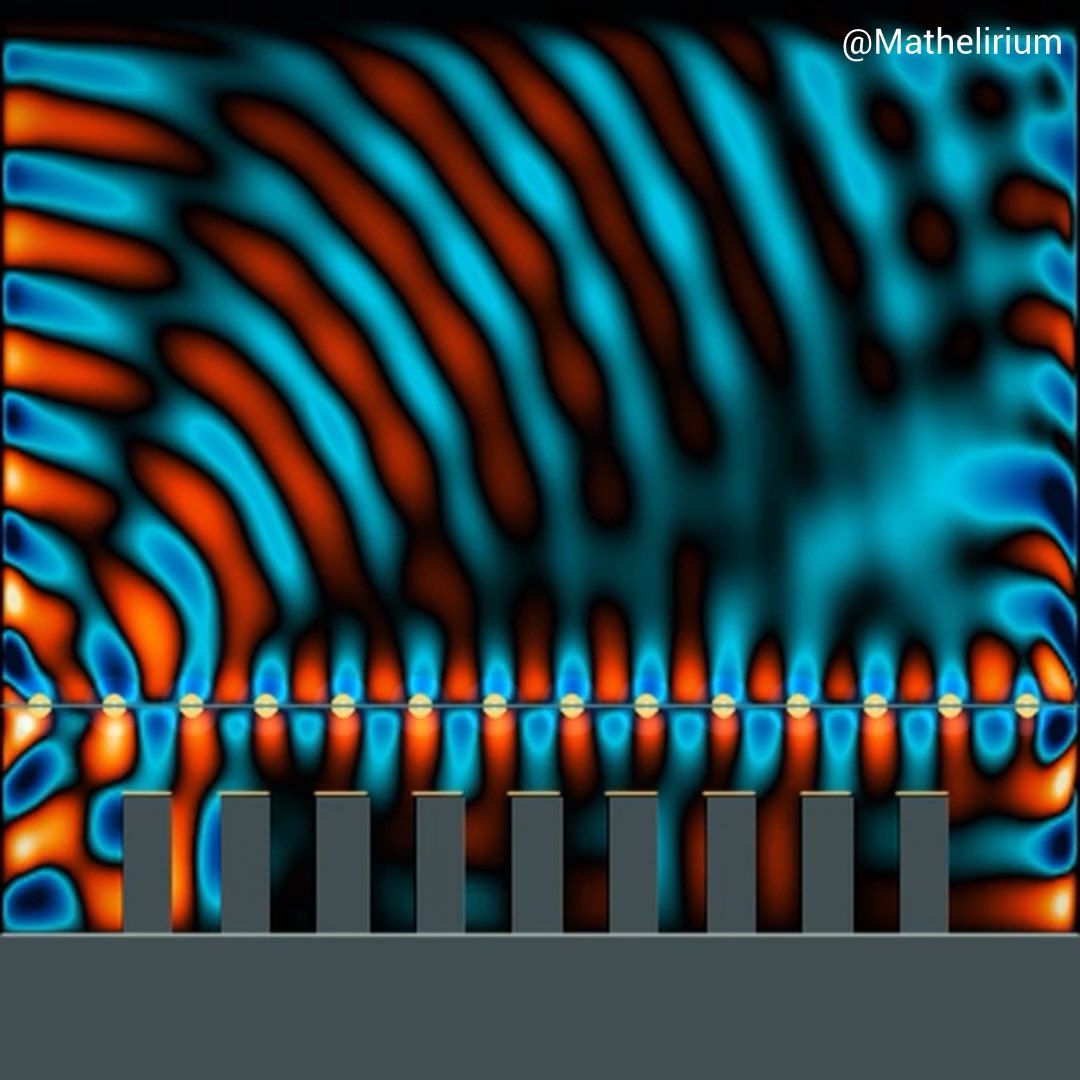
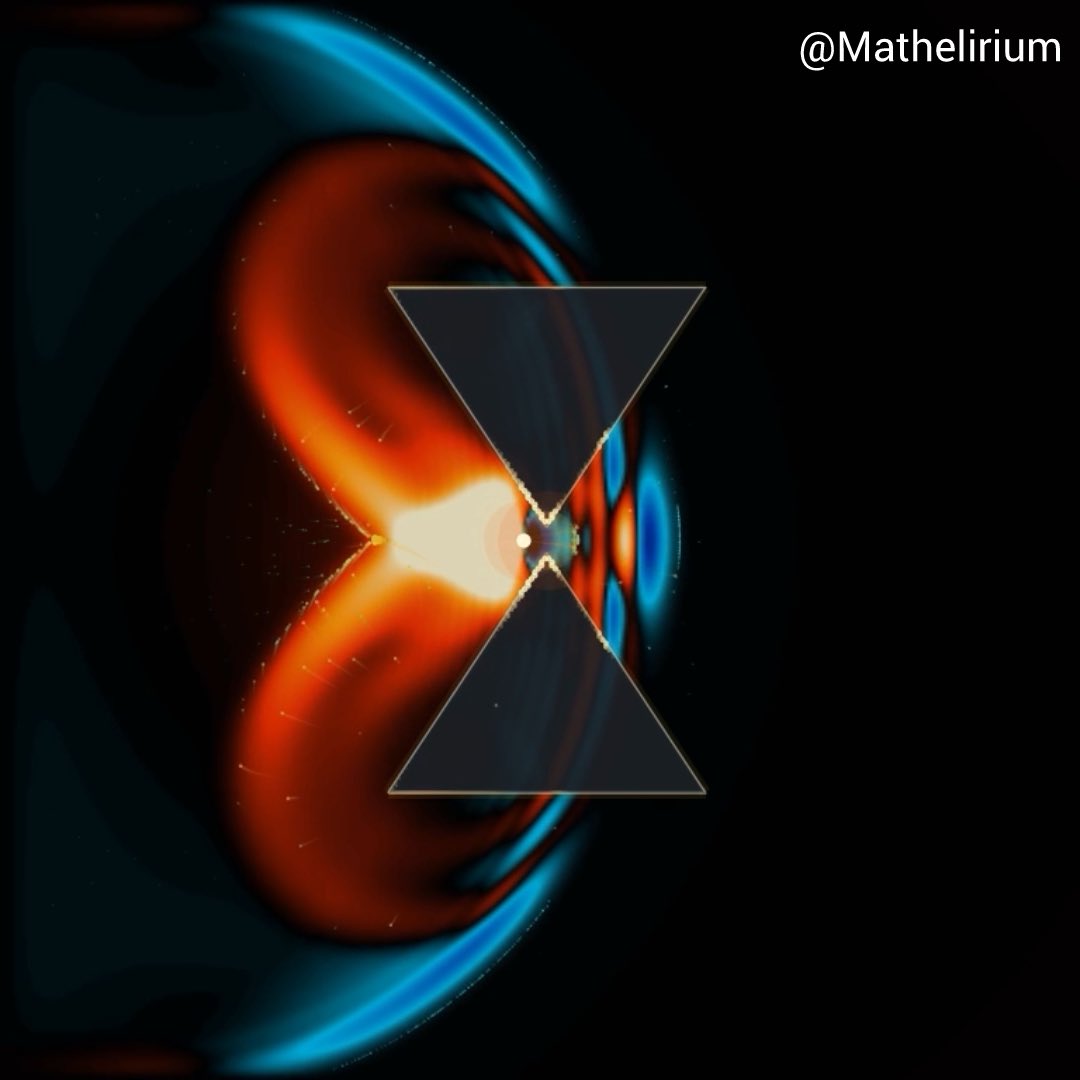
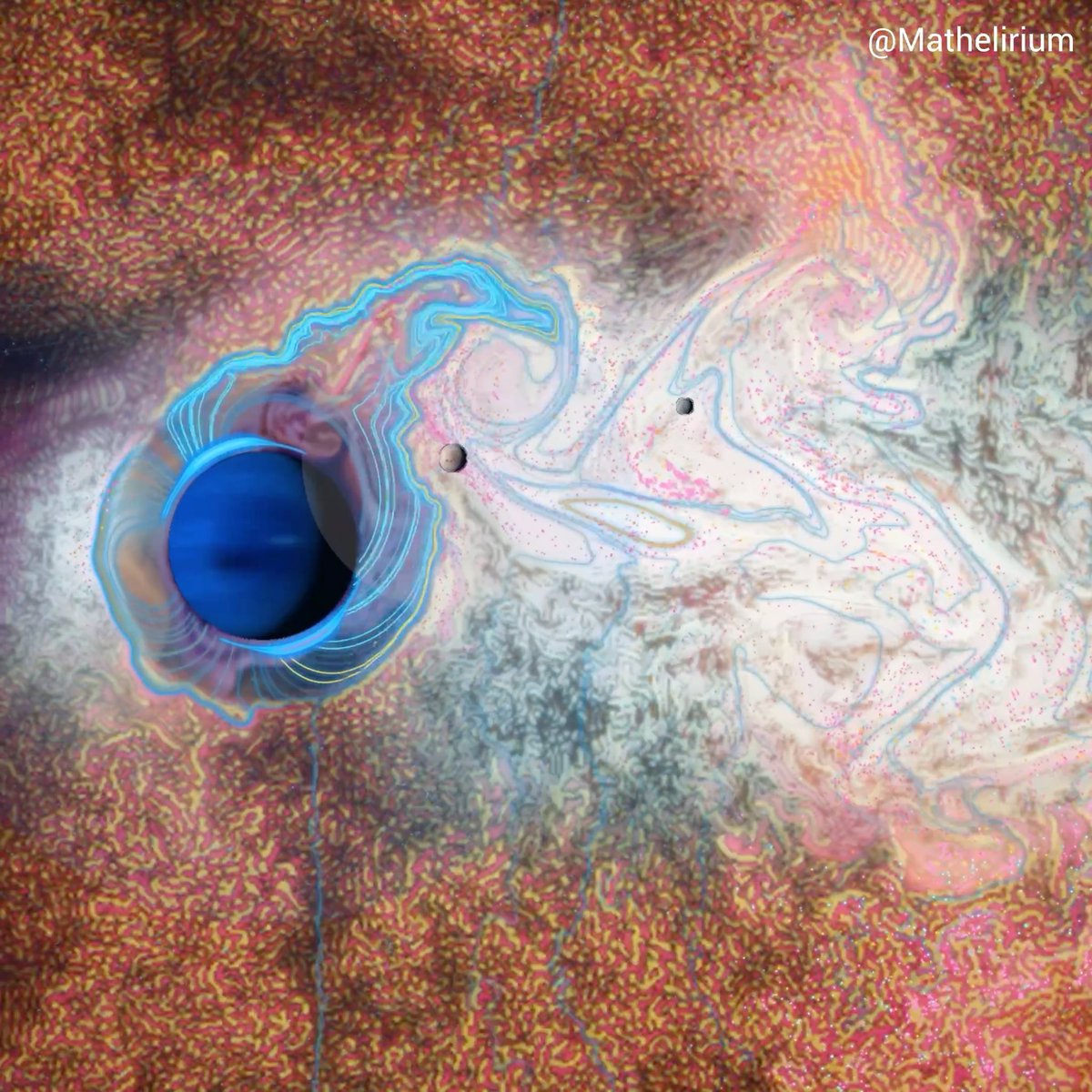
Forgive me guys, Im jus obsessed with these plasma visualizations😍 A relativistic electron beam can rip plasma electrons out of its path and leave behind a positively charged iron cavity. As the driver passes, the light electrons are expelled outward into a dense sheath, while the much heavier ions...

11,879 Aufrufe • vor 18 Tagen •via X (Twitter)

20 Kommentare

Profilbild von Mathelirium
Matheliriumvor 18 Tagen

See "Beam loading in the nonlinear regime of plasma-based acceleration" by Tzoufras et al. 2008

Profilbild von Doimo Manu
Doimo Manuvor 18 Tagen

Also some interesting research of 23 years ago that enabled this:

Profilbild von Mathelirium
Matheliriumvor 18 Tagen

Awesome! Thanks for sharing🫡

Profilbild von Doimo Manu
Doimo Manuvor 18 Tagen

With great pleasure. Godspeed on your account.

Profilbild von Gabriel
Gabrielvor 18 Tagen

It is an absolute triumph of scientific reasoning. 😍

Profilbild von Akki
Akkivor 18 Tagen

Coupled with the music, they are obsession worthy, even just for the visuals!

Profilbild von Jiri Snaidr, PhD
Jiri Snaidr, PhDvor 18 Tagen

Great work! How do you make these visualizations?

Profilbild von Mathelirium
Matheliriumvor 18 Tagen

I render them in Python

Profilbild von rmrfxyz
rmrfxyzvor 18 Tagen

They're awesome and I keep stumbling in all sort of rabbit holes thanks to your channel 👌🍻🤘🙏 I'm curious - (how) do you have a sense of what is their accuracy, when it comes to the ones which are not empirically observed?

Profilbild von integral00integer
integral00integervor 18 Tagen

Your account is one of the most fascinating on X. 👏 Keep up the incredible work.

Profilbild von TwoDogs ∞ 🦋
TwoDogs ∞ 🦋vor 18 Tagen

🤩

Profilbild von Greg Sweeney
Greg Sweeneyvor 18 Tagen

picture worth a thousand words ---thanks for posting

Profilbild von Toreador (Leplace's demon)
Toreador (Leplace's demon)vor 18 Tagen

Wow math , you must be capable to find the answer of the mechanism (and reason why) which causes the hot area , being hotter than the sun , at the edge of our solar system. 🌻 I ❤️ your animations , even if I don’t get it !! Haha, 😎🆒 Thank you 🙏

Profilbild von StandingOnTheMoon
StandingOnTheMoonvor 18 Tagen

No forgiveness necessary

Profilbild von jonteno kingofcrows
jonteno kingofcrowsvor 18 Tagen

qhy do i feel like i abuse this when smoking cigarettes?

Profilbild von Johnny Cornell
Johnny Cornellvor 18 Tagen

1

Profilbild von Mike Kuria
Mike Kuriavor 18 Tagen

Wow Windows Media Player from 2000

Profilbild von Jordan
Jordanvor 18 Tagen

Electric cosmology has entered the chat

Profilbild von Liam
Liamvor 18 Tagen

It is beautiful. Is it just a visualisation or is this observable?

Profilbild von Arch Delta Hound
Arch Delta Houndvor 18 Tagen

It's a civilizationally edifying obsession. Carry us through the light, so that we might understand.
Ähnliche Videos

Researchers at Tokamak Energy have captured for the first time a real-time, high-speed video of plasma behaviour inside their ST40 spherical tokamak, tracking visible green and red light emissions as the fusion process occurs. This visual insight comes via a camera operating at thousands of frames per second, offering unprecedented detail of how the plasma evolves, interacts with the surrounding lithium blanket and outer regions, and ultimately radiates energy. The imaging enables scientists to observe how the ultra-hot core transitions outward into cooler zones, how magnetic confinement shapes the plasma behaviour, and how impurities or outer-region interactions influence the process. By giving a ‘star-in-a-donut’ view of fusion in action, this breakthrough adds a new diagnostic tool to the development of fusion energy, helping engineers refine the magnetic confinement, optimise plasma stability and better understand the heat and light flows at play. It was slowed down by 100x. All this was for 0.3s A tokamak is one of the most advanced devices ever created to achieve controlled nuclear fusion, the same process that powers the Sun. Its goal is simple in principle but incredibly challenging in practice: heat a gas until it becomes plasma, raise that plasma to over 100 million degrees, and confine it long enough for hydrogen nuclei to fuse and release energy. Because no material container can survive such temperatures, a tokamak uses powerful magnetic fields to hold and shape the plasma like an invisible cage. The device has a distinctive doughnut-shaped (toroidal) chamber surrounded by magnetic coils. When the machine is switched on, electric currents and external magnets work together to create helical magnetic fields that trap the plasma and keep it away from the walls. As the plasma spirals around these magnetic lines, it heats up dramatically. Additional heating comes from methods like radio-frequency waves and neutral-beam injection, pushing the plasma toward the extreme temperatures needed for fusion. Inside this tightly controlled environment, hydrogen isotopes such as deuterium and tritium can collide and fuse, releasing fast neutrons and a burst of energy. The goal of tokamak research is to reach a point where the fusion reactions produce more energy than the system consumes, a milestone known as “net energy gain.” Modern machines like ITER, JET, and Tokamak Energy’s ST40 are bringing this vision closer, using advanced diagnostics, superconducting magnets, and increasingly stable plasma control. 👉

Erika 

162,540 Aufrufe • vor 9 Monaten