Загрузка видео...

Не удалось загрузить видео

На главную

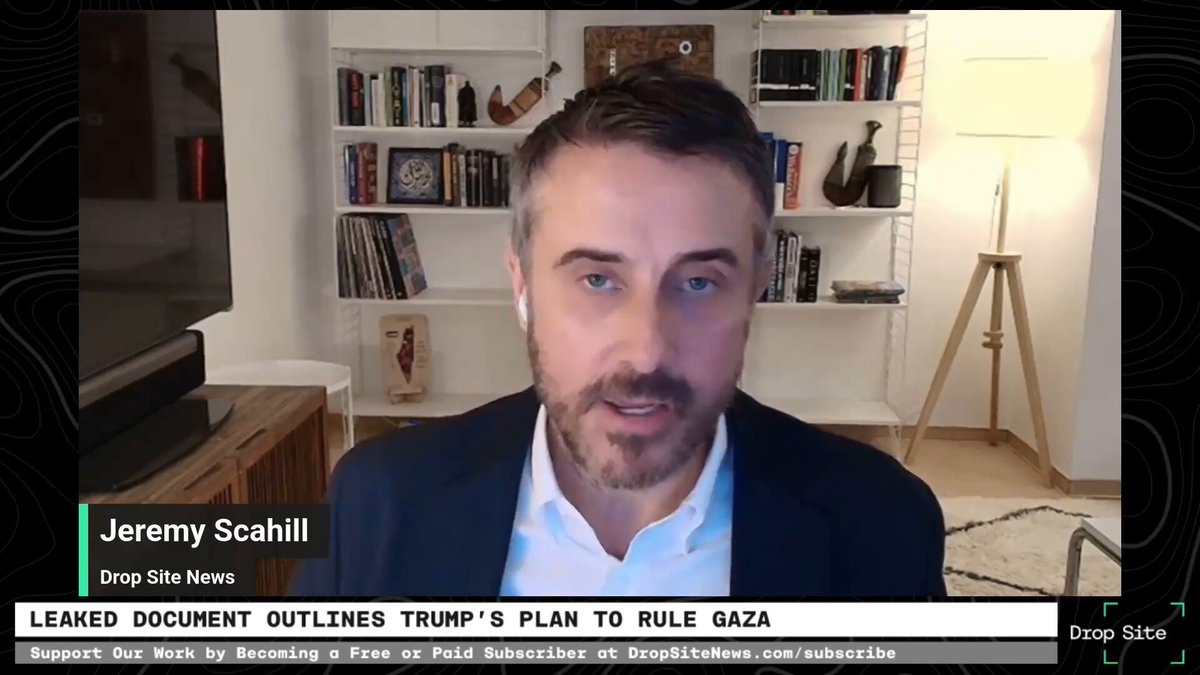
Former senior Biden administration official Philip Gordon says the same forces that pushed Trump toward the Iran MOU—what Drop Site’s Jeremy Scahill calls the “3 Ms”: markets, midterms, and depleted U.S. munitions—could ultimately force the US President back toward a “messy version of the MOU.” Gordon warns a renewed...

45,200 просмотров • 4 дней назад •via X (Twitter)

Комментарии: 0

Нет доступных комментариев

Здесь появятся комментарии из оригинального поста

Похожие видео

Professor Robert Pape says Trump has lost control of the Iran war and is now being dragged toward something almost nobody expected: U.S. troops seizing Iranian territory along the Strait of Hormuz. He thinks the Battle of Hormuz has begun, and his argument is that Trump is no longer choosing whether to escalate; the war itself is beginning to make those choices for him. For months, Prof. Pape has warned about what he calls the "escalation trap." America bombs Iran, they refuse to surrender, Washington increases the pressure, the bombing creates more anger and nationalism inside Iran, they retaliate, and America escalates again. Prof. Pape thinks America may be preparing for stage three of the escalation trap: Ground operations. Not an invasion of Tehran, but a limited seizure of strategic Iranian territory along the Strait of Hormuz to physically weaken Tehran's ability to control shipping. He says Iranian nationalism is already exploding after the killing of the Supreme Leader, members of his family, senior officials, and thousands of Iranians. Calls for revenge are growing that could inspire attacks against Americans around the world. Then imagine one of those attacks succeeds. Americans are killed, U.S. nationalism surges, and suddenly walking away from Iran isn't seen as ending a stupid war; it's seen as dishonouring dead Americans. That's why he doesn't think Trump can simply wake up tomorrow and decide he's had enough. He faces a political crisis if his own base decides Iran humiliated him. Trump may think he's escalating to reverse a defeat, but Prof. Pape thinks every escalation is removing another exit. And America may now be moving toward putting troops on Iranian soil in a war that neither Trump nor Iran will soon have the political power to stop. Robert A. Pape

Mario Nawfal

469,370 просмотров • 10 дней назад

🇮🇷🇺🇸 If the U.S-Iran war has lost the support of Kagan, it means it could be toast Robert Kagan spent decades arguing that American military power could shape the world. He was one of the intellectual architects of the neoconservative movement, a co-founder of the Project for the New American Century, and one of the loudest advocates for the kind of interventionism that defined the Iraq War era. So when someone like Kagan starts warning that the United States may be heading toward irreversible defeat in Iran, people should pay attention. Not because he suddenly became anti-war, but because figures like Kagan were always the ones insisting America could escalate its way out of any geopolitical crisis. That confidence now seems badly shaken. In The Atlantic, Kagan argued that the damage from the Iran conflict may already be beyond repair. He warned there would be “no return to the status quo ante” and no eventual American triumph is capable of undoing the consequences of the war. That is an extraordinary admission coming from someone who spent years promoting the idea that American power, properly used, could reorder entire regions. What Kagan seems to recognize now is that this conflict may have exposed limits the U.S cannot easily overcome. His focus is the Strait of Hormuz, where Iran’s leverage over global energy flows has fundamentally altered the balance of power in the Gulf. Kagan’s argument is not simply that the war is going badly. It is that the U.S may no longer possess the political will, military flexibility, or international credibility needed to reverse the situation without launching a catastrophic full-scale invasion that neither Trump nor the American public appears willing to support. That is the key shift. Kagan now sounds like someone confronting the possibility that escalation itself may have weakened American influence rather than restored it. He openly warns that the war could strengthen China and Russia, fracture alliances, undermine trust in U.S. leadership, and push Gulf states to reconsider their dependence on Washington altogether. In other words, the interventionist doctrine he helped champion may now be producing the exact opposite of what it promised.

Mario Nawfal

71,355 просмотров • 2 месяцев назад