Загрузка видео...
Не удалось загрузить видео
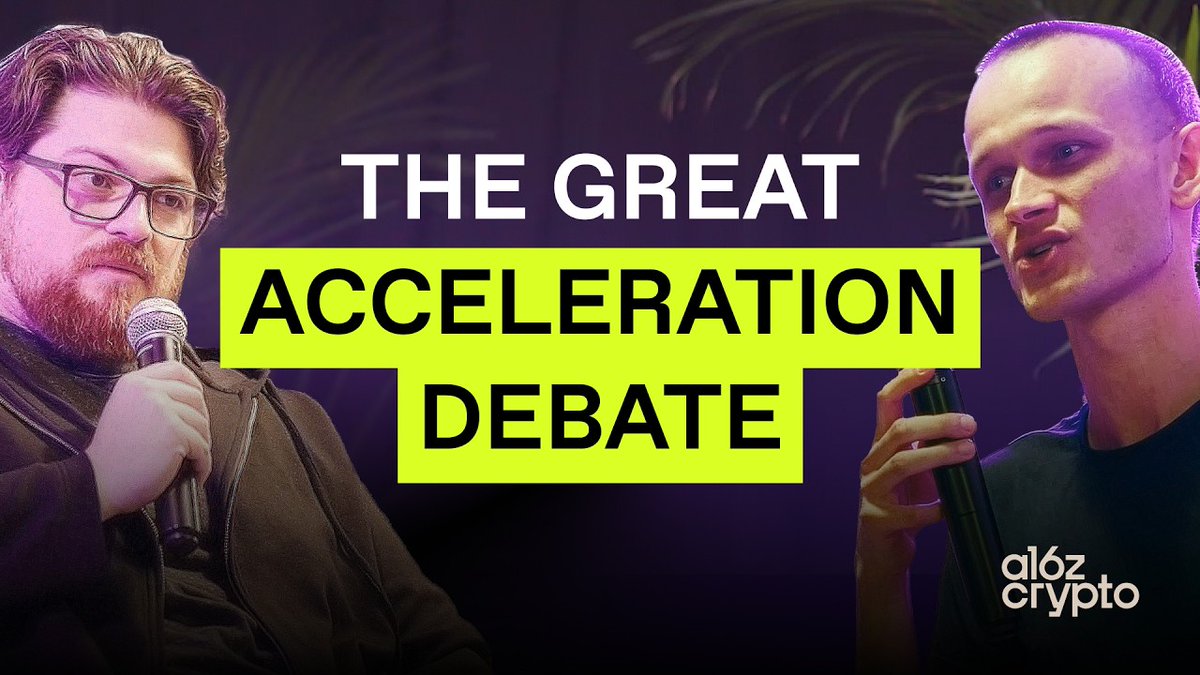
Full e/acc vs AI Decel debate w/ Igor Kurganov at TED AI

43,961 просмотров • 1 год назад •via X (Twitter)
Комментарии: 11

@IgorKurganov @TEDAI2024 Meanwhile… people in Dubai are walking around in EXTROPIC shirts…!

@IgorKurganov @TEDAI2024 🔥🔥🔥

@IgorKurganov @TEDAI2024 E/acc is the way🔥🔥

They should've allocated more time to this. The unrelistic expectations of foom and adversarial equilibrium is poorly understood by many people. Also would've been nice to have focused more on the realistic risk of powerful centralized models being used to deep fake entire social media feeds as an unprecedented form of weaponized disinformation rather than the theoretical possibility of a gigavirus. You know.. thats the quiet part they don't want people saying out loud.

What happens when you combine every AI? It's time for something better than ChatGPT...

@IgorKurganov @TEDAI2024 Great debate, but we need a 5 hour discussion on Lex to answer all those questions thoroughly.
@IgorKurganov @TEDAI2024 We were just discussing this afterwards w/ @IgorKurganov. @lexfridman open to hosting a long form debate pod?

Key Points from the Debate on AI Acceleration vs. Safety 👇👇👇 1. The Myth of a Binary The dialogue between AI accelerationists and those advocating for caution ("doomers") isn't a simple dichotomy. Instead, it's a complex discussion where both sides advocate for technological advancement but diverge on the approach to risk management and methodology. 2. Civilization as a Living Entity There's a viewpoint that civilization must be treated as a living entity that needs to grow and evolve to survive. This perspective pushes for an ongoing process of optimization in every aspect of our existence, from technology to governance, to preserve life's unique state in the universe. 3. The True Safety The conversation around AI safety isn't primarily about the speculative risks of superintelligence. Instead, it focuses on tangible issues like market monopolies, the potential for regulatory capture, and how society can adapt to AI advancements. The disagreement lies in whether market dynamics or regulatory mechanisms are better suited to manage these challenges. 4. Centralization vs. Decentralization of Power A shared concern among them is the potential for AI power to become overly centralized, either in the hands of government or large tech companies. The conversation revolves around how to prevent this through market-driven solutions like open-source technology or through regulatory frameworks that curb monopolistic tendencies. 5. The Need for Governance Innovation There's a consensus that current governance structures are ill-equipped to handle the pace of AI development. The challenge isn't to slow down AI but to accelerate societal adaptation, ensuring we can innovate responsibly while maintaining a competitive edge. Conclusion The core takeaway is that this isn't a straightforward debate between accelerating AI development and ensuring safety. It's about finding the right balance to maximize the benefits of AI while mitigating risks associated with power concentration. The primary challenge lies in innovating governance and societal mechanisms to keep up with technological advancements, ensuring AI's integration is both beneficial and controlled.

@IgorKurganov @TEDAI2024 $eacc to 30billion market cap CA: GqmEdRD3zGUZdYPeuDeXxCc8Cj1DBmGSYK97TCwSpump

@IgorKurganov @TEDAI2024 150 IQ vs 125 IQ. Nothing grows out of it.

@IgorKurganov @TEDAI2024 these niggas aint sayin nothin