Loading video...

Video Failed to Load

Go Home

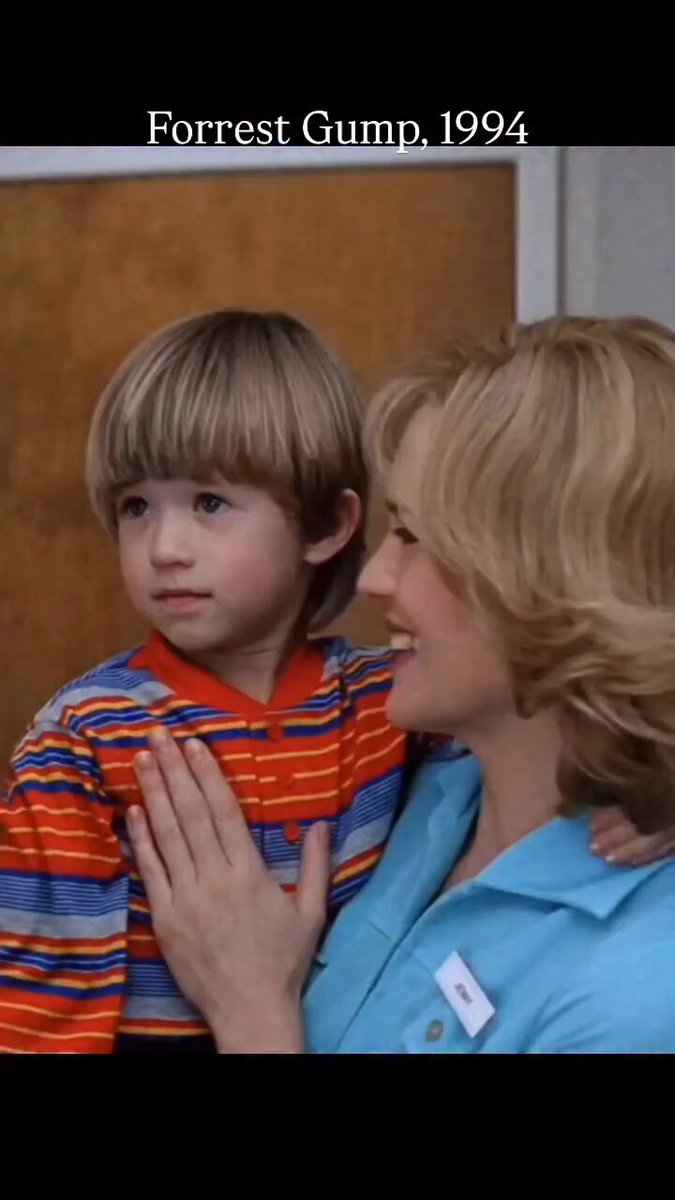
Fun Fact: Forrest Gump (1994) – Forrest & Jenny The bench scenes between Forrest and Jenny were filmed with minimal rehearsal so that Tom Hanks (Forrest) and Robin Wright (Jenny) could keep the emotions raw and unpolished. Director Robert Zemeckis wanted their relationship to feel unpredictable, reflecting how Jenny...

242,872 views • 7 months ago •via X (Twitter)

0 Comments

No comments available

Comments from the original post will appear here

Related Videos

During the filming of "Forrest Gump," director Bob Zemeckis realized he had a problem: The kid cast to play the young Forrest had a thick accent—sounding nothing like the way Tom Hanks was portraying the adult Forrest. Hanks' simple solution would define the iconic character: "Bob said, 'We got a problem here, you have to teach this kid how to talk the way you talk,'" Hanks says. "And I thought, 'Why don't I just talk the way he talks?'" The kid was from Mississippi and had a thick Southern accent. The iconic Forrest Gump accent and mannerisms were simply a result of Tom Hanks imitating the kid. Takeaway 1: The iconic characterization of Forrest Gump was a solution to a problem. Creativity is often forced out of necessity like this. The iconic POV scenes in Jaws, for instance, were also a solution to a problem: the mechanical shark broke. So director Steven Spielberg had no choice but to film the movie without his main character. Takeaway 2: One of the hottest actors in Hollywood, Hanks could have demanded they find another kid or that the kid figure out how to sound like Hanks. Instead, Hanks adapted and adopted the kid’s speech and mannerisms. Jerry Seinfeld talks about how great artists are like slalom skiers. “I always say, ‘If I’m the skier Lindsey Vonn, I don’t care where you put the gates on the mountain. Put ‘em anywhere you want. I’m going to make the gates.’” Seinfeld continues, "That’s how you have to think: ‘I don’t care what happens, I’m going to adjust to it.’” - - - "Creativity and adaptability are inseparable." — Robert Greene Follow Billy Oppenheimer for more content like this!

Billy Oppenheimer

2,729,073 views • 3 years ago

The most prominent example of a film that was financially viable because of generative AI was “Here” by Robert Zemeckis. Starring Tom Hanks and Robin Wright, it shows a couple living through multiple decades. The film’s budget was ~$50m and wouldn’t be able to cover traditional process for de-aging: ▫️Make-up: Takes hour to put on and can make actors look 10 years younger (but not 50 as the film requires) ▫️CGI: Expensive and long (per NYT, “Persuading us that we’re watching Hanks and Wright in their 20s would have required hundreds of VFX artists, tens of millions of dollars and months of postproduction work.”) Zemeckis says “Here” was able to be made in 2024 but not in 2021 (due to CGI costs). Also by using generative AI, Hanks and Wright could act more naturally without thick make-up (or those CGI dots) on their face. The AI effects were done by Metaphysics (the company’s content head is Ed Ulbrich, the former CEO of Digital Domain, James Cameron’s FX firm). Metaphysics AI tools were particularly useful because of how much video and images there are of Hanks and Wright over the decades (won’t be the case for all actors). Some of those images include 1994’s “Forrest Gump”, which was also directed by Zemeckis starring Hanks and Wright. That banger used a lot of advanced aging effects for the time and won the 1995 Best Visual Effects Oscar. A best case scenario might be instead of a studio spending $200m for a single blockbuster, it could finance and staff up 4 films at $50m (which could reach same visual quality bar using new tech). *** More from NYT: “Here” featurette:

Trung Phan

677,857 views • 8 months ago