Video yükleniyor...

Video Yüklenemedi

Ana Sayfaya Dön

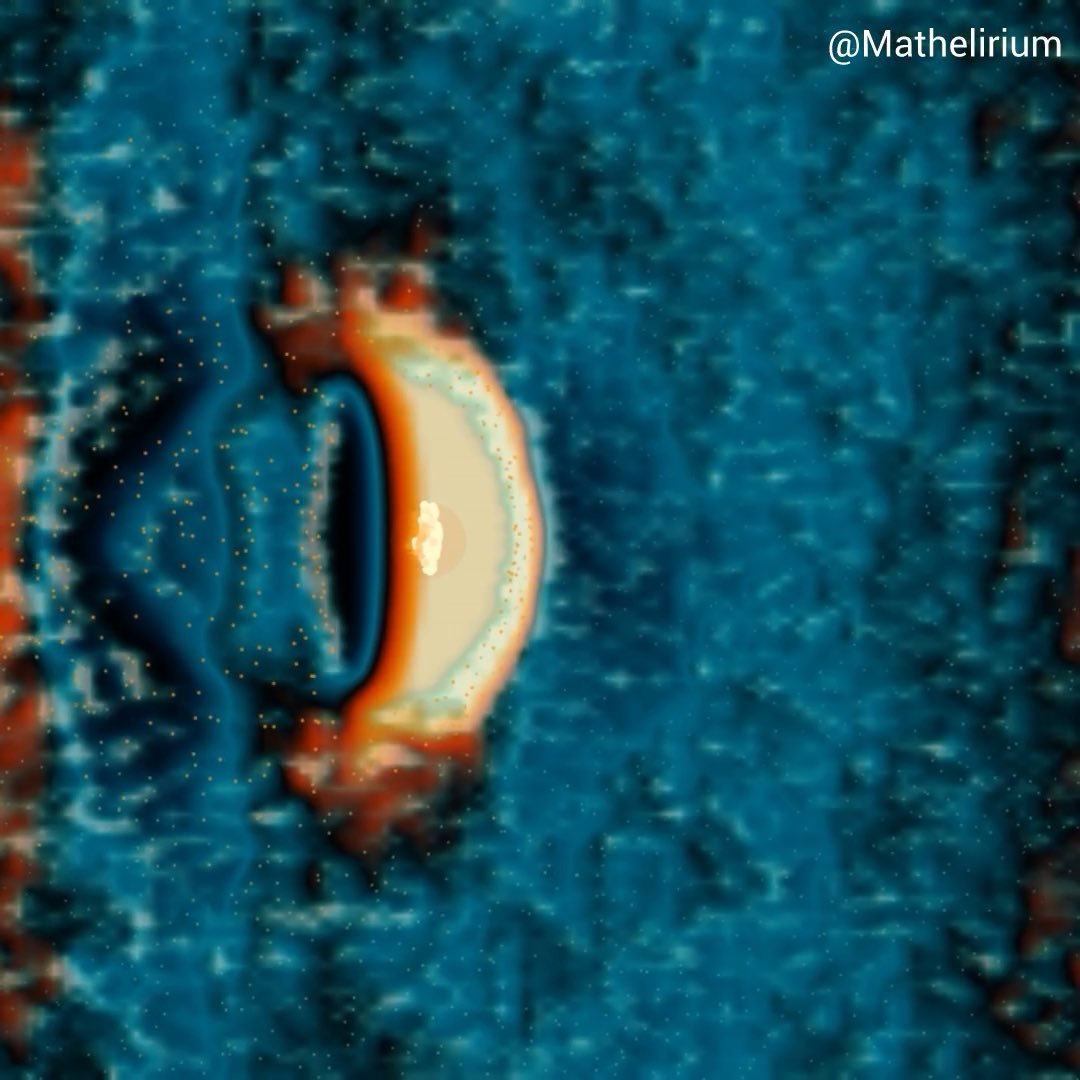
Future optics may be made from plasma. By using electrodes to reshape electron density, scientists can create a rapidly changing lens that bends light in real time, correcting turbulence for laser communications. A living optic made of ionized gas. 11 year old video

12,808 görüntüleme • 4 ay önce •via X (Twitter)

4 Yorum

Möbius Braid profil fotoğrafı
Möbius Braid4 ay önce

Would make us see the resonance of stars awesome

Mr. Echo profil fotoğrafı
Mr. Echo4 ay önce

You can’t have coherent plasma or non linear plasma so this isn’t really based on anything

Leahy profil fotoğrafı
Leahy4 ay önce

this would be amazing. current optic manufacturing for really specialized stuff is a huge pain.

ሜሮን ኣብራሃ profil fotoğrafı
ሜሮን ኣብራሃ4 ay önce

Plasma is very interesting. We need more content educating us on this type of science and technology

Benzer Videolar
Plasmoids are fascinating, self-contained structures made of plasma—ionized gas consisting of free electrons and positively charged ions—that are shaped and stabilized by their own magnetic fields. They were first systematically studied in the 1950s by physicist Winston Bostick, who created them using a plasma gun that accelerated plasma across a magnetic field. This process causes the magnetic field lines to wrap around the plasma, effectively pinching it into a compact, self-sustaining blob that can take on spherical, toroidal, or other symmetrical shapes. What makes plasmoids truly remarkable is their stability. Unlike ordinary plasma, which disperses quickly, a plasmoid generates its own internal magnetic fields that confine and hold the charged particles together. This allows the plasmoid to exist as an independent entity, often glowing with an eerie light due to the energetic particles within it. They can move through space, interact with their environment, and even exhibit behaviors like merging with other plasmoids or splitting apart under certain conditions. Plasmoids appear in a variety of natural and artificial settings. In laboratories, scientists recreate them using high-voltage electrical discharges, often over water surfaces, producing glowing orbs that closely resemble reported sightings of unidentified aerial phenomena or mysterious light balls. In nature, plasmoids are believed to be responsible for ball lightning—those rare, floating spheres of light that sometimes appear during thunderstorms. They’ve also been observed in space, associated with solar flares, planetary magnetospheres, and even galactic phenomena where vast clouds of plasma interact with cosmic magnetic fields. Beyond their scientific intrigue, plasmoids have sparked interest in fields like fusion research, where understanding plasma confinement is key to developing clean energy, and in plasma propulsion systems for spacecraft. Some researchers even speculate that plasmoids could explain certain atmospheric anomalies or UFO sightings, given their ability to hover, accelerate rapidly, and disappear suddenly. Overall, plasmoids represent a beautiful intersection of electromagnetism, fluid dynamics, and high-energy physics, offering a glimpse into the dynamic, often chaotic behavior of ionized matter in our universe. #TheRedMantis #Suno #grok #plasmoids #science

The Red Mantis

32,100 görüntüleme • 5 ay önce