Loading video...

Video Failed to Load

Go Home

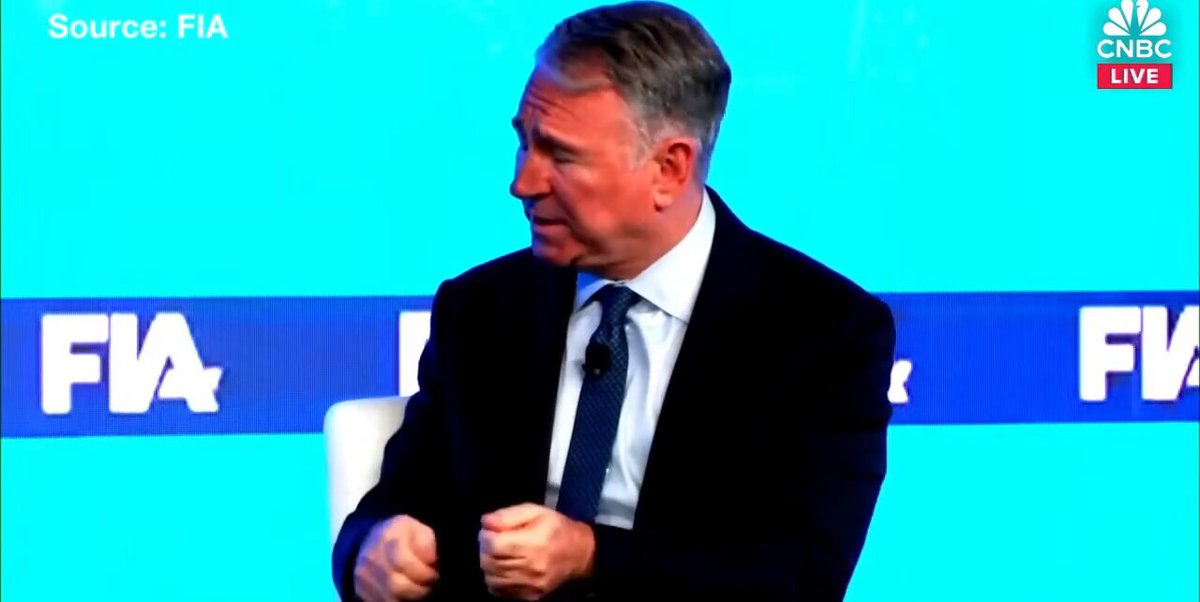
Gavin Baker: "which AI company actually survives? Google - already multi-trillion Microsoft, OpenAI, Meta chose open source - the only ones left is xAI and Anthropic - xAI + X will be worth over a trillion" this is him explaining what he actually invests in - and why Taiwan...

277,058 views • 2 days ago •via X (Twitter)

0 Comments

No comments available

Comments from the original post will appear here

Related Videos

The creator of High Bandwidth Memory (HBM) put a number on the AI build that should stop every infra investor cold. A cluster of a million GPUs runs at roughly 10-20% utilization (Save this). Kim Jung-ho spent thirty years building what feeds the GPU, and his claim is that the GPU is barely working. Here is what is actually happening. Every time a model generates output, the data has to be read out of memory, computed, and written back. The read and the write swallow almost the entire cycle. While that data moves, the GPU does nothing. It sits there, fully powered, fully paid for, waiting. By Kim's estimate the memory is doing only about 30 percent of the work it needs to do. The processor idles the rest. So a million installed GPUs run at 10 to 20 percent. You are not compute constrained. You are memory constrained, and the expensive part is standing around. Adding more GPUs does not fix this. It gives you more processors starving for the same data. Here is the part that decides the next decade. Memory can grow. When a cell cannot shrink any further, you stack it into a high-rise, layer on layer. A GPU cannot be stacked. It runs too hot and needs a cooler bolted to its back, so the one move that rescues memory is closed to the processor. The thing that can keep stacking compounds. The thing that cannot plateaus. The marginal dollar in an AI build now buys more by fixing the memory path than by bolting on another idle GPU. Which is why the companies that control memory bandwidth and supply are not suppliers to the AI trade. They are the AI trade.

Fireside Alpha

38,370 views • 1 month ago

The market is watching xAI charge $50 billion per gigawatt and the rest of the neocloud sector run up is just getting started (Save this). According to Gavin Baker of Atreides Management, this is the most important number in AI infrastructure right now, xAI is monetizing compute at $50 billion per gigawatt on the Google deal, 2 to 3 times what any neocloud competitor charges. Google is paying $920 million per month for access to roughly 110,000 Nvidia GPUs through June 2029, and Anthropic is paying $1.25 billion per month for Colossus 1's 300 megawatts. Baker's point is simple that stop tracking rocket launches, stop tracking GPU orders, model gigawatt additions. At $50 billion per gigawatt, every new gigawatt that xAI energizes over the next 12 months is a revenue event that the market has not yet priced in. But this is not just an xAI story but rather why neocloud stocks are one of the most mispriced assets in the entire AI stack. Neoclouds charge $17 to $25 billion per gigawatt in contract value, a dramatic discount to xAI's pricing, but still an extraordinary business model when the underlying infrastructure costs $9 to $12 million per megawatt to operate and customers are signing 5-year locked contracts. H100 GPU-hours from neoclouds like Nebius at $2.95 per GPU-hour are 66% cheaper than hyperscaler rates, which is the structural reason enterprise AI teams are shifting spend to neoclouds at an accelerating pace. The neocloud market is projected to grow 69% annually through 2030 to reach nearly $180 billion and right now only a handful of public companies offer direct exposure to it. Nebius is the standout among the publicly traded neoclouds. It reported Q1 2026 AI cloud revenue of $399 million, an 841% increase year over year beating estimates, with its CEO stating that demand continues to exceed available capacity and customers are actively being turned away. Nebius commands a 20 to 25% revenue premium over peers thanks to its full-stack software offering, European sovereign positioning, and data residency advantages that physically prevent hyperscalers from competing for a large portion of its customer base. It has $49 billion in contracted backlog with Meta, Microsoft, and Nvidia meaning its revenue trajectory for the next three to five years is not a forecast, it is a schedule. The competitive moat is in power, permits, and speed exactly what xAI has proven is the true bottleneck. Jensen Huang said publicly that xAI deploys data centers faster than anyone else in the ecosystem, and Baker called out that this deployment speed advantage directly translates to monetization speed, every week of earlier energization at these pricing levels is worth hundreds of millions in revenue. Neoclouds with secured power, permits, and long-term customer contracts are not in a fair race against companies still waiting on grid connections and zoning approvals. The companies with the most locked in gigawatts coming online in 2026 and 2027 are about to have very good years.

Milk Road AI

74,611 views • 1 month ago

🚨THEY CALLED HIM CRAZY FOR 20 YEARS.. HE'S ABOUT TO FILE THE BIGGEST IPO IN HISTORY.. SpaceX is quietly preparing to go public.. targeting a $1.75 trillion valuation.. bigger than Saudi Aramco.. the biggest IPO in human history.. but that's not even the real story.. in february elon merged xAI into SpaceX.. so now one single company owns the rockets.. owns about 65% of every satellite in orbit.. owns Starlink with over 10 million users.. and owns the AI.. think about that for a second.. OpenAI rents its servers from Microsoft.. Anthropic rents from Amazon.. they don't own anything.. they're tenants.. elon owns the infrastructure.. they're putting AI data centers in space.. solar powered.. no electric grid.. no cooling problems.. just satellites running AI in orbit while everyone else is fighting over GPU shipments on the ground.. the pentagon just handed them $2 billion for a defense satellite network.. starlink aviation customers are paying $300K a year.. NASA used to be their biggest customer.. now NASA is only 5% of their revenue.. they outgrew the entire US government.. this man built a company that launches the rockets.. owns the satellites.. provides the internet.. runs the AI.. and is about to go public at the highest valuation in history.. nobody is connecting the dots.. i got into xAI before the merger.. that converts to SpaceX equity before it even hits public markets.. sometimes the play is obvious.. you just have to be paying attention.

Evan Luthra

101,861 views • 4 months ago

Jensen Huang just admitted Nvidia is paying for BOTH ends of its own $500 billion deal. Every outlet ran the same headline: Nvidia is putting half a trillion dollars into Korea. The largest AI infrastructure commitment ever announced with a single partner. But when asked what was actually inside that number and whether this is Nvidia spending money in the Korean economy, or SK fronting the capital themselves, Jensen said this: "We're gonna be purchasing memories from them for many years to come. In order to build a trillion dollars worth of Vera Rubin systems, you're gonna have to buy a lot of system memories to go with it. And so we have large purchase agreements and large purchase intentions with SK Hynix. Meanwhile, SK Telecom is gonna become an AI cloud. And in that agreement, we will be selling AI supercomputers to them. So between us, we're gonna do $500 billion worth of business." He literally described two completely different transactions and added them together. Nvidia pays SK Hynix for memory chips. SK Telecom pays Nvidia for supercomputers. Both directions get stacked into one figure and handed to the market as demand. A large share of that half trillion dollars is Nvidia's own money going OUT the door. This is the CEO of the most important chip company on Earth. His silicon runs every serious AI system on the planet. If anyone alive could announce a clean half trillion in customer demand, it's him. Instead he announced a number that counts his own supplier payments as "business." But now this is where it gets genuinely crazy... Bloomberg asked how badly Nvidia needs Korean supply to grow. Jensen said Nvidia does not have enough bits. He said the company is constrained in HBM memory, constrained in LPDDR memory, and constrained in just about every part of the supply chain. Then he named the bottleneck nobody expected: "We're even constrained now with land and power and construction workers to set up the data centers." The company announcing the biggest AI deal in history cannot hire enough people to pour concrete. Then he capped the entire industry. He said the industry has the ability to double each year, and will have a hard time growing much faster than that. Now hold that against the target he set at the top of the same interview: He said the semiconductor industry probably has to become 10x larger than it is today over the next decade. Doubling annually clears that on a spreadsheet. But in reality it only happens if land, power and construction crews cooperate every single year for ten years straight. And the demand justifying all of it is a number most people have not heard yet. Jensen is planning for 100 BILLION AI agents and billions of robots using computers. That is the actual bet. 10x the industry, financed by deals where the vendor is also the customer, and gated by how fast you can find electricians. Korea's market did not celebrate any of this by the way. The KOSPI has been falling hard and SK Hynix and Samsung both slumped while the half trillion dollar headline was running. Jensen listed both directions of money and totaled them on camera because he does not think there is anything wrong with it. Maybe there isn't. Chips have to be bought before systems can be sold. But the market is pricing these announcements as demand, and at least half of this one is spending.

Ricardo

34,330 views • 4 days ago

The man who won the Nobel Prize just told the world that AI is not the energy crisis, it is the cure for it. Everyone has been screaming about how much electricity AI consumes, the data centers, the training runs, the billions of queries every single day. Hassabis just said AI will extract 30 to 40 percent more efficiency out of national power grids, grids that, right now, operate at only 30 percent of their total capacity according to Stanford researchers. That means the grids we already built are massively underused, and AI is the key to unlocking what is already there. But that is the smallest part of what he is saying. He is saying AI will crack nuclear fusion, the energy source that has been 30 years away for the last 60 years and DeepMind is already working with Commonwealth Fusion in the US to help AI contain plasma inside fusion reactors. His personal mission is to use AI to discover a room-temperature superconductor, a material that would allow electricity to travel with zero loss, something physics has never been able to deliver. The implications of that alone would reshape the entire global economy overnight. He is also saying AI will design next-generation batteries and build the best climate modeling systems humanity has ever had, using them to figure out exactly where the planet is breaking down. Think about what this means, the thing everyone is blaming for the energy crisis is the same thing being bet on to end it forever.

Milk Road AI

41,417 views • 3 months ago