Loading video...

Video Failed to Load

Go Home

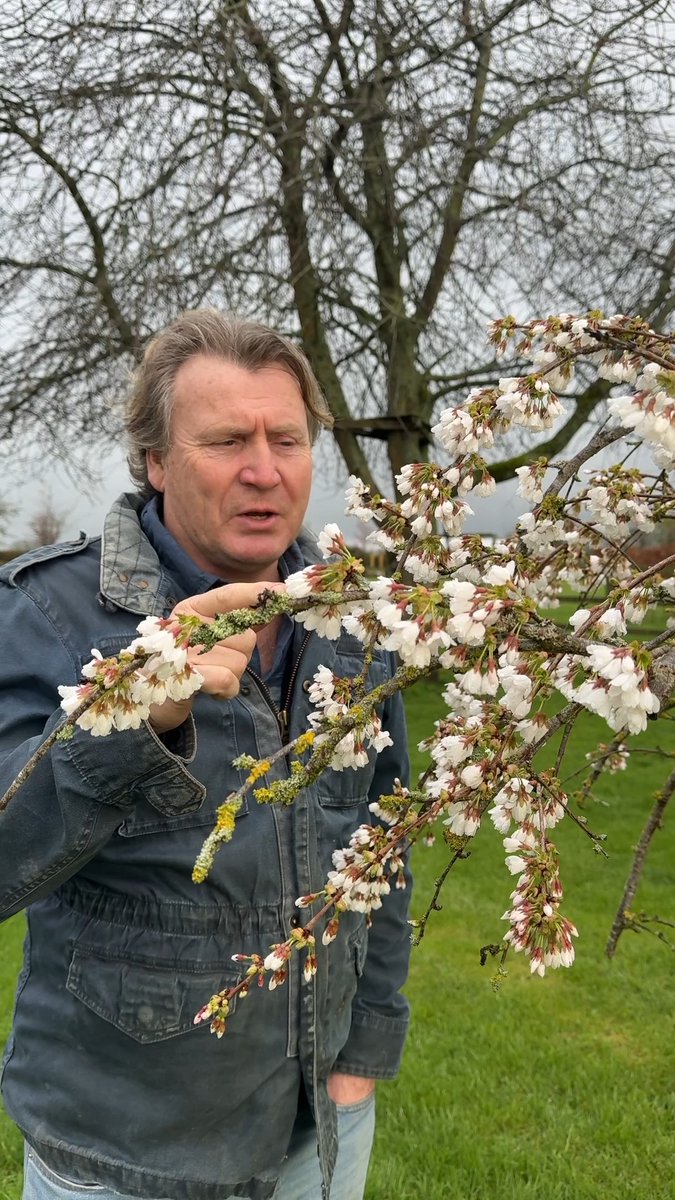
🌧️"Good rain knows its time right, it will fall when comes spring." Today marks Yu Shui (Rain Water), the second solar term in the Chinese lunar calendar. As Yu Shui arrives, spring quietly unfolds. At Sinopec service stations, oil fields and drilling sites, flowers are about to blossom and...

129,966 views • 1 year ago •via X (Twitter)

9 Comments

Сергей's profile picture
Сергей1 year ago

Тема прогноз погоды,это информация в нашей повседневной жизни всегда необходима...

Skinny ²'s profile picture
Skinny ²1 year ago

Kuliwa ni hulka ya mtu,haihusiani na imani,,actuall mwanamke aliumbwa na k na mwanaume aliumbwa na uume for reason..🤗

Bennywhite🤍's profile picture
Bennywhite🤍1 year ago

Happy wonderful Tuesday 🫂🌞

Gan Jing World's profile picture
Gan Jing World1 year ago

✦ Little Forest ✦ Hye-won grows tired of life in the city and returns to her hometown in the countryside. After a year of living in the countryside with her old friends, Hye-won finally realizes what she has always been searching for. 🍿Watch Now

Patrick Freeman's profile picture
Patrick Freeman1 year ago

Gentle as the sunset.

Celine SKy's profile picture
Celine SKy1 year ago

Interesting article, but could use more clarity and details for better understanding. Keep up the good work!

Hoangg555 Duc's profile picture
Hoangg555 Duc1 year ago

$rdpost

Joseph Simmons's profile picture
Joseph Simmons1 year ago

The clarity and precision in your writing are amazing.

Kaisar boyjun's profile picture
Kaisar boyjun1 year ago

Spring showers bring AI growths! PublicAI's decentralized workforce is blooming with high-quality data, just like those flowers at Sinopec service stations

Related Videos

Dear friends, I'm BeeRose. I'm really upset and I believe many of you might share the same feeling. These days in the US, I've seen banners, posters and even official government documents using "Lunar New Year" instead of the long - established "Chinese New Year" to refer to our Chinese Spring Festival. As an American daughter - in - law, I have to say that even as a native American, I'm really indignant about this. The US has always been sensitive about race and culture issues. But it seems some people here have got it all wrong this time. They may not realize that "Chinese New Year" is not just a simple term; it's the name of a festival that carries thousands of years of Chinese history and culture. "Chinese New Year" clearly indicates the origin of this festival is in China. It's a unique and important part of Chinese culture. Spring Festival is a time when Chinese people all over the world get together to celebrate, full of distinctive traditions like dragon and lion dances, setting off fireworks and having the New Year's Eve dinner. These are all symbols of Chinese culture that can't be replaced or confused. When we use "Lunar New Year", it may give the wrong impression that this festival is just a general "lunar new year" celebration that blurs the cultural differences among different countries. It makes people forget that Spring Festival has its unique origin and rich connotations in China. So, I made this video to let more people around the world know that there's only one Spring Festival, and that's "Chinese New Year". Let's respect the real origin and history of this festival and work together to protect the authenticity of Chinese culture. Thank you all for your support!

Zhang Heqing

32,947 views • 1 year ago

Have you ever wondered why some spring plants look so spectacular in flower? It’s a surprising answer… no leaves. These plants are flowering before the foliage appears — a clever botanical strategy known as hysteranthy. And it’s brilliant. With no leaves in the way, flowers are: More visible to pollinators when they’re scarce in early spring Easier for wind pollination in exposed conditions Visually striking — uninterrupted masses of pure colour It’s nature putting on a show… with purpose. And some of the most breathtaking spring performers use this technique: Magnolia — large, goblet-shaped blooms that create real drama before leafing out Flowering cherries (Prunus) — clouds of blossom that transform gardens into a spring spectacle Forsythia — vivid golden flowers lighting up bare stems Witch hazel (Hamamelis) — delicate, ribbon-like blooms in late winter to early spring 💡 Why this matters in your garden: ✨ You get maximum visual impact at a time when gardens are just waking up 🐝 You’re supporting early pollinators when food is limited 🌿 You create seasonal layering — flowers first, foliage later, extending interest Expert tip: Position these plants where they can be backlit by low spring sun — it enhances the translucency of the petals and elevates the entire display. It’s one of the most elegant tricks in horticulture… Flowers first. Leaves later. Maximum impact 🌿 Save this — and start noticing spring in a whole new way 👇 #springgarden #blossomtree #gardentips #ukgardening #naturemoments

David Domoney

10,111 views • 3 months ago

This recording presents Vivaldi’s Spring (La Primavera) as performed by the Netherlands Bach Society, with Shunske Sato as solo violinist and director. It is a performance in the historically informed style, seeking to recreate the manner in which Baroque music would have been played in Vivaldi’s own time, the eighteenth century. What distinguishes this interpretation is its complete fidelity to the original Baroque idiom. The musicians employ period instruments—gut strings and Baroque bows—producing a sound that is crisp, transparent, and restrained, with minimal vibrato and a faithful observance of the rhythms and ornamental practices of the era. The most striking and profoundly meaningful element in Vivaldi’s Spring (La Primavera)—In the traditional Western understanding—is the depiction of birdsong in the first movement and its striking contrast with the thunder and lightning that follow. Immediately after the joyful principal theme, Vivaldi employs three solo violins in harmonious interplay, using soaring trills and florid passages to evoke the joyous song of birds welcoming the spring. Yet this is swiftly succeeded by the darker, urgent tones of the full ensemble, conjuring a sudden storm with rumbling thunder and flashes of lightning. When the tempest subsides, the birdsong returns in serene tranquillity. Vivaldi does not use his music to recount a personal narrative. Rather, he employs it as a lens through which the listener may observe the ordered harmony of the natural world. There is warmth and sunshine, there are storms, and then there is peace once more. In the traditional Western understanding, nature and the cosmos do not operate by chance but are governed by a supreme intelligence—the Creator. By composing a work in which nature unfolds according to discernible laws, with perfect balance between light and darkness, sunshine and rain, Vivaldi offers a direct celebration of this perfect order. It imparts to the listener a profound sense of spiritual reassurance and stability. The performer, in rendering the birdsong or the thunder, must set aside personal ego and strive to imitate and merge with nature in its purest form. The true artistry lies in transforming the instruments into the very voice of creation, resulting in a work of art for its own sake—one that preserves the pristine beauty of its subject. In short, this music is beloved because it conveys a vivid sense of life and joy, as though one were witnessing the true awakening of spring. It is neither pessimistic nor abstract, but intimately connected to daily life and to the ancestral way of perceiving the world—a world possessed of order, beauty, and worthy of celebration. It is this rigorous structure, faithful depiction, and respect for the laws of nature that have secured for Spring its enduring status as one of the most lasting cultural symbols across the centuries.

𝗖𝗹𝗮𝘀𝘀𝗶𝗰𝗮𝗹 𝗠𝗲𝗹𝗼𝗱𝗶𝗲𝘀

13,904 views • 23 days ago