正在加载视频...

视频加载失败

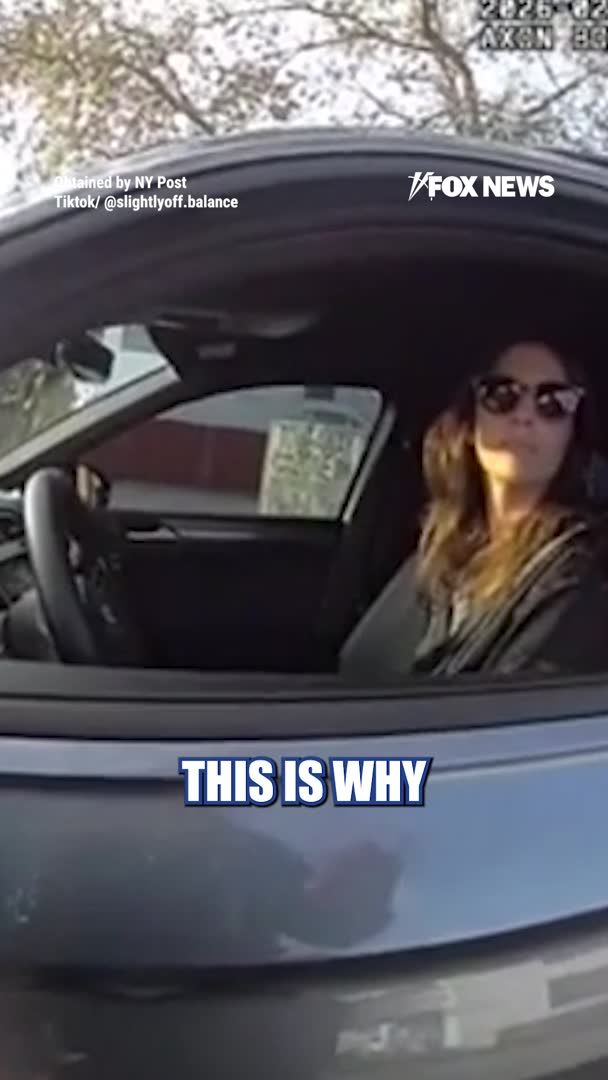
Guy gets pulled over by tyrant officer knows his rights and unloads on the officer. ​A Lake County Sheriff’s deputy decided to initiate a traffic stop, he clearly wasn’t expecting a driver who actually knew the law and was prepared to push back. Once the stop was in full...

80,843 次观看 • 19 天前 •via X (Twitter)

0 条评论

暂无评论

原始帖子的评论将显示在这里

相关视频

Cop gets caught lying in real time. Tried moving the goal posts to justify his actions. ​We are in Midland Texas where Midland Police Department ​Officer Gill pulls the driver over under the absolute certainty that he saw the driver holding a phone in his hand. The driver immediately points to his dashboard, showing the phone is securely mounted. Left with nowhere to hide, Officer Gill is forced to admit his mistake on camera, stating, "I stand corrected." ​Under the Fourth Amendment, once the officer realizes the initial reason for the stop was invalid, the driver should be free to go. Instead, Officer Gill pivots immediately. Determined to salvage the stop and force the driver to identify, he suddenly claims the driver was speeding. ​When the driver presses him for proof—asking if he was clocked on radar or paced—Officer Gill admits he has no data. Instead, he claims he "visually estimated" that the truck was going exactly "10% over the speed limit." Mind you, the officer was parked at a complete standstill. The driver calls out the absurdity, pointing out that his speed was a cautious 16 mph in a 20/25 (30 was the confirmed limit) mph zone. ​Recognizing that the officer is fishing, the driver firmly refuses to hand over his driver's license. He rightly argues that because the original cause was a mistake and the secondary cause is completely fabricated, the officer lacks the reasonable articulable suspicion required by law to demand identification. He demands a supervisor. ​Sergeant Wilson (Badge #330) arrives on the scene and initially tries to back up his officer with a classic legal bluff: claiming that the traffic code allows police to pull anyone over just to check for a driver's license. The driver holds his ground, refusing to be intimidated. ​Realizing the driver knows the law, won't back down, and that Officer Gill’s shifting allegations wouldn't hold up for a second in court, Sgt. Wilson quickly de-escalates and tells the driver he is free to go—without ever getting his ID. ​Know your rights, keep your cool, and always roll recording. What do you think about how this driver handled the shifting goalposts? I will say that while the Midland police did a terrible job due to their lack of understanding of the law, I have seen these types of situations get much worse. Officers threatening arrest and pulling people from cars. These guys never once did any of that, so perhaps there is hope in Midland.

Giggling Ganon

59,799 次观看 • 2 天前

This is how to handle a deputy that is fishing for crimes during a traffic stop all because he didn't like what the guy said. ​While driving past an active traffic stop at night, a citizen decided to exercise his First Amendment right to free speech by yelling a protected profanity out of his window: "F*ck the police!" ​Instead of maintaining professional composure, Harris County Sheriff's Deputy Vega immediately abandoned his current stop, ran back to his patrol vehicle, executed a U-turn, and pursued the driver. ​When Deputy Vega initially stopped the driver at a local gas station, he explicitly admitted his true motivation on camera, stating he pulled the vehicle over because the driver was "yelling something from [his] car." ​The moment the deputy realized that yelling at the police is entirely constitutionally protected speech—and does not constitute reasonable suspicion for a detention—the narrative instantly shifted. Suddenly, it became a traffic stop for a pretextual infraction: a alleged “failure to signal 100 feet before a turn.” ​Throughout the interaction, the driver handled the situation with a firm grasp of the law: ​ Because he was legally carrying a firearm, he complied with Texas law by presenting both his standard Driver's License and his License to Carry (LTC). ​He repeatedly and successfully invoked his right to remain silent, refusing to take the bait on fishing questions like "Where are you coming from?" or "Have you had anything to drink tonight?" ​After finding absolutely nothing to pin on the driver, Deputy Vega was forced to issue a mere written warning for the signal infraction. ​The most disturbing part of the footage happens at the very end. Deputy Vega explicitly tells the driver, "The stop is over, you may leave." However, as the driver cracks open his door to adjust himself, the deputy immediately reacts by drawing his firearm on an individual he just legally released from detention. ​The citizen is safe, has his own documentation of the event, and plans to update on the formal complaint process, police reports, and upcoming bodycam/dashcam requests. This deputy got butt sore because he does not feel as though people should be able to have free speech, but he had to do the walk of shame.

Giggling Ganon

38,204 次观看 • 10 天前

Midland cop caught fishing for violations just to get his hands on the driver's ID. The driver in this traffic stop out of Midland, Texas, put on a clinic with regards to knowing your rights when the "reasonable suspicion" starts to shift mid-conversation. ​ Officer Gilpin initially pulls the driver over claiming he was holding his phone. The driver immediately points to the dashboard mount. The phone wasn’t in his hand; it was secured. ​ Once the phone excuse fell through, the officer pivoted, claiming the driver was speeding. The driver’s response? He was doing 16 mph in a 25 mph zone. ​ When challenged, Gilpin admitted he didn't use radar and wasn't pacing the vehicle—he was sitting still. He claimed he knew the driver was speeding based on "visual interpretation" alone. The driver demanded a supervisor which also does not seem know the law as he also wanted the ID just because he asked. Meanwhile Texas is not id on demand state. ​ Because the initial reason for the stop was proven false and the second reason lacked any objective evidence, the driver refused to hand over his ID, citing his Fourth Amendment rights against unreasonable seizure. After this footage went viral, the Midland Police Department conducted an internal review. They concluded the officer’s conduct didn't meet department standards, and the City Manager later confirmed that the officer faced disciplinary action. ​When you know the law and have the footage to back it up, "visual interpretations" don't hold much weight in the face of the facts.

Giggling Ganon

364,073 次观看 • 1 个月前

This is how you handle a lying cop at a traffic stop. This dude knows his rights and flexes those knowledge muscles. ​The interaction begins when a deputy pulls over a driver for allegedly traveling 65 mph in a 50 mph zone. The driver adamantly denies the speed, claiming his cruise control was locked at 54 mph and pointing out his own dashcam as evidence. ​When the deputy orders him to roll his window all the way down for "officer safety," the driver stands his ground. He rolls it down just a crack—enough to pass his physical documents, which is the baseline requirement in many jurisdictions to prevent an escalation to an order to exit the vehicle. He complies fully with the law by handing over his driver's license, registration, and proof of insurance. ​While the deputy is well within his authority to ask questions, he crosses a serious line from asking to demanding answers that are completely voluntary: ​The Invasive Questions: The deputy demands a phone number and repeatedly presses the driver on whether there is a firearm in the car. ​The Fifth Amendment Invocation: Under the Fifth Amendment, you have the absolute right to remain silent. Florida does not have a "duty to inform" law for firearms unless you are carrying a concealed weapon and are explicitly asked, but the deputy attempts to use the color of authority to imply silence is illegal, stating: "No, you need to answer that question, sir." ​For an everyday citizen who doesn't know the law, this high-pressure tactic works almost every time to force compliance. ​Frustrated by the driver's strict non-compliance with non-mandatory questions, the deputy asks if he is a "Sovereign Citizen." ​The driver vehemently rejects the label, calling it defamation, and immediately flips the script. He accuses both the primary deputy and the arriving supervisor of being the true sovereign citizens, arguing that law enforcement routinely violates traffic laws with impunity. The supervisor steps in calmly to deliver a textbook definition, noting that their own agency vehicles are tracked via GPS. ​ After a supervisor takes over, de-escalates the technical requirements—explicitly stating, "I don't care if you answer any questions"—and hands over a $43 citation and the stop is over, the driver at that time uses his freedom of speech to tell the back up officer what he thought of the entire encounter. ​The driver remained respectful and complied with every lawful command until the stop was functionally concluded. Because his speech did not escalate to physical threats or actively obstruct an ongoing investigation, his final outburst—no matter how offensive to some—remains entirely protected under the First Amendment. ​The driver successfully protected his rights by refusing to feed an invasive information-gathering fishing expedition, while the deputies ultimately had to process the ticket and let him go on his way to fight the speed discrepancy in court. ​How did this interaction play out in your eyes, was the driver in the right for standing up or was the officer the one holding the higher ground?

Giggling Ganon

61,557 次观看 • 3 天前

This tyrant cop gets fully exposed on his own body cam. His side discussion with his sergeant in his squad car exposes everything. ​When a Denham Springs Police Department officer pulls over a driver that knows his rights for alleged "improper lane usage," the interaction escalates almost immediately. Armed with a smartphone and a deep knowledge of civil rights case law, the driver refuses to back down, explicitly citing Turner v. Driver—the landmark 5th Circuit ruling that protects a citizen's right to film law enforcement in public. ​The officer, trying to match the driver's energy with as his ego is getting crushed, demands the phone be put down, orders a pat-down for "officer safety," and threatens to upgrade a verbal warning to a physical ticket purely because of the driver's attitude. ​This is where things get interesting. ​Once the officer steps into his cruiser to write the citation, his supervisor steps by the window to drop a massive reality check. The supervisor warns the officer that he is out of line, coming in too hot, and creating a terrible look. The final blow to the officer's case? The police unit has zero dashcam evidence to prove the driver ever veered. ​Realizing that the driver has his own dashcam, a cell phone recording, and the law on his side, the entire legal justification for the stop crumbles. Realizing the stop is completely illegal and destined for an L in court as well as making him famous on YouTube, the officer is forced to do immediate damage control. He walks back out, hands the license over, and suddenly decides to give the driver a "break." Hearing the thought process in the car really gives you a peak behind the curtain as to how this officer thinks. He is clearly more concerned with being a bully than following the law and upholding his oath to the constitution. I think we all know how different this would end for someone that was not recording or had a dash cam.

Giggling Ganon

28,334 次观看 • 12 天前

This dude unloads on cop in a who is in the right type situation. We are in Adam's county PA where a Law Enforcement Ranger pulls over a man because he is saying he could not see his tag. By the officers own admission he was able to see the tag as he got closer but proceeded with the stop. As per usual the officer asks for ID and the man in truck went to work on this officer telling him this is an illegal stop as no crime has been committed so he is not required to provide ID. Through out the interaction he asks the officer if he is free to go and the officer doubles down on detainment. However at the same time when asked the officer was not able to articulate a crime. The man also asked for a sergeant and the officer never compiled by getting a supervisor on scene which honestly would have been the best move. There are two ways to look at this interaction. The eyes of the officer: The officer calmly maintains that the traffic stop is entirely lawful. In the United States, law enforcement needs reasonable suspicion to initiate a traffic stop. An obscured license plate or illegally dark window tint satisfies that standard in almost every jurisdiction. Furthermore, once a lawful traffic stop is initiated, a driver is legally required to produce a valid driver's license, proof of insurance, and vehicle registration. The driver's perspective: The driver claims that his tags are legit and the officer was able to see that when he ran them. He argues that because the ranger claimed at first he could not see the tags but now he can as he approached the vehicle. Since the officer admitted he can now see the tags and there is no problem with the tags, the initial stop was "erroneous" and constitutes an illegal search and seizure. He also details a personal grievance with local law enforcement, claiming a local district attorney and police officers have been "terrorizing" him. What is your take on this stop? Was this a case of an officer error where with the cop trying to save face by digging for a reason for the stop, or was this a legal stop and this officer deserves praise for staying calm while dealing with this man's outbursts? Share your thoughts below.

Giggling Ganon

191,249 次观看 • 13 天前

Officer gets upset at man that knows his rights so he packs up his toys and goes to sit in his squad car until another officer gets him to come out and finish the traffic stop. ​The driver, identified as Mr. Brewer, is pulled over for a standard nighttime headlight violation. He complies fully with the initial lawful demands—handing over his driver's license and proof of insurance. But once the officer has the necessary paperwork to write a fix-it ticket or a standard citation, the questions start drifting into unlawful territory. ​After processing the license, the officer asks Mr. Brewer for his phone number, followed by a request for his Social Security number. ​Mr. Brewer correctly draws the line here. While law enforcement can ask for voluntary information, they cannot legally compel a driver to hand over a Social Security number or phone number during a routine traffic infraction. Mr. Brewer stands his ground, stating clearly: "I've given you everything I'm legally required to give you." ​The core battle of this stop happens when a backup officer arrives on scene. The original officer had demanded identification from Mr. Brewer’s wife, who was sitting quietly in the passenger seat. The second officer attempts to back his partner up by claiming that because Alabama is a "Stop and Identify" state, they have the right to demand her ID. ​This is a massive and common misconception among law enforcement, and Mr. Brewer shuts it down perfectly: ​The reason for the stop is a headlights violation. The scope of the officer's traffic investigation stops at the driver. ​ Under Fourth Amendment precedent, a passenger in a vehicle is not the operator and cannot be forced to identify themselves unless officers have reasonable, articulable suspicion that the passenger specifically has committed, is committing, or is about to commit a crime. Simply riding in a car with a headlight violation does not strip you of your right to privacy. ​Knowing that Mr. Brewer knows the law, is well-aware that refusing to sign a ticket can result in an arrest, but that signing it means the stop is legally concluded, the officers realize they have zero leverage. With the citation signed and no legal grounds to prolong the detention or force the passenger to comply, the officers back down and send them on their way. ​Knowing your rights isn't about being difficult—it's about keeping the system accountable.

Giggling Ganon

38,680 次观看 • 12 天前

This guy owned these troopers with his knowledge of his rights as well as is and is not a law. ​This traffic stop involving the Ohio State Highway Patrol is one of the most legendary examples of a citizen dropping that education bomb that you will ever witness. What started as a completely routine stop for an expired registration tag quickly devolved into a prolonged, high-stakes debate over constitutional boundaries, officer ego, and the exact limits of police authority. ​If you want to know how to stand your ground calmly, articulate your rights under pressure, and dismantle "contempt of cop" in real-time, this is the video to check out. ​The stop began lawfully—the driver had an expired tag. But the entire energy shifted the second the driver disclosed he was recording the interaction for his own protection. ​After exiting his vehicle, the driver placed his hands in his pockets. Citing vague "officer safety concerns," the troopers immediately ordered him to remove his hands and prepared to conduct a pat-down frisk for weapons. The driver openly consented to a limited weapons check just to clear the air, but what followed was an absolute clinic on why law enforcement cannot use "safety" as a blank check to violate your civil liberties. ​The absolute moral of this entire encounter is the profound legal education this citizen handed to these troopers. While the officers attempted to rely on intimidation and commands like "stop talking and listen," the driver consistently hammered them with actual constitutional law: ​Terry v. Ohio & Pennsylvania v. Mimms: Under Mimms, an officer can order you out of a vehicle during a lawful stop. However, as this citizen correctly pointed out, that doesn't mean they get a free pass to frisk you. Under Terry, a pat-down requires a distinct, articulable "reasonable suspicion" that you are armed and dangerous. Stepping out of a car and putting your hands in your pockets during a routine paperwork stop does not automatically strip you of your Fourth Amendment rights. ​Rodriguez v. United States (2015): This is where the driver completely shut down the escalation. The Supreme Court has ruled that a traffic stop cannot be prolonged beyond the time reasonably required to complete its initial mission (writing the ticket/warning and checking registration). Once the troopers issued the warning, the stop was legally over. By continuing to detain him, command his movements, and lecture him, they were operating outside the law. ​City of Houston v. Hill: The troopers repeatedly tried to silence the driver for challenging them. But under the First Amendment, citizens have an absolute, protected right to verbally criticize, oppose, and argue with police officers, so long as they aren't physically obstructing justice. Standing your ground and speaking truth to power is not a crime. ​The encounter ended with the driver leaving with just a warning for the expired tag, but the real victory was the massive precedent he set on that roadside. ​This wasn't an citizen being difficult for the sake of views; this was a citizen drawing a hard, intellectual line between what is actual law and what is just an officer's feelings. When law enforcement operates out of ego, they rely on compliance through fear. The only antidote to that fear is a rigid, unshakeable knowledge of your constitutional rights. ​Know your rights. Protect your rights. And never let someone abuse authority just because they wear a badge.

Giggling Ganon

39,826 次观看 • 29 天前

Tyrant officer gets schooled on 4th amendment and what private property is. He does the walk of shame with nothing to say. This Yolo County Sheriff's Deputy learned the hard way that stepping onto private property without your facts straight can lead to a masterclass in constitutional rights—and a legendary chewing out! Watch this standoff unfolds between a homeowner and a Yolo County Deputy (Badge #160) who decided to roll up onto land he wasn't invited on. The officer claimed he was investigating a suspicious vehicle at a home under construction, demanding that the man inside identify himself. ​But this homeowner wasn't having any of it. ​He immediately flipped the script on the deputy, pointing out the absolute lack of legal ground the officer was standing on. Nobody called 911 to have this man checked on, nobody reported a crime, and the deputy had zero confirmation of who actually owned the property before demanding ID. The property owner stood his ground, completely shutting down the officer's overreach by demanding he get off the land instead. ​Once the homeowner stepped out of his vehicle and firmly established that it was his land, the deputy realized he had absolutely nothing to hold him on. With his investigation completely dismantled, the officer was forced to turn around and walk back to his cruiser. ​To top it all off, the property owner sent him packing with a high-energy, unforgettable tirade, capping it all off by shouting that his intense vibe was fueled by nothing more than "500 calories of M&Ms, dude!" This is text book 101 of how to stand up for your rights when you have an officer that has overreached to this level. ​Dude went scorched the earth on this deputy.

Giggling Ganon

50,213 次观看 • 23 天前

A routine traffic stop quickly escalated after a driver refused to provide identification and actively resisted officers. ​The entire encounter—from the initial tailgating violation to the final arrest—was captured on bodycam footage. ​ The officer initiated the stop after Joe reportedly followed her squad car at an unsafe distance while constantly honking his horn and flashing his lights. ​Throughout the encounter, Joe was extremely confrontational, aggressive, and uncooperative: ​He repeatedly used profanity and hurled derogatory insults at the officer. ​He refused to identify himself or provide his driver's license. ​He instructed his young child, who was a passenger in the vehicle, to get out and scream for help. ​He claimed that the officer was the one breaking the law by using her cell phone while driving. ​When a backup officer (a supervisor) arrived on the scene, Joe continued his combative behavior. He argued that honking his horn was not illegal and demanded to know what specific law he had broken. ​When the officers attempted to place Joe under arrest, he actively resisted. He refused to exit his vehicle, screamed that the officers were choking him (which the video evidence contradicts), and had to be physically removed and secured in the back of the police cruiser. Joe's actions during the traffic stop led to several specific criminal charges: ​1. Following Too Closely / Unlawful Use of a Horn ​The initial reason for the stop was a traffic violation. Under most state traffic laws (including Wisconsin, where this incident took place), drivers must maintain a safe following distance. Furthermore, vehicle horns are legally intended only to warn of immediate danger, not to harass or signal displeasure. Joe's continuous honking and tailgating constituted a valid reason for a traffic stop. ​2. Refusal to Identify / Provide a License ​While Joe correctly noted that citizens do not always have to identify themselves to police, traffic stops are a major exception. When operating a motor vehicle, a driver is legally required to present a valid driver's license upon the request of a law enforcement officer. Refusing to do so is a secondary offense and prevents the officer from issuing a standard citation. ​3. Resisting and Obstructing an Officer ​Joe was charged with resisting/obstructing an officer. Legally, "obstructing" includes knowingly giving false information or refusing to comply with lawful commands (such as refusing to sign a ticket or show ID). "Resisting" applies to his physical non-compliance when officers ordered him out of the vehicle and his subsequent physical struggle against being handcuffed and placed in the squad car. ​4. Disorderly Conduct ​Joe's loud, profane screaming in a public space, combined with triggering a disruptive situation by forcing his child to scream for help, falls under disorderly conduct. This charge applies to behavior that is violent, abusive, indecent, profane, boisterous, or otherwise unreasonably disruptive. ​5. Battery to a Law Enforcement Officer ​During the physical struggle to place Joe under arrest, his actions escalated to physical resistance that resulted in a charge of battery to a law enforcement officer. This is a felony charge in many jurisdictions, applying when an individual intentionally causes bodily harm (or takes actions likely to cause harm) to an officer acting in their official capacity.

✨️Serenitee♡Sam✨️

16,437 次观看 • 1 个月前

Sheriff conducts illegal stop and has little understanding of the rights of the citizens he swore to protect. ​Haskell County Sheriff David Haliburton pulled over this family’s white van for one reason: he claimed he was looking for a "white van" reported to be traveling the wrong way (northbound in the southbound lanes) near a roadside park. Because this vehicle happened to be a white van, Haliburton initiated the stop to "make sure it wasn't them." Under the Fourth Amendment of the U.S. Constitution, law enforcement must have reasonable, articulable suspicion that a specific vehicle or its occupants are involved in criminal activity or a traffic infraction before initiating a stop. ​The driver was operating their vehicle completely lawfully, staying in the correct lane, and obeying all traffic laws when the sheriff saw them upto and including when he was stopping them. ​Simply driving a vehicle of a common color and type does not automatically strip a citizen of their constitutional protections. ​"Making sure it wasn't them" is not a legal standard; it is a fishing expedition. As the elected Sheriff, David Haliburton wasn't just a novice deputy on his first week—he was the chief law enforcement officer of the county. He is expected to possess a deep, thorough understanding of constitutional boundaries. For a sheriff to confidently execute a detention based on nothing more than a vehicle color—ignoring the fact that the vehicle was driving perfectly legally—is a massive failure of training and leadership. The driver handled the situation perfectly. By remaining calm, articulating the law, and explicitly pointing out that the sheriff was risking his qualified immunity by conducting an unlawful detention, the driver shifted the leverage. Recognizing that he had zero legal basis to prolong the stop, the sheriff ultimately backed down, returned the identification, and let the family go. ​Know your rights. If you don't use them, you lose them.

Giggling Ganon

57,946 次观看 • 14 天前

This dude schooled these cops to the level where they ran away and he got out of the car to go after them. ​What do you do when the flashing lights hit your rearview, but you haven't broken a single law? ​A driver in DeLand, Florida, found himself in exactly that position. This interaction highlights a growing trend in traffic stops: using community caretaking as a loophole for law enforcement encounters. ​The driver was pulled over by Officer Alfonzo of the DeLand Police Department. The officer's justification? He claimed he was just doing a "well-being check" because he saw the vehicle pull off to the side of the road and back onto the roadway twice. The officer stated he wanted to ensure there wasn't a medical emergency—despite the driver clearly operating the vehicle safely and within the law. ​The Illusion of "Free to Go" ​The moment the driver questioned the stop, the legal gymnastics began. Officer Alfonzo repeatedly insisted, "I never said you were being detained." ​But the driver wasn't buying it. He correctly stood his ground on a fundamental Constitutional reality: when a police officer initiates a stop, activates emergency lights, and pulls a citizen to the side of the road, it is a functional detention under the Fourth Amendment. No reasonable person would feel free to simply drive away in that scenario. To execute a legal stop, law enforcement requires reasonable suspicion that a crime has been, is being, or is about to be committed—not just vague "concern." ​When the supervisor, Sergeant Sanfilippo, arrived on the scene, he doubled down on the "well-being check" narrative instead of addressing the lack of statutory violations. Realizing the officers were fishing without legal standing. With no lawful reason to hold him further, the officers ultimately backed off with their tails between their legs. ​Most people would have driven away, relieved the headache was over. Not this driver. ​Instead of moving on, he drove straight to the DeLand Police Department headquarters to file a formal internal affairs complaint for unlawful detention. By taking immediate action, he ensured that the bodycam, dashcam, and the details of this pretextual stop were officially documented on the record. ​Know your rights, stand your ground, and always hold bad policy accountable.

Giggling Ganon

168,733 次观看 • 7 天前

This driver turned a simple paperwork mistake into a mandatory felony arrest in under five minutes. Once the deputy confirmed that Rebecca’s license was permanently revoked, the nature of the interaction immediately shifted from a routine traffic infraction to a criminal investigation. Under Florida law, driving with a permanently revoked or suspended license is a criminal offense, meaning the deputy no longer had the discretion to simply issue a warning for the obscured plate and let her go. The confrontation usually escalates due to a combination of denial and legal misconceptions: ​The driver repeatedly denies the suspension, likely expecting the officer to take her word over the official database dispatch system. Presenting expired or irrelevant paperwork is a common stall tactic, but it does nothing to override the real-time computerized records the officer is viewing on their MDT (Mobile Data Terminal). ​Shouting into a cell phone that she is "about to be arrested" serves as a self-fulfilling prophecy. Instead of de-escalating, it heightens tension and signals to the officer that the driver is mentally preparing to resist. When the deputy ordered her out of the vehicle, Rebecca crossed a legal point of no return by refusing. ​Per the landmark U.S. Supreme Court ruling Pennsylvania v. Mimms (1977), a police officer has the absolute authority to order a driver out of a vehicle during a lawful traffic stop for officer safety. Refusing to comply with this lawful order is inherently a crime (Resisting an Officer Without Violence). ​By physically resisting the extraction and threatening violence ("threatening to punch the officer"), the driver legally compounded her issues. What would have likely been a misdemeanor charge for driving on a suspended license and non-violent resisting quickly escalated into felony territory due to the explicit threats against law enforcement. ​Ultimately, the passenger's subsequent conversation with the deputy highlights the tragic irony of the situation. The root cause—a failure to complete a mandatory Basic Driver Improvement (BDI) class—was an administrative issue that could have been sorted out through the court and the DMV. By choosing physical and verbal resistance over compliance, the driver transformed a fixable paperwork problem into a severe criminal arrest.

✨️Serenitee♡Sam✨️

14,369 次观看 • 1 个月前

The dude laid out the absolute blueprint for how to handle a traffic stop. He destroy the officer's strategy of fishing for violations just by staying calm and silent. ​The officer originally pulled the driver over for minor equipment violations: a dead left taillight and an unlit registration plate bulb. But as we see so often, the initial violation quickly took a backseat to a barrage of casual, probing questions designed to dig for something bigger. The officer started checking boxes—asking where the driver was coming from, where he was going, and if there were any weapons, drugs, or alcohol inside the vehicle. ​Instead of getting defensive, argumentative, or nervous, this driver completely flipped the script by invoking his constitutional rights with absolute precision: ​"I don't really wanna answer all these questions." ​When the officer made it clear the driver was being detained for the traffic infraction, the driver didn't panic. He just set a firm boundary: ​"So I can remain silent... I'm gonna remain silent." ​By refusing to take the bait, the driver effectively shut down the officer's strategy. Without any verbal missteps, nervous stumbles, or conflicting stories to build "reasonable suspicion" on, the officer had absolutely nothing extra to work with. ​Even when the officer exercised his right to order the driver out of the car for a standard safety pat-down, the driver remained cooperative but quiet. He handed over his physical ID, showed his proof of insurance on his phone, and let his silence do the heavy lifting. ​The result? The officer's tone stayed professional, the boundaries were respected, and the driver walked away with nothing but a verbal warning for the lights. Before cutting him loose, the officer even tried one last ditch effort, asking for consent to search the front of the vehicle. A simple, calm "No" put the final nail in the coffin. ​You don't need to argue on the side of the road to protect your rights. Know the law, stay calm, keep your mouth shut, and let them drive away empty-handed.

Giggling Ganon

314,081 次观看 • 1 个月前

Watch the exact moment a traffic stop went from a citation to an arrest over a single piece of plastic. An officer pulls the driver over, stating she failed to come to a complete stop at a stop sign. The driver refuses to physically hand over her driver's license to the officer. Instead, she holds it up so the officer can see the information but refuses to surrender physical possession of the license. She cites a belief that she is not legally required to "hand" the officer her license. ​The officer repeatedly explains that he needs to hold it to verify it as part of the traffic stop. The driver continues to refuse, and the officer orders her to step out of the vehicle. ​The driver eventually steps out of the vehicle after a lengthy debate about the law and her rights. The video concludes with the driver outside her vehicle, continuing to argue her legal stance with the officers and getting arrested for resisting and obstructing law enforcement. ​The Conflict Over "Presenting" a License ​In Florida, as in many states, the requirement to "present" or "submit" a driver's license is not interpreted as merely showing it from a distance. Law enforcement requires physical possession of the document for several operational reasons: ​Authentication: Officers must verify the security features of the card (holograms, tactile elements, etc.) to ensure it is not a counterfeit or an altered document. ​Database Verification: To complete a traffic stop investigation, the officer must run the license through the FCIC/NCIC (Florida Crime Information Center / National Crime Information Center) databases. This check verifies the status of the license (valid, suspended, revoked) and checks for outstanding warrants or other issues. An officer cannot perform this background check without the license number and/or the ability to scan the card. ​The Charge of "Resisting Without Violence" ​While the driver may have provided other documentation, the refusal to surrender the driver's license for verification is viewed by law enforcement as a failure to comply with a lawful order during a traffic stop. ​The Legal Trigger: Under Florida Statute § 843.02, an officer can charge a person with "resisting an officer without violence" if they believe the individual is obstructing them in the "lawful execution of any legal duty." ​The Interpretation of Obstruction: If an officer determines that the driver's refusal to hand over the license prevents them from completing the mandatory identification and background check, they may consider the driver to be intentionally obstructing their investigation. ​The Escalation: Even if the driver was cooperative in other aspects, the persistent refusal to comply with the officer’s instruction to hand over the license can lead to a formal detention and, ultimately, an arrest. The arrest is typically made because the officer determines that the driver is willfully impeding their ability to perform their official duties. ​In court, defense attorneys often argue whether a driver's actions constituted "obstruction" or merely a misunderstanding, but the outcome is highly dependent on the judge's interpretation of whether the driver’s refusal effectively stopped the officer from performing their duties.

✨️Serenitee♡Sam✨️

12,796 次观看 • 1 个月前