Video wird geladen...

Video konnte nicht geladen werden

Zur Startseite

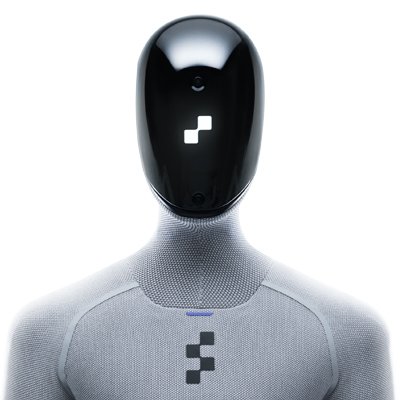
Helix is now learning directly from human video data We have already trained on data collected in the real world, including Brookfield residential units To our knowledge, this is the first instance of a humanoid robot learning navigation end-to-end using only human video
46,041 Aufrufe • vor 9 Monaten •via X (Twitter)

0 Kommentare

Keine Kommentare verfügbar

Kommentare vom Original-Post werden hier angezeigt

Ähnliche Videos

NEWS: Humanoid robotics company Figure has released Helix 02, what they claim in their most capable humanoid model yet. "A single neural system that controls the full body directly from pixels, enabling dexterous, long horizon autonomy across an entire room: • Autonomous, long‑horizon loco-manipulation: Helix 02 unloads and reloads a dishwasher across a full-sized kitchen - a four-minute, end-to-end autonomous task that integrates walking, manipulation, and balance with no resets and no human intervention. We believe this is the longest horizon, most complex task completed autonomously by a humanoid robot to date. • All sensors in. All actuators out: Helix 02 connects every onboard sensor - vision, touch, and proprioception - directly to every actuator through a single unified visuomotor neural network. • Human-like whole body control from human data: All results are enabled by System 0, a learned whole‑body controller trained on over 1,000 hours of human motion data and sim‑to‑real reinforcement learning. System 0 replaces 109,504 lines of hand‑engineered C++ with a single neural prior for stable, natural motion. • New classes of dexterity: With Figure 03’s embedded tactile sensing and palm cameras, Helix 02 performs manipulation that was previously out of reach: extracting individual pills, dispensing precise syringe volumes, and singulating small, irregular objects from clutter despite self‑occlusion. Helix 02 is trained on over 1,000 hours of human motion data and integrates vision, touch, and proprioception."

Sawyer Merritt

624,689 Aufrufe • vor 5 Monaten

I don’t know if we live in a Matrix, but I know for sure that robots will spend most of their lives in simulation. Let machines train machines. I’m excited to introduce DexMimicGen, a massive-scale synthetic data generator that enables a humanoid robot to learn complex skills from only a handful of human demonstrations. Yes, as few as 5! DexMimicGen addresses the biggest pain point in robotics: where do we get data? Unlike with LLMs, where vast amounts of texts are readily available, you cannot simply download motor control signals from the internet. So researchers teleoperate the robots to collect motion data via XR headsets. They have to repeat the same skill over and over and over again, because neural nets are data hungry. This is a very slow and uncomfortable process. At NVIDIA, we believe the majority of high-quality tokens for robot foundation models will come from simulation. What DexMimicGen does is to trade GPU compute time for human time. It takes one motion trajectory from human, and multiplies into 1000s of new trajectories. A robot brain trained on this augmented dataset will generalize far better in the real world. Think of DexMimicGen as a learning signal amplifier. It maps a small dataset to a large (de facto infinite) dataset, using physics simulation in the loop. In this way, we free humans from babysitting the bots all day. The future of robot data is generative. The future of the entire robot learning pipeline will also be generative. 🧵

Jim Fan

165,246 Aufrufe • vor 1 Jahr

Exciting updates on Project GR00T! We discover a systematic way to scale up robot data, tackling the most painful pain point in robotics. The idea is simple: human collects demonstration on a real robot, and we multiply that data 1000x or more in simulation. Let’s break it down: 1. We use Apple Vision Pro (yes!!) to give the human operator first person control of the humanoid. Vision Pro parses human hand pose and retargets the motion to the robot hand, all in real time. From the human’s point of view, they are immersed in another body like the Avatar. Teleoperation is slow and time-consuming, but we can afford to collect a small amount of data. 2. We use RoboCasa, a generative simulation framework, to multiply the demonstration data by varying the visual appearance and layout of the environment. In Jensen’s keynote video below, the humanoid is now placing the cup in hundreds of kitchens with a huge diversity of textures, furniture, and object placement. We only have 1 physical kitchen at the GEAR Lab in NVIDIA HQ, but we can conjure up infinite ones in simulation. 3. Finally, we apply MimicGen, a technique to multiply the above data even more by varying the *motion* of the robot. MimicGen generates vast number of new action trajectories based on the original human data, and filters out failed ones (e.g. those that drop the cup) to form a much larger dataset. To sum up, given 1 human trajectory with Vision Pro -> RoboCasa produces N (varying visuals) -> MimicGen further augments to NxM (varying motions). This is the way to trade compute for expensive human data by GPU-accelerated simulation. A while ago, I mentioned that teleoperation is fundamentally not scalable, because we are always limited by 24 hrs/robot/day in the world of atoms. Our new GR00T synthetic data pipeline breaks this barrier in the world of bits. Scaling has been so much fun for LLMs, and it's finally our turn to have fun in robotics! We are building tools to enable everyone in the ecosystem to scale up with us. Links in thread:

Jim Fan

364,380 Aufrufe • vor 1 Jahr