Video wird geladen...

Video konnte nicht geladen werden

Zur Startseite

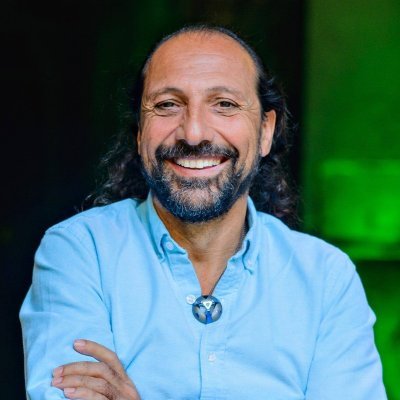
Here's something the physics textbook doesn't dwell on: the most successful scientific theory ever built runs on 19 numbers that nobody can explain. They're measured. They're plugged in. They work — the Standard Model predicts particle behaviour to extraordinary precision. But ask *why* the electron has the mass it...

11,949 Aufrufe • vor 2 Monaten •via X (Twitter)

0 Kommentare

Keine Kommentare verfügbar

Kommentare vom Original-Post werden hier angezeigt

Ähnliche Videos

The Sabotaging Practice of Over Supply and Sameness in the NFT Space. The current zeitgeist of the NFT space is that the same artists are doing the same kind of work five times a year, with project after project leaving a trail of disappointment and discontent among collectors and all of us watching in disbelief as huge resources are extracted from the space over work that feels like it could be left as an "artist study." I understand that you can do what you want with your money as collectors, but we are killing the whole space with this incestuous practice. No artist is that prolific to be able to do 5 collections of 100+ pieces each every year and actually deliver innovation and some kind of creative evolution. Of course, they can pretend play that the work has something new, but there is no precedent nor proof that that has ever happened in the speed that it happens in the NFT space. Again, people are free to through away their resources on whatever they want but with this way of doing things, we more and more are going to start seeing the consequences. Oh! There are consequences? Yes. Maybe unintended, but there are. Let's see. Let's start with the loss of belief in the NFT space as somewhere where emerging artists can come and find support for their experiments. Why even bother to bring experiments, innovation, and new ways to think of art on the blockchain if the same people have all the collectors hypnotized with their magical flutes? Why even try to come to a space where taking risks and challenging the status quo (the mission of art!!!) is overlooked? This makes the NFT space a social club and not a space for art. I guess it is fine, but IMO it is a recipe for disaster. New collectors stay away because the art will slowly but surely become stale and un-challenging. Why even bother to come and see what is happening here if you can't, as a collector, see new weird and up-and-coming artists? The amount of noise emitted by the same artists doing the same art over and over, drowns out any new voices. Again. A recipe for disaster. The NFT space is becoming a space of disappointment and doubt. We think that collections going to zero one after the other, over and over, is not damaging? I feel we are kidding ourselves. Disappointment piles up, and again, the people who will hurt are the emerging artists, the new blood, the ones who are willing to risk the most and, in return, put fire in this cold space of sameness. I love this space—don't get me wrong—it has changed my life, and I believe it has a ton of potential, but things need to change for it to become a beacon of light in art. But we need to support new voices. We need to support new ideas. The challenge is huge. I hope to contribute all I can to this change. I hope more and more see how exciting it is to go out and try to discover what else is out there and move this space forward. But again, I understand the leaps of faith needed, but if there is a space that is based on that, it's the NFT space...so there is hope. We will see. 📺by Boldtron

alejandro cartagena

98,261 Aufrufe • vor 2 Jahren

🚨 MATHEMATICIANS SAY THE GOLDEN RATIO IS THE “MOST IRRATIONAL” NUMBER AND IT’S NOT JUST A FUN FACT. Most irrational numbers can be approximated quite well by simple fractions. But the golden ratio (φ ≈ 1.6180339887…) is famously the worst at this. Its continued fraction is made entirely of 1’s [1; 1, 1, 1, 1…] which makes it the number that is most poorly approximated by rational numbers. In a very precise mathematical sense, it is the “most irrational” irrational. Why this matters: • The golden ratio appears throughout nature (nautilus shells, flower petals, galaxies) and human design (art, architecture, even financial markets) • Because it resists rational approximation so strongly, it creates stable, efficient patterns in growth and structure • This property has deep connections to chaos theory, dynamical systems, and why certain physical systems behave the way they do • It’s not just aesthetic the golden ratio’s extreme irrationality gives it unique mathematical stability The deeper implication: “Irrational” isn’t a simple yes/no label. Some irrationals are “more irrational” than others depending on how badly they can be approximated by fractions. The golden ratio sits at the extreme end of that spectrum. This isn’t just number theory trivia it helps explain why nature so often lands on this specific proportion when building efficient, stable structures. We’re still discovering how deeply this one number is woven into the mathematics of growth, form, and stability across the universe. Do you think the golden ratio shows up so often in nature because it’s mathematically special, or is it just a beautiful coincidence? Follow for more mind-bending math and the hidden structure of reality.

TheNewPhysics

44,841 Aufrufe • vor 20 Tagen

There is a room in Málaga that was built to be the closest thing on earth to standing inside heaven. It is called the camarín of the Virgin of Victory, and it is hidden at the top of a tower inside the Santuario de la Victoria. To reach it, you climb and the ascent is the entire point... The building you are climbing through was completed in 1700, and it was designed as a single argument made in stone. At the bottom lies a crypt: a black chamber crowded with white plaster skeletons, a meditation on death and the brevity of life. From there a staircase rises, and as you climb it the light grows stronger and the imagery changes from bones to saints. The architects of the time understood this ascent as the soul's own journey, the dark crypt as the stage of penitence, the staircase as the stage of spiritual progress, and the room at the very top as the final stage: the union of the soul with the divine. That room at the top is the camarín, and its dome is one of the most extraordinary interiors in Spain... Every surface is covered in white and gold plasterwork. There is no empty space anywhere. The Baroque called this horror vacui, the horror of the void: the conviction that a space meant to represent heaven should not contain a single bare patch of stone. Out of that plasterwork emerge angels, flowers, birds, and mirrors. The mirrors are not decoration alone. They catch the light pouring in through the windows of the drum and throw it around the chamber, so that the gold seems to move and the whole room appears to shimmer and breathe. This wonder was built by people who believed that if you wanted to show a human being what heaven might feel like, you did not describe it to them. You built a room, and you let them climb into it... -- -- -- If you enjoyed this, I write a weekly newsletter read by over 50,000 people who love rediscovering the beauty of the past. You can join us here: If you'd like to support my work, a paid subscription is what makes it possible.

James Lucas

68,921 Aufrufe • vor 1 Monat

They did not take cursive from the schools because children no longer needed it. They took it because of what it was quietly building in them. Consider what the exercise actually is. A child, six years old, is handed a pen and asked to draw a single unbroken line that becomes a word. The wrist must float. The fingers must hold a living pressure, never quite the same twice, always correcting. The eye must follow the ink forward and trust the hand to finish what it has begun. There is no lifting, no stopping, no starting over mid-word. The loop must close. The ascender must rise and return. The sentence must travel from one margin to the other as a single continuous gesture, and at the end of it the hand must still be steady. Twelve years of this. Every day. Ten thousand small acts of sustained, self-correcting attention, carried out below the level of conscious thought, until the motion belongs to the body and the body belongs to the motion. This is not penmanship. It is the slow construction of an interior form. The hand that has learned to carry a line without breaking it is the hand of a mind that has learned to carry a thought without breaking it. The two are not metaphors for one another. They are the same faculty, trained in the same child, by the same daily discipline. Continuity of the stroke becomes continuity of the reasoning. The patience of the loop becomes the patience of the argument. The commitment to finish a word one has started becomes the commitment to finish a sentence, a paragraph, a life's idea, without reaching for the nearest distraction halfway through. Print is a different creature entirely. Print lifts. Print stops. Print assembles a word out of separate, stamped, interchangeable pieces, each one beginning and ending in isolation. A mind raised only on print learns to think the way print is made, in discrete tokens, in replaceable units, in fragments that can be recombined by any outside hand without the owner noticing the substitution. It is precisely the shape of thought a language model produces. It is precisely the shape of thought a language model can steer. Cursive is kata. This is the whole of it. A form repeated daily, for years, not for the sake of the form but for what the repetition lays down in the practitioner beneath the form. The swordsman does not train kata so that one day he may fight in kata. He trains it so that when the moment comes and there is no time to think, the movement is already inside him, older and deeper than thought, and it rises on its own. Cursive was the kata of the literate mind, the daily quiet drilling of continuity, of patience, of a line held steady under the long pressure of its own length. And the signature it produced at the end, that small flourished mark unique to a single human being on earth, was only the outward proof of an inward form no machine and no other hand could ever reproduce. Take the kata away and the practitioner is left with vocabulary in place of faculty. He can recognise a whole thought when he encounters one. He cannot carry one himself. He can admire a finished argument. He cannot sustain one long enough to close its loop. He begins books he does not finish, sentences he does not end, ideas he abandons the moment the screen in his palm offers him a brighter one. And when the machine begins feeding him tokens in the exact shape his schooling taught him to receive, he meets it with no interior resistance at all, because no interior form was ever built in him to push back with. They removed it quietly, across a generation, and they removed it in the last years before the machines arrived. Twelve years of daily practice in unbroken, embodied, self-authored thought, gone from the curriculum of almost every child in the Western world, just as the instruments designed to complete their sentences for them came online. The hand forgets. The mind, having never been taught the kata, forgets a thing it never knew it had. That is what cursive was. That is what was taken. And that is why the thought of anyone who still writes by hand, in long unlifted lines, remains, quietly, stubbornly, and without their ever needing to announce it, their own. Now the question stands open. What else has been banned, phased out, quietly retired from the curriculum and from common life over these same decades, under the same soft excuses? Mental arithmetic. Memorisation of poetry. Latin. Logic as a formal subject. Map reading. Knot work. The keeping of a commonplace book. The reading aloud of long passages in class. Singing in parts. What was each of those actually building in the child, beneath the surface of the lesson, and whose interest was served by its disappearance?

SiriusB

441,606 Aufrufe • vor 2 Monaten