正在加载视频...

视频加载失败

He’s back! He’s 30 now and, since our last conversation, has gone from being semi-retired to now retired, as his investments are doing well. He worked for a NY-based hedge fund/family office. We discussed how he and his boss analyzed over 60 industries, the companies he looked at, and...

491,082 次观看 • 8 个月前 •via X (Twitter)

0 条评论

暂无评论

原始帖子的评论将显示在这里

相关视频

Henry Ellenbogen has one of the best track records in growth investing, yet he has kept a notably low profile. He built his reputation at T. Rowe Price, where he ran the New Horizons Fund and turned it into one of the best-performing small-cap growth portfolios in the country. He backed more than 50 companies through IPO before leaving in 2019 to found Durable Capital. Henry believes great investing is about understanding people and change. He spent his career studying the 1% of companies that drive nearly all long-term returns, which led him to a simple philosophy: invest in small companies that can become large ones. He built Durable to uniquely support a company through its full compounding journey. A single team can invest early in private markets and continue owning businesses as they scale into durable public companies. He talks about investing in and learning directly from founders like Jeff Bezos, Reed Hastings, tobi lutke, Max Levchin, and Luis von Ahn, and watching how they adapt and rebuild as their businesses scale. He is especially drawn to "Act II" entrepreneurs, founders who have already built one company and return with sharper judgment and execution the second time. We also discuss Durable itself, which is Henry's own Act II. He explains how he has built the firm around developing talent, measuring people by how much they make others better, and his discipline of writing memos and doing multi-year lookbacks on every investment. What comes through most clearly is how much Henry loves the craft of investing, and how seriously he takes building something meant to last. Enjoy! Timestamps: 00:00 Intro 03:02 Origin of an Investment Philosophy 07:02 The "One Percent" of Stocks 13:17 Domino's 19:10 Betting on "Act Two" Teams 24:31 Building Durable Capital 34:46 Market Structure and Time Arbitrage 52:49 Adapting to Discontinuous Change 1:03:19 Physical Moats vs. Soft Moats 1:11:52 The End of Free Money 1:37:35 The Argument for Going Public 1:46:43 The "Warriors" Mindset 1:51:17 Kindest Thing

Patrick OShaughnessy

868,962 次观看 • 7 个月前

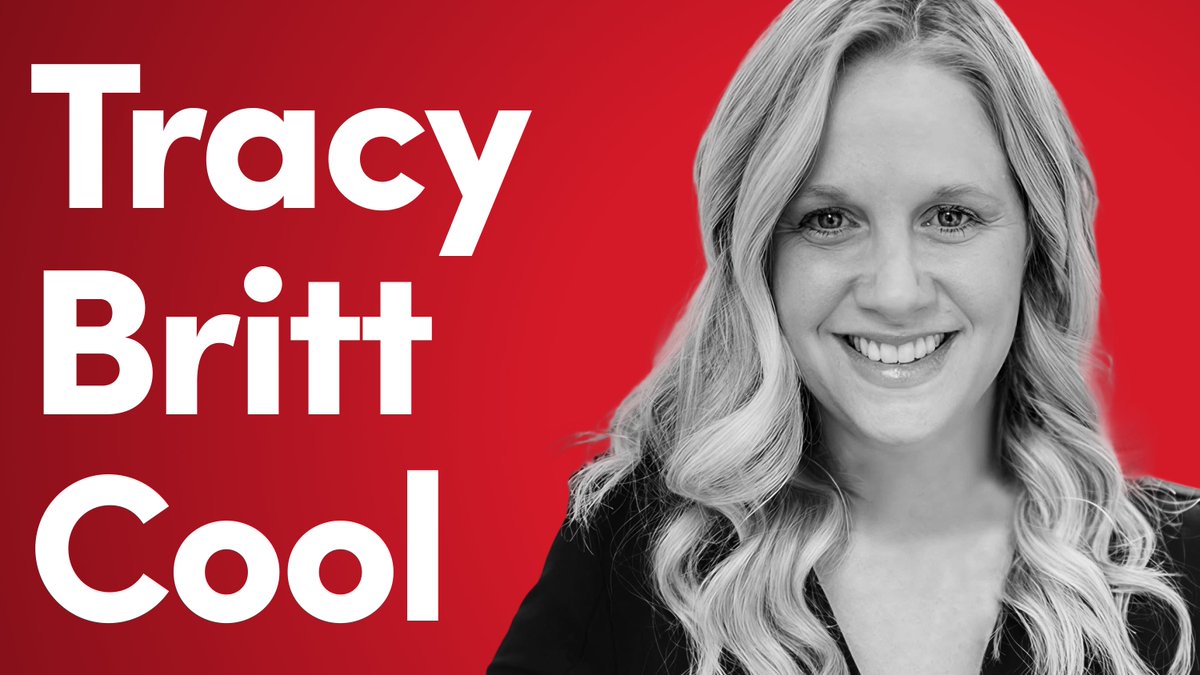
My conversation with Tracy Britt Cool. Warren Buffett called her his "fireman" because of her reputation at Berkshire Hathaway for turning around struggling businesses. In this conversation, you'll learn exactly how she did it, how she evaluates businesses, and the mistake that most people make when hiring. (0:00) Intro, recent reading, and family life (3:04) Alan Mulally's Turnaround at Ford (4:22) The Work Test (5:03) The Pampered Chef Turnaround (7:06) How Value Creation is Changing (8:38) Why Companies Fail to Adapt (10:09) Lessons from the Farm (16:57) Lessons from Warren Buffett (18:25) Ad Break (20:57) Buying Companies at Kanbrick (22:38) The 3 Components of Long-Term Thinking (25:11) Avoiding the Complexity Trap (26:23) How to Turnaround a Declining Business (28:03) Attracting Talent to a Declining Business (30:29) Matching Structure to Time Horizon (32:00) Growing Margins (33:25) The Process: What to Focus on (35:10) The 3 Buckets of Putting People First (37:00) How to Specifically Evaluate Talent (40:16) Identifying the People to Avoid at All Costs (42:23) Sourcing Deals (43:56) 5 Lenses to Evaluate a Business (45:14) How to Evaluate a Moat (49:29) How Quantitative Analysis Misleads (50:25) A Detailed Look at Return on Invested Capital (53:18) What Makes an Attractive Market (54:33) Finding High-Potential Businesses (57:00) The Post Close Playbook (1:02:03) Repeatable Business Systems (1:04:06) Why Copying What Works is Hard (1:06:01) Mistakes in the Past 5 Years (1:10:13) Debt and Leverage (1:12:20) 3 Ways to Think about AI (1:15:13) What Most People Get Wrong When Hiring (1:21:12) Businesses to Avoid (1:22:35) What Not to Do (1:24:31) Public vs. Private Company Boards (1:27:04) How Warren Buffett Taught Katharine Graham Business (1:29:28) Each Hire is a Million Dollar Decision (1:31:02) Evaluating Integrity (1:32:36) The One Word That Keeps People Honest (1:35:52) Principles & Lessons from Business History (1:36:59) Inflation (1:40:22) Public Company Heroes (1:41:41) Companies & Political Opinions (1:42:46) What is Success for you? Tracy Britt Cool is the co-founder of Kanbrick and the former CEO of Pampered Chef. At Berkshire Hathaway, she worked directly with Warren Buffett and was on the board of Kraft Heinz, Benjamin Moore, and Dairy Queen. (Includes paid partnerships. If you're interested in sponsoring, reach out.)

Shane Parrish

430,283 次观看 • 10 个月前

10 years ago, Parag Agrawal and I were working together to introduce ranking to Twitter’s timeline for hundreds of millions of consumers. Now he’s started Parallel Web Systems to build infrastructure for a very different kind of user: AI agents. And in a full circle moment, we’re able to work together again, as First Round invested in his seed round last year alongside Khosla Ventures and Index Ventures. Parag and I had a chance to sit down for a great conversation last week (his first interview since leaving Twitter!). It was a fascinating reflection on what he learned and what he’s doing differently. We dig into: - The transition from CTO → CEO → Founder - What he was *really* thinking when all the Twitter drama was going down - Why he chose to be a founder (vs. take another big role) - How he landed on the idea for Parallel - What fundamentally changes when you’re designing for AIs vs. humans - How he thought about fundraising and building his early team - How working with customers like Clay shaped Parallel’s earliest products - The case for building “slow” APIs, and the advice he got from Patrick Collison - His takes on the modern agent stack and how evals need to evolve And much more! Immensely proud to be able to partner with Parag and the entire Parallel team. They’ve made incredible progress in a short amount of time and I can’t wait for more folks to start playing around with the APIs they’ve built. The full conversation is below, as well as more details on what Parallel is up to.

Todd Jackson

114,887 次观看 • 1 年前

My guest today is Paul Tudor Jones (Paul Tudor Jones), one of the greatest macro traders of all time. He correctly predicted the 1987 stock market crash and shorted the Japanese bubble in 1990. For over 40 years, his flagship fund has had a negative correlation to the S&P 500. 100% of his returns are alpha. He says today's market has so many similarities to 2000, "the easiest bear market I've ever seen in my whole life." He makes the case for going long dollar-yen, why Bitcoin beats gold as an inflation hedge, and why he was wrong about Warren Buffett. But what I'll remember most from this conversation is Paul's zest for life. He's 71 and still wakes at 2:30 every morning to trade the London open. He works out for two hours a day. He walks with his wife every evening. He travels the country chasing peak spring and peak fall. He's so excited about the songs picked for his funeral that he wishes he could be there to hear them. Paul has lived five lifetimes in one. He's one of the most entertaining and interesting people I've met, and the conversation will leave you searching to be as passionate about what you do as he is about what he does. Enjoy! Timestamps: 0:00 Intro 1:00 The Kindest Thing 13:19 Trading vs. Investing 17:33 Lessons from Warren Buffet 22:24 The Existential Risks of AI 29:54 The Nature of Trading 31:46 Bitcoin 35:55 Bubbles 42:08 A Day in the Life of PTJ 46:00 Information Overload 47:07 Passion for Markets 50:49 The Robin Hood Foundation 54:18 The Workless World 56:03 Journalism 1:00:00 Principal Components of a Great Life 1:05:06 Kill Them With Kindness

Patrick OShaughnessy

5,618,449 次观看 • 3 个月前

Warren Buffett's legendary speech at the University of Georgia. This speech is a great piece on business and investing. But I specifically enjoy it for Buffett's humor and life lessons. Here are some of my favorite points: 1. Don't work for your Resume - Work for someone you admire. Not to upgrade your resume. Working jobs that you hate first sounds to Buffett like: "Saving up sex for when you're old." Focus on learning on the job! 2. Qualities to focus on in Life - Buffett's Thought Experiment: Look around in your classroom, which classmate would you choose when you could keep 10% of his earnings for the rest of your life? Also, think about the inversion of this scenario: Who would you sell short? The characteristics that you focus on when answering these questions are the ones you should focus on in your own life. 3. The Best Compounders are Stable Companies - "The internet won't change how you chew gum." Buffett's biggest successes come from companies that aren't disruptable. Industries that are subject to disruption are a bad spot to look for long-term investments. 4. Go Short Horses, Not Long Cars - Investing is not about spotting the disruptors. In most cases, it's obvious when a life-changing product comes up. The question is, who profits from that change? It was a matter of time before cars replaced horses. But out of hundreds of car companies, only a handful actually succeeded. The same happened in the airline industry. 5. Managing your Circle of Competence - According to Buffett, the key to successful investing is to manage your circle of competence. It's not how big that circle is. More important is that you know your boundaries and always stay within them. 6. The Birds in the Bush - "A bird in the hand is worth two in the bush." However, an investor should also ask: 1. How many birds are in the bush? 2. When will they come out? 3. How sure am I? Investing is all about answering these questions. What investing lecture/speech/video can you recommend to me? If you enjoyed this tweet, please Retweet and Like it!

Daniel Mahncke

138,552 次观看 • 2 年前

I’m fascinated with history’s thinker-doers: Cicero, Marcus Aurelius, Benjamin Franklin. There’s no greater achievement than calling your shots: laying out a theoretical worldview, then executing ruthlessly to bend reality. There exist people like this today, who write a manifesto and go build a $100B company on top. And I’m launching a new Cosmos Institute series to interview these modern greats, featuring Peter Thiel, Joe Lonsdale, Jim O’Shaughnessy and more detailed in the thread below👇 If you feel pulled both by the joys of understanding and the thrill of action, this series is a masterclass on how to integrate the two. The inaugural episode today is with Colin Moran, founder of one of the best-performing, multi-billion hedge funds on wall street in the last 20 years. And yet, he couldn’t be further from your average money-manager: Colin is a devout Christian whose primary concern is rescuing Catholic art, music, and architecture. He studied intellectual history at Duke and Oxford and wanted to be an academic. His fund is not run by quants of ivy-league athletes but a nerdy group of humanities scholars who studied classics, theology, musicology, and history. Colin analyzes each company as if close reading a Great Book. And he attributes his best investments to following his intellectual curiosity: writing an academic essay on the nature of creativity, for example, resulted in one of his best investments in Shopify. He calls this process “following the fun”… it turns out the best way to make money is not to think about making money. Timestamps: 2:09 How to Read a Company as a Text 5:58 Follow The Fun, the Money Will Come 11:54 Great Founders: Autistic, Megalomaniac, or Vengeful 15:46 The Limits of Reason in Investing and Faith 25:40 Colin’s Intellectual Influence: John Henry Newman 32:03 Faith and Investing Share Uncertainty 47:58 Colin’s Story From Ivory Tower to Wall Street 1:15:37 Classical Liberals vs. National Conservatives 1:23:10 Judaism and Christianity: A Marriage of Convenience?

Johnathan Bi

236,572 次观看 • 11 个月前

Below is my conversation with @jason directly posted on the X platform. We discuss how Jason returned 4,000x ($25K into $100MM) on a single investment and How Sequoia Capital, Andreessen Horowitz, and Y-Combinator compete in a hypercompetitive market. “I can tell you the Sequoia team is very competitive. Every time I go by that office, people are talking about the transition. The last two or three times I was there, Doug Leone was in the office. You know, he's retired? I don't know if that's correct because I see him there. People like Bill Gurley, he's retired? Every time I see him, he's talking to startups and he's on the boards of all these companies. Vinod Khosla is in his seventies and he's in meetings.” (00:00) Episode Preview (01:15) Fundraising for LAUNCH and LP investing experience (02:10) Sequoia’s investments in Twitter and Zynga (03:12) Being Sequoia’s first venture scout and earning 50% carry (04:28) Venture wealth bombs (08:06) Jason’s 4,000x investment in Uber (09:44) Loyalty in venture (10:07) Investing in Superhuman (13:15) How Jason got a 200x on an AngelList syndicate deal (14:20) Episode Sponsor (14:59) Unlocking value through secondaries (15:41) Qualities of top managers (16:23) Jason’s current fund (17:21) Aligning incentives through a GP commitment (20:54) Sourcing deals through Syndicate investments (23:56) The importance of social proof (25:04) Dealflow is destiny (28:23) The importance of ownership (29:51) Sharp elbows in Series A and beyond (31:28) Jason’s current portfolio construction (32:29) YCs impact on venture (34:05) Playing for carry, the importance of a techstack and the myth of work life balance (36:19) Venture is a competition (37:06) Why early stage venture is not zero-sum #OpenLP Turpentine Erik Torenberg Thank you to our sponsor @tactycHQ

David Weisburd 🚀

176,447 次观看 • 2 年前

After nearly 7 years as The Fort, we have rebranded the podcast as POWERS. We welcome back Barrett Linburg to the podcast for a deep dive into the evolution of Opportunity Zones and also his firm, Savoy. Barrett shares how his focus on Opportunity Zone projects has shaped Savoy, why these tax-incentivized investments are so compelling for long-term real estate strategies, and how his team has expanded into property management, construction, and development. The discussion also highlights the transformation of Dallas neighborhoods, navigating legislation, and lessons learned from working with contractors and city partnerships. We discuss: - How Barrett discovered opportunity zones and built a firm around them - The redevelopment of Bishop Ridge in Dallas and the strategy behind choosing locations - Key changes from Opportunity Zone 1.0 to 2.0 and what they mean for investors - Building out complementary businesses in property management, renovations, and construction - Combining opportunity zones with PFC structures to maximize returns and affordability 5:52 - Barrett's real estate journey 7:12 - Opportunity zones in practice 21:08 - Case study: Bishop Ridge 26:21 - Future of opportunity zones 34:51 - Understanding OZ tax benefits 35:16 - Clarifying misconceptions about OZ investments 36:55 - Step up in basis explained 38:46 - Investing in opportunity zone businesses 43:47 - Challenges with general contractors 48:42 - Expanding Savoy Equity Partners 58:31 - Navigating PFC and OZ deals 1:04:33 - Conclusion and contact information

Chris Powers

80,072 次观看 • 11 个月前

Mitchell Green is the co-founder and managing partner of Lead Edge Capital, a $9B growth equity firm he founded in 2011. For 15 years, he and his partners have built one of the most disciplined investment machines in the business, designed to deliver consistent returns by hitting doubles and triples rather than chasing power law outcomes. He obsesses over avoiding zeros and is constantly underwriting investments to know exactly when to sell. He has built a unique culture at Lead Edge, sending handwritten thank you notes to nearly everyone he meets and sitting down one on one with every person at the firm once a year. He is, by his own admission, one of the most persistent and competitive people you will meet. After the episode, he told me he believes the most important thing in life is to be memorable. You will find, listening to this conversation, that he very much is. We discuss: - Why it’s the best time to buy public software companies - Lessons from 10,000 cold calls - His unique LP base - Why consistency of returns matters more than home runs - The art of knowing when to sell - How culture is built from the top + the importance of follow-through - What skiing taught him about risk and competition Enjoy! Timestamps: 0:00 Intro 1:00 The Hierarchy of BS 2:20 Lessons From 10,000 Cold Calls 9:05 Base Hits vs. Grand Slams 15:24 The 8 Buying Criteria 17:24 Pricing and the AI Exit Multiple Trap 19:24 Software as a Game of Distribution 23:20 Creative Deal Structuring 26:27 The Framework for Focus 29:01 The Art of the Investigative Cold Call 34:24 Culture of Hustle 35:34 The Annual One-on-One Process 37:59 Playing to Strengths 39:43 The Mount Rushmore of Investment Machines 42:05 Fears and Excitement Around AI 48:54 Ski Racing 52:29 Advice for Starting a Firm 54:35 The Kindest Thing

Patrick OShaughnessy

738,218 次观看 • 4 个月前