Loading video...

Video Failed to Load

Go Home

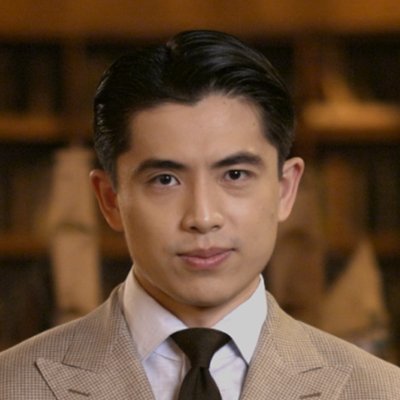
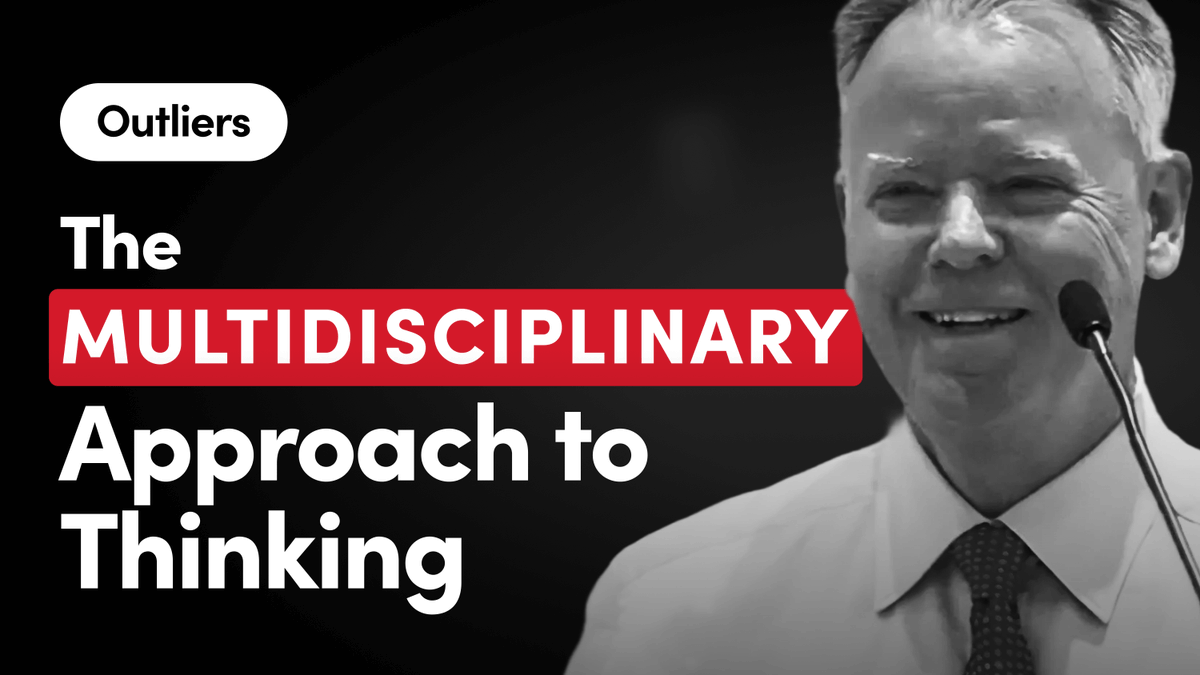
I’m fascinated with history’s thinker-doers: Cicero, Marcus Aurelius, Benjamin Franklin. There’s no greater achievement than calling your shots: laying out a theoretical worldview, then executing ruthlessly to bend reality. There exist people like this today, who write a manifesto and go build a $100B company on top. And I’m...

236,572 views • 10 months ago •via X (Twitter)

0 Comments

No comments available

Comments from the original post will appear here

Related Videos

Sequoia founder Don Valentine: “The art of storytelling is incredibly important” “The art of storytelling is incredibly important. And many—maybe even most of the entrepreneurs who come to talk to us can’t tell the story. Learning to tell a story is incredibly important because that’s how the money works. The money flows as a function of the stories.” The founder of Sequoia founder explains that the story is how you explain what you want to do, how long it’s going to take, who the competition is, and how much money you need. a16z cofounder Ben Horowitz shared a similar view in a 2014 Forbes interview: “Storytelling is the most underrated skill… Companies that don’t have a clearly articulated story don’t have a clear and well thought-out strategy. The company story is the company strategy.” He continues: “The story must explain at a fundamental level why you exist. Why does the world need your company? Why do we need to be doing what we’re doing and why is it important?… You can have a great product, but a compelling story puts the company into motion. If you don’t have a great story it’s hard to get people motivated to join you, to work on the product, and to get people to invest in the product.” This is the job of the founder and CEO: “The CEO must be the keeper of the story. The CEO is responsible for getting the story right, that it’s up to date, compelling, and can move the hearts of men and women. That’s the fundamental responsibility of the chief executive… The mistake people make is thinking the story is just about marketing. No, the story is the strategy. If you make your story better you make the strategy better.” Video source: Stanford Graduate School of Business (2010)

Startup Archive

258,562 views • 1 year ago

Studying Marx made me a much better entrepreneur. The most vocal critics of a system (Nietzsche to Christianity, Schmitt to Liberalism) are often the best guides. Marx is no different. If you want to master the game of capital, you need to understand his penetrating insights on alienation, primitive accumulation, and fetishization. My guest Marcus Ryu is one such master. He built a $16 billion startup, Guidewire, in response to Marx’s idea of alienation. The way to have motivated, effective employees is to address the problem of “estranged labor” within capitalism itself. This response represents both a deep agreement and rejection of Marx’s ideas. Marx was, of course, not his only philosophical guide in his entrepreneurial journey. For the first 25 years of his life, Marcus seemed destined to be a philosophy professor: top of his class at Princeton and Oxford, nerdy, with no interest outside the most theoretical of questions. And yet, after an existential crisis towards the end of his PhD on Wittgenstein Marcus found himself in Silicon Valley. This interview catalogs the story of that radical transformation and how Nietzsche, Marx, Hegel, and Wittgenstein shaped his approach to building startups. Timestamps: 1:55 How To Unalienate Your Labor 16:38 From Oxford to SF 25:28 Two Founder Types: Messianic Leader vs. The Hyperationalist 30:32 How Philosophy Harms You As a Founder 42:10 The Sociopathic Founder Type 52:38 The Inner Dialogue of a Philosopher 1:02:59 Scholars are not thinkers, employees are not founders 1:36:10 Philosophy as a Monastic Life 1:55:24 Human-Centered vs. Ruthless Leadership

Johnathan Bi

42,563 views • 9 months ago

Warren Buffett on why having less money is actually one of the biggest edges in investing: Buffett is asked about his best investing periods. His answer reveals something most people miss about scale and returns. "My best period was right after I met Ben Graham in early 1951. From the end of 1950 through the next 10 years, returns averaged about 50% a year... but I was working with a tiny tiny tiny amount of money." He explains his process back then: "I went through the pages of the manuals page by page. I probably went through 20,000 pages in the Moody's industrial, transportation, banks and finance manuals. And I did it twice. I actually looked at every business." The result? He'd find one or two businesses he could put $10,000 or $15,000 into that were "ridiculously cheap." But as his capital grew, the universe of opportunities shrank dramatically: "As soon as you start getting the money up into the millions, many millions, the curve on expectable results falls off just dramatically." His conclusion is striking: "If you're working with a small sum of money and you're really interested in the business and willing to do the work, there's no question in my mind. You will find some things that promise very large returns compared to what we will be able to deliver with large sums of money." Charlie Munger adds his own framing: "A brilliant man who can't get any money from other people and is working with a very small sum probably should work in very obscure stocks searching out unusual mispriced opportunities." But Buffett notes that most smart people on Wall Street don't take this path. They chase a different game entirely: "Most smart people in Wall Street figure that they can make a lot more money, a lot easier, by getting an override on other people's money... the monetization of hope and greed is a way to make a huge amount of money." He shares a recent example. A friend with no real investing track record called him about starting a $125 million hedge fund. "If you looked at this fellow's schedule D on his 1040 for the last 20 years, you'd think he ought to be mowing lawns. But he may get his 125 million." Buffett's final observation cuts deep: "The biggest money made in Wall Street in recent years has not been made by great performance, but has been made by great promotion."

Black Edge

13,791 views • 2 months ago

Try and make it make sense. Yesterday will be the day in history when Trump made the poor destitute, the middle class poor, leaving the rich planning how to invest their new ill gotten gains in a new yacht or some overseas tax haven. Wun Dum Fuc about to literally suck billions out of the real economy for billionaires to hoard. Trump is not wrong, the treasury will see an influx of hundreds of billions of dollars, but it will be hundreds of billions made up of YOUR hard earned cash. NOT money from China, Canada or Europe. Republicans have spent decades claiming to be the party of fiscal responsibility. And they have just put in place the biggest transfer of wealth in American history and had a party on the White House lawn to celebrate. If a Dem president had just put your taxes up as a family by $5000, Republicans would be losing their minds today and Fox News would be playing their outrage on a loop. But because they’ve just arranged to steal the money from middle and low income families, they are celebrating and calling it ‘Liberation Day’. They should be calling it ‘Fiscal Subjugation Day’ All they’ve done, is liberate $5000 from the bank account of every working family in America, in the biggest act of deception in modern American history. This is not me spreading misinformation. It’s a simple FACT. He lied to voters on the campaign trail when he said he would lower the cost of living. He’s just done the opposite and has the audacity to call the catastrophe about to hit the bottom 95% of Americans, ‘minor disruption’. He’s convinced millions of people who swallowed his lies, it’s a small price to pay for bread and water tomorrow. Just pause to think about that for a moment. This is a president who is quite literally about to take food from the mouths of hungry children in America, while tanking an economy that was the envy of the world following the pandemic. Ask yourself this simple question, who benefits most in times of crisis and economic instability? Rest assured, it ain’t the middle or working class. If you are on a fixed low income in America today, you are part of Donald Trump’s ‘Final Solution’. If you’re a millionaire or a billionaire, you’re planning which tax haven to stash the proceeds of crime in, from the biggest fiscal criminal act in modern times. In Trump’s Robin Hood tale, the Sheriff of Nottingham is having a banquet today while the merry men in his thiefdom prepare to starve. There’s no ‘happy ever after’ in this horror movie. It took Joe Biden four years to put America in economic pole position in the world. It’s taken Wun Dum Fuc, eight weeks to burn it to the ground on a Casino bet, with the lowest economic odds of success in modern history. Let’s remind ourselves, how did his last Casino venture go? Well now America is his new casino bet. The wheel is spinning and Trump has placed all YOUR chips (because let’s face it, he never bets with his own money), on 0. Oh and did I mention, Russia and Belarus got no tariffs. This brings a whole new meaning to the term ‘Russian Roulette’. Remember, there’s just one bullet in the chamber, he’s just spun it and the gun is at the side of YOUR head not his or any of his rich friends. Hold your breath America. Tick, tock, tick tock, tick tock. 🎥 TikTok -

𝔗𝔯𝔲𝔱𝔥 𝔐𝔞𝔱𝔱𝔢𝔯𝔰

89,417 views • 1 year ago

Anti ICE riots funded by a man who “Actually shares an office in Shanghai with a propaganda firm of the Chinese Communist Party” “He identifies as a communist” Liz Wheeler “We traced the organizers of those anti-ice riots. We traced who organized this — Singham uses his wealth to fund violence in the United States, channeling his money through a complex network of shell organizations, including NGOs and political activism groups “We traced the organizers of those anti-ICE riots, investigating who orchestrated them, how they came to be, who’s paying for them, and who the people behind them are. We specifically looked into where they’re getting the money, and our investigation led us to Roy Singham. Neville Roy Singham is an American citizen and a tech entrepreneur, often referred to as a tech billionaire because he sold his tech company, ThoughtWorks, for three-quarters of a billion dollars. After selling his company, he moved to Shanghai, China, where he currently resides, with permission from the Chinese Communist Party (CCP), because he identifies as a communist.” “He has openly admitted to being a communist and even shares an office in Shanghai with a CCP propaganda firm. Singham has been seen at propaganda conferences in China, writing in a red notebook adorned with a hammer and sickle, and he has publicly praised the Chinese Communists” “Singham uses his wealth to fund violence in the United States, channeling his money through a complex network of shell organizations, including NGOs and political activism groups. This tangled web of funding is deliberately vague and confusing, but the result is clear: his money supports violent riots like those we’ve seen in the U.S. He is an operative of the CCP, though he claims he’s not paid by them. However, his ability to live and operate a business in China, coupled with his echoing of CCP talking points, raises questions. He is actively engaged in what the CCP has described as their primary tactic for undermining America as the world’s dominant superpower: funding domestic unrest and violence. As an American citizen, Singham is used as a patsy by the CCP, who can claim he’s simply spending his money as he sees fit. This is precisely what Roy Singham does”

Wall Street Apes

28,634 views • 9 months ago

Andrei Tarkovsky on Ingmar Bergman's Shame (1968): "Let us look at Bergman's Shame. The film doesn't contain a single 'actor's piece' for the performer to 'give away' the director's purpose, to play the conception of the persona, his attitude to it, to assess it in relation to the overall idea; and the latter is entirely hidden within the dynamic of the characters' lives, at one with it. The people in the film are crushed by circumstances; they act only in accordance with their situation, to which they themselves are subordinate; they make no attempt to proffer us any idea, any perspective on what is happening, or to draw any conclusion. All of that is left to the film as a whole, to the director's vision. And how superbly it is accomplished! You cannot say in simple terms who amongst them is good or bad. I could never say that von Sydow is a bad man. They are all partly good and partly bad, each in his own way. No judgements are passed, because there is no hint of tendentiousness in any of the actors, and the circumstances of the film are used by the director to explore the human possibilities which they test, and not for a moment in order to illustrate a thesis. Max von Sydow's character is developed with masterly power. He is a very good man; a musician; kind and sensitive. It turns out that he is a coward. But by no means every bold man is a good human being, and cowards are not always scoundrels. Of course, he is weak and irresolute. His wife is far stronger than he, so much so that she can overcome her fear. The hero lacks that strength. He is tormented by his own weakness, vulnerability, lack of resilience; he tries to hide, to cower in a corner, not to see and not to hear; and he does this like a child, naively and with complete sincerity. But when circumstances nevertheless force him to defend himself, he instantly turns into a scoundrel. He loses all that was best in him; but the drama and absurdity of his situation is that as he is now he becomes necessary to his wife, who, in her turn, looks to him for protection and succour instead of despising him as she always had. When he beats her about the face and says 'Get out!' she goes crawling after him. There is something here of the age-old idea of passive good and active evil; but its expression is immensely complex. At the beginning of the film the hero cannot even kill a chicken, but as soon as he has found a way of defending himself he becomes a cruel cynic. He has something of Hamlet: my view is that the Prince of Denmark perishes not as a result of the duel, when he dies physically, but immediately after the 'rat' scene, when he understands how irreversible are those laws of life which have forced him, a man of humanity and intellect, to act like the inferior people who inhabit Elsinore. Von Sydow is now a sinister character, afraid of nothing: he kills; will not raise a finger to save his fellows; pursues only his own interests. The point is that you have to be a person of great integrity to feel fear in the face of the foul necessity to kill and humiliate. And by shedding that fear and apparently acquiring courage, a person in fact loses his spiritual strength and intellectual honesty and parts from his innocence. War is the obvious catalyst for the cruel, anti-human elements in people. Bergman uses the war in this film exactly as he uses the heroine's illness in Through a Glass Darkly: to explore his view of man." — "Sculpting in Time" by Andrei Tarkovsky (translated by Kitty Hunter-Blair, 1987)

RadiantFilm

27,723 views • 5 months ago

Paypal co-founder Peter Thiel offers a contrarian view on mastery: the best founders aren't specialists, they're polymaths who understand how everything connects. After 14 years on the Facebook board, Thiel has watched Mark Zuckerberg up close. And he's noticed something that cuts against conventional wisdom about what it takes to build something great. "I think that one kind of perspective for a lot of the world-class entrepreneurs is they're not specialists. They're something close to polymaths." Thiel uses Zuckerberg as his prime example: "If you have a conversation with Mark Zuckerberg, he'd be able to speak with a surprising amount of understanding about a lot of things. He could talk about the details of the Facebook product, the psychology of social media, the way the culture is shifting, the management of the company, and how this fits into the bigger history of technology." This stands in stark contrast to how academia frames expertise: "Whereas the sort of academic view is often that you're like a narrow expert on one thing and that's what you do and what it is about. It's much more this polymath-like intellect who understands all these different things." Peter Thiel reflects on what this has looked like at the board level: "The kinds of board conversations we've had over the last 13, 14 years, it's just been this crazy range." The takeaway: world-class founders don't just go deep in one area. They think across product, psychology, culture, management, and technology history, and they see how it all connects.

Big Brain Business

69,402 views • 2 months ago

In it’s heyday, Goldman’s special situations group was the navy SEALs of money making. Today’s guest, Alan Waxman, used to run that group before leaving to build Sixth Street, now a $115b behemoth. SSG heads were sometimes of the more brainy, nerdy variety. Not Waxman. He is a force of nature and energy who apparently would pound around the SSG office, loudly and enthusiastically asking people “who is going to make us some money today?!” When I asked another SSG alum about Alan, he said his main memory was his remarkable nose for talent. Once, the smartest guy at SSG (which is saying something) was a mere entry level associate, 6 or 7 rungs in the hierarchy below Waxman. But, Waxman immediately recognized the raw talent and was joined to this associate at the hip. Under Waxman and his team, SSG produced an insane (so insane I can’t quote it!) percent of Goldman’s bottom line. In creating Sixth Street with his partners and team, he sought to recreate and expand the magic of the SSG days. Here, in his first interview of this type, he shares the entire story. I found Alan to be a singular force. His team is ridiculously talented, and nobody leaves (they’ve never lost a senior person). They’ve even built a unique pool of capital called Tao that sits atop the rest of the firm…tens of billions that can go anywhere and do anything as a permanent pool of money with no restrictions, other than to earn the highest risk adjusted returns possible. Sounds a lot like SSG. This was one of my favorite conversations this year. I hope you enjoy. Face the tiger! Timestamps 0:00 Intro 0:38 The Formative Goldman Sachs Experience 5:58 Unitizing Risk and Return 10:09 Facing the Tiger: Culture and Values 24:55 The Genesis of Sixth Street 34:09 Spotify and Airbnb Investments 37:52 The Flexibility of TAO 41:42 COVID-19: Playing Offense 44:42 Analyzing Risk and Business Models 48:35 Investing in Sports and Live Experiences 54:44 Developing Investment Themes 58:16 Personal Development and Firm Culture 1:19:00 The Future of Sixth Street 1:21:52 The Kindest Thing

Patrick OShaughnessy

769,086 views • 1 year ago