Loading video...

Video Failed to Load

Go Home

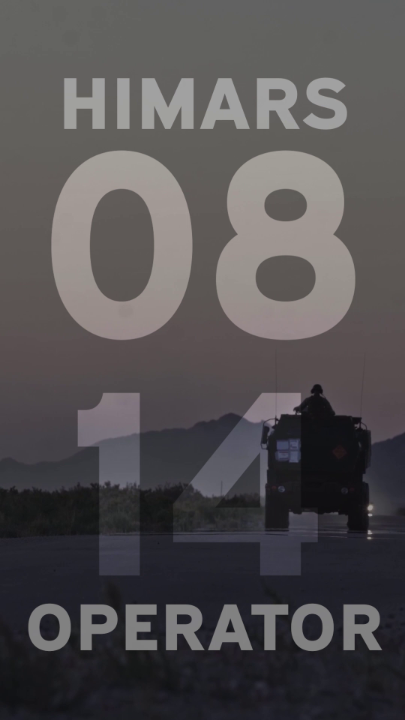
HIMARS + Tropic Lightning = A Lethal Combo 25th Infantry Division receives High Mobility Artillery Rocket System (HIMARS) launchers at Joint Base Pearl Harbor-Hickam, July 2025. 🎥 Sgt. Duke Edwards

91,764 views • 1 year ago •via X (Twitter)

0 Comments

No comments available

Comments from the original post will appear here

Related Videos

Breaking news. Norway has selected Hanwha's K239 system and 500km range ballistic missiles over SAAB/Boeing, KNDS, and Rheinmetall proposals as part of the acquisition of the long-range weapon system. Hanwha is the only company that met all requirements, including performance, delivery, and cost, according to the official announcement. The contract is worth roughly $2 billion and includes three kinds of missiles, 16 launchers, and comprehensive logistics and training. ●SAAB/Boeing did not submit their bids by the March 2025 deadline, while Norway also considered HIMARS through Lockheed Martin and FMS. ●KNDS was reportedly eliminated from the competition in June 2025. ●Hanwha plans to deliver launchers by 2029 and missiles by 2031. ●Hanwha recently signed a contract with Estonia and is offering the K239 to countries in the Middle East, Northern Europe, the Baltics, Eastern Europe, and Asian countries that don't have K239. (Latvia, Lithuania, Finland, Sweden, Egypt, the Philippines, Malaysia, etc.) ●Estonia and Norway are expected to engage in training exchanges with Poland on system operation. A rocket factory for Hanwha-WB Advanced Systems is scheduled to be built in Poland, and the ammunition produced there will be sold to various K239 family users. ●Currently, the K239 is in mass operation in South Korea, the UAE, Saudi Arabia, and Poland, and, along with HIMARS, is the world's most widely produced modern rocket artillery system. ●Hanwha Group has total solutions for tactical, operational, and strategic missile sectors, and they're actively promoting its high-altitude interception solutions. (L-SAM, L-SAM-II) ●The K239 MRLS can operate a wide variety of general purposes, special purposes, medium range, and long-range missiles.

Mason ヨンハク

69,360 views • 6 months ago

🚨The HIMARS at the Foot of Fuji Was Not a Drill. It Was a Message. Three signals from three cities. One target. One 24-hour window. Beijing was always going to hear it. Just after 2 p.m. Tokyo time on Wednesday, a platoon of about fifty U.S. Marines from the 3rd Battalion, 12th Marine Regiment — Okinawa-based, ordinarily stationed within sight of the Taiwan Strait — rolled two HIMARS launchers onto the East Fuji Maneuver Area and fired two salvos. Six rockets. Pause. Six more. The launchers then did what they were built to do: pulled back from the firing line and disappeared. The Marines call this "shoot and scoot." In the age of cheap drones and counter-battery radar, it is no longer a clever tactic — it is the difference between a launcher that fights tomorrow and a launcher that is a smoking ruin within ninety seconds. The Pentagon framed the exercise in routine terms. Live-fire training. Readiness. Allied interoperability. "Reinforcing our commitment to regional security and the defense of Japan," the division spokesman wrote in his April briefing email. Many legacy media outlets reported it as a drill. Second consecutive year at this location. Nothing to see. That framing is technically correct and strategically blind. Because of what else happened on May 20. In Taipei, Lai Ching-te marked his second anniversary in office, halfway through his term, with a press conference reaffirming that Taiwan's future will not be decided by external forces and that arms procurement from the United States is essential to peace. In Washington, president Donald Trump walked onto the tarmac at Joint Base Andrews and told reporters he would speak with Lai personally — the first sitting U.S. president-to-sitting Taiwanese president call since the United States switched recognition to Beijing in 1979. And in Shizuoka Prefecture, on a maneuver area visible to local farmers and a 72-year-old former Japanese soldier watching from a hilltop in Gotemba, twelve American rockets arced into the foothills of Japan's most photographed mountain. Three events. Three cities. Same calendar day. You can call that coincidence if you want. The people who plan exercises eighteen months in advance, coordinate them with Japan's Ministry of Defense by formal email in April, and clear them with three different theater command headquarters do not believe in that kind of coincidence. Here is what the HIMARS at Fuji actually means in the wider picture. The system, as configured for Wednesday's drill, is short-range. But HIMARS is a platform, not a weapon. Swap the standard pod for the Precision Strike Missile and the same truck can put a warhead 500 kilometers downrange — from Yonaguni, from the Senkakus, from the Batanes islands the U.S. Army has been quietly deploying to since last year, that arc covers the Taiwan Strait and a meaningful portion of the southern Chinese coast. Beijing has spent two decades and several hundred billion dollars building an Anti-Access/Area Denial system designed around one assumption: that American power projection in the Western Pacific depends on a handful of large, fixed, exquisite platforms — carrier groups, Kadena, Guam. The DF-26 is called the "Guam Killer" for a reason. The entire bet is that if you can credibly threaten those platforms, the United States will not show up. A truck that fires twelve rockets and disappears into the tree line breaks that bet. There is no "Guam Killer" for a HIMARS battery that moves every forty minutes across an archipelago of forty-six inhabited islands the U.S. and Japan jointly operate. You cannot pre-target what you cannot find. This was the message Beijing received on Wednesday afternoon. Trump's announcement told them the political ceiling has been raised. Lai's anniversary speech told them Taipei is not negotiating its sovereignty. The rockets at Fuji told them the military floor has been raised too — and that the floor is mobile, distributed, and very difficult to break. The bell that has been ringing all week did not stop at the phone call. It rang again at 2 p.m. in the shadow of Mount Fuji. And the next time it rings, it may not be a training round. Original post by me Aric Chen. Views are my own — welcome to discuss!

Aric Chen

109,283 views • 2 months ago

‼️‼️🇺🇲🇹🇼🇨🇳 BREAKING - The administration of Donald Trump is moving with full commitment into a preparatory phase aimed at defending Taiwan from China. In line with the new U.S. National Security Strategy, The administration of U.S. President Donald Trump has announced a large-scale arms sales package to Taiwan valued at more than $11 billion. The U.S. State Department was notified of this decision by the Defense Cooperation and Security Office of the U.S. Department of Defense. The United States is prepared to sell tactical ballistic missiles, self-propelled howitzers, multiple rocket systems, and strike drones. The eight proposed deals include 82 M142 HIMARS high-mobility artillery rocket systems and 420 M57 ATACMS tactical ballistic missiles, with an estimated combined value of $4.05 billion. The package also includes 60 M109A7 155mm self-propelled howitzers and associated equipment, with an estimated cost of $4.03 billion. Taiwan may additionally acquire Altius-600 and Altius-700M drones along with related systems, valued at approximately $1.1 billion. Furthermore, approval has been granted for the sale of more than 1,500 BGM-71F-7-RF TOW 2B anti-tank guided missiles, including logistics, training, and program support, with a total value of $353 million. The United States has also agreed to sell 1,050 FGM-148F Javelin missiles and 70 lightweight command launch units (LwCLU), at a total cost of $375 million. Additional elements of the package include spare parts for AH-1W attack helicopters worth $96 million, as well as repair kits for Harpoon anti-ship missiles valued at just over $91 million. See the latest updates with us: NSTRIKE

NSTRIKE

32,847 views • 7 months ago

EL ARSENAL DE ALTA TECNOLOGÍA QUE ESTADOS UNIDOS DESPLIEGA CONTRA IRÁN Lectura rápida Estados Unidos concentró en Medio Oriente una de sus mayores fuerzas militares en décadas. Utiliza bombarderos B-2, portaaviones, drones y sistemas antimisiles. Antes de los bombardeos, Washington acumuló poder aéreo, naval y tecnológico en la región. El Comando Central informó el armamento utilizado en la operación. El despliegue combina sistemas tradicionales y tecnología de última generación. Bombarderos furtivos B-2 Los B-2 Spirit encabezan la ofensiva aérea. Estados Unidos tiene 19 en servicio. Fueron equipados con bombas de 2.000 libras para atacar instalaciones vinculadas a misiles balísticos. Drones y ataque asimétrico Por primera vez se emplearon drones LUCAS (Low-cost Unmanned Combat Attack System). Son aparatos de ataque unidireccional y de bajo costo. Están inspirados en modelos iraníes Shahed-136. También operan drones MQ-9 Reaper armados con misiles y bombas guiadas. En tierra, el sistema HIMARS (High Mobility Artillery Rocket System) aporta movilidad y precisión Poder naval y misiles Dos portaaviones, el USS Abraham Lincoln y el USS Gerald R. Ford, operan en la región. Desde allí despegan cazas F/A-18 y F-35. Los destructores clase Arleigh Burke lanzan misiles Tomahawk y pueden transportar hasta 96 misiles. Defensa y guerra electrónica Estados Unidos activó sistemas Patriot y THAAD (Terminal High-Altitude Area Defense) para interceptar misiles y drones. Aviones EA-18G Growler realizan tareas de guerra electrónica. Aeronaves de alerta temprana monitorean hasta 400 kilómetros y coordinan operaciones en tiempo real. (+) en Clarín:

Clarín

21,488 views • 5 months ago

🇳🇴🇰🇷 Norway’s parliament has approved a roughly $2 billion plan to buy long-range rocket artillery, choosing South Korea’s K239 Chunmoo system over the US-made HIMARS. The move is intended to strengthen Norway’s deterrence posture against Russia, particularly in the High North and the Arctic, where Norway shares a strategically sensitive border with Russia. The decision is seen as a major breakthrough for Hanwha Aerospace in the European defence market, and a setback for Lockheed Martin, which produces HIMARS. Industry sources cited by Yonhap News Agency said a formal contract signing is expected on Friday in Oslo, and that South Korea’s presidential chief of staff, Kang Hoon-sik, is expected to attend. Why Norway picked Chunmoo Norwegian newspaper Aftenposten reported that the Chunmoo system met all of Norway’s operational requirements for ground-based long-range fires, including the ability to strike targets at ranges of up to 500 kilometres. It also reportedly offered the fastest delivery schedule among the competing options, a factor that has become increasingly important as European countries try to close capability gaps quickly. During Tuesday’s parliamentary session, Peter Frölich, defence spokesman for Norway’s Conservative Party, emphasised the importance of deep-strike capability in contemporary warfare, describing the munitions as able to reach far into enemy territory. What the deal includes The procurement covers 16 launch systems, along with an unspecified number of rockets, with a total value estimated at 19.5 billion Norwegian kroner. Under Norway’s defence procurement rules, the contract also includes an offset requirement. This means the foreign supplier must provide industrial cooperation equal to 100 percent of the contract’s value, typically through technology transfer and partnerships with Norwegian companies. Part of a wider European rearmament push The purchase comes as European countries accelerate defence investment amid the ongoing war in Ukraine and heightened concern about Russia’s military intentions. Some Norwegian lawmakers had pushed for a European missile alternative, but officials reportedly concluded that developing a new system would take too long and cost too much given the immediate security situation. Hanwha’s expanding presence in Europe The agreement further strengthens Hanwha Aerospace’s position in Northern Europe. The company has already won Nordic business, including contracts to supply K9 Vidar self-propelled howitzers to Norway signed in September 2025. Hanwha has also partnered with Poland’s WB Electronics to produce Chunmoo missiles in Poland, supporting European-based manufacturing and supply chains. Taken together, the deal highlights how quickly South Korea’s defence industry has become a serious contender in Europe, especially when speed of delivery and industrial cooperation are decisive factors. Stay connected, Follow Gandalv Gandalv

Gandalv

173,440 views • 6 months ago

This was awesome. Joint Chiefs of Staff Chairman General Dan Caine paid tribute to yet another unsung aspect of the joint force, focusing this time on those in artillery. “Now, as I often do, I want to share a little bit about our incredible joint force. Today, I’m going to talk about our incredible artillery force comprised of American soldiers and Marines who have been sinking ships, destroying depots, and launching Army tactical missiles, missile systems, or ATACMS precision strike missiles or PRISMS, and high mobility rocket systems, or HIMARS from outside Iran. Our army and marine artillery are hitting sites that Iran relies on to project power beyond their borders and protect our deployed. In just the first 13 days of this operation, our artillery forces have made history. They fired the first precision strike missiles ever used in combat, reaching deep into enemy territory. They’ve used Army ATACMS to sink multiple ships, including a submarine, and they’ve done all of this with the precision and determination that comes from relentless training and trust in each other and in their weapon systems.” “Yesterday, I had the incredible honor and privilege of speaking with some of our young soldiers from the Third Battalion, 27th Field Artillery Regiment out of Fort Bragg, North Carolina, the unit and the crew that fired the first precision strike missiles. The soldiers I met came from all over this great country: New York, Texas, Delaware, California. One had been in the Army only six months and had been in the unit for two months and was already deployed. He was the youngest at 20, but you would not know it from the way that they talked about their mission. The others were 22 and 28 years old. They spoke with the sense of calm, pride, purpose and clarity that tells you clearly they understand the weight of what they’re doing and the people who depend on them. I asked him to walk me through a fire mission. I asked not just what they do, but what they feel, especially those first crew members on this particular mission. These soldiers basically live in these vehicles behind us, the cab very tight. Two folks sit next to each other with the crew commander behind them. It’s jammed inside there with their personal weapons and kit, and they sit and wait for a fire mission. And when that fire mission comes, they close the armored doors and begin to program the systems. They then throw three simple toggle switches and 10 to 15 feet behind them, a rocket motor ignites and the round is headed downrange to do the nation’s work.” “I asked these youngsters, these young, awesome Americans, what does that feel like? And one of them just looked at me and said, ‘it’s awesome.’ No drama, no hesitation. In the middle of the day, in the middle of the night, in the sun, the rain and the snow. Flawless execution. Their Marine counterparts are out there doing the same thing every night. Same work, same pressure, same expectations, same results. And we hand tremendous and enormous responsibility to these young Americans, and they carry it with a level of maturity, grit, professionalism, and tenacity that makes me incredibly proud to be a part of their joint force. Their parents and families, what could and should be incredibly proud and their leaders. And I trust them to do the deeds that they must do in difficult circumstances every single time.” “I also want to touch today a moment — I want to touch for a moment today on their leadership. These young Americans are led by extraordinary young leaders out at the tactical edge. Yesterday, the battery commander and her NCO were there with this crew on the same video screen. The two of them hardly said a word. They didn’t have to in their eyes — and in particular, the commander’s eyes — you could see the quiet trust and confidence she had in these soldiers and the rest of their battery. It came through loud and clear, and we appreciate their leadership. When I asked these soldiers yesterday, what is it that you need from the Secretary and I? They looked at each other, paused for a moment and look back at me and said, ‘more rounds, sir.’ It was awesome. So, thank you to those soldiers and Marines out on the firing line supporting our mission. And thank you to their families. Our joint force will continue today to deliver dynamic fires against the enemy from the land, sea, and air. We remain deeply grateful for their service. And, for the third time today, I’ll mention that today will be our busiest day. This mission remains complex, dangerous, and difficult, and every service member has a family waiting for them to return home. And I want to thank all of the families today who are supporting their deployed forces and those doing the work here in the States.”

Curtis Houck

64,938 views • 4 months ago